

Kirjahaku
Etsi kirjoja tekijän nimen, kirjan nimen tai ISBN:n perusteella.
1000 tulosta hakusanalla Royle Edward

This text has established itself as the best short account of the Chartist movement available. It considers its origins and development, placing the movement within its broad social and economic context. Dr Royle also provides clear analysis of its strategy and leadership and assesses the conflicting interpretations for the failure of Chartism.
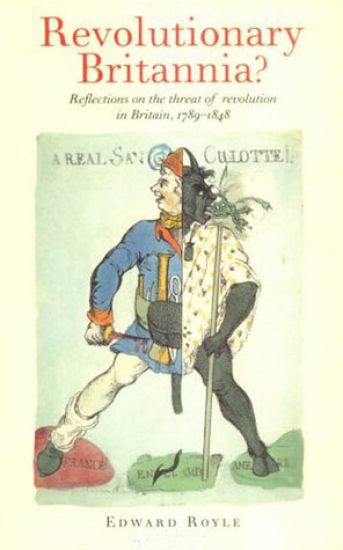
Europe was swept by revolution in the period from 1789 to 1848. Britain, alone of the major western powers, seemed exempt from this revolutionary fervour. The governing class attributed this exemption to divine providence and the soundness of the British Constitution. This view has been upheld by historians for over a century. This book provides students with an alternative view of the potential for revolution and the resources of conservatism in early industrial Britain which challenges many of the common assumptions. Incorporates quotations from primary sources to give the reader a critical sense of why revolution was taken seriously by people at the time. Shows how the revolutionaries were defeated by the government's propaganda against revolutionary sentiments and the strength of popular conservatism.
This text has established itself as the best short account of the Chartist movement available. It considers its origins and development, placing the movement within its broad social and economic context. Dr Royle also provides clear analysis of its strategy and leadership and assesses the conflicting interpretations for the failure of Chartism.
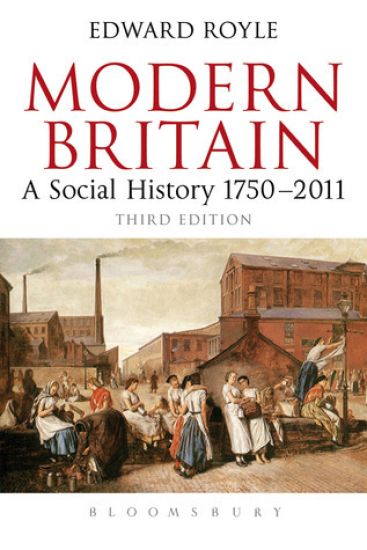
Praise for the first edition:'Royle calls on an impressive range of materials (supported by an excellent bibliography) to offer a judicious review of most of the issues currently confronted by social historians. His agenda contains both traditional and novel elements [...] all are presented with admirable clarity and balance. [...] A volume which shows an astonishing command of such a wide range of material will long prove essential reading.'Times Literary SupplementThis popular work provides an in-depth historical background to issues of contemporary concern, tracing developments over the past two and a half centuries. It promotes accessibility by adopting a thematic approach, with each theme treated chronologically. Major themes are chosen partly by their importance to an understanding of the past and partly by their relevance to students of contemporary Britain - rather than by imposing current fashions in historical study on the past. Thoroughly revised, the third edition of Modern Britain reviews and brings up to date the content to take account of developments since 1997 and reconsiders emphases and interpretations in light of more recent scholarship. It incorporates new currents in historical writing on matters such as the language of class, the position of women, and the revolution worked by the Internet and mobile technologies. Modern Britain is vital reading for students of history and the social and political sciences.
Most Americans persist in believing that poverty results primarily from individual deficiencies: people are poor because they lack intelligence, determination, and skills. In opposition to this dominant, individualistic view, Poverty and Power proposes that American poverty is a structural problem, resulting from the failings of the political economy, not the failings of the poor. In Poverty and Power Edward Royce argues that the current poverty problem originates from changes in the larger economic, political and cultural landscape and from a corresponding shift in the balance of power that has worked to the advantage of business over labor.
Certified Function Point Specialist Examination Guide
David Garmus; Janet Russac; Royce Edwards
CRC Press
2017
sidottu
The Certified Function Point Specialist Examination Guide provides a complete and authoritative review of the rules and guidelines prescribed in the release of version 4.3 of the Function Point Counting Practices Manual (CPM). Providing a fundamental understanding of the IFPUG Functional Size Measurement method, this is the ideal study guide for the CFPS examination. The text: Includes time-tested tips on how to best prepare for the exam Provides a series of questions and answers at the end of each chapter with specific references to the latest version of the CPM Contains two CFPS practice exams to measure understanding and identify areas where more study is needed Active members of the Counting Practices Committee and a past president of the IFPUG supply time-tested insight on how to use the CPM manual effectively and efficiently during the exam. The two sample exams and detailed examples throughout the text help to ensure readers develop the comprehension required to attain certification the first time around. Following certification, this book is a valuable reference for applying the IFPUG method for sizing proficient software design, development, and deployment. Praise for the book: While there are a number of solid books on counting function points, this new book fills a gap in the function point literature by providing useful information on the specifics of becoming a certified function point counter. The authors are all qualified for the work at hand, and indeed have contributed to the function point counting methodology.Capers Jones, President, Capers Jones and Associates LLC
Certified Function Point Specialist Examination Guide
David Garmus; Janet Russac; Royce Edwards
Auerbach Publishers Inc.
2010
nidottu
The Certified Function Point Specialist Examination Guide provides a complete and authoritative review of the rules and guidelines prescribed in the release of version 4.3 of the Function Point Counting Practices Manual (CPM). Providing a fundamental understanding of the IFPUG Functional Size Measurement method, this is the ideal study guide for the CFPS examination. The text: Includes time-tested tips on how to best prepare for the exam Provides a series of questions and answers at the end of each chapter with specific references to the latest version of the CPMContains two CFPS practice exams to measure understanding and identify areas where more study is neededActive members of the Counting Practices Committee and a past president of the IFPUG supply time-tested insight on how to use the CPM manual effectively and efficiently during the exam. The two sample exams and detailed examples throughout the text help to ensure readers develop the comprehension required to attain certification the first time around. Following certification, this book is a valuable reference for applying the IFPUG method for sizing proficient software design, development, and deployment. Praise for the book:While there are a number of solid books on counting function points, this new book fills a gap in the function point literature by providing useful information on the specifics of becoming a certified function point counter. The authors are all qualified for the work at hand, and indeed have contributed to the function point counting methodology.—Capers Jones, President, Capers Jones & Associates LLC





Karl Marx, Émile Durkheim, and Max Weber are indispensable for understanding the sociological enterprise. They are among the chief founders of the discipline and among the foremost theorists of modernity, and their work can stimulate readers to reflect on their own identities and worldviews. Classical Social Theory and Modern Society introduces students to these three thinkers and shows their continued relevance today. The first chapter sets the stage by situating the work of Marx, Durkheim, and Weber in the context of three modernizing revolutions: the Enlightenment, the French Revolution of 1789, and the Industrial Revolution. Three overview chapters follow that summarize the key ideas of each thinker, focusing on their contributions to the development of sociology and their conceptions of modern society. The last portion of the book explores the thinking of Marx, Durkheim, and Weber on four themes—the pathologies of modern society, the predicament of the modern individual, the state and democracy, and socialism versus capitalism. These thematic chapters place Marx, Durkheim, and Weber in dialogue with one another, offering students the opportunity to wrestle with conflicting ideas on issues that are still significant today. Classical sociology is essential to the teaching of sociology and also an invaluable tool in the education of citizens.
Karl Marx, Émile Durkheim, and Max Weber are indispensable for understanding the sociological enterprise. They are among the chief founders of the discipline and among the foremost theorists of modernity, and their work can stimulate readers to reflect on their own identities and worldviews. Classical Social Theory and Modern Society introduces students to these three thinkers and shows their continued relevance today. The first chapter sets the stage by situating the work of Marx, Durkheim, and Weber in the context of three modernizing revolutions: the Enlightenment, the French Revolution of 1789, and the Industrial Revolution. Three overview chapters follow that summarize the key ideas of each thinker, focusing on their contributions to the development of sociology and their conceptions of modern society. The last portion of the book explores the thinking of Marx, Durkheim, and Weber on four themes—the pathologies of modern society, the predicament of the modern individual, the state and democracy, and socialism versus capitalism. These thematic chapters place Marx, Durkheim, and Weber in dialogue with one another, offering students the opportunity to wrestle with conflicting ideas on issues that are still significant today. Classical sociology is essential to the teaching of sociology and also an invaluable tool in the education of citizens.

The Early Narratives of Genesis: A Brief Introduction to the Study of Genesis
Herbert Edward Ryle
Literary Licensing, LLC
2014
nidottu

Poverty and Power examines structural inequality in American society with a focus on the issue of poverty. The third edition features new material throughout, including discussions of the 2016 election and current political climate, the geography of poverty, the weakening of the safety net, the declining quality of employment opportunities, and more. Many Americans believe that people are poor because of individual failings, such as lack of skills or work ethic. Poverty and Power challenges this view, showing that American poverty instead is a structural problem, resulting from failings of our political, economic, cultural, and social systems. The book examines the social forces and institutional problems that contribute to growing inequality and the persistence of poverty in the United States. Throughout the book, the author compares individualistic and structural approaches and makes a case for the superiority of a structural perspective on American poverty.

Many Americans believe that people are poor because of individual failings, such as lack of skills or work ethic. Poverty and Power challenges this view, showing that American poverty instead is a structural problem, resulting from failings of our political, economic, cultural, and social systems. The book examines the social forces and institutional problems that contribute to growing inequality and the persistence of poverty in the United States. Throughout the book, the author compares individualistic and structural approaches and makes a case that a structural perspective on American poverty is the best explanation of the persistent inequalities and disparities that hold back progress and advancement for the country.The fourth edition features new material throughout, including discussions of how poverty intersects with race, ethnicity, and gender; the divisive, growing political and cultural polarization in the country and its impacts on structural poverty; the exacerbating effects of the COVID-19 pandemic on structural poverty; and the role of social justice movements such as Black Lives Matter and the backlash of white nationalism as they relate to structural poverty.
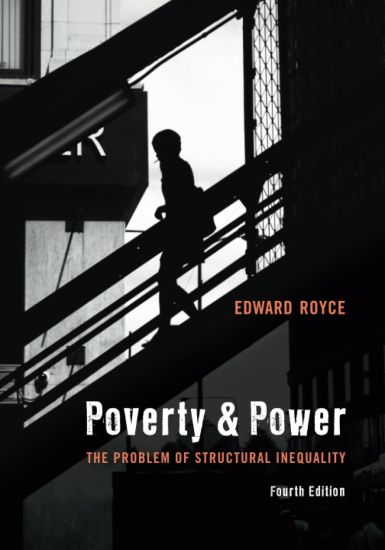
Poverty is serious problem in the United States, more so than commonly imagined, and more so in this country than in other industrialized nations. Most Americans believe poverty is largely the result of people being deficient in intelligence, determination, education, and other personal traits, but poverty is a structural problem, resulting from failings of our political, economic, cultural, and social systems. Poverty and Power, Fourth Edition examines the social forces and institutional problems that contribute to growing inequality and the persistence of poverty in the United States. The author argues that a renewed war on poverty can be successful, but only through a popular movement to bring about significant change in the workings of American economic, political, and cultural institutions. New to the Fourth Edition: New segment on the influence of job seekers' physical appearance on hiring decisions emphasizes that success is not simply a matter of education, skills, and training New data on the "Job Availability Problem" explains in detail why the monthly headline unemployment number is misleading New content on how corporations have become increasingly assertive political players explores the dramatic increase in corporate lobbying efforts and spending on corporate political action committees; the rise of billionaire political activists, and the creation of a powerful conservative political infrastructure in the states. Greater attention to neighborhoods marked by "extreme poverty" and to racially segregated and resource-deprived Black communities covers the extraordinary hardships experienced by the residents of these areas, while a new section on "The Geographical Isolation of the Affluent" discusses how isolation affects wealthy people's beliefs and perceptions about poverty in the United States and what policies they deem acceptable.