Kirjojen hintavertailu. Mukana 11 365 813 kirjaa ja 12 kauppaa.

Kirjahaku

Etsi kirjoja tekijän nimen, kirjan nimen tai ISBN:n perusteella.

1000 tulosta hakusanalla S. Gamble

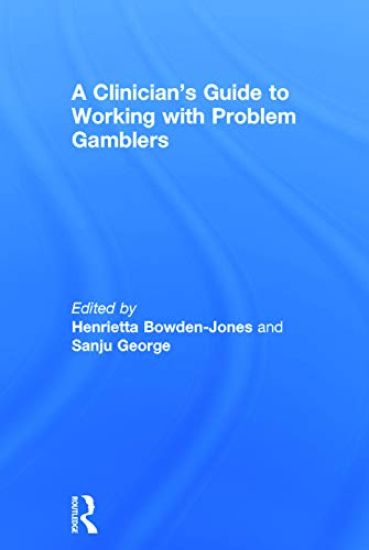
A Clinician's Guide to Working with Problem Gamblers
Problem gambling is a recognised mental disorder and a significant public health issue internationally. A Clinician’s Guide to Working with Problem Gamblers introduces the reader to the concept of problem gambling as an illness, it describes the current gambling habits and explores the way problem gambling may present in an individual. This guide is the product of a collaboration between two of the country’s most eminent experts on problem gambling as a psychiatric disorder. Bowden-Jones and George bring together contributions from leading clinicians working in the field to provide an outline of the epidemiology, aetiology, research, assessment procedures and treatment practices which are discussed and presented in an accessible and engaging manner. The inclusion of questionnaires and screening tools adds to the ‘hands on’ feel of the book. The book covers a range of topics that clinicians and trainees need in order to review and understand the disorder, including, amongst others:Cognitive behavioural models of problem gamblingPsychiatric co-morbidityFamily interventionsGambling and womenRemote gamblingA Clinician’s Guide to Working with Problem Gamblers will be essential reading for mental health professionals working with problem gamblers, as well as those in training, it is a comprehensive reference point on all aspects of this psychiatric condition. It is also aimed at various other groups of people who have an interest in the field of problem gambling, including academics, researchers, policy makers, NHS commissioners, probation officers, other health care professionals, the lay reader and family members of those affected by gambling.

A Clinician's Guide to Working with Problem Gamblers
Problem gambling is a recognised mental disorder and a significant public health issue internationally. A Clinician’s Guide to Working with Problem Gamblers introduces the reader to the concept of problem gambling as an illness, it describes the current gambling habits and explores the way problem gambling may present in an individual. This guide is the product of a collaboration between two of the country’s most eminent experts on problem gambling as a psychiatric disorder. Bowden-Jones and George bring together contributions from leading clinicians working in the field to provide an outline of the epidemiology, aetiology, research, assessment procedures and treatment practices which are discussed and presented in an accessible and engaging manner. The inclusion of questionnaires and screening tools adds to the ‘hands on’ feel of the book. The book covers a range of topics that clinicians and trainees need in order to review and understand the disorder, including, amongst others:Cognitive behavioural models of problem gamblingPsychiatric co-morbidityFamily interventionsGambling and womenRemote gamblingA Clinician’s Guide to Working with Problem Gamblers will be essential reading for mental health professionals working with problem gamblers, as well as those in training, it is a comprehensive reference point on all aspects of this psychiatric condition. It is also aimed at various other groups of people who have an interest in the field of problem gambling, including academics, researchers, policy makers, NHS commissioners, probation officers, other health care professionals, the lay reader and family members of those affected by gambling.
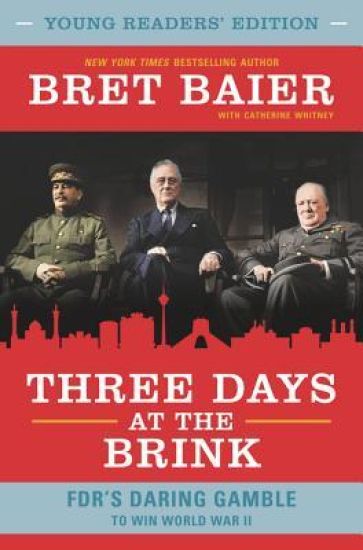
Three Days at the Brink: FDR's Daring Gamble to Win World War II

Three Days at the Brink: FDR's Daring Gamble to Win World War II

Bret Baier; Catherine Whitney

Harpercollins
2019
sidottu
This young readers' edition from New York Times bestselling author and Fox News anchor Bret Baier dives into the first of the secret World War II meetings between President Franklin Roosevelt, Winston Churchill, and Joseph Stalin, which would shape the world for decades to come.In the process, it tells the story of the personal and political evolution of Roosevelt, and how he came to be the man who orchestrated the most decisive conference of the war. Following Germany's invasion of the USSR in June 1941, Prime Minister Winston Churchill offered his support to the Soviets. But by the time the United States entered what had become the second World War in history, it became crucial for the Allied forces to better align themselves against the Axis powers.This meeting of the minds took place in Tehran, and in attendance were some of the most iconic leaders of the twentieth century: Franklin Delano Roosevelt, Winston Churchill, and Joseph Stalin.Though America, Britain, and the Soviet Union all had a common enemy, their political goals differed greatly. This young readers' edition will explore how their united stance against Nazi Germany allowed them to mend their differences, paving the way for what eventually became one of the most important victories in world history.This book, which includes an insert of photographs from that time, tells the inside story of their secret conference.
Three Days at the Brink: FDR's Daring Gamble to Win World War II
This young readers' edition from New York Times bestselling author and Fox News anchor Bret Baier dives into the first of the secret World War II meetings between President Franklin Roosevelt, Winston Churchill, and Joseph Stalin, which would shape the world for decades to come.In the process, it tells the story of the personal and political evolution of Roosevelt, and how he came to be the man who orchestrated the most decisive conference of the war. Following Germany's invasion of the USSR in June 1941, Prime Minister Winston Churchill offered his support to the Soviets. But by the time the United States entered what had become the second World War in history, it became crucial for the Allied forces to better align themselves against the Axis powers.This meeting of the minds took place in Tehran, and in attendance were some of the most iconic leaders of the twentieth century: Franklin Delano Roosevelt, Winston Churchill, and Joseph Stalin.Though America, Britain, and the Soviet Union all had a common enemy, their political goals differed greatly. This young readers' edition will explore how their united stance against Nazi Germany allowed them to mend their differences, paving the way for what eventually became one of the most important victories in world history.This book, which includes a glossary of terms, tells the inside story of their secret conference.Supplemental enhancement PDF accompanies the audiobook.
George Washington's Great Gamble

George Washington's Great Gamble

James Nelson

International Marine Publishing Co
2010
sidottu
One shining yet overlooked moment that changed the course of the Revolutionary WarIn the opening months of 1781, General George Washington feared his army would fail to survive another campaign season. The spring and summer only served to reinforce his despair, but in late summer the changing circumstances of war presented a once-in-a-war opportunity for a French armada to hold off the mighty British navy while his own troops with French reinforcements drove Lord Cornwallis's forces to the Chesapeake. The Battle of the Capes would prove the only time the French ever fought the Royal Navy to a draw, and for the British army it was a catastrophe. Cornwallis confidently retreated to Yorktown, expecting to be evacuated by a British fleet that never arrived. In the end he had no choice but to surrender. Although the war sputtered on another two years, its outcome was never in doubt after Yorktown.General Washington's Great Gamble is the story of the greatest naval engagement of the American Revolution. It is also a study in leadership, good and bad, political machinations and the wild, unpredictable circumstances that led to the extraordinary confluence of military and naval resources at that time and place. Topics include:Looking South; Sea Power for the General; Arnold; Copper Bottoms; Head of Elk; The Battle of Cape Henry; An Attempt to Conquer Virginia; Greene and Cornwallis: Looking North; The American Command; The Battle of Guilford Courthouse; Pyrrhic Victory; Reinforcing the Chesapeake; "[T]he enemy have turned so much of their attention to the Southern States..."; The Battle of Blandford; The British War at Sea; Juncture; "I am inclined to think well of York..."; The Promise of a Fleet; The Battle of Green Springs; The March on New York; An Operation to the Southward; The Arrival of De Grasse; The Battle of the Capes;Cornwallis Surrenders
Hitler's American Gamble

Hitler's American Gamble

Brendan Simms; Charlie Laderman

PENGUIN BOOKS LTD
2022
pokkari
'History at its scintillating best ... hard-hitting, revelatory and superbly researched' Andrew Roberts, author of Churchill: Walking with Destiny 'A rare achievement ... sure to become an instant classic' John Lewis Gaddis, Yale University This gripping book dramatizes the extraordinarily compressed and terrifying period between the surprise Japanese attack on Pearl Harbor and Hitler's declaration of war on the United States. These five days transformed much of the world and have shaped our own experience ever since. Simms and Laderman's aim in the book is to show how this agonizing period had no inevitability about it and that innumerable outcomes were possible. Key leaders around the world were taking decisions with often poor and confused information, under overwhelming pressure and knowing that they could be facing personal and national disaster. And yet, there were also long-standing assumptions that shaped these decisions, both consciously and unconsciously. Hitler's American Gamble is a superb work of history, both as an explanation for the course taken by the Second World War and as a study in statecraft and political choices.
Gorbachev's Gamble

Gorbachev's Gamble

Baruch A. Hazan

Routledge
2020
sidottu
This book is an outcome of the 'Nineteenth All-Union Party conference, convened on Gorbachev's initiative. The conference recommends that, taking account of the new realities, legislation pertaining to union and autonomous republics and autonomous oblasts and okrugs should be developed and renewed.
Gorbachev's Gamble

Gorbachev's Gamble

Baruch A. Hazan

Routledge
2022
nidottu
This book is an outcome of the 'Nineteenth All-Union Party conference, convened on Gorbachev's initiative. The conference recommends that, taking account of the new realities, legislation pertaining to union and autonomous republics and autonomous oblasts and okrugs should be developed and renewed.
Life's a Gamble

Life's a Gamble

Roy Brindley; Jesse (FRW) May

Transworld Publishers Ltd
2010
pokkari
Tells the story of a man who learnt to trust something other than lady luck. This title offers an insight into the glamorous, celebrity-filled and popular world of poker.
Nasser's Gamble

Nasser's Gamble

Jesse Ferris

Princeton University Press
2015
pokkari
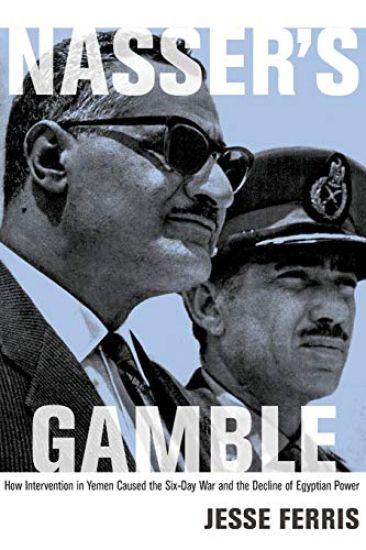
Nasser's Gamble draws on declassified documents from six countries and original material in Arabic, German, Hebrew, and Russian to present a new understanding of Egypt's disastrous five-year intervention in Yemen, which Egyptian president Gamal Abdel Nasser later referred to as "my Vietnam." Jesse Ferris argues that Nasser's attempt to export the Egyptian revolution to Yemen played a decisive role in destabilizing Egypt's relations with the Cold War powers, tarnishing its image in the Arab world, ruining its economy, and driving its rulers to instigate the fatal series of missteps that led to war with Israel in 1967. Viewing the Six Day War as an unintended consequence of the Saudi-Egyptian struggle over Yemen, Ferris demonstrates that the most important Cold War conflict in the Middle East was not the clash between Israel and its neighbors. It was the inter-Arab struggle between monarchies and republics over power and legitimacy. Egypt's defeat in the "Arab Cold War" set the stage for the rise of Saudi Arabia and political Islam. Bold and provocative, Nasser's Gamble brings to life a critical phase in the modern history of the Middle East. Its compelling analysis of Egypt's fall from power in the 1960s offers new insights into the decline of Arab nationalism, exposing the deep historical roots of the Arab Spring of 2011.
Devil's Gamble

Devil's Gamble

Tess Barnett

Corvid House
2016
nidottu
-*-2016 RAINBOW AWARDS FINALIST-*-Caleb Durant is half demon. His mother has spent his entire life telling him that he's the Antichrist, destined for great and evil things.He's mostly just trying to pass calculus.After his school principal's fatal and not-entirely-unintentional accident, he's forced to moved to a small country town, but he hopes he can at least get some solitude.But Andras, his demonic guardian, has made a friendly wager with an angel, and Caleb's soul is the prize.Isaac Mitchell, the sheltered Southern Baptist tasked by an Angel of the Lord to turn Caleb toward the light, is determined to keep his new friend on the straight and narrow.Isaac himself, however, is having some trouble remembering to keep his task and his feelings separate.
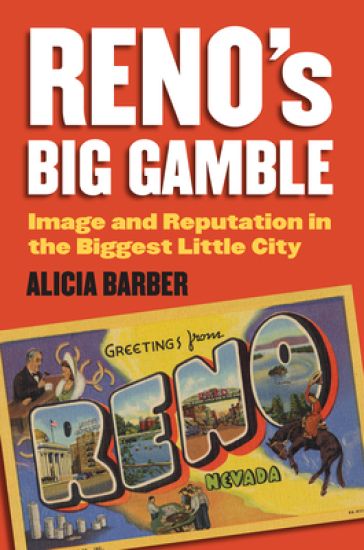
Reno's Big Gamble

Reno's Big Gamble

Alicia Barber

University Press of Kansas
2008
sidottu
When Pittsburgh socialite Laura Corey rolled into Reno, Nevada, in 1905 for a six-month stay, her goal was a divorce from the president of U.S. Steel. Her visit also provided a provocative glimpse into the city's future.With its rugged landscape and rough-edged culture, Reno had little to offer early twentieth-century visitors besides the gambling and prostitution that had remained unregulated since Nevada's silver-mining heyday. But the possibility of easy divorce attracted national media attention, East Coast notables, and Hollywood stars, and soon the 'Reno Cure' was all the rage. Almost overnight, Reno was on the map.Alicia Barber traces the transformation of Reno's reputation from backward railroad town to the nationally known 'Sin Central' - as Garrison Keillor observed, a place where you could see things that you wouldn't want to see in your own hometown. Chronicling the city's changing fortunes from the days of the Comstock Lode, she describes how city leaders came to embrace an identity as 'The Biggest Little City in the World' and transform their town into a lively tourist mecca.Focusing on the evolution of urban reputation, Barber carefully distinguishes between the image that a city's promoters hope to manufacture and the impression that outsiders actually have. Interweaving aspects of urban identity, she shows how sense of place, promoted image, and civic reputation intermingled and influenced each other - and how they in turn shaped the urban environment.Quickie divorces notwithstanding, Reno's primary growth engine was gambling; modern casinos came to dominate the downtown landscape. When mainstream America balked, Reno countered by advertising 'tax freedom' and natural splendor to attract new residents. But by the mid-seventies, unchecked growth and competition from Las Vegas had initiated a downslide that persisted until a carefully crafted series of special events and the rise of recreational tourism began to attract new breeds of tourists.Barber's engaging story portrays Reno as more than a second-string Las Vegas, having pioneered most of the attractions - gaming and prizefighting, divorces and weddings - that made the larger city famous. As Reno continues to remold itself to weather the shifting winds of tourism and growth, Barber's book provides a cautionary tale for other cities hoping to ride the latest consumer trends.
Reno's Big Gamble

Reno's Big Gamble

Alicia Barber

UNIVERSITY PRESS OF KANSAS
2023
nidottu
When Pittsburgh socialite Laura Corey rolled into Reno, Nevada, in 1905 for a six-month stay, her goal was a divorce from the president of U.S. Steel. Her visit also provided a provocative glimpse into the city’s future.With its rugged landscape and rough-edged culture, Reno had little to offer early twentieth-century visitors besides the gambling and prostitution that had remained unregulated since Nevada’s silver-mining heyday. But the possibility of easy divorce attracted national media attention, East Coast notables, and Hollywood stars, and soon the “Reno Cure” was all the rage. Almost overnight, Reno was on the map. Alicia Barber traces the transformation of Reno’s reputation from backward railroad town to the nationally known “Sin Central”—as Garrison Keillor observed, a place where you could see things that you wouldn’t want to see in your own hometown. Chronicling the city’s changing fortunes from the days of the Comstock Lode, she describes how city leaders came to embrace an identity as “The Biggest Little City in the World” and transform their town into a lively tourist mecca.Focusing on the evolution of urban reputation, Barber carefully distinguishes between the image that a city’s promoters hope to manufacture and the impression that outsiders actually have. Interweaving aspects of urban identity, she shows how sense of place, promoted image, and civic reputation intermingled and influenced each other—and how they in turn shaped the urban environment.Quickie divorces notwithstanding, Reno’s primary growth engine was gambling; modern casinos came to dominate the downtown landscape. When mainstream America balked, Reno countered by advertising “tax freedom” and natural splendor to attract new residents. But by the mid-seventies, unchecked growth and competition from Las Vegas had initiated a downslide that persisted until a carefully crafted series of special events and the rise of recreational tourism began to attract new breeds of tourists.Barber’s engaging story portrays Reno as more than a second-string Las Vegas, having pioneered most of the attractions—gaming and prizefighting, divorces and weddings—that made the larger city famous. As Reno continues to remold itself to weather the shifting winds of tourism and growth, Barber’s book provides a cautionary tale for other cities hoping to ride the latest consumer trends.
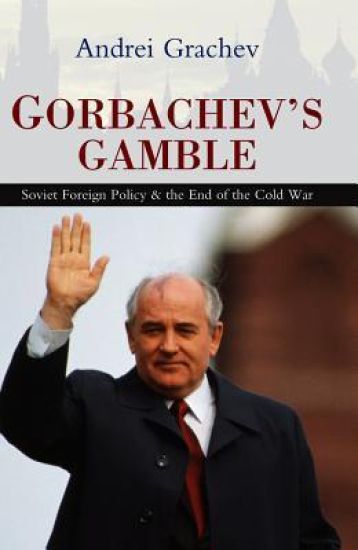
Gorbachev's Gamble

Gorbachev's Gamble

Andrei Grachev

Polity Press
2008
sidottu
Gorbachev’s Gamble offers a new and more convincing answer to this question by providing the missing link between the internal and external aspects of Gorbachev’s perestroika. Andrei Grachev shows that the radical transformation of Soviet foreign policy during the Gorbachev years was an integral part of an ambitious project of internal democratic reform and of the historic opening of Soviet society to the outside world. Grachev explains the motives and the intentions of the initiators of this project and describes their hopes and their illusions. He recounts the story of the internal debates and struggles in the Kremlin and behind-the-scene decisions that led to the Soviet withdrawal from Afghanistan, the fall of the Berlin Wall, the break-up of the Warsaw Pact and eventually the demise of the Soviet Union itself. The book is based on exclusive interviews with the leaders of the Soviet Union including Gorbachev, personal notes and diaries of their assistants and advisers and transcripts of the discussions inside the Politburo and Secretariat of the Central Committee. Together they constitute a multi-voice political confession of a whole generation of decision-makers of the Soviet Union that enables us better to understand the origin and the breathtaking trajectory of the events that led to the end of the Cold War and the unprecedented transformation of world politics in the closing decades of the 20th century.
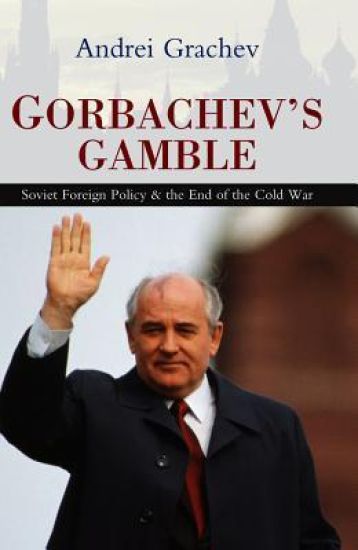
Gorbachev's Gamble

Gorbachev's Gamble

Andrei Grachev

Polity Press
2019
nidottu
Gorbachev’s Gamble offers a new and more convincing answer to this question by providing the missing link between the internal and external aspects of Gorbachev’s perestroika. Andrei Grachev shows that the radical transformation of Soviet foreign policy during the Gorbachev years was an integral part of an ambitious project of internal democratic reform and of the historic opening of Soviet society to the outside world. Grachev explains the motives and the intentions of the initiators of this project and describes their hopes and their illusions. He recounts the story of the internal debates and struggles in the Kremlin and behind-the-scene decisions that led to the Soviet withdrawal from Afghanistan, the fall of the Berlin Wall, the break-up of the Warsaw Pact and eventually the demise of the Soviet Union itself. The book is based on exclusive interviews with the leaders of the Soviet Union including Gorbachev, personal notes and diaries of their assistants and advisers and transcripts of the discussions inside the Politburo and Secretariat of the Central Committee. Together they constitute a multi-voice political confession of a whole generation of decision-makers of the Soviet Union that enables us better to understand the origin and the breathtaking trajectory of the events that led to the end of the Cold War and the unprecedented transformation of world politics in the closing decades of the 20th century.
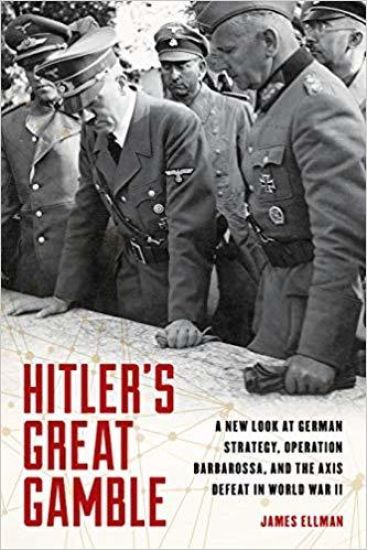
Hitler's Great Gamble

Hitler's Great Gamble

James Ellman

Stackpole Books
2019
sidottu
On June 22, 1941, Hitler invaded the Soviet Union in Operation Barbarossa, one of the turning points of World War II. Within six months, the invasion bogged down at the gates of Moscow, and the Eastern Front proved to be the decisive theater in the defeat of the Third Reich. Ever since, most historians have agreed that this was one of Hitler’s great mistakes. In Hitler’s Great Gamble, James Ellman argues that Barbarossa was a gamble, but that it was not doomed from the start: that it was a reasonable gamble spoiled not by strategic shortsightedness, but by diplomatic setbacks and poor execution. In Ellman’s recounting, the invasion of the Soviet Union was not a doomed act of madness or hubris, but a logical gamble that maximized the Third Reich’s attempts at achieving its war aims, however perverted, of “living space” and subjugating the Slavs. Had Finland and Japan made good on their alliance with Germany—had Hitler been more committed to diplomacy and not military invasion—Germany might well have succeeded in defeating the Soviet Union and, perhaps, winning World War II. Drawing on a wealth of primary and secondary sources (including many recently released), Hitler’s Great Gamble is a provocative work that will appeal to a wide cross-section of World War II buffs, enthusiasts, and historians
Patton's Last Gamble

Patton's Last Gamble

Duane Schultz

STACKPOLE BOOKS
2022
pokkari
In March 1945, against the advice of his top subordinates, Gen. George Patton created a special task force to venture more than fifty miles behind enemy lines and liberate a POW camp near Hammelburg, Germany. The camp held some 1,500 American prisoners, including Patton’s son-in-law. Hampered by ambushes and a lack of fuel and even maps, the raid was a disaster, one of the worst mistakes of Patton’s legendary career. Out of some 300 men, only three dozen returned. Based on memoirs, diaries, combat reports, and interviews with survivors, Patton’s Last Gamble vividly recounts a mission Gen. Omar Bradley later said “began as a wild goose chase and ended in tragedy.”