Kirjojen hintavertailu. Mukana 12 357 150 kirjaa ja 12 kauppaa.

Kirjahaku

Etsi kirjoja tekijän nimen, kirjan nimen tai ISBN:n perusteella.

1000 tulosta hakusanalla STEFANO CATELLANI

Elementi Di Diritto Sanzionatorio Amministrativo Alimentare
La Legge 24 novembre 1981, n. 689 in argomento compie, oramai, 35 anni di vita. Con questa Legge il legislatore ha introdotto, nell'ordinamento italiano, il doppio binario della sanzione punitiva: penale e amministrativa. Si tratta di una norma generale che regola l'applicazione di tutte le sanzioni amministrative, percio anche quelle relative alla legislazione degli alimenti. Questo e un testo per lo studio degli elementi e dei principi che regolano l'applicazione delle sanzioni amministrative, in particolare quelle degli alimenti e delle bevande. Fra gli argomenti vi e una sezione dedicata al prelievo dei campioni, alle analisi di laboratorio, ai sequestri sanitari, al blocco ufficiale ed in fine, al vincolo sanitario. Il testo tratta anche la procedura sanzionatoria, lo scritto difensivo, l'emissione dell'ordinanza-ingiunzione, le impugnazioni, i ricorsi e l'Opposizione alle sanzioni.
L'Art. 5 Della Legge 30 Aprile 1962, n. 283
La Legge 30 aprile 1962, n. 283 in argomento ha resistito piu di 50 anni nell'ordinamento. Il reato di cui all'art. 5 ha costituito un pilastro ineliminabile del controllo degli alimenti di ogni origine. Questo lavoro riporta casi pratici affrontati dalla Cassazione, commentati secondo un criterio per argomenti. Utile agli operatori del settore.
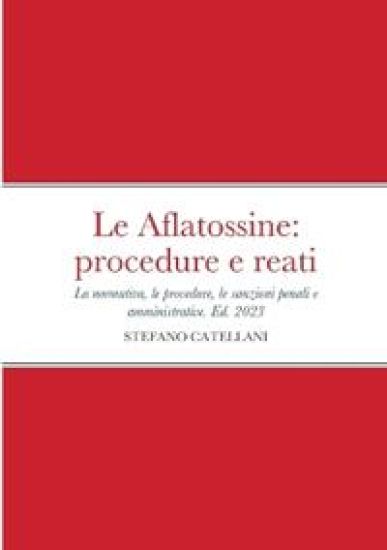
Le Aflatossine

Le Aflatossine

Stefano Catellani

Lulu.com
2023
pokkari
l problema delle Micotossine, ed in particolare delle Aflatossine, oggetto di questo studio, interessa da anni molte sostanze alimentari, ma anche i mangimi per animali; quindi, si estende a gran parte della filiera alimentare. L'Aflatossina non eliminabile dalla filiera alimentare, ed genotossica. La legislazione alimentare orami costituita quasi interamente da Regolamenti Comunitari. Per quanto riguarda le Aflatossine il riferimento legislativo al Regolamento (CE) n. 1881/2006, modificato dal Regolamento (UE) N. 165/2010. Questo studio si occupato anche del campionamento ufficiale e dei suoi metodi, della analisi in autocontrollo, del superamento dei limiti stabiliti nella normativa, dell'integrazione delle sanzioni amministrative e penali, in particolare dell'art. 5, lettera d), della legge 283 del 1962, come strutturato nella recente riforma introdotta con D. Lgs. n. 150 del 10 ottobre 2022 (c.d. Cartabia). The problem of mycotoxins, and in particular of aflatoxins, which is object of this study, has been affecting many food substances and animal feed for years; therefore, it extends throughout a large part of the food chain. The latest studies, mentioned in this study demonstrate the high risk to human health in case of exposure to aflatoxin, through diary intake. The continuous introduction of aflatoxins through foods may cause, in fact, immune deficiency, as well as reduce the ability to absorb nutrients. This study also dealt with the official sampling and its methods, self-monitoring analysis, exceeding the limits established in the legislation, integrating some sanctions.
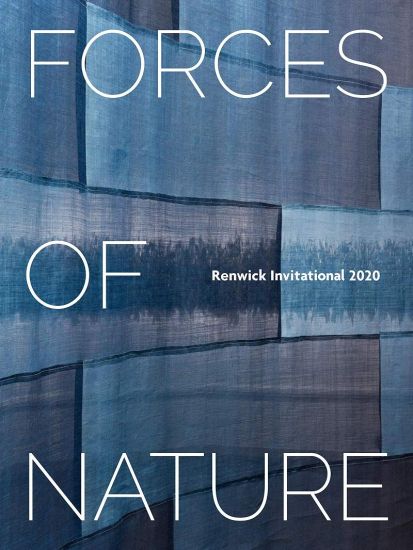
Forces of Nature: Renwick Invitational 2020

Forces of Nature: Renwick Invitational 2020

Stefano Catalani; Emily Zilber

D Giles Ltd
2020
nidottu
All of the artists use the topic of Nature as a means of asking what it is to be human in a world increasingly chaotic and divorced from our physical landscape. Forces of Nature: Renwick Invitational 2020 features artists Lauren Fensterstock, Timothy Horn, Debora Moore, and Rowland Ricketts. Nature provides a way for these invited artists to ask what it means to be human in a world increasingly chaotic and divorced from our physical landscape. Representing craft media from fiber to mosaic to glass and metals, these artists approach the long history of art's engagement with the natural world through unconventional and highly personal perspectives. Forces of Nature: Renwick Invitational 2020 is the ninth installment of the Renwick Invitational. Established in 2000, this biennial showcase highlights midcareer and emerging makers who are deserving of wider national recognition. The featured artists work in a wide variety of media, from Lauren Fensterstock, who creates detailed, large-scale installations using intensive modes of making drawn from the decorative arts, including paper quilling and mosaic, and from whom SAAM has commissioned a site-specific work - inspired in part by the illustrated renaissance German manuscript The Book of Miracles - that will transform an entire gallery at the Renwick, to Timothy Horn, who creates exaggerated adornments that combine natural and constructed worlds, taking inspiration from objects as varied as baroque jewellery patterns and Victorian era detailed studies of lichen, coral, and seaweed, from bronze and glass, as well as unusual materials like crystalized rock sugar, to evoke the extravagant Amber Room in the Catherine the Great's palace of Tsarskoye Selo; and from Debora Moore, known for her exquisitely detailed glass renderings of orchids, and who is represented in this volume in her new series, Arboria (2018), in which Moore focuses less on realism and more on capturing an intensely personal experience of beauty and wonder, to Rowland Ricketts who creates immersive installations using handwoven and hand-dyed cloth, starting on his farm, where he cultivates the indigo plants he uses to colour his artwork, fully linking his material and process with the finished product. Participatory engagement from non-artists, forms a major part of Rickett's work, emphasising the relationship between nature, culture, the passage of time, and everyday life. AUTHOR: Nora Atkinson is the Lloyd Herman Curator of Craft Renwick Gallery, Smithsonian American Art Museum Washington, DC. 74 colour illustrations
Metaphor into Form

Metaphor into Form

Stefano Catalani; Aruna D'Souza; Rock Hushka; Tina Oldknow

Tacoma Art Museum
2019
pokkari
This book celebrates the generous promised gift of over three hundred works from the collection of Rebecca and Jack Benaroya to the Tacoma Art Museum. Rebecca and Jack built their collection over the course of thirty-five years, starting in 1980 with Dale Chihuly’s blown glass Tomato Red Basket Set. The couple followed their passions and acquired seminal works from some of the Northwest artists and international artists who transformed the Pilchuck Glass School into a world-renowned center for innovation and experimentation. These artists include Olga de Amaral, Howard Ben Tré, Sonja Blomdahl, Kenneth Callahan, Joey Kirkpatrick and Flora C. Mace, Kyohei Fujita, Morris Graves, Paul Horiuchi, Stanislav Libenský and Jaroslava Brychtová, William Morris, Ginny Ruffner, Bertil Vallien, and more. Their works are generously reproduced in full color and accompanied by scholarly essays by Stefano Catalani, Aruna D’Souza, Rock Hushka, and Tina Oldknow. This promised gift of 353 works and funds for a new wing and endowment honors Rebecca and Jack by ensuring their collection will be enjoyed for generations to come.
Walt Disney's Mickey Mouse: Trapped in the Shadow Dimension: Disney Masters Vol. 19
All of Mouseton is swooning over the odd "Mr. Benevolence," a masked philanthropist who can't stop doing good -- or can he? Mickey thinks he's behind the vanishing of the atomic genius Dr. Einmug -- and the arrest of Einmug's otherworldly helper, Atomo Bleep-Bleep But things get strange when the villainous Pegleg Pete turns up where Mickey least expects him: a "Shadow Dimension" in which fiction becomes fact Walking in the footsteps of Disney giants Floyd Gottfredson and Romano Scarpa, Italian writer/artist Andrea "Casty" Castellan is among today's most inspired and beloved Mickey Mouse comics creators. After many reader requests, Fantagraphics Books is thrilled to present the first Disney Masters volume by the beloved Disney cartoonist Casty And "Trapped in the Shadow Dimension'' is just the start Also: in this volume, Scrooge McDuck squares off with "The Terrible, Terrible Triple-Dimensional Beagle Boy''... while in "The World to Come," Mickey and Minnie are headed to far-off Illusitania for royal intrigue, robot war... and a showdown with that dastardly, poetic secret agent, The Rhyming Man
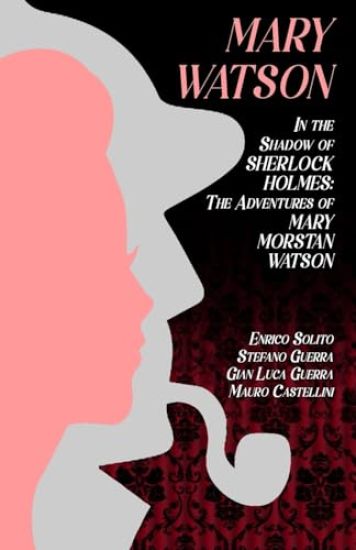
Mary Watson

Mary Watson

Enrico Solito; Stefano Guerra; Mauro Castellini

MX PUBLISHING
2023
sidottu
London, end of the century, the capital of the largest empire of the world: a sprawling city populated by millions of people. Yet not all that glitters is gold. Behind, or rather beneath the lights and extravagance, the theaters and music, and the crowds, there are enormous social contradictions slowly coming to light. The industrial slums, inhumane working conditions, widespread prostitution, massive exploitation of child labor, alcoholism, overcrowding, poverty, and hunger. Masses of destitute people struggling to survive, tuberculosis, crime, and moral hardships. Mary Watson was 27 years old when she met Watson, and she had always been a beacon to those in need, as her husband put it (TWIS: Folk who were in grief came to my wife like birds to a lighthouse.) Slowly, in her concern for others, she found herself battling abuse, injustice, and horrors. She fought with the tools she had, the examples before her: the unwavering integrity and courage of John Watson, the deductive prowess of Sherlock Holmes. She engaged with Catholics, socialists, the Salvation Army, trade unions, and anyone willing to do something to save a life, and she never held back. This is the chronicle of her adventures, as she left it in a series of recently discovered writings. Some tell us a couple of Watson's stories, but they present them through her eyes; of others, we had never known anything, and probably neither had Watson.
Mary Watson

Mary Watson

Enrico Solito; Stefano Guerra; Mauro Castellini

MX PUBLISHING
2023
pokkari
London, end of the century, the capital of the largest empire of the world: a sprawling city populated by millions of people. Yet not all that glitters is gold. Behind, or rather beneath the lights and extravagance, the theaters and music, and the crowds, there are enormous social contradictions slowly coming to light. The industrial slums, inhumane working conditions, widespread prostitution, massive exploitation of child labor, alcoholism, overcrowding, poverty, and hunger. Masses of destitute people struggling to survive, tuberculosis, crime, and moral hardships. Mary Watson was 27 years old when she met Watson, and she had always been a beacon to those in need, as her husband put it (TWIS: Folk who were in grief came to my wife like birds to a lighthouse.) Slowly, in her concern for others, she found herself battling abuse, injustice, and horrors. She fought with the tools she had, the examples before her: the unwavering integrity and courage of John Watson, the deductive prowess of Sherlock Holmes. She engaged with Catholics, socialists, the Salvation Army, trade unions, and anyone willing to do something to save a life, and she never held back. This is the chronicle of her adventures, as she left it in a series of recently discovered writings. Some tell us a couple of Watson's stories, but they present them through her eyes; of others, we had never known anything, and probably neither had Watson.
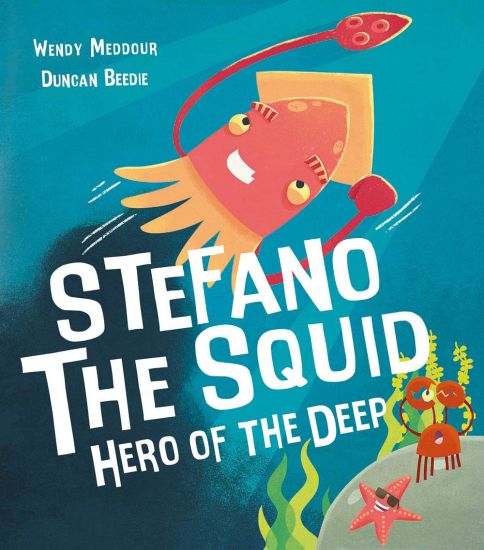
Stefano the Squid

Stefano the Squid

Wendy Meddour

Little Tiger Press
2020
nidottu
It's lights, camera, ACTION under the sea, but Stefano the Squid is having a wobble. All the other creatures seem far more amazing - no wonder the Deep Sea TV team don't notice him. But when disaster strikes, Stefano steps up! Can one ordinary squid save the day?
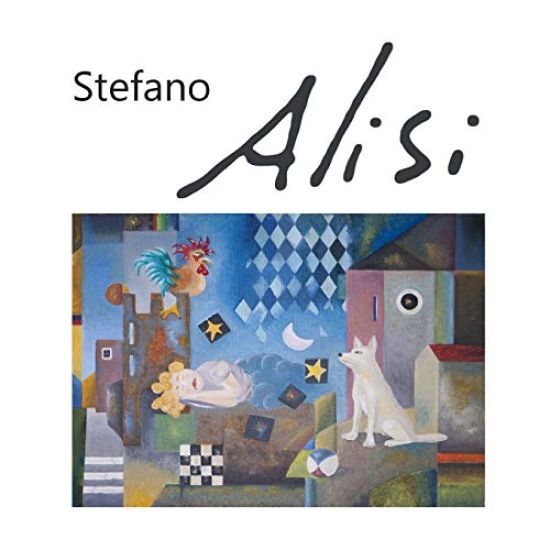
Stefano Alisi: Catalogo - iNcerto equilibrio

Stefano Alisi: Catalogo - iNcerto equilibrio

Stefano Alisi; Laura Giovanna Bevione

Independently Published
2018
nidottu
Catalogo dei lavori esposti alla mostra personale inaugurata il 21 novembre 2018 presso Studio Lab 138 Figlio d'arte, Stefano Alisi, fin da bambino stato educato a inquadrare la realt .In cerca della propria identit ha attinto alla memoria culturale, artefice di quello che una volta era il Bel Paese: un paesaggio di piccoli borghi, ma dalla storia importante ...] piccole citt di fondazione, autentiche apparizioni fantasmatiche. (1)Un po' surrealista e un po' illustratore, girovagando per l'Italia centrale e riflettendo sul rapporto tra l'uomo e le "cose", ha raccolto ritagli di borghi e atmosfere in Preziosi codici miniati . (2)I suoi lavori condensano personaggi e situazioni nello stesso spazio narrativo raccontando una storia diversa ad ognuno dei suoi lettori. Non fotografie ma impressioni, sintesi problematica ma ironica, di una cultura che va sparendo.Non fotografie ma impressioni, sintesi problematica ma ironica, di una cultura che va sparendo.Viaggiando molto per lavoro, Stefano Alisi, dal finestrino della sua macchina, inquadra ogni giorno l'iNcerto equilibrio in cui vive il nostro Paese.Scrive Salvatore Settis: Vedremo boschi, prati e campagne arretrare ogni giorno davanti all'invasione di mesti condomini, vedremo ...] Villaggi che per secoli avevano saputo crescere conservando l'impronta di una cultura dell'abitare tanto pi nobile quanto pi povera ...]assediati da nuovi e anonimi quartieri, che cancellano dall'orizzonte campanili, torri, mura alberi secolari. (3)Alla approfondita e razionale riflessione di Settis, Stefano Alisi risponde con la poesia, impugnando i pennelli si ribella alDissesto psico geologico, sollecitandola Communitasa preservare La favola del Borgo, a riprendersiIl tempo di un caff e una sigaretta, per godere la tranquillit di una Pieve di campagna.1) F. Ranelletti, Stefano Alisi, Il Punto, Annuario Artisti contemporanei, 2009 Albano Laziale(Rm)2) Ibidem3) S.Settis, Paesaggio costituzione cemento, Einaudi, Torino 2010, pp. 3
Stefano Guazzo «La Civil Conversazione» in Der Franzoesischen Kultur Des 16. Und 17. Jahrhunderts
Mit Stefano Guazzos Dialog La Civil Conversazione erschien 1574 in Brescia ein Werk, das den Gesellschaftsfragen im Europa der Fruhen Neuzeit entscheidende Impulse gab. Indem er alle sozialen Schichten in seine UEberlegungen einbezieht, betont Guazzo das uberstandische Ideal einer umfassenden Kultivierung und Vervollkommnung des Menschen. Damit treibt er die Demokratisierung von Anstand und Bildung voran, die ihm als das geeignete Mittel der Verstandigung zwischen den einzelnen sozialen Standen und innerhalb derselben erscheinen. Er widerlegt Vorurteile, betont den Adel der Tugend und relativiert den Vorrang des Geburtsadels, um den menschlichen Beziehungen eine gerechte Grundlage zu geben. Der Schlussel dazu ist die civil conversazione, der Guazzo eine moralische wie erkenntnisfoerdernde Kraft zuschreibt und diese im Verlauf seines Dialogs vorfuhrt. Guazzo spielt im Kulturtransfer zwischen Italien und Frankreich eine herausragende Rolle, zu der in dieser Untersuchung erstmals prazise Informationen gegeben werden. Zudem wird gezeigt, wie Guazzos Vorstellungen in unterschiedlichen Stroemungen des 17. Jahrhunderts ihren Niederschlag finden.
Stefano Cerio

Stefano Cerio

Hatje Cantz
2015
sidottu
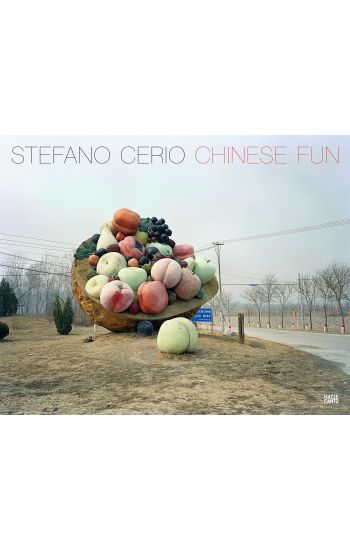
Stefano Cerio (*1962) directs his attention to alternative worlds: for his elaborate series he takes pictures of recreational paradises—ski arenas, cruises, water and fun parks. For the artist, Italian street altars even count among these colorful illusory worlds that people create for the purpose of escaping from everyday life. Yet in his cool photographs Cerio without exception exposes the fun rides and the adventure pools in the off-season and therefore devoid of visitors; the ruptures, the bleakness, and the senselessness that become visible behind the amusing façades. For Chinese Fun, the photographer visited a whole range of recreational parks, water landscapes, and sports grounds in Beijing, Shanghai, Qingdao, and Hong Kong. His centrally organized compositions are made with a plate camera and document selected absurd arrangements—from a concrete fruit basket as large as a house to the looped tracks of an enormous roller coaster in the interior courtyard of an office complex. Exhibition: Fondazione VOLUME!, Rome 23.9.–3.11.2015
Stefano Cerio

Stefano Cerio

HATJE CANTZ
2022
sidottu
The ground is covered in snow, the horizon a dark line of mountains; low milky clouds hide the sky. In the foreground, a shapeless form, a strange sagging mass of bright colors—red, blue and yellow—stirs as it fills with air. In less than a minute a popular fairground attraction appears: an inflatable, rotund form, awkward and genial, shaped like a double slide or a springboard, the kind often seen in children’s play areas, at fairs and village gatherings. Along with other inflatables in the same vein—a chubby castle complete with dragon, a football pitch—the slide is part of the bizarre landscape conjured up in Stefano Cerio’s Aquila, a series of photographs taken in Abruzzo at different times of year and in highly impactful settings not far from L’ Aquila, on the plains of Campo Felice, Campo Imperatore and Pescasseroli.