

Kirjahaku
Etsi kirjoja tekijän nimen, kirjan nimen tai ISBN:n perusteella.
1000 tulosta hakusanalla STEPHEN N. HASKELL

This classic Bible Handbook, compiled by Stephen N. Haskell, contains more than 220 Bible studies organized by topic. Haskell, who recognized the call of God early in life and responded with all his heart, gave himself particularly to the study of God's word. During the 1800's and early 1900's, Haskell served as a preacher, author, publisher and ultimately, as a soul winner--leading hundreds, if not thousands, to know Jesus Christ as their personal Savior.The solid biblical foundation of Haskell's four books reflect his lifelong pursuit of understanding the Scriptures. In "The Cross and Its Shadow," Haskell addressed the Jewish sanctuary service and the meaning behind it, in an easy-to-understand, Bible-based manner. In "The Story of the Seer of Patmos", Haskell delved deeply into the life of John the Beloved, as well as the book of Revelation. "The Story of Daniel the Prophet," like the book about John the Revelator, is built around the biblical story of a prophet, together with the prophecies in the book that bear his name.In the Bible Handbook, Haskell presents a wide range of biblical subjects arranged in a topical manner. Topics such as the ministry of angels, reliability of the Word of God, the Second Coming, signs of the times, modesty in dress, the law of God, temperance in diet, and biblical business principles are each addressed with a list of summarized Bible texts. The result of years of immersion in God's Holy Word, Haskell's book is a "must have" for any serious Bible student. Containing outlines for numerous Bible studies, it offers a serious "leg up" on a number of important topics that are relevant--even critical--to living as a Christian today.
An in-depth study of the Old Testament tabernacle or sanctuary, "The Cross and It's Shadow" delves into what author Stephen N. Haskell calls "the most wonderful object lesson ever given to mankind." Drawing solely from Scripture, Haskell provides a clear, concise understanding of how the Old Testament sanctuary captures the entire theme of the gospel. Readers will learn each facet of the sanctuary and its services, the different offerings and feasts, and the work of the High Priest, which directly illustrates the gospel of salvation through Jesus Christ. As the book so clearly points out, "in the sanctuary, the cross of Christ is the great center of the whole scheme of human redemption. Around it clusters every truth of the Bible."Scripture references abound in this book, which covers types versus antitypes, the Biblical feasts, the priesthood, Levitical laws and ceremonies, and the use of the urim and thummim to discover God's will. The twelve tribes, the significance of Jacob's son's names, the prophecies of Jacob, and even the 144,000 all come within the purview of this Scripture-based book."The Cross and It's Shadow" presents a clear contrast between the earthly sanctuary and the heavenly sanctuary, as well as an enlightening overview of both the daily and annual responsibilities of the priests. Ellen G. White, a contemporary and personal friend of Stephen Haskell's, encouraged him to write this book, which lives up to her endorsement. This book is an absolute must for any Bible student desiring a better understanding of the Old Testament sanctuary and the meaning of the its symbols, ordinances, and services.
An in-depth study of the Old Testament tabernacle or sanctuary, "The Cross and It's Shadow" delves into what author Stephen N. Haskell calls "the most wonderful object lesson ever given to mankind." Drawing solely from Scripture, Haskell provides a clear, concise understanding of how the Old Testament sanctuary captures the entire theme of the gospel. Readers will learn each facet of the sanctuary and its services, the different offerings and feasts, and the work of the High Priest, which directly illustrates the gospel of salvation through Jesus Christ. As the book so clearly points out, "in the sanctuary, the cross of Christ is the great center of the whole scheme of human redemption. Around it clusters every truth of the Bible."Scripture references abound in this book, which covers types versus antitypes, the Biblical feasts, the priesthood, Levitical laws and ceremonies, and the use of the urim and thummim to discover God's will. The twelve tribes, the significance of Jacob's son's names, the prophecies of Jacob, and even the 144,000 all come within the purview of this Scripture-based book."The Cross and It's Shadow" presents a clear contrast between the earthly sanctuary and the heavenly sanctuary, as well as an enlightening overview of both the daily and annual responsibilities of the priests. Ellen G. White, a contemporary and personal friend of Stephen Haskell's, encouraged him to write this book, which lives up to her endorsement. This book is an absolute must for any Bible student desiring a better understanding of the Old Testament sanctuary and the meaning of the its symbols, ordinances, and services.
This classic Bible Handbook, compiled by Stephen N. Haskell, contains more than 220 Bible studies organized by topic. Haskell, who recognized the call of God early in life and responded with all his heart, gave himself particularly to the study of God's word. During the 1800's and early 1900's, Haskell served as a preacher, author, publisher and ultimately, as a soul winner--leading hundreds, if not thousands, to know Jesus Christ as their personal Savior.The solid biblical foundation of Haskell's four books reflect his lifelong pursuit of understanding the Scriptures. In "The Cross and Its Shadow," Haskell addressed the Jewish sanctuary service and the meaning behind it, in an easy-to-understand, Bible-based manner. In "The Story of the Seer of Patmos", Haskell delved deeply into the life of John the Beloved, as well as the book of Revelation. "The Story of Daniel the Prophet," like the book about John the Revelator, is built around the biblical story of a prophet, together with the prophecies in the book that bear his name.In the Bible Handbook, Haskell presents a wide range of biblical subjects arranged in a topical manner. Topics such as the ministry of angels, reliability of the Word of God, the Second Coming, signs of the times, modesty in dress, the law of God, temperance in diet, and biblical business principles are each addressed with a list of summarized Bible texts. The result of years of immersion in God's Holy Word, Haskell's book is a "must have" for any serious Bible student. Containing outlines for numerous Bible studies, it offers a serious "leg up" on a number of important topics that are relevant--even critical--to living as a Christian today.

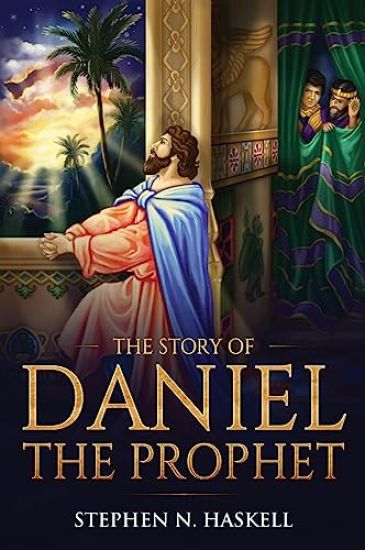
The Story of Daniel the Prophet is both a history and prophetic revelation of events that, as revealed to Daniel in vision, took place, have taken place, and are about to take place in the earth. While history bears witness to the veracity of Daniel's account, the last day events transpiring at this time confirm it as well. Stephen N. Haskell, author of this timeless book, had a depth of understanding and Scriptural knowledge that few could rival today. With skillful pen, Haskell wove the story of the prophet Daniel into a study of his prophecies, connecting the dots with world history as he wrote. Haskell concluded with an explanation of the last chapter of Daniel, which shows the great triumphal climax of the "great controversy" with the Second Coming of Jesus Christ. Though written in 1904, this book remains accurate--and relevant--in our day. Its spiritual content and scope never fail to challenge, inspire, and amaze. This book is highly recommended for any serious student of Bible prophecy, or anyone who simply wants to understand more fully what the Bible predicts for these tumultuous times.
In "The Story of the Seer of Patmos," author Stephen Haskell walks readers right into the life of John the Beloved, explaining in great detail the closeness of John to God, and how, because of that closeness, John was shown many future events in vision. So much more than a story, the book delves so deeply into Revelation that it can serve as a verse-by-verse, step-by-step guide. Chock full of spiritual and historical gems, Haskell's book opens the Bible's last book up in an easily read, narrative style that explains the various symbols within John's visions and their meaning to us today.The study of prophecy is considered uninteresting by many. Much that is written upon this subject is given in an argumentative style, which is unattractive to many minds. Stephen Haskell changes all that in "The Story of the Seer of Patmos," presenting Bible prophecy, together with details of last day events and the life of John, in a fresh way that will be interesting to young and old.From the seven churches, to the seven seals, from fearsome beasts to the riders of the apocalypse, Haskell covers it all. His explanation of the "signs of the times" in the last 1700's and early 1800's, which included a spectacular meteor shower, the Lisbon earthquake, and the day the sky turned dark at noon, is particularly fascinating. Haskell points out that these very signs were predicted in no less than eight different books of the Bible (four in the Old Testament and four in the New), with thirteen identifying characteristics making them truly unmistakable as harbingers of the end.When published, this classic book was "sent forth on its mission of love with earnest prayer to God that it may point all who read to the Lamb of God that taketh away the sin of the world." It was the earnest hope of the author that, within these pages, the Bible student would find treasure, the skeptics ground for faith, and the thoughtless become acquainted with the very thoughts of God."Blessed is he that readeth, and they that hear the words of this prophecy, and keep those things which are written therein: for the time is at hand." (Revelation 1:3)

In "The Story of the Seer of Patmos," author Stephen Haskell walks readers right into the life of John the Beloved, explaining in great detail the closeness of John to God, and how, because of that closeness, John was shown many future events in vision. So much more than a story, the book delves so deeply into Revelation that it can serve as a verse-by-verse, step-by-step guide. Chock full of spiritual and historical gems, Haskell's book opens the Bible's last book up in an easily read, narrative style that explains the various symbols within John's visions and their meaning to us today.The study of prophecy is considered uninteresting by many. Much that is written upon this subject is given in an argumentative style, which is unattractive to many minds. Stephen Haskell changes all that in "The Story of the Seer of Patmos," presenting Bible prophecy, together with details of last day events and the life of John, in a fresh way that will be interesting to young and old.From the seven churches, to the seven seals, from fearsome beasts to the riders of the apocalypse, Haskell covers it all. His explanation of the "signs of the times" in the last 1700's and early 1800's, which included a spectacular meteor shower, the Lisbon earthquake, and the day the sky turned dark at noon, is particularly fascinating. Haskell points out that these very signs were predicted in no less than eight different books of the Bible (four in the Old Testament and four in the New), with thirteen identifying characteristics making them truly unmistakable as harbingers of the end.When published, this classic book was "sent forth on its mission of love with earnest prayer to God that it may point all who read to the Lamb of God that taketh away the sin of the world." It was the earnest hope of the author that, within these pages, the Bible student would find treasure, the skeptics ground for faith, and the thoughtless become acquainted with the very thoughts of God."Blessed is he that readeth, and they that hear the words of this prophecy, and keep those things which are written therein: for the time is at hand." (Revelation 1:3)

Complimentary Dinner to Stephen N. Gifford - Clerk of the Massachusetts Senate - In Honor of his Twenty-Five Years' Service in that Capacity. is an unchanged, high-quality reprint of the original edition of 1883. Hansebooks is editor of the literature on different topic areas such as research and science, travel and expeditions, cooking and nutrition, medicine, and other genres. As a publisher we focus on the preservation of historical literature. Many works of historical writers and scientists are available today as antiques only. Hansebooks newly publishes these books and contributes to the preservation of literature which has become rare and historical knowledge for the future.

Interpretation pervades human thinking. Whether perception or experience, spoken word or written theory, whatever enters our consciousness must be interpreted in order to be understood. Every area of inquiry—art and literature, philosophy and religion, history and the social sciences, even many aspects of the natural sciences—involves countless opportunities to interpret the object of inquiry according to very different paradigms. These paradigms may derive from the language we speak, the nature of our education, or personal preferences. The abundance and diversity of paradigms make interpretation both fascinating in its complexity and often frustrating for the conflicts it generates. In Dialectical Readings, Dunning distinguishes three types of interpretation, each defined in terms of a distinctive dialectical way of thinking: theoretical interpretation, which assumes binary oppositions; transactional interpretation, which seeks reciprocal relations; and transformational interpretation, which discerns paradoxical meanings. Dunning offers new and insightful readings of familiar texts by B. F. Skinner, Claude Lévi-Strauss, Lee Benson, Roland Barthes, Friedrich Nietzsche, and Michel Foucault and sheds new light on works by Thomas Kuhn, Joseph Campbell, Reinhold Niebuhr, Søren Kierkegaard, Paul Tillich, and Paul Ricoeur. Dialectical Readings enables readers to recognize diverse dialectical approaches to understanding—their own as well as those of others—in a way that provides new and helpful insights into a wide variety of subjects in which conflicting interpretations abound.

This is the first major biography of Alexander T. Stewart, known during his lifetime as The Merchant Prince for his success in retail, wholesale, and manufacturing in New York City. At the time of his death in 1876, Stewart was one of the three wealthiest men in America, along with William B. Astor and Cornelius Vanderbilt. But, because he died with no surviving children, his name has all but been forgotten. In this work, Stewart is revived, his remarkable success as the father of the department store examined, and his great contributions to retailing acknowledged and recounted. Not only a definitive account, this story of a major figure in America's Gilded Age, as told by Stephen Elias, is also an absorbing tale. This work fills a gap in the literature on American history and the history of our retail trade. It will be of use to historians, students of merchandising, and those interested in New York's golden age.
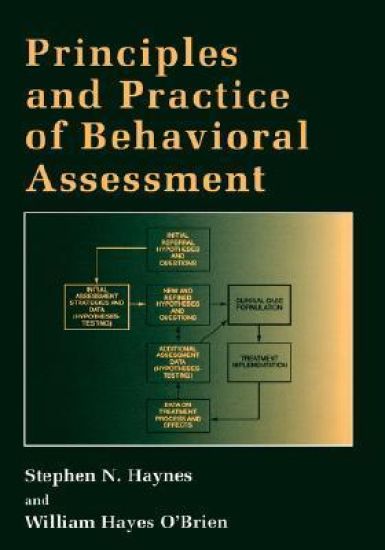
Principles and Practice of Behavioral Assessment
Stephen N. Haynes; William Hayes O'Brien
Kluwer Academic/Plenum Publishers
1999
sidottu
Behavioral assessment is a psychological assessment paradigm that emphasizes empirically supported, multimethod and multi-informant assessment of specific, observable behaviors and contemporaneous causal variables in the natural environment. The behavioral assessment paradigm stresses the use of well-validated assessment instruments and assumptions that social/environmental, cognitive, and physiological variables are often important sources of behavior variance. The behavioral assessment paradigm has had a major influence on the field of psychological assessment. It has affected the way research on the causes of behavior disorders is conducted, the way treatment processes and outcomes are evaluated, and the way treatment decisions are made. The goal of this book is to present the characteristics and underlying assumptions of the behavioral assessment paradigm and to show how they affect the strategies of behavioral assessment. Although all of the concepts and strategies discussed in this book are applicable in the research, this book focuses on the use of behavioral assessment to guide clinical judgements.
Prostate problems eventually affect nearly half of all American males: cancer of the prostate is all too common, and almost all men over fifty have some evidence of enlarged prostate, which causes urinary difficulty. Now, in a new edition of his best-selling book for lay readers, Dr. Stephen Rous draws on his forty years of clinical experience to give readers the best information available on how the prostate works, diseases that affect it, treatment choices for different conditions, and the recuperation process after surgery, including possible side effects. Dr. Rous explains how the essential PSA blood test and other tests are interpreted. He evaluates alternative-medicine options, different surgical treatments (including minimally invasive techniques), and cases where radiation can be helpful. For older men with prostate cancer, he discusses the age factor in decision making: how to decide with your doctor whether surgery, medical treatment, or watchful waiting is the best option.

Shepherds of the Flock: Elevating Home and Visiting Teachers to Home Ministers
Stephen N. Webber
Timpanogos Media, LLC
2016
nidottu