Kirjojen hintavertailu. Mukana 12 390 323 kirjaa ja 12 kauppaa.

Kirjahaku

Etsi kirjoja tekijän nimen, kirjan nimen tai ISBN:n perusteella.

1000 tulosta hakusanalla Samuel Smiles

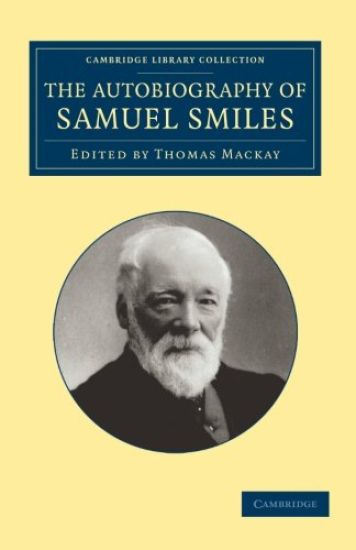
The Autobiography of Samuel Smiles, LL.D.

The Autobiography of Samuel Smiles, LL.D.

Samuel Smiles

Cambridge University Press
2013
pokkari
One of the most popular Victorian writers, Samuel Smiles (1812–1904) made his name in 1859 with the original self-improvement manual Self-Help. His highly successful multi-volume Lives of the Engineers (also reissued in this series) contained biographies of men who had, like him, achieved greatness not through privilege but through hard work. Left incomplete at his death, edited by the social theorist Thomas Mackay (1849–1912) and first published in 1905, his autobiography opens with a vivid description of the Scottish garrison town of his birth during the Napoleonic wars. In his later years he was a vocal supporter of state education, and the value of education was a constant theme throughout his life. He remembers his schooldays here with clarity, writing that 'a good education is equivalent to a good fortune'. Straightforward and unpretentious, this book will be of interest to historians and readers fascinated by the Victorian drive for self-improvement.
Samuel Smiles and the Victorian Work Ethic
Samuel Smiles is best known for his book Self Help (1859), which many have assumed to be an encouragement to social and financial success. However, Smiles actually argued against the single-minded pursuit of success, and in favour of the protean formation of character as the ultimate goal of life. First published in 1987, this book examines Samuel Smiles’ ideals of work and self-help against the background of the Victorian work ethic. Drawing on ‘sub-literature’ such as pamphlets, periodicals, novels, works by Dissenting and Anglican ministers, popular ‘success’ and ‘self-improvement’ books, and general literature on the condition of the working classes, it presents a broad range of public opinion and attitudes towards work and in doing so, creates an essential framework and context for Smiles’ popular books.This book will be of interest to those studying Victorian history and ideology.
Samuel Smiles and the Victorian Work Ethic
Samuel Smiles is best known for his book Self Help (1859), which many have assumed to be an encouragement to social and financial success. However, Smiles actually argued against the single-minded pursuit of success, and in favour of the protean formation of character as the ultimate goal of life. First published in 1987, this book examines Samuel Smiles’ ideals of work and self-help against the background of the Victorian work ethic. Drawing on ‘sub-literature’ such as pamphlets, periodicals, novels, works by Dissenting and Anglican ministers, popular ‘success’ and ‘self-improvement’ books, and general literature on the condition of the working classes, it presents a broad range of public opinion and attitudes towards work and in doing so, creates an essential framework and context for Smiles’ popular books.This book will be of interest to those studying Victorian history and ideology.
Spiritual Messages from Samuel Smiles
Samuel Smiles, the author of Self-Help wrote this masterpiece in the 19th century. In a matter of time, readership of this book spread worldwide and it became the driving force that brought prosperity in America and Japan. But when we look around the world today, prosperity is losing its vigor. If Smiles was alive today and saw what the world has come to, what would he think and say? What kind of advice would he give to his home country, England, seeing the state it is in over the Brexit issue? What has enabled us to answer these questions is this very book, Spiritual Messages from Samuel Smiles -Tips for Self-Help in the modern age-.Also inside this book: The reason he wrote Self-HelpA new insight on the usage of smartphonesThere is "good liberal" and "bad liberal"The future of England post-BrexitAstonishing spiritual truths of the British Royal Family and the Church of EnglandWhat he thinks about China's prosperityOkawa is the Master of Happy Science, a religion founded in 1986 and now joined by people in more than 100 countries across the world. As of December 2019, he has given over 3,000 lectures and has published a total of more than 2,600 books worldwide, many which are translated into 31 languages. Among these books, 500 of them are the Spiritual Interview series recorded through Okawa's unparalleled spiritual ability. He can summon the spirit of any deceased person or any guardian spirit of a living person.
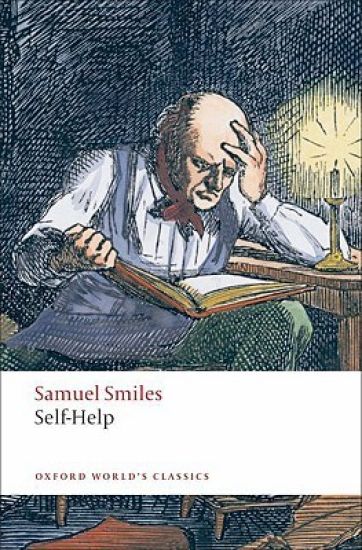
Self-Help

Self-Help

Samuel Smiles

Oxford University Press
2008
nidottu
'The spirit of self-help is the root of all genuine growth in the individual; and, exhibited in the lives of many, it constitutes the true source of national vigour and strength.' A bestseller immediately after its publication in 1859, Self-Help propelled its author to fame and rapidly became one of Victorian Britain's most important statements on the allied virtues of hard work, thrift, and perseverance. Interpreted by some as a paean to personal avarice, Smiles's most celebrated book is in fact a practical and engaging tribute to the working- and lower-middle classes, in whom he identified the capacity for self-improvement and for whom he tirelessly advocated the right of social advancement. Part practical guide, part proverbial testament, part secular hagiography, this literary hybrid turns biography into an inspirational medium that awakens readers to their own potential and instils the desire to succeed. Smiles's book is the precursor of today's motivational and self-help literature, although its vision is significantly more cosmopolitan than that of most books in a still-expanding genre. This edition includes a fully indexed glossary to the more than 750 names discussed by Smiles. ABOUT THE SERIES: For over 100 years Oxford World's Classics has made available the widest range of literature from around the globe. Each affordable volume reflects Oxford's commitment to scholarship, providing the most accurate text plus a wealth of other valuable features, including expert introductions by leading authorities, helpful notes to clarify the text, up-to-date bibliographies for further study, and much more.
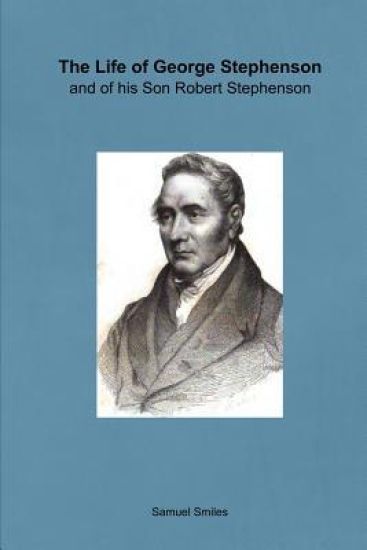
The Life of George Stephenson and of his Son Robert Stephenson
George Stephenson (1781 1848) was a civil and mechanical engineer who, through his work constructing the first intercity railway line between Manchester and Liverpool and (along with his son Robert) designing the locomotive Rocket that was to win the Rainhill Trials, became known as the Father of Railways Born in Northumberland he was illiterate until the age of 18, but realising the value of education he used his wages as an engineman at a local colliery to fund his studies at night school. In 1811 he offered to improve the pumping engine at High Pit, Killingworth which he did with such success that he was promoted to enginewright and in his new position became an expert in steam driven machinery