

Kirjahaku
Etsi kirjoja tekijän nimen, kirjan nimen tai ISBN:n perusteella.
1000 tulosta hakusanalla Sandra M

Sandra-Model: An American Romance
William Legeune
Createspace Independent Publishing Platform
2013
nidottu

Sandra Mendez: Senda De Sueños
Sandra Mendez
Createspace Independent Publishing Platform
2018
nidottu

Altbauliebe an der Nordsee. Mit Tom & Sandra von MiMaMeise.
Sandra Maria Lörch; Tom Oehne
Busse-Seewald Verlag
2024
sidottu

Sandra Monterroso: The Healing Aesthetics: Essays and Interviews
Temblores Publicaciones
2025
nidottu
Centered around the practice of Guatemalan/Mayan Q'eqchi' artist Sandra Monterroso, this reader offers a considered approach to the power of healing through artThrough public performances, videos or installations using traditional dyeing and weaving techniques, Guatemalan artist Sandra Monterroso (born 1974) delves into her Mayan Q'eqchi' ancestry to heal the spiritual and physical wounds inflicted by colonial violence. She also asks the broader question: how can artistic practice pave the way for healing?This bilingual collection of essays and interviews from Monterroso, as well as a host of curators, activists and scholars across the Americas, unravels the core themes of her work including ancestral knowledge, Indigenous identities and feminisms, as well as the relationship between materiality and memory. At the same time, they point to the strategies Monterroso employs to forge connections through a self-reflective lens on her own history--keeping her past alive and, in doing so, mobilizing the present.

Sandra Mujinga’s work might offer an indication of the impact of the events of past and present on the future. Although disturbing, this power to ‘sess’, however speculative it might be, should be be treasured as a route to greater insight into the here and now. For every new work, standing on the shoulders of its forebears, Mujinga opens up uncharted vistas of understanding and new routes to reflection.

Kom med børnenes tv-læge kendt fra ”Bamselægen” på en rejse ind i kroppen og få svar på alle de spørgsmål om din krop, som de voksne ikke kan svare på. Vil du gerne vide alt om, hvordan din krop egentlig virker? Da Sandra gik på læge-skolen, blev hun helt opslugt af, hvor vild kroppen er. Vidste du fx, at din krop er opbygget af 35 billioner (35.000.000.000.000) levende byggeklodser? Nu tager Sandra dig med ind i en spændende fortælling om alle kroppens dele fra yderst til inderst. Læs om alt fra kroppens rensningsanlæg, kroppens benzinstation til kroppens børnefabrik. I hvert kapitel dykker Sandra ned i et nyt område af kroppen, og når du har læst bogen, ved du nok mere om kroppen, end de fleste voksne. Her er historier om, hvordan brækkede knogler kan vokse sammen, om hvorfor dit hjerte er en slags vandpistol, der skyder med blod, om hvordan mave-tarmsystemet kan lave selv den lækreste kage om til lort, og om hvorfor nogle immunceller er kæmpe-ædere, mens andre er snigskytter. Bogen er rigt illustreret af Kirstine Lyngklip Svansøs smukke og oplysende illustrationer.


An Analysis of Sandra M. Gilbert and Susan Gubar's The Madwoman in the Attic
Rebecca Pohl
Macat International Limited
2018
nidottu
The 1979 publication of Susan Gubar and Sandra M. Gilbert’s ground-breaking study The Madwoman in the Attic marked a founding moment in feminist literary history as much as feminist literary theory. In their extensive study of nineteenth-century women’s writing, Gubar and Gilbert offer radical re-readings of Jane Austen, the Brontës, Emily Dickinson, George Eliot and Mary Shelley tracing a distinctive female literary tradition and female literary aesthetic. Gubar and Gilbert raise questions about canonisation that continue to resonate today, and model the revolutionary importance of re-reading influential texts that may seem all too familiar

An Analysis of Sandra M. Gilbert and Susan Gubar's The Madwoman in the Attic
Rebecca Pohl
Macat International Limited
2018
sidottu
The 1979 publication of Susan Gubar and Sandra M. Gilbert’s ground-breaking study The Madwoman in the Attic marked a founding moment in feminist literary history as much as feminist literary theory. In their extensive study of nineteenth-century women’s writing, Gubar and Gilbert offer radical re-readings of Jane Austen, the Brontës, Emily Dickinson, George Eliot and Mary Shelley tracing a distinctive female literary tradition and female literary aesthetic. Gubar and Gilbert raise questions about canonisation that continue to resonate today, and model the revolutionary importance of re-reading influential texts that may seem all too familiar

How to Manage Emotions Effectively: Guiding Your Anger Management All the Time and Developing Good Habits to Control Your Feeling Everyday
Sandra M
Independently Published
2018
nidottu
>> Buy the Paperback Version of this Book and get the Kindle Book version for FREE Do you often get angry? Have you ever yelled, kicked and slammed everything when the traffic jam, get bad news or felt helpless with those around?When you are stressed out for work pressure, for your children or for any other reason, do you want to stress manager and quickly get out of it?Many people have the same question about stress management, anger management, or negative emotions- mastering emotions. They can be hurt, frustration, stress or anger when outraged, feeling injustice or in many other unwanted situations.Understanding your emotions, - managing stress - managing emotions- emotional mastery, and having the ability to effectively handle them can have a positive effect on both your career as well as your personal relationships.Introducing

The first book in a landmark three-volume work that brings feminist theory to bear on modern literature in English. Focusing on both male and female writers, Gilbert and Gubar here survey social, literary, and linguistic conflicts between the sexes as revealed in texts by nineteenth- and twentieth-century writers from Tennyson to Woolf, from Hemingway to Plath."An exciting and ground-breaking work."—Carolyn Heilbrun, Columbia University"Fast, funny, profound in its theoretical assertions, and deliciously irreverent in its asides. Male readers and critics will ignore it at their own peril."—Joyce Carol Oates"Should be welcomed both by contemporary women readers and by anyone who has had the experience of modernism but wondered about its meanings."—Christine Froula, New York Times Book Review"No Man’s Land will surely rewrite the history of modernism."—Maureen Corrigan, Village Voice"No Man’s Land promises to be as crucial for our understanding of 20th-century literature as The Madwoman in the Attic has been for our understanding of 19th-century literature."—Clare Hanson, Times Higher Education Supplement

What might sex be, and what could sex roles be, in the midst of a war between men and women? What is a "woman," a "man," an "androgyne"? Such questions haunt the works Gilbert and Gubar study in Sexchanges, the second volume of their landmark trilogy No Man's Land. Investigating the connections between the feminine and the modern made by writers from Rider Haggard, Olive Schreiner, and Kate Chopin to Edith Wharton, Willa Cather, D.H. Lawrence, Virginia Woolf, T.S. Eliot, and Caryl Churchill, they show that the "no man's land" of the Great War became a metaphor for a crisis of masculinity—a crisis that was already associated with the decline of imperialism and the rise of the femme fatale at the fin de siecle, with the newly visible lesbian literary community that was formed in those years and with what many thinkers increasingly understood to be the artifice of gender. Throughout this century, the therefore argue, images of sexchanges—explored in fictions about transvestism and transsexualism—constituted a set of striking tropes through which male and female writers sought to combat one another's conceptions of the relation between anatomy and destiny.

How do writers and their readers imagine the future in a turbulent time of sex war and sex change? And how have transformations of gender and genre affected literary representations of "woman," "man," "family," and "society"?This final volume in Gilbert and Gubar's landmark three-part No Man's Land: The Place of the Woman Writer in the Twentieth Century argues that throughout the twentieth century women of letters have found themselves on a confusing cultural front and that most, increasingly aware of the artifice of gender, have dispatched missives recording some form of the "future shock" associated with profound changes in the roles and rules governing sexuality.Divided into two parts, Letters from the Front is chronological in organization, with the first section focusing on such writers of the modernist period as Virginia Woolf, Zora Neale Hurston, Edna St. Vincent Millay, Marianne Moore, and H.D., and the second devoted to authors who came to prominence after the Second World War, including Gwendolyn Brooks, Sylvia Plath, Margaret Atwood, Toni Morrison, and A.S. Byatt.Embroiled in the sex antagonism that Gilbert and Gubar traced in The War of the Words and in the sexual experimentations that they studied in Sexchanges, all these artists struggled to envision the inscription of hitherto untold stories on what H.D. called "the blank pages/of the unwritten volume of the new." Through the works of the first group, Gilbert and Gubar focus in particular on the demise of any single normative definition of the feminine and the rise of masquerades of "femininity" amounting to "female female impersonation." In the writings of the second group, the critics pay special attention to proliferating revisions of the family romance—revisions significantly inflected by differences in race, class, and ethnicity—and to the rise of masquerades of masculinity, or "male male impersonation."Throughout, Gilbert and Gubar discuss the impact on literature of such crucial historical events as the Harlem Renaissance, the Second World War, and the "sexual revolution" of the sixties. What kind of future might such a past engender? Their book concludes with a fantasia on "The Further Adventures of Snow White" in which their bravura retellings of the Grimm fairy tale illustrate ways in which future writing about gender might develop.

"A feminist classic."—Judith Shulevitz, New York Times Book Review“A pivotal book, one of those after which we will never think the same again.”—Carolyn G. Heilbrun, Washington Post Book World A pathbreaking book of literary criticism is now reissued with a new introduction by Lisa Appignanesi that speaks to how The Madwoman in the Attic set the groundwork for subsequent generations of scholars writing about women writers, and why the book still feels fresh some four decades later.
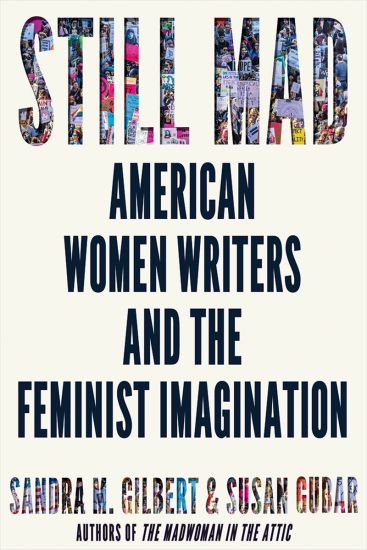
Forty years after their first groundbreaking work of feminist literary theory, The Madwoman in the Attic, award-winning collaborators Sandra M. Gilbert and Susan Gubar map the literary history of feminism’s second wave. In Still Mad, they offer lively readings of major works by such writers as Sylvia Plath, Lorraine Hansberry, Adrienne Rich, Ursula K. Le Guin, Maxine Hong Kingston, Gloria Anzaldúa and Toni Morrison. To address shifting social attitudes over seven decades, they discuss polemics by thinkers from Kate Millett and Susan Sontag to Audre Lorde, Andrea Dworkin and Judith Butler. As Gilbert and Gubar chart feminist gains—including creative new forms of protests and changing attitudes toward gender and sexuality—they show how the legacies of second wave feminists, and the misogynistic culture they fought, extend to the present. In doing so, they celebrate the diversity and urgency of women who have turned passionate rage into powerful writing.

A Jewish Girl & a Not-So-Jewish Boy: A Memoir from New Jersey to Hawaii
Sandra M. Z. Armstrong
Sandra M.Z. Armstrong
2014
nidottu
Sandra is a Jewish girl, studying theatre arts at Rutgers College and more interested in dating around than diving into a serious relationship. Don is a wrestler, a guitar player who loves hanging around the girls' dormitory and is a Presbyterian. He keeps a toothbrush in his back pocket at all times because he never knows what might turn up. When this Jewish girl and not-so-Jewish boy meet, what turns up is an entertaining, interfaith relationship that brings new challenges and plenty of heartfelt moments. But Sandra M. Z. Armstrong's memoir is more than an endearing love story-it's a straightforward, layperson's guide to understanding, adopting, and practicing Judaism. Whether you are currently in-or considering-an interfaith relationship or simply want to learn more about Judaism, this book is a source of inspiration for anyone struggling to achieve religious balance. You will find her descriptions of Shabbat, festivals, celebrations, and community connections as accessible ways to gradually adopt and implement a Jewish lifestyle. Find out how Sandra and Don make it work, then see if you can too. By the end, you may be inspired to write about your own spiritual journey.

Is there a plot against the life of letters today?!!!! A mysterious assailant has tied a nameless text to a railroad track near Boondock State University. While young untenured English professor Jane Marple enlists a group of odd and oddly rivalrous academicians to help her identify and save the text, a coalition of powerful conservatives begins to suspect and rally against a left-wing conspiracy. But all are foiled when the amnesiac text is abducted on the Euro-Centric Express, where Ms. Marple encounters a number of suspiciously eccentric theorists temporarily set loose from their usual haunts in Marxist, deconstructionist, new historicist, and postcolonial circles. You'll laugh with our heroine, you'll cry with her, but you'll never guess how--using the very latest technology and in the midst of sometimes sinister stage and screen celebrities--she brings the last of three thrilling episodes in the canon wars to an end at a WOW (Writers of the World) conference set in the heart of the Big Apple.In this hilarious romp through the culture wars, Sandra M. Gilbert and Susan Gubar send up everyone including, sometimes, themselves, while at the same time they speculate seriously on the future of literature and literacy in a society where both are increasingly endangered. The cast includes well-known critics, politicians, writers, pop stars, media personalities, and a juicy assortment of technocrats, CEOs, and other culture vultures. Any similarities you find between these characters and actual persons, living or dead, are probably glaring. So, hum the opening notes of Masterpiece Theatre as you sit back, relax, and consider (yes!) the fate of the printed word in Western civilization.Masterpiece Theatre is the latest--and funniest--round in the culture wars. No member of Modern Language Association, lover of literature and literacy, cultural pundit, or talking head should be without a copy.

Jesus Risen in Our Midst mines the Resurrection Narrative of John's gospel as a rich resource for understanding and developing Christian spirituality. In this series of essays, which can be read independently of one another, Scripture scholar Sandra Schneiders draws out especially fascinating insights on the place of the Resurrection in the overall structure of the Gospel of Johnthe important structure of John 20, which presents a series of episodes that are internally related to each other and constitute a distinctive synthesis of Christian spiritualitywhat the Resurrection story reveals about the New Covenant promised by Jeremiah and Ezekielthe anthropology and eschatology that is operative in John's account of the Resurrectionthe distinction in John between the Glorification and the Resurrection of Jesus

Writing Exceptional Missionary Newsletters
Sandra M Weyeneth
William Carey Library Publishers
2013
pokkari
Writing Exceptional Missionary Newsletters shows anyone who writes personal ministry newsletters how to captivate readers. This revised edition offers more ideas for better online communication like e-mail and Facebook. It shows how to increase your letter's impact and provides tips for how often to send your newsletters, e-newsletters, and posts. It is for seasoned and new missionaries, church leaders, mission organizations, mission boards, and any person encouraging missionaries to communicate well.