Kirjojen hintavertailu. Mukana 11 627 484 kirjaa ja 12 kauppaa.

Kirjahaku

Etsi kirjoja tekijän nimen, kirjan nimen tai ISBN:n perusteella.

1000 tulosta hakusanalla Scott B. Vickers

Native American Identities

Native American Identities

Scott B. Vickers

University of New Mexico Press
1998
nidottu
Issues of identity and authenticity present perennial challenges to both Native Americans and critics of their art. Vickers examines the long history of dehumanizing depictions of Native Americans while discussing such purveyors of stereotypes as the Puritans, the Bureau of Indian Affairs, and Hollywood. These stereotypes abetted a national policy robbing Indians of their cultural identity. As a contrast to these, he examines the work of white authors and artists such as Helen Hunt Jackson, Oliver La Farge, the Taos Society of Artists, and Frank Waters, who created more archetypal fictional Indian characters.In the second half of the book, Vickers explores the work of Indian artists and writers, such as Edgar Heap of Birds, Jaune Quick-to-See Smith, Linda Hogan, and Sherman Alexie who craft humanizing new images of authenticity and legitimacy, bridging the gap between stereotype and archetype. This is an essential book for all readers with an interest in the tragic history of Indian-white conflict.""Vickers is one of the few to consider artists and writers in relation to each other. He offers a refreshingly commonsensical approach.""-Herta Wong, University of California, Berkley

scott b. davis: sonora
Landscape photography between representation and abstraction: new adventures in print and tonality from scott b. davis Californian photographer scott b. davis’ (born 1971) recent work uses combinations of in-camera palladium paper negatives and traditional film-based platinum/palladium prints. The images explore the boundaries of visibility in the darkness and overwhelming light of the Sonoran Desert, creating pictures of landscapes that are both literal and abstract. The light and space found in the open desert are felt in these uniquely rendered images comprised of diptychs, triptychs and occasional works that include as many as 10 or 12 unique images in a series. By using exposure to intense UV light, davis has pioneered a process that captures images invisible to the naked eye, creating prints rich in contrast to push the boundaries of the visible spectrum and the perceptual limits of human vision. His prints invite closer, deeper looking at landscapes that seem familiar to us in the daylight but evolve into something altogether different when rendered as abstract records of place. The aim is not to represent the desert as we think we know it, but to evoke an intimate connection with the desert through new perspectives.
Mountain High, White Avalanche

Mountain High, White Avalanche

Scott B. MacDonald

Praeger Publishers Inc
1989
nidottu
The Latin Amnerican drug trade has become one of the major problems confronting the United States in the late twentieth century. The key dynamic of that trade is cocaine, which is primarily produced in the Andean nations of Bolivia, Colombia, and Peru. The cocaine trade's influence, however, has spread outwards into other Andean states--Chile, Ecuador, and Venezuela. Moreover, countries on the Andean periphery, such as Panama, have become enmeshed in the trade as transit points and money-lanudering centers. This book examines the cocaine trade in the Andean states and Panana with a special emphasis given to the relationship between cocaine and power.MacDonald examines the linkages between the political and economic power of those in the cocaine trade, the narcotraficantes, and the governments in the region. Important parts of this issue are the drug-insurgency nexus and the significance of the debt crisis. Although the book concentrates on the structure of the cocaine industry in the Andean states and Panama, the final chapters offer policy options on how to contend with the problem.
Doing the Right Thing

Doing the Right Thing

Scott B. Rae

Zondervan
2013
pokkari
According to author Scott B. Rae in Doing the Right Thing, our culture is in an ethical mess because we've neglected moral training and education. This book proposes that there is such a thing as moral truth, that it can be known, and that it can be put into practice. Looking specifically at the areas of medicine, the marketplace, public life, education, and the family, Rae shows how foundational ethical principles can guide you in making moral day-to-day decisions. Informed by Scripture and calling for a renewed understanding of the importance of the Christian faith in moral training, Doing the Right Thing issues a call for cultivated virtue that can bring about both better lives and a better society. You will find yourself examining the ways in which ethical and character issues relate to your life. As a result, you will be better equipped to promote virtue in your own spheres of influence and the culture at large.
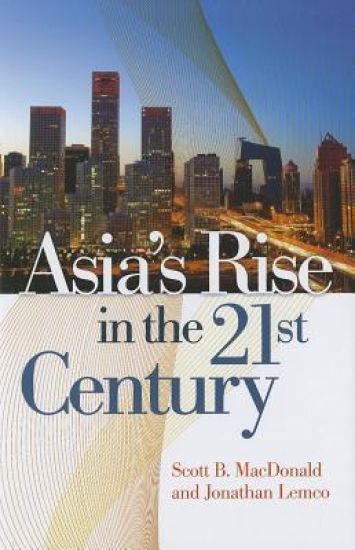
Asia's Rise in the 21st Century

Asia's Rise in the 21st Century

Scott B. MacDonald; Jonathan Lemco

Praeger Publishers Inc
2011
sidottu
This expert analysis looks at what the increasing economic and political prominence of China and other Asian nations means to the West and the rest of the world.Asia's Rise in the 21st Century is a wake-up call to the West, offering a sophisticated assessment of a group of nations that are becoming essential markets for U.S. trade, industry, and finance, even as they increasingly represent fierce competition for global markets. The work traces changes that launched the region down the path to potential economic and political ascendancy, and it looks at various factors, from politics to economics to demographics that affect Asia now and will continue to do so in the future.China's prominence is explored in the context of how it complements and competes with the rest of Asia, especially Japan and India, and how it interacts with other major emerging-market countries, such as Brazil, Russia, and Turkey. The book also looks at the challenge China's ascendancy poses to the assertion that a successful capitalist system must be accompanied by political democracy. Finally, the authors suggest ways in which Asia's rise can be accommodated in the West and elsewhere and offer thoughts on where Asia, and especially China, will be in 2030.
Janus Parallelism in the Book of Job

Janus Parallelism in the Book of Job

Scott B. Noegel

Continuum International Publishing Group Ltd.
2009
nidottu
Noegel here examines instances of Janus parallelism in the Hebrew Bible with particular attention to the book of Job, and with excursuses on the device in other ancient Near Esatern literatures. The author finds the punning device integral to the book of Job, serving a referential function. Within the context of dialogue and debate, the polysemous statements resemble a poetry contest among the participants (Job, his friends, and Elihu). The book also treats the relationship between wordplay and wisdom literature; polysemy as preserved in the Greek, Aramaic, Latin, and Syriac translations; and the impact of Janus parallelism on textual criticism and the unity of the book of Job.
A History of Credit and Power in the Western World

A History of Credit and Power in the Western World

Scott B. MacDonald

Transaction Publishers
2001
sidottu
The end of the Cold War put the planet on a new track, abruptly replacing the familiar world of bipolarity, red phones, and intercontinental ballistic missiles with the strange new world of the Internet, e-commerce, and Palm Pilots. The "New World Order" was defined by a U.S.-led war against Iraq, bloody ethnic strife in Bosnia and Rwanda, and religious turmoil in Central Asia. This evolving global system, however, overlooked the powerful role of credit, which functions as a critical building block for developing greater national and individual wealth. This volume examines the evolution of credit in the Western world and its relationship to power. Spanning several centuries of human endeavor. it focuses on Western Europe and the United States and also considers how the Western system became the global credit system. Six major themes run throughout: (1) the direct relationship between credit and power; (2) different kinds of political power promote different kinds of economic behavior; (3) various societal and cultural groups were often more successful in mingling credit and political power; (4) the Western credit system evolved in tandem with the development of the nation-state; (5) historically, there has been a pattern of financial crises; (6) credit spread from being the privilege of the wealthy and powerful to being available to vast numbers. MacDonald and Gastmann have broken history into five periods, ranging from early pre-modern, defining the earliest references to banking and credit as exemplified by the Code of Hammurabi, circa 1726 BC, through the Roman Empire with its creation of money and growing use of credit in trade, the barbarian invasions of the 11th century which led to a breakdown in credit networks in the West, through the establishment of the Italian city-states, to the modern period which incorporates the rise of credit in the Low Countries in the 1500s and extends through the rise of London and New York as the major international credit hubs. The final period is the global one which began in the early 1990s, reflecting the linkages of almost all points of the map, and the deepening democratization of credit in North America, Europe, and parts of Asia. This highly accessible and well-written volume will engage historians and economists alike.
Fast Forward

Fast Forward

Scott B. MacDonald

Transaction Publishers
1998
nidottu
Latin America is developing rapidly. As the authors see the region, a small group of countries has found a fast-forward button. In these countries change is exciting, occurring at such a rapid pace that a major breakthrough hi economic growth appears within grasp. After an almost decade-long period of recession and stagnation, many Latin American economies now have elected governments. With a few exceptions, most have also improved their socioeconomic conditions beyond meeting basic human needs. Yet few North Americans or Europeans are aware of these advances. How does Latin America fit into the changing world in the 1990s, and why should someone living in the United States, Europe, or developed parts of the Pacific Basin care?Fast Forward shows that Latin America's economic renaissance clearly has implications for a post-Cold War world order. Latin America is starting to make important contributions, particularly in the areas of international diplomacy, economics, and culture. Collectively, Latin Americans now demonstrate a coherent collective will about where they wish to take themselves. This does not mean that U.S. influence in the Americas will soon disappear, but that new challenges in the international system will force greater equity in Western Hemisphere relationships.While Latin America in the 1990s offers much to be excited about, the authors caution that there are dangers in being too enthusiastic. The always-present potential for top-down authoritarian approaches must temper enthusiasm about a better Latin American future. Despite this, the authors see a well-defined departure from past economic modes occurring and the potential for a higher level of development for some countries. This book is for economists, sociologists, and political scientists interested in economic and political development, and researchers interested in Latin America in particular.
A History of Credit and Power in the Western World

A History of Credit and Power in the Western World

Scott B. MacDonald

Transaction Publishers
2004
nidottu
The end of the Cold War put the planet on a new track, abruptly replacing the familiar world of bipolarity, red phones, and intercontinental ballistic missiles with the strange new world of the Internet, e-commerce, and Palm Pilots. The "New World Order" was defined by a U.S.-led war against Iraq, bloody ethnic strife in Bosnia and Rwanda, and religious turmoil in Central Asia. This evolving global system, however, overlooked the powerful role of credit, which functions as a critical building block for developing greater national and individual wealth. This volume examines the evolution of credit in the Western world and its relationship to power. Spanning several centuries of human endeavor. it focuses on Western Europe and the United States and also considers how the Western system became the global credit system. Six major themes run throughout: (1) the direct relationship between credit and power; (2) different kinds of political power promote different kinds of economic behavior; (3) various societal and cultural groups were often more successful in mingling credit and political power; (4) the Western credit system evolved in tandem with the development of the nation-state; (5) historically, there has been a pattern of financial crises; (6) credit spread from being the privilege of the wealthy and powerful to being available to vast numbers. MacDonald and Gastmann have broken history into five periods, ranging from early pre-modern, defining the earliest references to banking and credit as exemplified by the Code of Hammurabi, circa 1726 BC, through the Roman Empire with its creation of money and growing use of credit in trade, the barbarian invasions of the 11th century which led to a breakdown in credit networks in the West, through the establishment of the Italian city-states, to the modern period which incorporates the rise of credit in the Low Countries in the 1500s and extends through the rise of London and New York as the major international credit hubs. The final period is the global one which began in the early 1990s, reflecting the linkages of almost all points of the map, and the deepening democratization of credit in North America, Europe, and parts of Asia. This highly accessible and well-written volume will engage historians and economists alike.
Weapons of the Wealthy

Weapons of the Wealthy

Scott B. Radnitz

Cornell University Press
2012
pokkari
Mass mobilization is among the most dramatic and inspiring forces for political change. When ordinary citizens take to the streets in large numbers, they can undermine and even topple undemocratic governments, as the recent wave of peaceful uprisings in several postcommunist states has shown. However, investigation into how protests are organized can sometimes reveal that the origins and purpose of "people power" are not as they appear on the surface. In particular, protest can be used as an instrument of elite actors to advance their own interests rather than those of the masses. Weapons of the Wealthy focuses on the region of post-Soviet Central Asia to investigate the causes of elite-led protest. In nondemocratic states, economic and political opportunities can give rise to elites who are independent of the regime, yet vulnerable to expropriation and harassment from above. In conditions of political uncertainty, elites have an incentive to cultivate support in local communities, which elites can then wield as a "weapon" against a predatory regime. Scott Radnitz builds on his in-depth fieldwork and analysis of the spatial distribution of protests to demonstrate how Kyrgyzstan's post-independence development laid the groundwork for elite-led mobilization, whereas Uzbekistan's did not. Elites often have the wherewithal and the motivation to trigger protests, as is borne out by Radnitz's more than one hundred interviews with those who participated in, observed, or avoided protests. Even Kyrgyzstan's 2005 "Tulip Revolution," which brought about the first peaceful change of power in Central Asia since independence, should be understood as a strategic action of elites rather than as an expression of the popular will. This interpretation helps account for the undemocratic nature of the successor government and the 2010 uprising that toppled it. It also serves as a warning for scholars to look critically at bottom-up political change.
Bioethics

Bioethics

Scott B. Rae; Paul Cox

William B Eerdmans Publishing Co
1999
pokkari
The authors assess various secular approaches to bioethics that are particularly influential today and develop a framework for a Christian approach to assist people in addressing the many pressing issues in the field. Throughout, the authors touch on the numerous debated issues in bioethics though they are primarily concerned to give an account of the central theological notions crucial to an informed Christian perspective on bioethics.
The A to Z of Prophets in Islam and Judaism

The A to Z of Prophets in Islam and Judaism

Scott B. Noegel; Brannon M. Wheeler

Scarecrow Press
2010
nidottu
Both traditions recognize and draw theological and historical lessons from some of the same narrative sources, but this is the first comparative resource to provide interdisciplinary coverage of the history and textual sources associated with prophets and prophecy. This thorough treatment of a difficult and increasingly controversial subject area will encourage and cultivate knowledge and understanding. Entries are drawn from five main fields: 1. Ancient Near Eastern Studies 2. Bible and Biblical Studies 3. Judaism and Jewish Studies 4. The Quran and Quranic Studies 5. Islam and Islamic Studies The A to Z of Prophets in Islam and Judaism treat each entry as a compilation of relevant data culled from these different traditions in order to take the reader beyond the expected parameters of research. Originally envisioned as an initial resource for students of comparative religion, the extensive chronology, bibliography, and the overall accessibility of the passages make the book suitable for a much wider audience.
Captives of Revolution

Captives of Revolution

Scott B. Smith

University of Pittsburgh Press
2013
nidottu
The Socialist Revolutionaries (SRs) were the largest political party in Russia in the crucial revolutionary year of 1917. Heirs to the legacy of the PeopleÆs Will movement, the SRs were unabashed proponents of peasant rebellion and revolutionary terror, emphasizing the socialist transformation of the countryside and a democratic system of government as their political goals. They offered a compelling, but still socialist, alternative to the Bolsheviks, yet by the early 1920s their party was shattered and its members were branded as enemies of the revolution. In 1922, the SR leaders became the first fellow socialists to be condemned by the Bolsheviks as \u201ccounter-revolutionaries\u201d in the prototypical Soviet show trial. In Captives of the Revolution, Scott B. Smith presents both a convincing account of the defeat of the SRs and a deeper analysis of the significance of the political dynamics of the Civil War for subsequent Soviet history. Once the SRs decided to openly fight the Bolsheviks in 1918, they faced a series of nearly impossible political dilemmas. At the same time, the Bolsheviks fatally undermined the revolutionary credentials of the SRs by successfully appropriating the rhetoric of class struggle, painting a simplistic picture of Reds versus Whites in the Civil War, a rhetorical dominance that they converted into victory over the SRs and any left-wing alternative to Bolshevik dictatorship. In this narrative, the SRs became a bona fide threat to national security and enemies of the people—a characterization that proved so successful that it became an archetype to be used repeatedly by the Soviet leadership against any political opponents, even those from within the Bolshevik party itself. In this groundbreaking study, Smith reveals a more complex and nuanced picture of the postrevolutionary struggle for power in Russia than we have ever seen before and demonstrates that the Civil War—and in particular the struggle with the SRs—was the formative experience of the Bolshevik party and the Soviet state.
"Wordplay" in Ancient Near Eastern Texts
This book from Scott B. Noegel offers a comparative, in-depth study of "wordplay" in ancient Near Eastern texts. Noegel establishes comprehensive taxonomies for the many kinds of devices that scholars label as wordplay and for their proposed functions. The consistent terminology proposed offers students and scholars of Sumerian, Akkadian, Egyptian, Ugaritic, Hebrew, and Aramaic a useful template for documenting and understanding the devices they discover and for comparing them across languages for a rich interdisciplinary dialogue.
Plants of Central Texas Wetlands

Plants of Central Texas Wetlands

Scott B. Fleenor; Stephen Welton Taber

Texas Tech Press,U.S.
2009
nidottu
Along the San Marcos River, in and surrounding Palmetto State Park in south central Texas, lie more than five square kilometers of relict ecosystem known as the Ottine Wetlands. This rich and fascinating area of swamps, marshes, and ponds is situated on the biogeographical divide separating the eastern plants and animals of the United States from their western counterparts, and also along a similar ecological boundary separating subtropical species from their more northern, temperate counterparts. Catalogued are more than 500 species, ranging from mosses and liverworts to flowering plants. Photographs and detailed descriptions aid in field recognition of more than 275 species; checklists are provided for those not treated in the text. An introductory chapter covers the regions geology and soils, climate, postglacial history, plant communities, and biogeography and also serves as a guide to Palmetto State Park and its easily accessible nature trails. Scientific researchers and nature enthusiasts alike will appreciate this expert guide to one of the nations most distinctive ecosystems.