Kirjojen hintavertailu. Mukana 11 244 527 kirjaa ja 12 kauppaa.

Kirjahaku

Etsi kirjoja tekijän nimen, kirjan nimen tai ISBN:n perusteella.

1000 tulosta hakusanalla Sharon Monteith

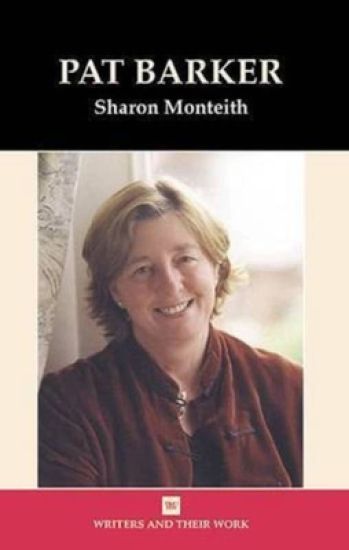
Pat Barker

Pat Barker

Sharon Monteith

Northcote House Publishers Ltd
2017
nidottu
When Pat Barker was published in 2002, it was the first study to investigate this award-winning and popular writer’s fiction in a sustained way. This updated second edition coincides with the centenary of the First World War, a major preoccupation from Liza's England through the Regeneration Trilogyto Toby's Room. Many of Barker’s stories balance on the serrated edges of the military experience as she depicts it, to include bombs, bullets and bayonets but also psychological pressures of conscience and class under which soldiers struggle, and debates over how to represent war in which painters, journalists and writers engage. A creative spur to other writers, Barker’s work is also a primary source for filmmakers. Barker's leading critic, Monteith has interviewed the author about her work over three decades. Here she positions Barker as a supremely contemporary novelist: when she intervenes imaginatively in history, Barker speaks to present concerns over culture and memory.
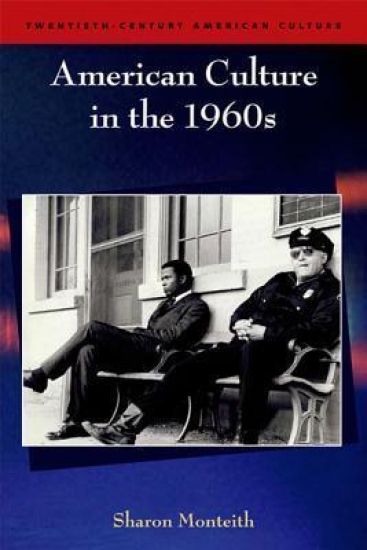
American Culture in the 1960s

American Culture in the 1960s

Sharon Monteith

Edinburgh University Press
2008
sidottu
This book charts the changing complexion of American culture in one of the most culturally vibrant of twentieth-century decades. It provides a vivid account of the major cultural forms of 1960s America - music and performance; film and television; fiction and poetry; art and photography - as well as influential texts, trends and figures of the decade: from Norman Mailer to Susan Sontag; from Muhammad Ali's anti-war protests to Tom Lehrer's stand-up comedy; from Bob Dylan to Rachel Carson; and from Pop Art to photojournalism. A chapter on new social movements demonstrates that a current of conservatism runs through even the most revolutionary movements of the 1960s and the book as a whole looks to the West and especially to the South in the making of the sixties as myth and as history. Key Features: * Focused case studies featuring key texts, genres, writers, artists and cultural trends * Detailed chronology of 1960s American culture * Bibliographies for each chapter * Over 30 black and white illustrations
American Culture in the 1960s

American Culture in the 1960s

Sharon Monteith

Edinburgh University Press
2008
nidottu
This book charts the changing complexion of American culture in one of the most culturally vibrant of twentieth-century decades. It provides a vivid account of the major cultural forms of 1960s America - music and performance; film and television; fiction and poetry; art and photography - as well as influential texts, trends and figures of the decade: from Norman Mailer to Susan Sontag; from Muhammad Ali's anti-war protests to Tom Lehrer's stand-up comedy; from Bob Dylan to Rachel Carson; and from Pop Art to photojournalism. A chapter on new social movements demonstrates that a current of conservatism runs through even the most revolutionary movements of the 1960s and the book as a whole looks to the West and especially to the South in the making of the sixties as myth and as history. Key Features: * Focused case studies featuring key texts, genres, writers, artists and cultural trends * Detailed chronology of 1960s American culture * Bibliographies for each chapter * Over 30 black and white illustrations
Advancing Sisterhood?

Advancing Sisterhood?

Sharon Monteith

University of Georgia Press
2001
sidottu
Though black and white women have long been associated with the heart of southern culture, their relationships with each other in the context of contemporary southern fiction have been largely glossed over until now. In Advancing Sisterhood? Sharon Monteith offers an enlightening map of this new literary ground. Beginning with an overview of the theory and literary incarnations of friendship, Advancing Sisterhood? examines how prevalent specific relationships between black and white women have become in the works of Ellen Douglas, Kaye Gibbons, Connie Mae Fowler, Lane von Herzen, Ellen Gilchrist, Carol Dawson, and others. Monteith explains that interracial friendships have become an alluring topic for white women writers. She also examines these friendships in relation to the ways black women writers and critics have pictured black and white girls and women in the South.Advancing Sisterhood? explores childhood female relationships in such works as Ellen Foster and Before Women Had Wings and considers recent ecocriticism and its role in charting the female southern landscape. Monteith also provides an in-depth examination of the archetypal friendship between white housewives and their black servants. Through these discussions, Advancing Sisterhood? demonstrates how contemporary white women writers have broadened their work to include friendships between women of diverse backgrounds and to influence literary expression.
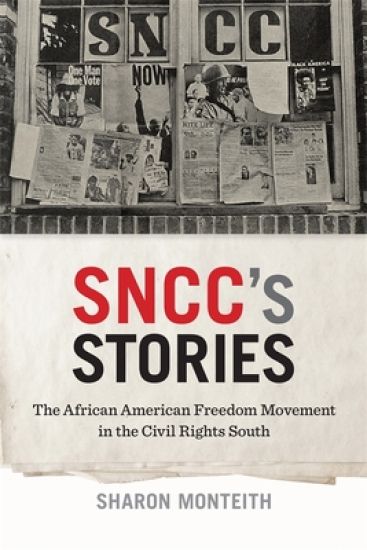
SNCC's Stories

SNCC's Stories

Sharon Monteith

University of Georgia Press
2020
pokkari
Formed in 1960 in Raleigh, North Carolina, the Student Non-violent Coordinating Committee (SNCC) was a high-profile civil rights collective led by young people. For Howard Zinn in 1964, SNCC members were “new abolitionists,” but SNCC pursued radical initiatives and Black Power politics in addition to reform. It was committed to grassroots organizing in towns and rural communities, facilitating voter registration and direct action through “projects” embedded in Freedom Houses, especially in the South: the setting for most of SNCC’s stories. Over time, it changed from a tight cadre into a disparate group of many constellations but stood out among civil rights organizations for its participatory democracy and emphasis on local people deciding the terms of their battle for social change. Organizers debated their role and grappled with SNCC’s responsibility to communities, to the “walking wounded” damaged by racial terrorism, and to individuals who died pursuing racial justice. SNCC’s Stories examines the organization’s print and publishing culture, uncovering how fundamental self- and group narration is for the undersung heroes of social movements. The organizer may be SNCC’s dramatis persona, but its writers have been overlooked. In the 1960s it was assumed established literary figures would write about civil rights, and until now, critical attention has centered on the Black Arts Movement, neglecting what SNCC’s writers contributed. Sharon Monteith gathers hard-to-find literature where the freedom movement in the civil rights South is analyzed as subjective history and explored imaginatively. SNCC’s print culture consists of field reports, pamphlets, newsletters, fiction, essays, poetry, and plays, which serve as intimate and illuminative sources for understanding political action. SNCC's literary history contributes to the organization's legacy.
SNCC's Stories

SNCC's Stories

Sharon Monteith

University of Georgia Press
2020
sidottu
Formed in 1960 in Raleigh, North Carolina, the Student Non-violent Coordinating Committee (SNCC) was a high-profile civil rights collective led by young people. For Howard Zinn in 1964, SNCC members were “new abolitionists,” but SNCC pursued radical initiatives and Black Power politics in addition to reform. It was committed to grassroots organizing in towns and rural communities, facilitating voter registration and direct action through “projects” embedded in Freedom Houses, especially in the South: the setting for most of SNCC’s stories. Over time, it changed from a tight cadre into a disparate group of many constellations but stood out among civil rights organizations for its participatory democracy and emphasis on local people deciding the terms of their battle for social change. Organizers debated their role and grappled with SNCC’s responsibility to communities, to the “walking wounded” damaged by racial terrorism, and to individuals who died pursuing racial justice. SNCC’s Stories examines the organization’s print and publishing culture, uncovering how fundamental self- and group narration is for the undersung heroes of social movements. The organizer may be SNCC’s dramatis persona, but its writers have been overlooked. In the 1960s it was assumed established literary figures would write about civil rights, and until now, critical attention has centered on the Black Arts Movement, neglecting what SNCC’s writers contributed. Sharon Monteith gathers hard-to-find literature where the freedom movement in the civil rights South is analyzed as subjective history and explored imaginatively. SNCC’s print culture consists of field reports, pamphlets, newsletters, fiction, essays, poetry, and plays, which serve as intimate and illuminative sources for understanding political action. SNCC's literary history contributes to the organization's legacy.
Sharon Creech 3-Book Box Set: Love That Dog, Hate That Cat, Moo
Enjoy three bestselling middle grade novels about animals--Love That Dog, Hate That Cat, and Moo--by beloved Newbery Medal winner Sharon Creech in this paperback box set Creech fans will love this perfect holiday gift and companion to her latest novel, Saving Winslow, about a young boy who befriends an ailing newborn donkey and nurses him back to health.Love That Dog: A boy named Jack finds his voice with the help of a teacher, a pencil, some yellow paper, and, of course, a dog."A really special triumph." --Kirkus (starred review)Hate That Cat: Jack is back, along with his one-of-a-kind teacher, a fat cat, and a beautiful surprise."Readers will be touched and inspired."--School Library JournalMoo: When Reena's family moves to Maine, she forms an unexpected bond with an ornery cow named Zora."Vivid, emotion-packed images and characters that will stay with readers." --Publishers Weekly (starred review)
Sharon Hayes

Sharon Hayes

Chrissie Iles; Sharon Hayes

Yale University Press
2012
pokkari
In her performances, videos, and installations, Sharon Hayes (b. 1970) explores the nexus between politics, history, speech, and desire. Her works modify or appropriate the language and tools of political dissent, creating unexpected affinities between important historical events and the present. Highlighted in this volume is the video installation Symbionese Liberation Army (SLA) Screeds #13, 16, 20 & 29 (2003)—a work in which Hayes memorized the famous taped speeches by Patty Hearst and her kidnappers, the leftist radical group the Symbionese Liberation Army, and then reads them to an audience who corrects her mistakes. It is in these slippages between memory and history that the meaning of Hayes's work resides. This book also includes a group of new site-specific works that addresses the Whitney's role in the historic development of process-based, performative art and its engagement with politics that took place in the late 1960s and early 1970s.This book serves as document of Hayes’s thinking process, featuring original contributions from Hayes and some two-dozen other writers, artists, and activists, which provide insight into the motivations and development of her projects. The catalogue includes images carefully selected by the artist—photographs, vinyl LP covers, fliers, images of Hayes’s own work—and a short text response by each of the contributors. Contributors include: Dennis Adams, Lauren Berlant, Saramina Berman, Claire Bishop, Juli Carson, Kabir Carter, Christhian Diaz, Saeed Taji Farouky, Malik Gaines, Andrea Geyer, Leah Gilliam, Michela Griffo, Sharon Hayes, Holly Hughes, Chrissie Iles, Iman Issa, Hans Kuzmich, Cristobal Lehyt, Ralph Lemon, Brooke O’Harra, Jenni Olson, Dean Spade, Lynne Tillman, What, How & For Whom/WHW, Craig Willse.Distributed for the Whitney Museum of American ArtExhibition Schedule:Whitney Museum of American Art(06/21/12–09/09/12)
Sharon Tate

Sharon Tate

Ed Sanders

Da Capo Press Inc
2016
sidottu
Ed Sanders gave readers their clearest insight yet into the disturbing world of Charles Manson and his followers when he published The Family in 1971. Continuing that journalistic tradition, Sanders presents the most thorough look ever into the heartbreaking story of Sharon Tate, the iconic actress who found love, fame, and ultimately tragedy during her all-too-brief life. Sharon Tate: A Life traces Sharon's path from beauty queen to budding young actress: her early love affairs, her romance with and marriage to director Roman Polanski, and the excitement of the glamorous life she had always sought- all set against the background of the turbulent 1960s. This sympathetic account tells the powerful story of her determined rise through the ranks of Hollywood and to the brink of stardom before her name became forever linked with the shocking murder spree that took her life.In 1969, the Polanski house was targeted by the followers of cultist Charles Manson. Why the Manson clan focused its gaze on Sharon remains unclear, but the world was soon shocked to its core as it learned of the brutal murders of a pregnant Sharon Tate and her friends at her idyllic home in Los Angeles. Sanders once again examines this horrific crime and its aftermath, expounding on what may have led the killers to that particular house on that particular evening. Sharon Tate takes readers on a sometimes joyous yet inevitably heart-wrenching tour of the'60s as seen through the eyes of someone who lived it, survived it, and remembers it all too well. Brilliant illustrations by noted artist Rick Veitch lend character to this riveting narrative of the life and times of a beloved actress whose image and whose fate still haunt us to this day.
Sharon Creech

Sharon Creech

Pamela Sissi Carroll

Greenwood Press
2007
sidottu
Sharon Creech is a best-selling author for young adult readers, and her books are enjoyed in both classroom settings and for leisure reading for three important reasons: -She shows great respect for teens through giving attention to the voices of teen protagonists, creating adventures in which teens grown socially and emotionally as a result of a journey. She captures the language of her characters, including dialects from the hollers of West Virginia and the mountains of Switzerland, and introduces figurative language and vocabulary to enrich her readers' experience during and after their time with her books. With humor and gentleness, she provides readers with a sense of hope. After an introductory chapter and biographical sketch, there is one chapter per volume that examines the characters, plot, setting, and themes in each work. This volume will be useful to young adults wanting to delve deeper into the worlds of Creech's characters, or literature professionals studying Creech's works.
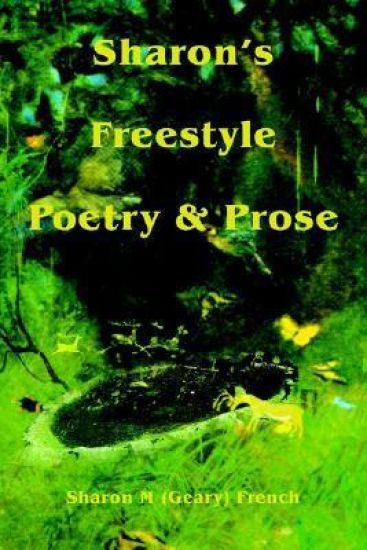
Sharon's Freestyle Poetry & Prose

Sharon's Freestyle Poetry & Prose

Sharon M French

iUniverse
2002
pokkari
For my unique and rare style of writing poetry, I received an "Editor's Choice Award" from the International Library of Poetry. What's more amazing is how my poetry writing came about and it is not just on one subject, but many. In order to find out, you will have to take a deeper look into the book and read a little about my life. There is poetry on: Inspirational, Animal's, Bird's, Insects, Nature, Patriotism and more. Some are about depression, that I thought of leaving it out at one time. But decided to include this part because it does happen in real life. People I have met on-line have given me several compliments about my writings. Some say I should make a "Children's Book" with some of the poems. One Mother said she read "Busy, Busy Bees" to her daughter, and she started singing it around the house.