

Kirjahaku
Etsi kirjoja tekijän nimen, kirjan nimen tai ISBN:n perusteella.
1000 tulosta hakusanalla Smita Joseph
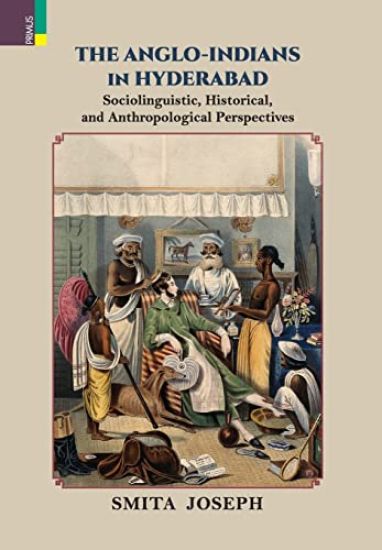
The book gives a fascinating account of how the Anglo-Indians of Hyderabad maintain their ethnic identity through the use of proper names and slang. The data on slang and names has been elicited through a combination of interview, survey and ethnographic methods.The relationship between ethnicity and language has been by explored by comparing the usage of slang across three age groups, and also by comparing the usage of proper names across three decades. The status of slang and names as ethnic markers has been examined through the use of statistics.The book gives new directions in the field of socio-onomastics by discussing the various strategies by which Christian names have adapted according to their ecology in the Indian context.Full of new insights, the book is a recommended reading for students and researchers in the area of linguistics, history and anthropology. It would also appeal to the Anglo-Indians, and the Syrian Christians of Kerala whose names were compared with the Anglo-Indians of Hyderabad. Since the author has avoided jargons and technical terms, the book would also appeal to the general population.
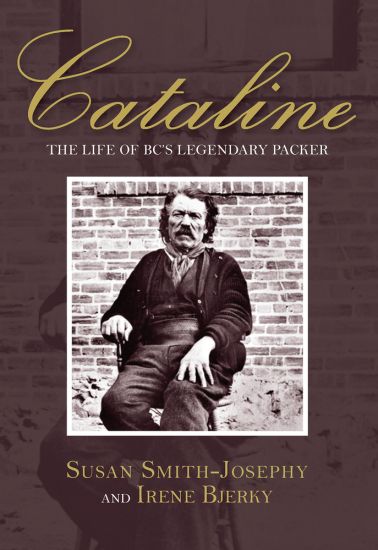
Gold rushes, telegraph lines and railroads, Smith-Josephy reaches into BC's pioneering past to share intriguing stories featuring famous mule train packer, Jean "Cataline" Caux. In the early days of British Columbia, pack trains of horses or mules were a lifeline for the early pioneer population. Explorers, trappers, traders, miners, merchants, workers and settlers and relied on them for the materials needed to live and work. Packers were also vital to the building of railways, roads, and telegraph lines. Pack mule train drivers followed trails created over the years by the First Nations people and later by the fur trading companies, to travel between settlements in the rugged backcountry. The most famous of all the men who ran the pack trains was Jean Caux, who would enter British Columbia's history as the legendary packer "Cataline". Cataline came to North America from Southern France with his brother, eventually landing in British Columbia in 1858. Having learned the trade from Mexican packers in California and Washington, Cataline established a pack train operation that grew to be one of the most well-known and reliable in the province, including securing contracts with the government and Hudson's Bay Company. Cataline witnessed many of the pioneering events that shaped the province, including the Fraser River Gold Rush of 1858, the Cariboo Gold Rush of 1862, the coming of the railway to Ashcroft in 1886, and the Grand Trunk Pacific to Hazelton in 1912. Cataline also crossed paths with significant historical figures such as Judge Matthew Begbie, famed anthropologist James Teit, and Amelia York (ne e Paul, daughter of Chief Kowpelst (Telxkn) of the Nlaka'pamux people of Spuzzum), a world-famous First Nations basketmaker, with whom Cataline had two children. In Cataline, the legend and life of the man has been remembered in the words of his friends, his family, and those who chronicled the times and development of the province.
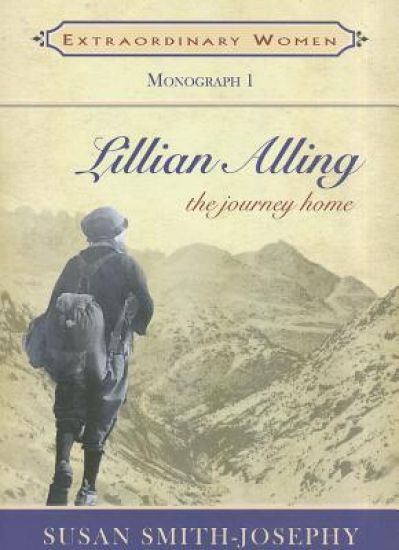
In 1926, Lillian Alling, a European immigrant, set out on a journey home from New York. She had little money and no transportation, but plenty of determination. In the three years that followed, Alling walked all the way to Dawson City, Yukon, crossing the North American continent on foot. She walked across the Canadian landscape, weathering the baking sun and freezing winter, crossed the rugged Rocky Mountains and hiked the untested wilderness of British Columbia and the Yukon. Finally, on a make-shift raft, she sailed alone down the Yukon River from Dawson City all the way to the Bering Sea. Lillian Alling is a legend. She has been the subject of novels, plays, epic poems, an opera and more tall tales than can be remembered. Her life has been subjected to speculation, fiction and exaggeration. But as legendary as she may be, the true story of Lillian Alling has never been told. "The Mystery Woman", as she came to be known, is as intriguing to us now as she was to those she met on her trek.Lillian's name lives on in the folk tales of British Columbia, the Yukon and Alaska, but her life leading up to her journey and what waited for her at home in Eastern Europe still remains a shadowy mystery. This is a collection of personal documents, first-hand recollections, family tales and archival research that provide tantalising new clues to Lillian's story. Smith-Josephy places Lillian firmly in the context of history and among the cast of unique and colourful characters she met along her journey.

Junior High School Mathematics, Book III
David Eugene Smith Joseph CL Wentworth
Creative Media Partners, LLC
2019
pokkari

Junior High School Mathematics, Book I
David Eugene Smith Joseph CL Wentworth
Creative Media Partners, LLC
2019
pokkari
Mormonism's founder, Joseph Smith, claimed to have translated ancient scriptures. He dictated an American Bible from metal plates reportedly buried by ancient Jews in a nearby hill, and produced an Egyptian "Book of Abraham" derived from funerary papyri he extracted from a collection of mummies he bought from a traveling showman. In addition, he rewrote sections of the King James Version as a "New Translation" of the Bible. Smith and his followers used the term translation to describe the genesis of these English scriptures, which remain canonical for the Church of Jesus Christ of Latter-day Saints. Whether one believes him or not, the discussion has focused on whether Smith's English texts represent literal translations of extant source documents. On closer inspection, though, Smith's translations are far more metaphysical than linguistic. In Joseph Smith's Translation, Samuel Morris Brown argues that these translations express the mystical power of language and scripture to interconnect people across barriers of space and time, especially in the developing Mormon temple liturgy. He shows that Smith was devoted to an ancient metaphysics--especially the principle of correspondence, the concept of "as above, so below"--that provided an infrastructure for bridging the human and the divine as well as for his textual interpretive projects. Joseph Smith's projects of metaphysical translation place Mormonism at the productive edge of the transitions associated with shifts toward "secular modernity." This transition into modern worldviews intensified, complexly, in nineteenth-century America. The evolving legacies of Reformation and Enlightenment were the sea in which early Mormons swam, says Brown. Smith's translations and the theology that supported them illuminate the power and vulnerability of the Mormon critique of American culture in transition. This complex critique continues to resonate and illuminate to the present day.
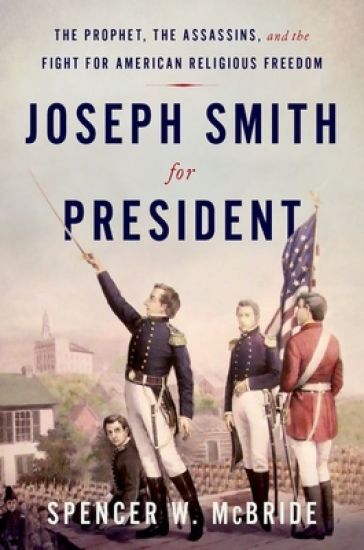
By the election year of 1844, Joseph Smith, the controversial founder of the Church of Jesus Christ of Latter-day Saints, had amassed a national following of some 25,000 believers. Nearly half of them lived in the city of Nauvoo, Illinois, where Smith was not only their religious leader but also the mayor and the commander-in-chief of a militia of some 2,500 men. In less than twenty years, Smith had helped transform the American religious landscape and grown his own political power substantially. Yet the standing of the Mormon people in American society remained unstable. Unable to garner federal protection, and having failed to win the support of former president Martin Van Buren or any of the other candidates in the race, Smith decided to take matters into his own hands, launching his own bid for the presidency. While many scoffed at the notion that Smith could come anywhere close to the White House, others regarded his run—and his religion—as a threat to the stability of the young nation. Hounded by mobs throughout the campaign, Smith was ultimately killed by one—the first presidential candidate to be assassinated. Though Joseph Smith's run for president is now best remembered—when it is remembered at all—for its gruesome end, the renegade campaign was revolutionary. Smith called for the total abolition of slavery, the closure of the country's penitentiaries, and the reestablishment of a national bank to stabilize the economy. But Smith's most important proposal was for an expansion of protections for religious minorities. At a time when the Bill of Rights did not apply to individual states, Smith sought to empower the federal government to protect minorities when states failed to do so. Spencer W. McBride tells the story of Joseph Smith's quixotic but consequential run for the White House and shows how his calls for religious freedom helped to shape the American political system we know today.

Joseph Smith, Jr.
Oxford University Press Inc
2009
nidottu
Mormon founder Joseph Smith is one of the most controversial figures of nineteenth-century American history, and a virtually inexhaustible subject for analysis. In this volume, fifteen scholars offer essays on how to interpret and understand Smith and his legacy. Including essays by both Mormons and non-Mormons, this wide-ranging collection is the only available survey of contemporary scholarly opinion on the extraordinary man who started one of the fastest growing religious traditions in the modern world.

Renowned historian Richard Lyman Bushman presents a vibrant history of the objects that gave birth to a new religion. According to Joseph Smith, in September of 1823 an angel appeared to him and directed him to a hill near his home. Buried there Smith found a box containing a stack of thin metal sheets, gold in color, about six inches wide, eight inches long, piled six or so inches high, bound together by large rings, and covered with what appeared to be ancient engravings. Exactly four years later, the angel allowed Smith to take the plates and instructed him to translate them into English. When the text was published, a new religion was born. The plates have had a long and active life, and the question of their reality has hovered over them from the beginning. Months before the Book of Mormon was published, newspapers began reporting on the discovery of a "Golden Bible." Within a few years over a hundred articles had appeared. Critics denounced Smith as a charlatan for claiming to have a wondrous object that he refused to show, while believers countered by pointing to witnesses who said they saw the plates. Two hundred years later the mystery of the gold plates remains. In this book renowned historian of Mormonism Richard Lyman Bushman offers a cultural history of the gold plates. Bushman examines how the plates have been imagined by both believers and critics--and by treasure-seekers, novelists, artists, scholars, and others--from Smith's first encounter with them to the present. Why have they been remembered, and how have they been used? And why do they remain objects of fascination to this day? By examining these questions, Bushman sheds new light on Mormon history and on the role of enchantment in the modern world.
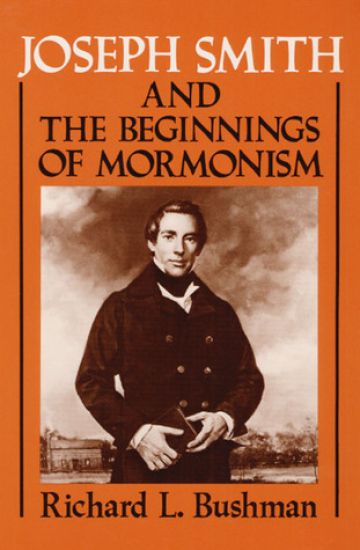
Joseph Smith and the Beginnings of Mormonism
Richard L. Bushman
University of Illinois Press
1987
nidottu
Winner of the David Woolley Evans and Beatrice Evans Biography Award and a History Book Club selection, 1985. The core of Mormon belief was a conviction about actual events. The test of faith was not adherence to a certain confession of faith but belief that Christ was resurrected, that Joseph Smith saw God, that the Book of Mormon was true history, and that Peter, James, and John restored the apostleship. Mormonism was history, not philosophy. It is as history that Richard L. Bushman analyzes the emergence of Mormonism in the early nineteenth century. Bushman, however, brings to his study a unique set of credentials--he is both a prize-winning historian and a faithful member of the Latter-day Saints church. For Mormons and non-Mormons alike, his book provides a very special perspective on an endlessly fascinating subject. Building upon previous accounts and incorporating recently discovered contemporary sources, Bushman focuses on the first twenty-five years of Joseph Smith's life--up to his move to Kirtland, Ohio, in 1831. Bushman shows how the rural Yankee culture of New England and New York--especially evangelical revivalism, Christian rationalism, and folk magic--both influenced and hindered the formation of Smith's new religion. Mormonism, Bushman argues, must be seen not only as the product of this culture, but also as an independent creation based on the revelations of its charismatic leader. In the final analysis, it was Smith's ability to breathe new life into the ancient sacred stories and to make a sacred story out of his own life which accounted for his own extraordinary influence. By presenting Smith and his revelations as they were viewed by the early Mormons themselves, Bushman leads us to a deeper understanding of their faith.

This masterful study charts the extensive common ground and telling differences between two widely separated coal-mining communities: Lanarkshire, in the Clyde Valley of southwest Scotland, and the northern Illinois coalfield that became a prime destination for skilled Scottish migrant miners in the mid-nineteenth century. Challenging the prevailing exceptionalist paradigm of labor history, John Laslett examines the social, economic, and political context of each of these communities in generous detail. He traces the progressive heightening of class consciousness as the coal industry evolved from skilled hand labor to an increasingly mechanized extraction process and the escalating hostility between miners and mineowners as their interests split along class lines. Examining the rise of militant industrial unionism in both areas, Laslett provides a sophisticated explanation of the American and Scottish miners' divergent approaches to collectivist solutions. Based on a profound knowledge of both communities, Colliers across the Sea tells a compelling story of industrial transformation's human costs, of conflict and greed, and of democratic aspirations and community.
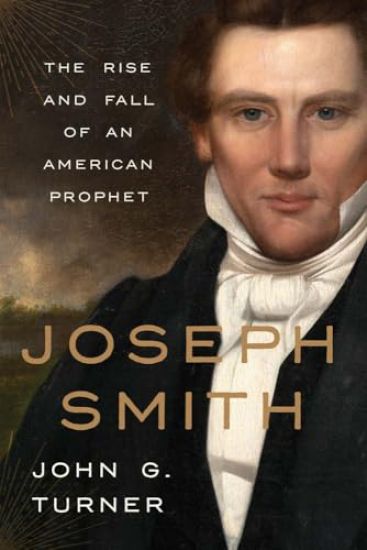
From an award-winning biographer, a riveting and deeply researched portrait of Mormonism’s charismatic founder Joseph Smith Jr. (1805–1844) was one of the most successful and controversial religious leaders of nineteenth-century America, publishing the Book of Mormon and starting what would become the Church of Jesus Christ of Latter-day Saints. He built temples, founded a city-state in Illinois, ran for president, and married more than thirty women. This self-made prophet thrilled his followers with his grand vision of peace and unity, but his increasingly grandiose plans tested and sometimes shattered their faith. In this vivid biography, John G. Turner presents Smith as a consummate religious entrepreneur and innovator, a man both flawed and compelling. He sold books, land, and merchandise. And he relentlessly advanced doctrines that tapped into anxieties about the nature and meaning of salvation, the validity of miracles, the timing of Christ’s second coming, and the persistence of human relationships for eternity. His teachings prompted people to gather into communities, evoking fierce opposition from those who saw those communities as theocratic threats to republicanism. With insights from newly accessible diaries, church records, and transcripts of sermons, Turner illuminates Smith’s stunning trajectory, from his beginnings as an uneducated, impoverished farmhand to his ultimate fall at the hands of a murderous mob, revealing how he forged a religious tradition that has resonated with millions of people in the United States and beyond.
Joseph Smith: The Rise and Fall of an American Prophet
John G. Turner
YALE UNIVERSITY PRESS
2026
nidottu
From an award-winning biographer, a riveting and deeply researched portrait of Mormonism's charismatic founder Joseph Smith Jr. (1805-1844) was one of the most successful and controversial religious leaders of nineteenth-century America, publishing the Book of Mormon and starting what would become the Church of Jesus Christ of Latter-day Saints. He built temples, founded a city-state in Illinois, ran for president, and married more than thirty women. This self-made prophet thrilled his followers with his grand vision of peace and unity, but his increasingly grandiose plans tested and sometimes shattered their faith. In this vivid biography, John G. Turner presents Smith as a consummate religious entrepreneur and innovator, a man both flawed and compelling. He sold books, land, and merchandise. And he relentlessly advanced doctrines that tapped into anxieties about the nature and meaning of salvation, the validity of miracles, the timing of Christ's second coming, and the persistence of human relationships for eternity. His teachings prompted people to gather into communities, evoking fierce opposition from those who saw those communities as theocratic threats to republicanism. With insights from newly accessible diaries, church records, and transcripts of sermons, Turner illuminates Smith's stunning trajectory, from his beginnings as an uneducated, impoverished farmhand to his ultimate fall at the hands of a murderous mob, revealing how he forged a religious tradition that has resonated with millions of people in the United States and beyond.


Joseph Smith Defended, and His Divine Mission Vindicated. an Answer to the Attacks of His Enemies, Religious and Political
J W Peterson
Trieste Publishing
2018
nidottu


Joseph Smith and the Origins of The Book of Mormon, 2d ed.
David Persuitte
McFarland Co Inc
2000
pokkari
Just as a growing interest in millennialism at the turn of this century has rejuvenated religious debate and questions concerning the fate of the world, so did Mormonism develop from millennial enthusiasm early in the nineteenth century. Joseph Smith, the founder of Mormonism, and a provocative, even controversial figure in history, declared that he had been given the authority to restore the true church in the latter days. The primary source of Smith's latter-day revelation is The Book of Mormon, and to fully understand his role as the founder of the Mormon faith, one must also understand The Book of Mormon and how it came to be. Unfortunately, the literature about Joseph Smith and The Book of Mormon is permeated with contradiction and controversy. In the first edition of this impressive work, David Persuitte provided a significant amount of revealing biographical information about Smith that resolved many of the controversies concerning his character. He also presented an extensive comparative analysis positing that the probable conceptual source for The Book of Mormon was a book entitled View of the Hebrews; or the Tribes of Israel in America, which was written by an early New England minister named Ethan Smith. Now in an expanded and revised second edition incorporating many new findings relating to the origin of The Book of Mormon, Mr. Persuitte's book continues to shed much new light on the path Joseph Smith took toward founding the Church of Jesus Christ of Latter-day Saints.

Joseph Smith's United Order: A Non-Communalistic Interpretation
Kent W. Huff
Theological Thinktank
2020
nidottu
Socialism was never a part of Mormon doctrine, but internal and external proponents of socialism have nonetheless been able convince many members (and outsiders), through perpetuating myths and legends, that it has been or is a part of church doctrine. The Mormon Church (The Church of Jesus Christ of Latter-day Saints) was organized in 1830 and immediately began moving westward from New York to Kirtland, Ohio, and Independence, Missouri, and, later, from about 1838 to 1845, to Nauvoo, Illinois. The next move was to Utah beginning in 1847. Numerous cooperative efforts were necessary at each stage to help the poorer and weaker members of the Church move along with the others. Some of its first converts had been members of communal societies before their contacts with the Mormons. Also, the enemies of the Church found an untrue but effective epithet against "those sheep-stealing Mormons" by calling their new organization "common stock" communalism or socialism, a damning charge in the political atmosphere of the time.Joseph Smith went to great efforts to speak and write against this falsehood, declaring that it had nothing to do with the church. His successor Brigham Young continued the practice of denouncing this false claim, declaring that such a doctrine could destroy the church, especially in its precarious Utah setting. Nonetheless, it appears that the external enemies of the church and some of its politically leftwing members have, by sheer weight of repetition, made it part of the unofficial lore of the church.The term "united order" came from the "united firm," one name for the early church business partnerships. The term "united order" also comes from the Brigham Young era of the church's history, and needs to be further explained in that unique context, as is done in the subsequent book, Brigham Youngs United Order. With no powers of self-government granted the Mormons for the first 22 years of their time in Utah, some unusual and creative temporary substitutes were invented.The official history of the church makes it clear that various practical methods were used to solve problems as they arose, many involving cooperation, as one might expect of any tight-knit religious body, but none required any doctrinaire overriding of the principle of private ownership of property, as the centralizing socialists would like to see. For one thing, that would be severely inconsistent with the constitution of the United States.In the first 8 years of the church's existence, it was not legally possible to organize it as a corporation as it is today. As an unsatisfactory but necessary stop-gap measure, a common-law business partnership was organized to carry on church business of all kinds. (The partners also constituted a temporary Quorum of the Twelve for ecclesiastical purposes.) In the normal accounting practices of partnerships, all partners are assumed to be agents of all the others, and also to share equally in the both the liabilities and profits of the business, including being personally liable for all the partnership's debts. There is thus no escape from full liability, but the use of silent (unknown) partners can give those unknown partners a small amount of financial protection. It is strange to see that misunderstandings of the British common law (and misunderstandings of many other events and circumstances as well) have been used in political and polemical efforts to justify pressing socialism into the canon of church doctrine, but socialism (centralized ownership and control of nearly everything) can never be part of a value system that emphasizes individual responsibility. It is no accident that Utah is mostly a conservative, Republican state. This apparent inconsistency deep within the doctrines of the church will likely lead to a whole set of difficulties as the church grows in size and influence. At some point this issue must be cleared up, and this book should help.
