Kirjojen hintavertailu. Mukana 11 244 527 kirjaa ja 12 kauppaa.

Kirjahaku

Etsi kirjoja tekijän nimen, kirjan nimen tai ISBN:n perusteella.

1000 tulosta hakusanalla Stephen Collis

Phyllis Webb and the Common Good

Phyllis Webb and the Common Good

Stephen Collis

Talonbooks
2007
pokkari
Phyllis Webb is a poet around whom archetypes tend to cluster: the reclusive artist; the distraught, borderline suicidal Sapphic woman poet. While on the surface she seems someone supremely disinterested in the public sphere, argues Stephen Collis in this brilliant and revealing new celebration of her work, Webb is no domestic, as a creator or a critic. Her work sweeps into the wilds of politics, philosophy, economics and her slim books speak volumes. If there is a sense of abandoned projects hovering as ghosts on the margins of her books it is a purposeful abandonment, an anarchist's abdication of positions of power and authority. Webb's work points steadily towards the idea that the poem is not a commodity to be hoarded, but a response-ability to be shared, an aspect of the commons and our "common good." The gradual dissolution of the lyric I traceable over the course of her writing career mirrors both the development of avant-garde poetics across the century and the anarchist inflected notion of the poem as a common property --an effect of language (the commons) and not the self (the private).In this sense Collis reads Webb's poetry as it conjoins (and simultaneously diverges from) various twentieth-century literary movements and moments--it is this tension in her work which makes Webb a modernist whose writing nevertheless provides an opening into postmodernism. Her work constructs bridges across numerous conceptual divides: the (porous) boundaries between poetry and painting, poetry and politics, modernism and postmodernism, the lyric and the long poem, the ontologies of the self and the other. The changes across decades of Webb's writing, Collis argues, mirror changes in the approaches of the twentieth-century avant-garde to questions of responsibility and abstraction, locating her work in the Image-Nation of radical, philosophically engaged poetries that have flourished throughout twentieth-century North America.
On the Material

On the Material

Stephen Collis

Talonbooks
2010
pokkari
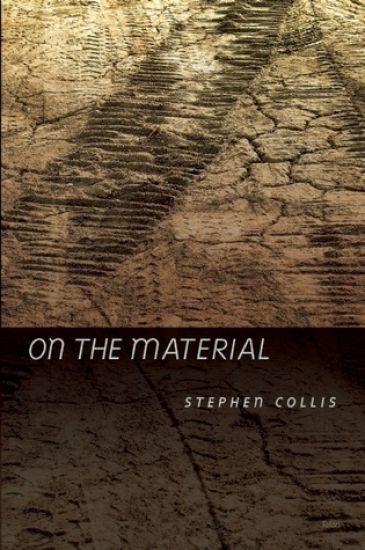
Structured in three parts, On the Material is a meditation on language, geography, socio-economics and the body, moving from the glut of fossil-fuelled consumer excess to the materiality of a single book. Composed almost entirely of quatrains (each page being comprised of four four-line stanzas) and written while travelling through North America in 2008, "4 x 4" navigates issues of space and movement in the global age. As economies crumble, ecosystems fail and peak oil approaches, Collis records the production of a disarticulation of social discourse that our consumer society has generated: "After all we made money out of matter here / Now condos shield us from the computer hum / Of on-line trading and wars ?ash on ?at screens / As 4 x 4s cool and ping mud covered in double garages." In its bridging second section, "I Fought the Lyric and the Lyric Won," the desire to express wins out over the desire to possess. Beauty, contemplation and human communication seem to have abandoned the world, and their absence from the everyday has re-engaged the poet's struggle with language--has left a need to reinvent human discourse and its attendant relations.The third section, "Gail's Books," is a sequence of poems in memory of Stephen Collis's sister, Gail Tulloch. A month after Gail's death from cancer in 2002, a ?re destroyed her house, removing every material reminder of her from the earth. All that remained was one book recovered from a pool of water in the ruins after the ?re. Dried in the air, this book, and those Collis had previously borrowed from his sister, become a way for the poet to read back into the elemental heart of absence and loss--the "material" of the books displacing, and in some way recovering, how language holds the materiality of the physical world.
Dispatches from the Occupation

Dispatches from the Occupation

Stephen Collis

Talonbooks
2012
pokkari
Somewhere at the core of almost every intellectual discipline is an attempt to explain change -- why and how things change, and how we negotiate these transformations. These are among the most ancient of philosophical questions. In this collection of essays, award-winning poet Stephen Collis investigates how the Occupy movement grapples with these questions as it once again takes up the cause of social, economic, and political change. Dispatches from the Occupation opens with a meditation on the Occupy movement and its place in the history of recent social movements. Strategies, tactics, and the experiments with participatory democracy and direct action are carefully parsed and explained. How a movement for social, economic, and political change emerges, and how it might be sustained, are at the heart of this exploration. Comprising the second section of the book is a series of "dispatches" from the day-to-day unfolding of the occupation in Vancouver's city centre as the author witnessed it -- and participated in it -- first hand: short manifestos, theoretical musings, and utopian proposals.The global Occupy movement has only just begun, and as such this book presents an important first report from the frontlines. Finally, Dispatches from the Occupation closes with a reflection on the city of Rome, written in the shadows of the Pantheon (the oldest continually-in-use building in the world). In something of a long prose-poem, Collis traces the trope of Rome as the "eternal (unchanging?) city," from its imperial past (as one of the "cradles of civilization") to the rebirth of Roman republicanism during the French Revolution and the era of modern social movements -- right up to the explosive riots of October 2011. Woven throughout is the story of the idea of change as it moves through intellectual history.
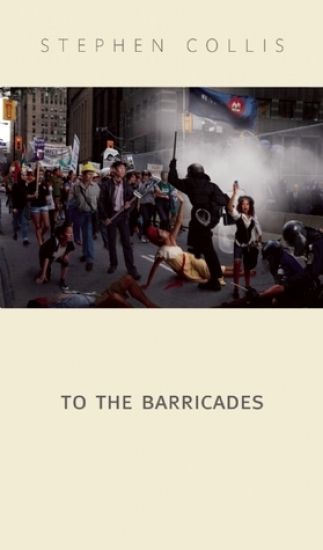
To the Barricades

To the Barricades

Stephen Collis

Talonbooks
2012
pokkari
To the Barricades moves back and forth between historical and contemporary scenes of revolt, from nineteenth-century Parisian street barricades to twenty-first-century occupations and street marches, shifting along the active seam between poetry and revolution. Avant-garde technique is donated to lyric ends, forming an anti-archive of the revolutionary record where words are bricks hurriedly thrown up as linguistic "barricades." Stephen Collis is the author of five books of poetry, including the Dorothy Livesay Poetry Prize--winning On the Material and three titles in the ongoing "Barricades Project." An activist and social critic, his writing on the Occupy movement is collected in Dispatches from the Occupation (Talonbooks, 2012).
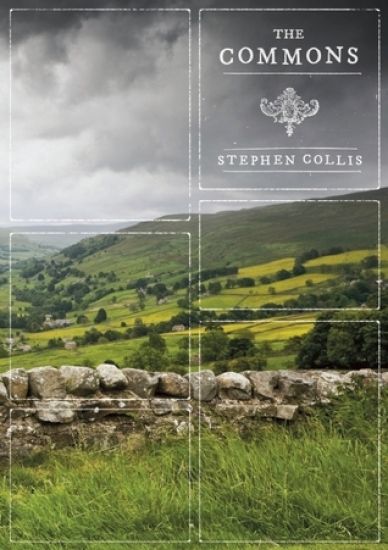
The Commons

The Commons

Stephen Collis

Talonbooks
2014
pokkari
Between the sixteenth and nineteenth centuries the majority of the English common lands were enclosed, by decree and by force, depriving communities of their independence and self-sufficiency. The resistance to capitalism's "primitive accumulation," registered in recurring peasant revolts and nighttime attacks on hedges and fences, failed to stem the tide of what we now call "privatization" -- but it spilled over into Romanticism's own advocacy of a kind of literary commons. Underground in poetry since the nineteenth century, the fight against enclosure resurfaces today amidst continuing accumulation and a renascent sense of the commons under globalization. In The Commons we wander the English countryside with the so-called mad peasant poet John Clare, pick wild fruit with Henry David Thoreau, and comb the Lake District with a host of authors of Romantic guides and tours, undermining William Wordsworth's proprietary claim to the region. Somewhere along the way Robert Frost's wall falls down, the Zapatistas make their appearance, and Gerrard Winstanley reclaims the earth as a "Common Treasury." This second edition includes the essay "Of Blackberries and the Poetic Commons."Stephen Collis is a climate justice activist and a professor of poetry at Simon Fraser University.
Once in Blockadia

Once in Blockadia

Stephen Collis

Talon Books,Canada
2016
pokkari
In this collection of long and serial poems, Stephen Collis returns to the commons, and to his ongoing argument with romantic poet William Wordsworth, to rethink the relationship between human beings and the natural world in the Anthropocene Era. Collis circumambulates Tar Sands tailings ponds and English lakes -- and stands in the path of pipelines, where on Burnaby Mountain in 2014 he was sued for $5.6 million by energy giant Kinder Morgan, whose lawyers glossed Collis's writing in court by noting that "underneath the poetry is a description of how the barricade was constructed." Called by Eden Robinson "the most dangerous poet in Canada," in Once in Blockadia Collis is in search of how we can continue to resist -- as we only begin to understand the extent of our complicity and the depths of the predicament we are in. The bulk of Once in Blockadia is made up of two long sequences evolving from found texts, and two long poems that engage with Wordsworth. The two found texts relate to two blockades Collis was involved in: one blocking the flood of commodities into the Port of Vancouver, and the other blocking the potential flood of oil out of Vancouver.In both cases the poetry and "notes" that follow offer glimpses into the documentary "fact" of events, the resistance behind the blockade, the reasons for them, and the complex of resistant affects driving the events. The two Wordsworthian long poems involve two walks -- one in the Alberta Tar Sands, and the other in Wordsworth's beloved Grasmere. In the first instance Wordsworthian description is applied to the impossible to aestheticize Tar Sands; in the second, Wordsworth's own beloved home is revealed not as an alternative to the destruction of extraction, but as conditioned, surrounded, and structured by it.
Almost Islands

Almost Islands

Stephen Collis

Talonbooks
2018
pokkari
Almost Islands is a memoir of Collis's friendship with and regular visits to legendary poet Phyllis Webb--now in her nineties and long enveloped in the silence which followed her last published book in 1990--as well as an extended meditation on literary ambition and failure, poetry and politics, choice and chance, place, colonization, and climate change--the struggle that is writing, and the end of writing. "I go to see her because she is poetry's old crone and I am seeking. I go to her--usually three, four times a year--because it is a small ministration I can perform for her, and for her poetry, as she slowly reaches into the finite--a long, slow embrace of nothing.... If living is a process of learning how to die, then is writing a process of learning how to stop writing? I go in search of lost words, in search of the hoped for defence against the loss of words, drawn to the shaping sounds of fate and mortality." This is a book of poetic, political, and philosophical digressions--a book that weaves numerous themes together in a non-linear fashion. In part, it makes a literary argument: that Webb's turn, in the 1970s, from a failed poet about a European radical to the indigenous artworks literally etched into the rocks of her local environment has both literary and political meaning and importance. Beyond this, Collis seeks to build upon and extend Webb's expansion of her "poetic" sense of the political, by proposing a political agent, the "biotariat," that is both human and more than human--this after following as many pathways as he can through Webb's own reading and thought. Finally, this is a book obsessed with the problem of Webb's not writing, its implications for a writer (me) who--compulsively--probably writes too much, and the wider social, political, and world historical implications of withdrawal, self-silencing, and not-doing.
A History of the Theories of Rain

A History of the Theories of Rain

Stephen Collis

Talon Books,Canada
2021
pokkari
Approaching the unfolding climate catastrophe conceptually through its dissolution of the categories of "man-made" and "natural" disasters, A History of the Theories of Rain explores the strange effect our current sense of impending doom has on our relation to time. How do we go on with our daily lives while a disastrous future impinges upon every moment? Collis provides no easy answers and offers no simple hope. What his book does is probe our current state of anxiety with care, humour, and an unflinching gazing into the darkness we have gathered around ourselves. All the while - in song, in lyrical outbursts, and in philosophical and speculative excursions - it asks what resistance to the tenor of these out-of-joint times might look like. In doing so it explores the links between the climate's "tipping points" and the borders which constrain those who are fleeing the disaster - including the plants, animals, and peoples forcibly displaced by a radically altered world ecology. "Can you walk away from a climate?" Maybe. But "in the future / everyone will have their fifteen minutes of blame."
The Middle

The Middle

Stephen Collis

TALON BOOKS,CANADA
2025
pokkari
Written in the midst of wildfires and atmospheric rivers, The Middle extends award-winning poet Stephen Collis's investigation of threatened climate futures into a poetics of displacement and wandering. The fulcrum of a trilogy begun with A History of the Theories of Rain, The Middle hikes the shifting treelines of our warming world to reflect on the way all life is in motion, fleeing the rising heat. Taking up the human-plant relationship in particular, each of The Middle's linked sequences finds itself somewhere on a mountain, in the company of trees (or the ghosts of now absent trees), climbing in altitude, or heading north. Across the poem's three sections, Collis employs various forms of citational practice, rooted in his long engagement with the idea of a "poetic commons" where writing is made out of what one is reading. This practice is a kind of entanglement, a form of literary seed dispersal, where words are blown, carried, and scattered from one textual field to another, akin to the mammals, fish, crustaceans, reptiles, rodents, birds, insects, plants, grasses, and trees in motion on our dangerously heating planet.
Decomp

Decomp

Stephen Collis; Jordan Scott

Coach House Books
2013
pokkari
Poets Stephen Collis and Jordan Scott left copies of Charles Darwin's On the Origin of Species to decay in five distinct ecosystems in British Columbia. A year later, they photographed what remained, reading poetry into nature's "rewriting" process and documenting the gorgeous detritus in Decomp, a long poem in prose and color photographs. Darwin is an eye amidst graphed genera seeing the web it is woven thereof. A matted scrap of printed material, shit, soil and leaf rot--all dried, bleached and curled up at small edges. Stephen Collis is the author of four books of poetry and a collection of essays, Dispatches from the Occupation. Jordan Scott is the author of Silt and Blert, which explores the poetics of stuttering.
Refugee Tales

Refugee Tales

Ali Smith; Abdulrazak Gurnah; Chris Cleave; Marina Lewycka; Jade Amoli-Jackson; Patience Agbabi; Inua Ellams; Stephen Collis; Michael Zand; Dragan Todorovic

Comma Press
2016
nidottu
Two unaccompanied children travel across the Mediterranean in an overcrowded boat that has been designed to only make it halfway across... A 63-year-old man is woken one morning by border officers 'acting on a tip-off' and, despite having paid taxes for 28 years, is suddenly cast into the detention system with no obvious means of escape... An orphan whose entire life has been spent in slavery - first on a Ghanaian farm, then as a victim of trafficking - writes to the Home Office for help, only to be rewarded with a jail sentence and indefinite detention... These are not fictions. Nor are they testimonies from some distant, brutal past, but the frighteningly common experiences of Europe's new underclass - its refugees. While those with "citizenship" enjoy basic human rights (like the right not to be detained without charge for more than 14 days), people seeking asylum can be suspended for years in Kafka-esque uncertainty. Here, poets and novelists retell the stories of individuals who have direct experience of Britain's policy of indefinite immigration detention. Presenting their accounts anonymously, as modern day counterparts to the pilgrims' stories in Chaucer's Canterbury Tales, this book offers rare, intimate glimpses into otherwise untold suffering.
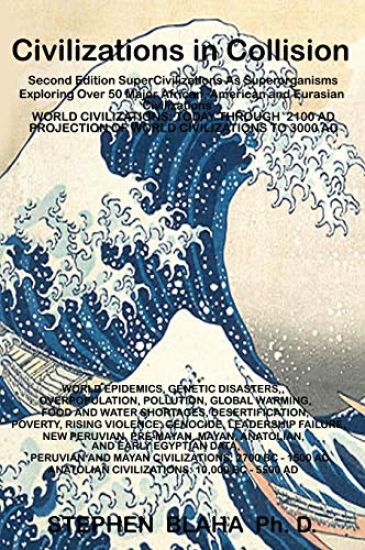
Civilizations in Collision

Civilizations in Collision

Stephen Blaha

Pingree-Hill Publishing
2020
sidottu
This book presents the Second Edition theory of SuperCivilizations-civilizations that have a regular series of rises and falls. The cover lists the major topics. The First edition of SuperCivilizations has a detailed description of SuperCivilizations to which the reader is referred. See SuperCivilizations: as Superorganisms. The book presents a view of current times as envisioned 5 - 10 years ago and projects the future of civilizations to 3000 AD. Over 50 major African, American and Eurasian civilizations are described in detail.
Michael Psellus on the Operation of Dæmons

Michael Psellus on the Operation of Dæmons

Stephen Skinner; Marcus Collisson

GOLDEN HOARD PRESS LTD
2011
nidottu
Michael Constantine Psellus (1018-1178 C.E) was one of the most notable writers and philosophers of the Byzantine era. The Byzantine domain was effectively the eastern Greek speaking part of the Roman Empire centred on Byzantium (Constantinople, modern Istanbul) which split off from the Latin West in 364 C.E. Its intellectual legacies helped lay the foundations for the Italian Renaissance. It was the fall of Constantinople in 1453 that released a tide of Greek reading scholars into Western Europe, particularly Venice. With them came much of the magical and Hermetic knowledge which the Greeks in their turn had inherited from the Egyptians. The Key of Solomon was one such text. It is therefore essential to the understanding of such magical texts that one understands exactly how the Byzantines understood the nature of daemons. Psellus forms the bridge between the ancient world, Byzantine Greek, and the grimoire conception of the nature of daemons. Hailing from Constantinople, Psellus' career was an illustrious and practical one, serving as a political advisor to a succession of emperors, playing a decisive role in the transition of power between various monarchs. He became the leading professor at the newly founded University of Constantinople, bearing the honorary title, 'Consul of the Philosophers'. He was the driving force behind the university curriculum reform designed to emphasise the Greek classics, especially Homeric literature. Psellus is credited with the shift from Aristotelian thought to the Platonist tradition, and was adept in politics, astronomy, medicine, music, theology, jurisprudence, physics, grammar and history.
Crimson Dragon

Crimson Dragon

Stephen Collier

TROUBADOR PUBLISHING
2022
nidottu
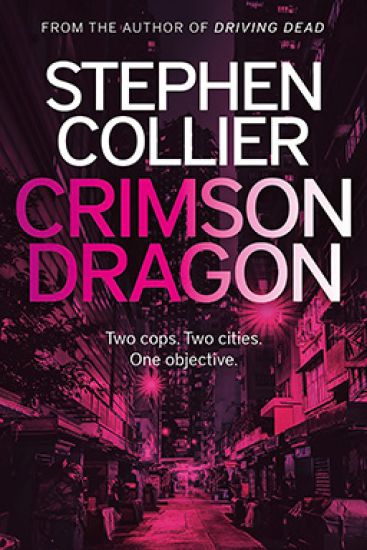
Murder. Abduction. Two cities. Two cops… Eighteen months ago. Chinatown, London. A police raid goes disastrously wrong. People die. Today, those police officers involved in the swoop are dead. Serial, Purple One Five, are all dead, except the serial commander – Sergeant Brian Gibson. In Hong Kong, a woman’s body is discovered in a seedy downtown Wan Chai hotel. Detective Inspector of Police Mandy Lee must determine who she is and who killed her. Lee identifies the woman as Andrea Ventress-Gibson. Lee’s investigation leads her to the UK, but Andrea’s new husband, Sergeant Brian Gibson, is missing – whereabouts unknown. Meanwhile, in the UK, Road Policing Officer PC Ed Roberts discovers a cyber-attack on a police database. But he’s ordered to chaperone D. I. Lee. As a team they soon find that their enquiries are linked. Against orders, Roberts follows Lee to London’s Chinatown, where they come into direct conflict with a Hong Kong underworld organisation - Crimson Dragon. And confirms Lee’s suspicions her estranged step-brother is involved. Can Lee and Roberts discover Gibson’s whereabouts and stop Crimson Dragon?
Blind Murder

Blind Murder

Stephen Collier

TROUBADOR PUBLISHING
2022
nidottu
In 1994 probationary PC’s Jim Kingsfield and Jake Jordan attend their first murder where Bingham Tyler’s step-mother is found in a house on a Northampton estate. Some think Tyler did it. Eighteen years later, Detective Inspector Jim Kingsfield, now married to forensic pathologist, Kirsty, is unaware that he and his wife are being targeted by Tyler, who’s lust for revenge will have explosive and life changing consequences for them all. Meanwhile Jake Jordan, now a traffic sergeant, is thrown into this revenge fuelled mix, putting his job to the test, and discovering his marriage is on the rocks. Tyler is a psychopath. Tyler wants Kingsfield dead for his actions all those years ago. Will he get his revenge?
The Song of the Stork

The Song of the Stork

Stephan Collishaw

Legend Press Ltd
2017
nidottu
‘Stephan Collishaw takes your hand and leads you into a world of tragic beauty, inspiring strength and delicate kindness in the midst of horror’ Aiste DiržiuteFifteen-year-old Yael is on the run. The Jewish girl seeks shelter from the Germans on the farm of the village outcast. Aleksei is mute and solitary, but as the brutal winter advances, he reluctantly takes her in and a delicate relationship develops.As her feelings towards Aleksei change, the war intrudes and Yael is forced to join a Jewish partisan group fighting in the woods.Torn apart and fighting for her life, The Song of the Stork is Yael's story of love, hope and survival. It is the story of one woman finding a voice as the voices around her are extinguished.'An elegantly crafted, beautifully written novel about love, survival and hope against all the odds- The Song of the Stork is a reading experience to savour.' William Ryan'At once tightly written and suspenseful, Collishaw's historical novel is a darkly compassionate fable of human endurance in absolute extremity' Stevie Davies'The subtle melody of The Song of the Stork caught my soul with its first notes and didn't leave me until the very last ones. Stephen Collishaw takes your hand and leads you into a world of tragic beauty, inspiring strength and delicate kindness in the midst of horror and through this journey he reminds you of the sound of hope.' Aiste Diržiute'A harrowing novel about a Jewish girl abandoned in World War 2 and forced to fend for herself in a landscape crawling with sexual ambiguity and brutal violence. It’s a dark jewel that holds up for examination the proximity of terror and savagery to innocence and love. Yet The Song of The Stork is as much about the future as the past. Stephan Collishaw warns us how the times we live in might end up: with an oafish peasantry drunk on Brexit chasing children through the woods, just because their parents voted Remain.' Guy Kennaway' …a masterly work of condensed fiction that synthesises the art of a great writer with the knowledge of a keen researcher who has become immersed in the first-hand sources of the period… A beautiful book that will go down as one of the classics of the literature of the anti-Nazi partisans in the forests around Vilna during the Holocaust.' David Katz'The prose is sparse and understated and it reminded me at times of The Secret Diary of Anne Frank, which hints at the barbaric events going on in the world without ever displaying them in all their technicolour horror... The writing is hauntingly beautiful and poetic.' Madhouse Family Reviews'It is a refreshing read that is full of so much love and hope... I really loved this book, and is one that I have already been recommending.' The Reading Lodge'There are so many beautiful moments in the story, acts of kindness and small mercies that show human nature at its best... he gets under the skin of his characters and brings them fully to life on the page.' One More Page blog'The Song of the Stork is a beautifully written and poignant novel about a young girl in Poland during the Second World War… a moving read about an awful period in history, which is in fact troublingly relevant in the current political climate.' A View from the Balcony blog'Collishaw has done a fine job of balancing historical reality with the license of fiction, the grim facts of the holocaust with the poignancy of love, and through all it, he manages to offer a sense of optimism.' Words and Leaves blog
A Child Called Happiness

A Child Called Happiness

Stephan Collishaw

Legend Press Ltd
2018
nidottu
A story of love, race, power and consequences that spans generationsThree days after arriving in Zimbabwe, Natalie discovers an abandoned newborn baby on a hill near her uncle's farm. Years earlier, the hill was home to the Mazowe village where Chief Tafara governed at a time of great unrest. Faced with taxation, abductions and loss of their land at the hands of the white settlers, Tafara joined forces with the neighbouring villages in what becomes the first of many uprisings. A Child Called Happiness is a beautiful and emotive work of historical fiction. This is a story of hope, resilience and reclamation, proving that the choices made by our ancestor's can echo for many generations to come. What Reviewers and Readers Say: 'Collishaw's characters are delicately created and endearingly human', Celeste Hicks'An incredibly timely book about the human upheaval in all its emotional forms, ' Rosie Garthwaite'Steeped in the beautiful smells and sounds of Zimbabwe and evidences Stephan Collishaw's love of the country... His balanced treatment of an emotive issue will challenge and provoke many readers, ' Phillip Barclay'Deftly weaves together two stories set in different periods of Zimbabwe's history, always taking the reader with him. The vexed issue of land in Zimbabwe and who it belongs to is the common thread. Collishaw creates atmosphere and a sense of place, bringing to life the characters, the history and the politics, ' Mary Harper'A gripping yet tender story, played out under a burning African sun, and shot through with thought-provoking authenticity, ' Nick Brownlee
InDesign

InDesign

Sascha Hammel; Stephen Collier; Joachim Hüter

Grin Publishing
2009
pokkari
Adobe InDesign hat sich zum f hrenden Layout-Programm entwickelt.Bei QuarkXPress, das vormals die Spitzenposition im Bereich DeskTop-Publishing (DTP) besetzt hat, ist in den letzten Jahren die Milch schnell sauer" geworden und viele User haben sich davon ab- und InDesign zugewendet. Damit ist InDesign heute also schlicht und einfach der Standard f r Satzprogramme.Die wesentlichen Aufgaben einer DTP-Software bestehen in der M glichkeit, Texte, Bilder und Grafiken in einem Dokument zu integrieren und diese f r die professionelle Reproduktion vorzubereiten und zu optimieren.Einsteiger haben es mit InDesign relativ leicht, diese Layout-Arbeiten zu erledigen, denn das Programm besitzt eine klare und durchdachte Struktur. Doch trotz des logischen Aufbaus und der aufger umten Arbeitsoberfl che ist die F lle der Funktionen fast un berschaubar.Dieser Schnelleinstieg in das Programm von Studenten f r Studenten ist aus diesem Grund nur der erste Schritt in die Welt von InDesign. Er soll bekannt machen mit der InDesign-Oberfl che, Werkzeuge bzw. Einstellungen vorstellen und beschr nkt sich in aller K rze darauf, grundlegendeFunktionen von InDesign in der Version CS3 zu pr sentieren. Die Informationen reichen aus, ein neues Dokument zu erstellen, einfache Formatierungen vorzunehmen und Bilder oder Grafiken einzuf gen.