Kirjojen hintavertailu. Mukana 11 342 296 kirjaa ja 12 kauppaa.

Kirjahaku

Etsi kirjoja tekijän nimen, kirjan nimen tai ISBN:n perusteella.

1000 tulosta hakusanalla Stephen Parcell

Four Historical Definitions of Architecture

Four Historical Definitions of Architecture

Stephen Parcell

McGill-Queen's University Press
2012
sidottu
Where does architecture belong in the larger scheme of things? Is it a liberal art? Is it related to painting, music, medicine, or horse training? Is it timeless, or does it have a beginning? To pursue such questions, Stephen Parcell investigates four historical definitions of Western architecture: as a techne in ancient Greece, a mechanical art in medieval Europe, an art of disegno in Renaissance Italy, and a fine art in eighteenth-century Europe. These definitions situated architecture within larger classifications of knowledge, establishing alliances between architecture and other disciplines. They also influenced elements of architectural practice that we now associate with three characters (designer, builder, and dweller) and three things (material, drawing, and building). Guided by current architectural questions, Parcell examines writings in these historical periods and focuses on practical implications of texts by Hugh of St Victor, Leon Battista Alberti, and Etienne-Louis Boullee. Four Historical Definitions of Architecture shows how the concept of architecture and elements of architectural practice have evolved over time. Even the word "architecture" has ambiguous roots.
Chora 1

Chora 1

Alberto Pérez-Gómez; Stephen Parcell

McGill-Queen's University Press
1994
sidottu
Contents Chora: The Space of Architectural Representation - Alberto Perez-Gomez - The Measure of Expression: Physiognomy and Character in the Nouvelle Methode of Jean-Jacques Lequeu - Jean-Francois Bedard - Michelangelo: The Image of the Human Body, Artifice, and Architecture - Helmut Klassen - Architecture as Site of Reception - Part I: Cuisine, Frontality, and the Infra-thin - Donald Kunze - Fictional Cities - Graham Livesey - Instrumentality and the Organic Assistance of Looms - Indra Kagis McEwen - Space and Image in Andrey Tarkovsky's "Nostalgia": Notes on a Phenomenology of Architecture in Cinema - Juhani Pallasmaa - The Momentary Modern Magic of the Panorama - Stephen Parcell - The Building of a Horizon - Louise Pelletier - Anaesthetic Induction: An Excursion into the World of Visual Indifference - Natalija Subotincic. The essays in this collection explore architectural form and content in the hope of finding new and better alternatives to traditionally accepted practices.
Chora 2

Chora 2

Alberto Pérez-Gómez; Stephen Parcell

McGill-Queen's University Press
1996
sidottu
Karsten Harries provides a new and long-overdue reading of Martin Heidegger's well-known essay "Building Dwelling Thinking." Donald Kunze and Stephen Parcell consider possibilities of meaningful architectural space for a visual culture, continuing themes they addressed in Chora 1. Further reflections on the spaces of literature, cinema, and architecture include an interview with French writer and film maker Alain Robbe-Grillet and articles by Dagmar Motycka Weston on the surrealist city, Tracey Eve Winton on the museum as a paradigmatic modern building, and Terrance Galvin on spiritual space in the works of Jean Cocteau. Jean-Pierre Chupin and Bram Ratner explore historical themes in their essays on French Renaissance architect Philibert de l'Orme and the Jewish myth of the Golem. Gregory Caicco addresses ethical questions in his essay on the Greek agora and the death of Socrates, as does Lily Chi in her meditation on the critical issue of use in architectural works. A concern with architectural representation and generative strategies for the making of architecture is present throughout, especially in the essay by Joanna Merwood on the provocative House by British artist Rachel Whiteread.
Chora 2

Chora 2

Alberto Pérez-Gómez; Stephen Parcell

McGill-Queen's University Press
1996
nidottu
Karsten Harries provides a new and long-overdue reading of Martin Heidegger's well-known essay "Building Dwelling Thinking." Donald Kunze and Stephen Parcell consider possibilities of meaningful architectural space for a visual culture, continuing themes they addressed in Chora 1. Further reflections on the spaces of literature, cinema, and architecture include an interview with French writer and film maker Alain Robbe-Grillet and articles by Dagmar Motycka Weston on the surrealist city, Tracey Eve Winton on the museum as a paradigmatic modern building, and Terrance Galvin on spiritual space in the works of Jean Cocteau. Jean-Pierre Chupin and Bram Ratner explore historical themes in their essays on French Renaissance architect Philibert de l'Orme and the Jewish myth of the Golem. Gregory Caicco addresses ethical questions in his essay on the Greek agora and the death of Socrates, as does Lily Chi in her meditation on the critical issue of use in architectural works. A concern with architectural representation and generative strategies for the making of architecture is present throughout, especially in the essay by Joanna Merwood on the provocative House by British artist Rachel Whiteread.
Chora 3

Chora 3

Alberto Pérez-Gómez; Stephen Parcell

McGill-Queen's University Press
1999
sidottu
The thirteen essays in this collection include historical subjects as well as speculative theoretical "projects" that blur conventional boundaries between history and fiction. Ricardo Castro provides an original reading of the Kogi culture in Colombia; Maria Karvouni explores philological and architectonic connections between the Greek demas (the political individual) and domus (the house); Mark Rozahegy speculates on relationships between architecture and memory; Myriam Blais discusses technical inventions by sixteenth-century French architect Philibert de l'Orme; Alberto Perez-Gomez examines the late sixteenth-century reconstruction of the Temple of Jerusalem by Juan Bautista Villalpando; Janine Debanne offers a new perspective on Guarino Guarini's Chapel of the Holy Shroud in Turin; Katja Grillner examines the early seventeenth-century writings of Salomon de Caus and his built work in Heidelberg; David Winterton reflects on Charles-Francois Viel's "Letters"; Franca Trubiano looks at Jean-Jacques Lequeu's controversial Civil Architecture; Henrik Reeh considers the work of Sigfried Kracauer, a disciple of Walter Benjamin; Irena dantovska Murray reflects on work by artist Jana Sterbak; artist Ellen Zweig presents a textual project that demonstrates the charged poetic space created by film makers such as Antonioni and Hitchcock; and Swedish writer and architect Soren Thurell asks a riddle about architecture and its mimetic origins. The essays in this volume demonstrate a reconciliatory architecture that respects cultural differences, acknowledges the globalization of technological culture, and points to a referent other than itself.
Chora 3

Chora 3

Alberto Pérez-Gómez; Stephen Parcell

McGill-Queen's University Press
1999
nidottu
The thirteen essays in this collection include historical subjects as well as speculative theoretical "projects" that blur conventional boundaries between history and fiction. Ricardo Castro provides an original reading of the Kogi culture in Colombia; Maria Karvouni explores philological and architectonic connections between the Greek demas (the political individual) and domus (the house); Mark Rozahegy speculates on relationships between architecture and memory; Myriam Blais discusses technical inventions by sixteenth-century French architect Philibert de l'Orme; Alberto Perez-Gomez examines the late sixteenth-century reconstruction of the Temple of Jerusalem by Juan Bautista Villalpando; Janine Debanne offers a new perspective on Guarino Guarini's Chapel of the Holy Shroud in Turin; Katja Grillner examines the early seventeenth-century writings of Salomon de Caus and his built work in Heidelberg; David Winterton reflects on Charles-Francois Viel's "Letters"; Franca Trubiano looks at Jean-Jacques Lequeu's controversial Civil Architecture; Henrik Reeh considers the work of Sigfried Kracauer, a disciple of Walter Benjamin; Irena dantovska Murray reflects on work by artist Jana Sterbak; artist Ellen Zweig presents a textual project that demonstrates the charged poetic space created by film makers such as Antonioni and Hitchcock; and Swedish writer and architect Soren Thurell asks a riddle about architecture and its mimetic origins. The essays in this volume demonstrate a reconciliatory architecture that respects cultural differences, acknowledges the globalization of technological culture, and points to a referent other than itself.
Chora 4

Chora 4

Alberto Pérez-Gomez; Stephen Parcell

McGill-Queen's University Press
2004
sidottu
Chora IV continues a tradition of excellence in open, interdisciplinary research into architecture.
Chora 4

Chora 4

Alberto Pérez-Gomez; Stephen Parcell

McGill-Queen's University Press
2004
nidottu
Chora IV continues a tradition of excellence in open, interdisciplinary research into architecture.
Chora 5

Chora 5

Alberto Pérez-Gomez; Stephen Parcell

McGill-Queen's University Press
2007
sidottu
Provocative views on why architecture matters offer vital information for developing a richer architecture
Chora 5

Chora 5

Alberto Pérez-Gomez; Stephen Parcell

McGill-Queen's University Press
2007
nidottu
Provocative views on why architecture matters offer vital information for developing a richer architecture
Chora 6

Chora 6

Alberto Pérez-Gómez; Stephen Parcell

McGill-Queen's University Press
2011
sidottu
Different concepts of the machine are pursued in essays on Fritz Lang's Metropolis, Alfred Jarry's pataphysical machines, and cosmological and political orders in sixteenth-century utopias. Cross-cultural tensions are examined in essays on the Christian appropriation of Aztec symbolism, and on Jesuit perspectives in an imperial Chinese garden in Beijing. Architectural origins and education are revisited in essays on fire and language in Vitruvius, on storytelling by Spanish theorist Juan Caramuel de Lobkowitz, and on the role of history in the design of the Prato della Valle, a public square in Padua. Phenomenal experience is the focus of essays on light and stone in the Gothic church of Saint-Denis, and on bodily movement through the ancient Palace of Minos at Knossos in Crete. Tensions in architectural representation are investigated in essays on the influence of Villard de Honnecourt on drawings by William Burges in Victorian England, and on Stendhal's curious narrative drawings in his book Vie de Henry Brulard. Contemporary beliefs are scrutinized in an essay that uses psychoanalytic theory to examine the modern concept of sustainability.
Chora 6

Chora 6

Alberto Pérez-Gómez; Stephen Parcell

McGill-Queen's University Press
2011
nidottu
Different concepts of the machine are pursued in essays on Fritz Lang's Metropolis, Alfred Jarry's pataphysical machines, and cosmological and political orders in sixteenth-century utopias. Cross-cultural tensions are examined in essays on the Christian appropriation of Aztec symbolism, and on Jesuit perspectives in an imperial Chinese garden in Beijing. Architectural origins and education are revisited in essays on fire and language in Vitruvius, on storytelling by Spanish theorist Juan Caramuel de Lobkowitz, and on the role of history in the design of the Prato della Valle, a public square in Padua. Phenomenal experience is the focus of essays on light and stone in the Gothic church of Saint-Denis, and on bodily movement through the ancient Palace of Minos at Knossos in Crete. Tensions in architectural representation are investigated in essays on the influence of Villard de Honnecourt on drawings by William Burges in Victorian England, and on Stendhal's curious narrative drawings in his book Vie de Henry Brulard. Contemporary beliefs are scrutinized in an essay that uses psychoanalytic theory to examine the modern concept of sustainability.
Chora 7

Chora 7

Alberto Pérez-Gómez; Stephen Parcell

McGill-Queen's University Press
2016
sidottu
For over twenty years, the Chora series has received international acclaim for its excellence in interdisciplinary research on architecture. The seven volumes of Chora have challenged readers to consider alternatives to conventional aesthetic and technological concepts. The seventy-eight authors and eighty-seven scholarly essays in the series have investigated profound cultural roots of architecture and revealed rich possibilities for architecture and its related disciplines. Chora 7, the final volume in the series, includes fifteen essays on architectural topics from around the world (France, Greece, Iran, Italy, Korea, and the United States) and from diverse cultures (antiquity, Renaissance Italy, early modern France, and the past hundred years). Thematically, they bring original approaches to human experience, theatre, architectural creation, and historical origins. Readers will also gain insights into theoretical and practical work by architects and artists such as Leon Battista Alberti, Peter Brook, Douglas Darden, Filarete, Andy Goldsworthy, Anselm Kiefer, Frederick Kiesler, Claude-Nicolas Ledoux, and Peter Zumthor. Contributors to Chora 7 include Anne Bordeleau (University of Waterloo), Diana Cheng (Montreal), Negin Djavaherian (Montreal), Paul Emmons (Washington-Alexandria Architecture Center of Virginia Tech), Paul Holmquist (McGill University), Ron Jelaco (McGill University), Yoonchun Jung (Kyoto University), Christos Kakalis (Edinburgh School of Architecture and Landscape Architecture), Lisa Landrum (University of Manitoba), Robert Nelson (Monash University), Marc J Neveu (Woodbury University), Alberto Perez-Gomez (McGill University), Angeliki Sioli (Monterrey Institute of Technology and Higher Education), Nikolaos-Ion Terzoglou (National Technical University of Athens), and Stephen Wischer (North Dakota State University).
Chora 7

Chora 7

Alberto Pérez-Gómez; Stephen Parcell

McGill-Queen's University Press
2016
nidottu
For over twenty years, the Chora series has received international acclaim for its excellence in interdisciplinary research on architecture. The seven volumes of Chora have challenged readers to consider alternatives to conventional aesthetic and technological concepts. The seventy-eight authors and eighty-seven scholarly essays in the series have investigated profound cultural roots of architecture and revealed rich possibilities for architecture and its related disciplines. Chora 7, the final volume in the series, includes fifteen essays on architectural topics from around the world (France, Greece, Iran, Italy, Korea, and the United States) and from diverse cultures (antiquity, Renaissance Italy, early modern France, and the past hundred years). Thematically, they bring original approaches to human experience, theatre, architectural creation, and historical origins. Readers will also gain insights into theoretical and practical work by architects and artists such as Leon Battista Alberti, Peter Brook, Douglas Darden, Filarete, Andy Goldsworthy, Anselm Kiefer, Frederick Kiesler, Claude-Nicolas Ledoux, and Peter Zumthor. Contributors to Chora 7 include Anne Bordeleau (University of Waterloo), Diana Cheng (Montreal), Negin Djavaherian (Montreal), Paul Emmons (Washington-Alexandria Architecture Center of Virginia Tech), Paul Holmquist (McGill University), Ron Jelaco (McGill University), Yoonchun Jung (Kyoto University), Christos Kakalis (Edinburgh School of Architecture and Landscape Architecture), Lisa Landrum (University of Manitoba), Robert Nelson (Monash University), Marc J Neveu (Woodbury University), Alberto Perez-Gomez (McGill University), Angeliki Sioli (Monterrey Institute of Technology and Higher Education), Nikolaos-Ion Terzoglou (National Technical University of Athens), and Stephen Wischer (North Dakota State University).
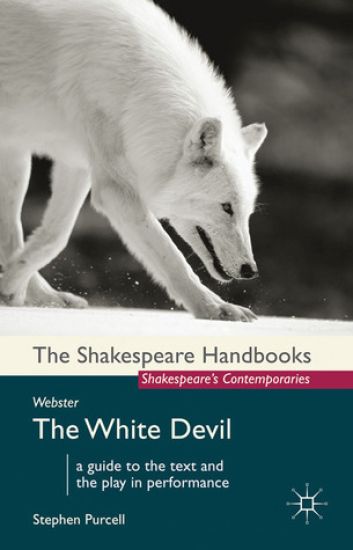
Webster: The White Devil

Webster: The White Devil

Stephen Purcell

Red Globe Press
2012
nidottu
The White Devil is one of the great plays of the Jacobean era. In this vibrant Handbook, Stephen Purcell offers an in-depth, performance-focused exploration of John Webster's thrilling, unsettling and darkly comic tragedy. The Handbook includes:• a scene-by-scene commentary on the play as it unfolds on stage • an overview of the play's cultural context• excerpts from historical sources• case studies of four modern productions, featuring interviews with directors• an outline of key critical writings on the play, from the seventeenth century through to today.
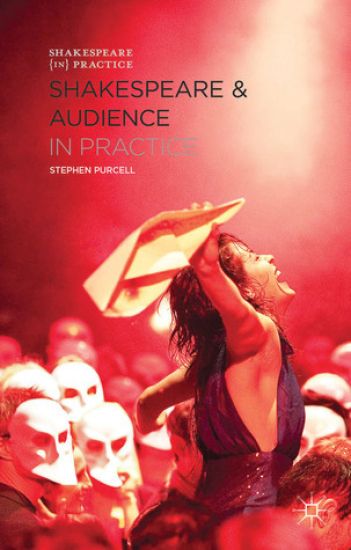
Shakespeare and Audience in Practice

Shakespeare and Audience in Practice

Stephen Purcell

Red Globe Press
2014
sidottu
What do audiences do as they watch a Shakespearean play? What makes them respond in the ways that they do? This book examines a wide range of theatrical productions to explore the practice of being a modern Shakespearean audience. It surveys some of the most influential ideas about spectatorship in contemporary performance studies, and analyses the strategies employed both in the texts themselves and by modern theatre practitioners to position audiences in particular ways.
Shakespeare and Audience in Practice

Shakespeare and Audience in Practice

Stephen Purcell

Red Globe Press
2013
nidottu
What do audiences do as they watch a Shakespearean play? What makes them respond in the ways that they do? This book examines a wide range of theatrical productions to explore the practice of being a modern Shakespearean audience. It surveys some of the most influential ideas about spectatorship in contemporary performance studies, and analyses the strategies employed both in the texts themselves and by modern theatre practitioners to position audiences in particular ways.
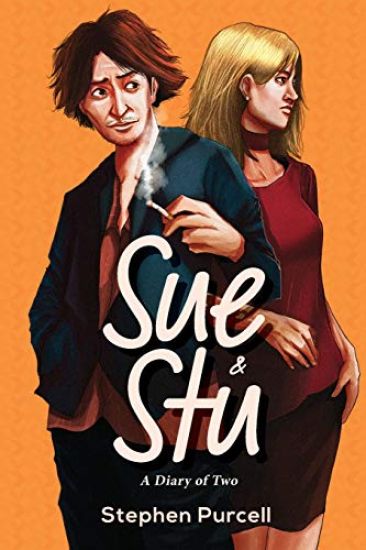
Sue & Stu - A Diary of Two

Sue & Stu - A Diary of Two

Stephen Purcell

Pendleton Press
2019
nidottu
Sue (Suzanne Conway) and Stu (Stuart Jackson) live in the small city of Rockwood. They have never met, nor do they know of each other. Sue manages a hair salon and spends her days styling the 'who's who', while Stu manages a record store and typically deals with the 'who's not'. Though they've never met, Sue & Stu do share a common trait, they both keep a diary. A brief encounter between the two sends Stu on a search to find the mystery woman he believes is destined to become his future wife. Unbeknown to Stu, Sue is busy attempting to be her perfect self. She wants to find the man of her dreams, she wants to settle down, and while she may not admit it to herself or her friends, she's broody as hell for a baby. Sadly, she's not having much luck. All her encounters with men have been disastrous. Her mother is in her ear day-in and day-out and she is fearful of spending the rest of her life with her cat, Mr Snuggles. In a bizarre happenstance, Sue & Stu become an item. Now, their daily diary rants are on each other, not just obscure records and Sue's mother. Can Stu, the epitome of the 'man child' navigate what's to come? Or will his more recent past catch up to wreak havoc? And what about Sue? Is she ready to embrace this whirlwind situation? Is she capable of coping with Stu's antics or is she on course for another doomed relationship?