Kirjahaku
Etsi kirjoja tekijän nimen, kirjan nimen tai ISBN:n perusteella.
1000 tulosta hakusanalla Steven B. Smith
Radius Books
2020
sidottu
The work of photographer and Rhode Island School of Design professor Steven B. Smith (born 1963) chronicles the transition of the Western landscape into suburbia. Robert Pinsky, US Poet Laureate, wrote of his work, "Smith's images record not so much a contrast as two violent absences joining as a single force. Landfill, seedling, turnabout, heating coil collude with the sky and mountains in a triumph of disproportion: scale not so much confused or lost as irrelevant." Steven B. Smith: Your Mountain is Waiting documents the accelerating suburbanization of Smith's native Utah. Peeling back the layers of westward expansion with equal parts subtlety and irony, Smith captures the new McMansions springing up against the rocky, rust-red mountains and deep blue skies of the West. Smith is equally attentive to the cast of characters that fill these new landscapes the people that build them, and the people that live in them.
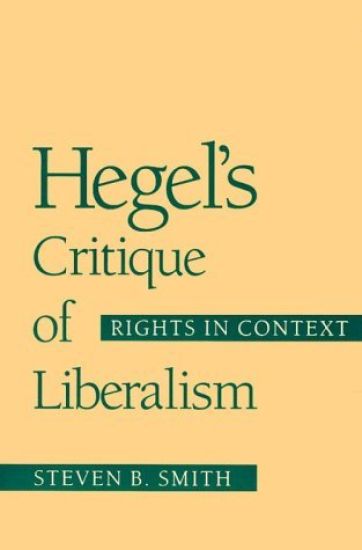
In Hegel's Critique of Liberalism, Steven B. Smith examines Hegel's critique of rights-based liberalism and its relevance to contemporary political concerns. Smith argues that Hegel reformulated classic liberalism, preserving what was of value while rendering it more attentive to the dynamics of human history and the developmental structure of the moral personality. Hegel's goal, Smith suggests, was to find a way of incorporating both the ancient emphasis on the dignity and even architectonic character of political life with the modern concern for freedom, rights, and mutual recognition. Smith's insightful analysis reveals Hegel's relevance not only to contemporary political philosophers concerned with normative issues of liberal theory but also to political scientists who have urged a revival of the state as a central concept of political inquiry.
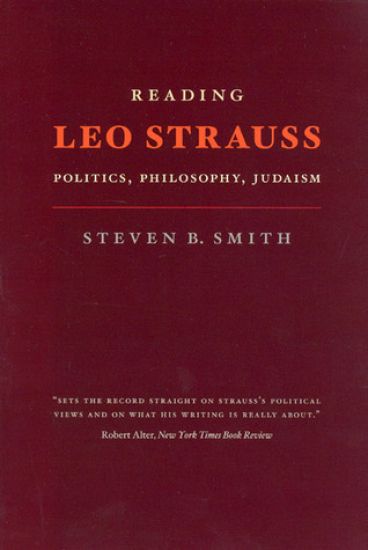
Interest in Leo Strauss is greater now than at any time since his death, mostly because of the purported link between his thought and the political movement known as neoconservatism. Steven B. Smith, though, surprisingly depicts Strauss not as the high priest of neoconservatism but as a friend of liberal democracy - perhaps the best defender democracy has ever had. Moreover, in "Reading Leo Strauss", Smith shows that Strauss' defense of liberal democracy was closely connected to his skepticism of both the extreme Left and extreme Right. It was as a skeptic, Smith argues, that Strauss considered the seemingly irreconcilable conflict between reason and revelation - a conflict Strauss dubbed the "theologico-political problem." Calling this problem "the theme of my investigations," Strauss asked the same fundamental question throughout his life: what is the relation of the political order to revelation in general and Judaism in particular? Smith bases his book on this question and assesses Strauss' attempt to direct the teaching of political science away from the examination of mass behavior and interest-group politics and toward the study of the philosophical principles on which politics are based. With his provocative, lucid study, Smith establishes a distinctive form of Straussian liberalism himself.
Interest in Leo Strauss is greater now than at any time since his death, mostly because of the purported link between his thought and the political movement known as neoconservatism. Steven B. Smith, though, surprisingly depicts Strauss not as the high priest of neoconservatism but as a friend of liberal democracy - perhaps the best defender democracy has ever had. Moreover, in "Reading Leo Strauss", Smith shows that Strauss's defense of liberal democracy was closely connected to his skepticism of both the extreme Left and the extreme Right. Smith asserts that this philosophical skepticism defined Strauss's thought. It was as a skeptic, Smith argues, that Strauss considered the seemingly irreconcilable conflict between reason and revelation - a conflict Strauss dubbed the "theologico-political problem". Calling this problem "the theme of my investigations," Strauss asked the same fundamental question throughout his life: what is the relation of the political order to revelation in general and Judaism in particular? Smith organizes his book with this question, first addressing Strauss's views on religion and then examining his thought on philosophical and political issues. In his investigation of these philosophical and political issues, Smith assesses Strauss's attempt to direct the teaching of political science away from the examination of mass behavior and interest group politics and toward the study of the philosophical principles on which politics are based. With his provocative, lucid essays, Smith goes a long way toward establishing a distinctive form of Straussian liberalism.
Spinoza, Liberalism, and the Question of Jewish Identity
Steven B. Smith
Yale University Press
1998
pokkari
Baruch de Spinoza (1632-1677)—often recognized as the first modern Jewish thinker—was also a founder of modern liberal political philosophy. This book is the first to connect systematically these two aspects of Spinoza's legacy. Steven B. Smith shows that Spinoza was a politically engaged theorist who both advocated and embodied a new conception of the emancipated individual, a thinker who decisively influenced such diverse movements as the Enlightenment, liberalism, and political Zionism.Focusing on Spinoza's Theologico-Political Treatise, Smith argues that Spinoza was the first thinker of note to make the civil status of Jews and Judaism (what later became known as the Jewish Question) an essential ingredient of modern political thought. Before Marx or Freud, Smith notes, Spinoza recast Judaism to include the liberal values of autonomy and emancipation from tradition. Smith examines the circumstances of Spinoza's excommunication from the Jewish community of Amsterdam, his skeptical assault on the authority of Scripture, his transformation of Mosaic prophecy into a progressive philosophy of history, his use of the language of natural right and the social contract to defend democratic political institutions, and his comprehensive comparison of the ancient Hebrew commonwealth and the modern commercial republic. According to Smith, Spinoza's Treatise represents a classic defense of religious toleration and intellectual freedom, showing them to be necessary foundations for political stability and liberal regimes. In this study Smith examines Spinoza's solution to the Jewish Question and asks whether a Judaism, so conceived, can long survive.
Most readers of Spinoza treat him as a pure metaphysician, a grim determinist, or a stoic moralist, but none of these descriptions captures the author of the Ethics, argues Steven B. Smith in this intriguing book. Offering a new reading of Spinoza’s masterpiece, Smith asserts that the Ethics is a celebration of human freedom and its attendant joys and responsibilities and should be placed among the great founding documents of the Enlightenment.Two aspects of Smith’s book distinguish it from other studies. It treats the famous “geometrical method” of the Ethics as a form of moral rhetoric, a model for the construction of individuality. And it presents the Ethics as a companion to Spinoza’s major work of political philosophy, the Theologico-Political Treatise, each work helping to explore the problem of freedom. Affirming Spinoza’s centrality for both critics and defenders of modernity, the book will be of value to students of political theory, philosophy, and intellectual history.
Who ought to govern? Why should I obey the law? How should conflict be controlled? What is the proper education for a citizen and a statesman? These questions probe some of the deepest and most enduring problems that every society confronts, regardless of time and place. Today we ask the same crucial questions about law, authority, justice, and freedom that Plato, Aristotle, Machiavelli, Hobbes, Locke, Rousseau, and Tocqueville faced in previous centuries. In this lively and enlightening book, Professor Steven B. Smith introduces the wide terrain of political philosophy through the classic texts of the discipline. Works by the greatest thinkers illuminate the permanent problems of political life, Smith shows, and while we may not accept all their conclusions, it would be a mistake to overlook the relevance of their insights.
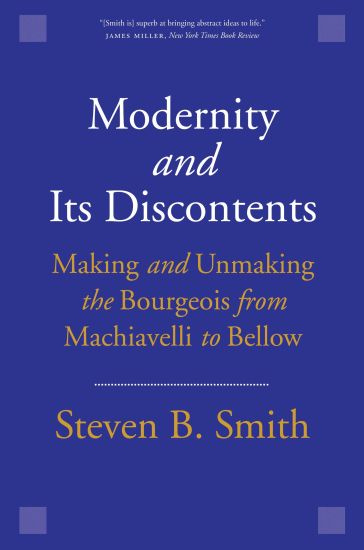
Steven B. Smith examines the concept of modernity, not as the end product of historical developments but as a state of mind. He explores modernism as a source of both pride and anxiety, suggesting that its most distinctive characteristics are the self-criticisms and doubts that accompany social and political progress. Providing profiles of the modern project’s most powerful defenders and critics—from Machiavelli and Spinoza to Saul Bellow and Isaiah Berlin—this provocative work of philosophy and political science offers a novel perspective on what it means to be modern and why discontent and sometimes radical rejection are its inevitable by-products.
A rediscovery of patriotism as a virtue in line with the core values of democracy in an extremist age “Like you perhaps, I still regard myself as an extremely patriotic person. Which is why I so admired [this book]. . . . It explained my emotion to me, as it might yours to you." —David Brooks, New York Times “Smith superbly illuminates the distinctiveness of the American idea of patriotism and reminds us of how important patriotism is, and how essential to making America better.”—Leslie Lenkowsky, Wall Street Journal The concept of patriotism has fallen on hard times. What was once a value that united Americans has become so politicized by both the left and the right that it threatens to rip apart the social fabric. On the right, patriotism has become synonymous with nationalism and an “us versus them” worldview, while on the left it is seen as an impediment to acknowledging important ethnic, religious, or racial identities and a threat to cosmopolitan globalism. Steven B. Smith reclaims patriotism from these extremist positions and advocates for a patriotism that is broad enough to balance loyalty to country with other loyalties. Describing how it is a matter of both the head and the heart, Smith shows how patriotism can bring the country together around the highest ideals of equality and is a central and ennobling disposition that democratic societies cannot afford to do without.
What true statecraft consists of, and how to know a statesman when we see one In the modern world we yearn for great leaders but resist them when they come along. In this much-needed essay, Steven B. Smith tells us that a statesman is something far different from a demagogue or a technocrat; he or she incorporates many qualities of leadership--persuasiveness, courage, foresight, judgment--to take people where they need to go while hardly seeming to lead them at all. A true statesman is focused not on amassing power but on finding the best way to use power toward responsible ends. Above all else, Smith argues, the statesman is an educator who, through language and argument, helps shape a people's civic understanding. This book is a timely reminder of a set of qualities we desperately need in our political leaders but have forgotten how to talk about.
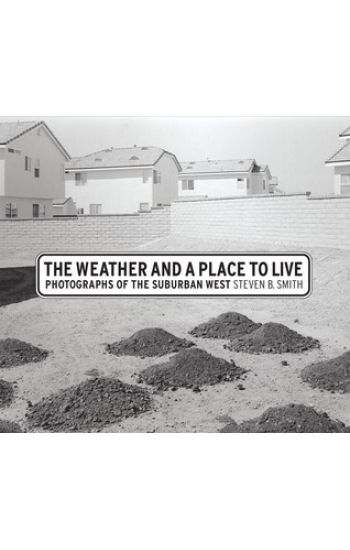
In compelling, often stunning black-and-white photographs, The Weather and a Place to Live portrays the manmade landscape of the western United States. Here we come face to face with the surreal intersection of the American appetite for suburban development and the resistant, rolling, arid country of the desert West. Steven B. Smith’s extraordinary photographs take us into the contemporary reality of sprawling suburbs reconfiguring what was once vast, unpopulated territory. With arresting concision and an unblinking eye, Smith shows how a new frontier is being won, and suggests too how it may be lost in its very emergence. Since the early 1990s Smith has been making large-format photographs in California, Utah, Nevada, and Colorado. Based on this body of work, he was chosen as winner of the biennial Center for Documentary Studies/Honickman First Book Prize in Photography. The power of these photographs lies in part in Smith’s unusual knowledge of the places he portrays. Raised in Utah, Smith has worked on construction crews, and he was a contractor in California after living on the East Coast for a few years. When he moved to Los Angeles in 1991, he writes, “I was so astounded by what I saw happening to the landscape as it was being developed that I started photographing it immediately. The landscapes I saw were scraped bare, re-sculpted, sealed, and then covered so as not to erode away before the building process could be completed.”Smith’s photographs offer a disturbing vision of the future of our planet, where the desire for home ownership is pitted against the costs of development in epic proportions. These altered landscapes force us to consider the consequences of human design battling natural forces across great expanses, a fragile balancing act and a contorted equation in which nature becomes both inspiration and invisible adversary. Smith’s elegant photographs of this constructed universe confront us with the beauty of images as images, yet push us to reflect on the devastation possible in the simple act of choosing a place to live.
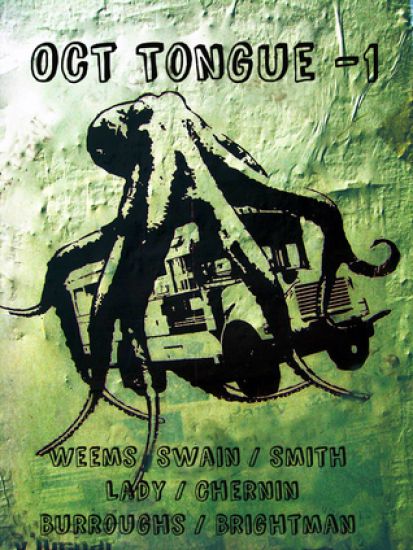
Like seven 31-page chapbooks in one See October 2013 through the eyes of seven fine and quite different poets.Published August 27th by Crisis Chronicles Press, Oct Tongue -1 is a collaborative book by Mary Weems, John Swain, Steven Smith, Lady Kathy] Smith, Shelley Chernin, John Burroughs and Steve Brightman. This book is our biggest yet, 300+ pages, featuring 217 poems (31 by each author), all written in response to the editor's October 2013 poem-a-day challenge. He borrowed the idea from a poem-a-day book called February 03 by Todd Colby, Alex Gildzen, Thurston Moore and Matthew Wascovich (published in 2003 by Slow Toe in Cleveland).] Oct Tongue -1 is a 6x9" paperback, ISBN 978-1-940996-08-0, available for $15 from Crisis Chronicles Press.
Liberties Journal of Culture and Politics
Michael Ignatieff; Mary Gaitskill; Sergei Lebedev; Antonia Bouis; Karen Solie; Michael Walzer; David A. Bell; Justin E.H. Smith; Michael C. Kimmage; Andrew Scull; Robert Alter; Steven B. Smith; Benjamin Moser; Helen Vendler; John Hodgen; Adam Zagajewski
Liberties Journal Foundation
2023
pokkari
Liberties, a Journal of Culture and Politics, is essential reading for those engaged in the cultural and political issues of our time. In this issue of Liberties: Michael Ignatieff - The Mind’s Emancipation; Mary Gaitskill - The Trials of the Young; Sergei Lebedev - Putin’s Philosopher: A Memoir; Michael Walzer - Moral Concern; Justin E. H. Smith – The Happiness Industrial Complex; Andrew Scull – The Fashions in Trauma; David A. Bell – The Triumph of Anti-Politics in America; Michael Kimmage – A Defense of Delight in a Dark Time; Robert Alter – Proust and the Mystification of the Jews; Steven B. Smith – What is a Statesman?; Benjamin Moser – Rembrandt’s shadows; Helen Vendler – The Poetry of Charm; Celeste Marcus – Priorism, or the Joshua Katz Affair; Leon Wieseltier – Problems and Struggles; and, new poems by Karen Solie, Adam Zagajewski, and John Hodgen.Published quarterly, Liberties, is a collection of the most significant writers today as well as launching the voices of tomorrow.Liberties features serious, independent, stylish, and controversial essays by significant writers and introduces the next generation of writers and poets to inspire and impact the intellectual and creative lifeblood of today’s culture and politics. Nobel Prize winners, leading op-ed writers, well-known non-fiction writers, rising talents, and poets from around the world are part of the Liberties series.There’s a reason why engaged citizens, cultural warriors, political leaders, opinion makers, and activists from across the cultural and political spectrum read and cherish Liberties.
In this provocative book, acclaimed psychologists Thomas Ward, Ronald Finke, and Steven Smith eloquently portray the fascinating processes of the creative mind at work, and hand us the invaluable tools with which we can mine our most valued and important resource. Creativity - and the methods by which we can heighten it - has recently become the focus of a burgeoning and exciting new field in psychology. By skillfully blending this cutting-edge scientific research with the real-world experiences of humanity's most successful creative thinkers, this provocative book isolates the mechanisms by which our mind conceives innovative and creative ideas. Since all creative thoughts emerge from skillfully drawing upon the well of knowledge we already possess, this book tackles the very nature of this knowledge. As these astute authors convincingly argue, the same mental processes that help a chemist like Kary Mullis discover a revolutionary new scientific principle or inspire an artist like Beethoven to create a marvelous symphony underlie the host of creative endeavors we all undertake. This inspiring book applies these basic tenets to a rich variety of creative pursuits, including engineering, design, writing, business, science, art, and even the challenges of our everyday lives. We learn how best to combine and play with the images, words, and concepts that spark fertile new ideas and lead to ever more impressive creative leaps.
What's Cookyn' Crisalyn? Back To Iraq!: Black And White Version
Steven E. Miller; Amanda Lynn Bledsoe-Smith; Tanya B. Morrell
Createspace Independent Publishing Platform
2009
nidottu
Teaching for Racial Equity
Tonya B. Perry; Steven Zemelman; Katy Smith
Stenhouse Publishers
2022
nidottu
Recipient of the 2022 Excellence in Equity Award! It is not enough to be against racism in education teachers must be actively antiracist. Yet how do we start reflecting on our own beliefs and lives so we can truly teach for racial literacy? In the award-winning Teaching for Racial Equity: Becoming Interrupters, authors Tonya Perry, Steven Zemelman, and Katy Smith engage in honest conversations between educators of color and their white colleagues. Authentic, inspiring, and sometimes uncomfortable, teachers share stories of personal histories and experiences that shaped them as people and educators.In this book you will find:Strategies to understand different backgrounds through a racial lens and ways to address potentially difficult conversations with fellow educators In-depth overview of Yolanda Sealey-Ruiz’s Archaeology of Self™ and how it can be personally and professionally adopted Lists of resources for teaching about and actively interrupting racism in education and tools that document systemic inequalities in the classroom Ways to facilitate student-led conversations which examine race and inequitable conditions found nationwideBy examining inequalities found at a systemic level, teachers can start to remove some of their internal biases and allow students to show who they truly are. In turn, this can help create a school curriculum that makes space for BIPOC voices that inspire and invite students to share. Teaching for Racial Equity: Becoming Interrupters provides a resource for teachers and educators to critically reflect and begin work to interrupt racism at all levels.
Rare Book Librarianship
Steven K. Galbraith; Joel B. Silver; Geoffrey D. Smith
Libraries Unlimited Inc
2012
nidottu
Successfully managing rare book collections requires very specific knowledge and skills. This handbook provides that essential information in a single volume.Rare Book Librarianship for the 21st Century is the first new rare books handbook of practice in 25 years. Authored by two special collections experts with extensive field experience, this book is also the first to discuss the role of digital technologies in managing a rare book collection. After a fascinating discussion of the history and current state of rare book libraries, this handbook provides a comprehensive account of the core skills and knowledge needed to be a successful rare book librarian. Topics include best practices for handling, housing, and conserving rare materials; collection development techniques; and user education and outreach. This book will serve as a handbook for practitioners in academic settings, large public libraries, and special libraries, and as a textbook for students in MLIS courses on rare book librarianship and curatorship.
Creative Cognition combines original experiments with existing work in cognitive psychology to provide the first explicit account of the cognitive processes and structures that contribute to creative thinking and discovery.Creative Cognition combines original experiments with existing work in cognitive psychology to provide the first explicit account of the cognitive processes and structures that contribute to creative thinking and discovery.In separate chapters, the authors take up visualization, concept formation, categorization, memory retrieval, and problem solving. They describe novel experimental methods for studying creative cognitive processes under controlled laboratory conditions, along with techniques that can be used to generate many different types of inventions and concepts. Unlike traditional approaches, Creative Cognition considers creativity as a product of numerous cognitive processes, each of which helps to set the stage for insight and discovery. It identifies many of these processes as well as general principles of creative cognition that can be applied across a variety of different domains, with examples in artificial intelligence, engineering design, product development, architecture, education, and the visual arts.Following a summary of previous approaches to creativity, the authors present a theoretical model of the creative process. They review research involving an innovative imagery recombination technique, developed by Finke, that clearly demonstrates that creative inventions can be induced in the laboratory. They then describe experiments in category learning that support the provocative claim that the factors constraining category formation similarly constrain imagination and illustrate the role of various memory processes and other strategies in creative problem solving.