Kirjojen hintavertailu. Mukana 12 377 322 kirjaa ja 12 kauppaa.

Kirjahaku

Etsi kirjoja tekijän nimen, kirjan nimen tai ISBN:n perusteella.

1000 tulosta hakusanalla Steven Casey

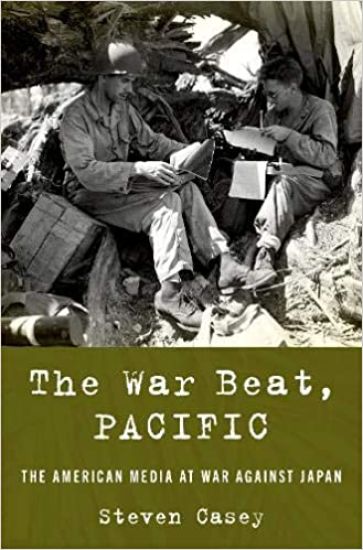
The War Beat, Pacific

The War Beat, Pacific

Steven Casey

Oxford University Press Inc
2021
sidottu
The definitive history of American war reporting in the Pacific theater of World War II, from the attack on Pearl Harbor to the atomic bombings of Hiroshima and Nagasaki. After almost two years slogging with infantrymen through North Africa, Italy, and France, Ernie Pyle immediately realized he was ill prepared for covering the Pacific War. As Pyle and other war correspondents discovered, the climate, the logistics, and the sheer scope of the Pacific theater had no parallel in the war America was fighting in Europe. From Pearl Harbor to Hiroshima and Nagasaki, The War Beat, Pacific provides the first comprehensive account of how a group of highly courageous correspondents covered America's war against Japan, what they witnessed, what they were allowed to publish, and how their reports shaped the home front's perception of some of the most pivotal battles in American military history. In a dramatic and fast-paced narrative based on a wealth of previously untapped primary sources, Casey takes us from MacArthur's doomed defense on the Philippines and the navy's overly strict censorship policy at the time of Midway, through the bloody battles on Guadalcanal, New Guinea, Tarawa, Saipan, Leyte and Luzon, Iwo Jima and Okinawa, detailing the cooperation, as well as conflict, between the media and the military, as they grappled with the enduring problem of limiting a free press during a period of extreme crisis. The War Beat, Pacific shows how foreign correspondents ran up against practical challenges and risked their lives to get stories in a theater that was far more challenging than the war against Nazi Germany, while the US government blocked news of the war against Japan and tried to focus the home front on Hitler and his atrocities.
The War Beat, Europe

The War Beat, Europe

Steven Casey

Oxford University Press Inc
2017
sidottu
From the North African desert to the bloody stalemate in Italy, from the London blitz to the D-Day beaches, a group of highly courageous and extremely talented American journalists reported the war against Nazi Germany for a grateful audience. Based on a wealth of previously untapped primary sources, War Beat, Europe provides the first comprehensive account of what these reporters witnessed, what they were allowed to publish, and how their reports shaped the home front's perception of some of the most pivotal battles in American history. In a dramatic and fast-paced narrative, Steven Casey takes readers from the inner councils of government, where Franklin D. Roosevelt and George Marshall held clear views about how much blood and gore Americans could stomach, to the command centers in London, Algiers, Naples, and Paris, where many reporters were stuck with the dreary task of reporting the war by communiqué. At the heart of this book is the epic journey of reporters like Wes Gallagher and Don Whitehead of the Associated Press, Drew Middleton of the New York Times, Bill Stoneman of the Chicago Daily News, and John Thompson of the Chicago Tribune; of columnists like Ernie Pyle and Hal Boyle; and of photographers like Margaret Bourke-White and Robert Capa. These men and women risked their lives on countless occasions to get their dispatches and their images back home. In providing coverage of war in an open society, they also balanced the weighty responsibility of adhering to censorship regulations while working to sell newspapers and maintaining American support for the war. These reporters were driven by a combination of ambition, patriotism, and belief in the cause. War Beat, Europe shows how they earned their reputation as America's golden generation of journalists and wrote the first draft of World War II history for posterity.
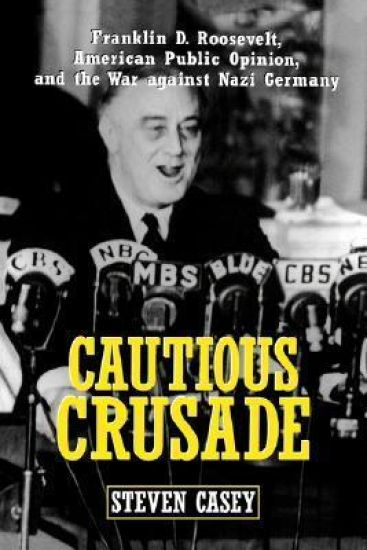
Cautious Crusade

Cautious Crusade

Steven Casey

Oxford University Press Inc
2001
sidottu
This title explores how Americans viewed Nazi Germany during World War II, the extent to which the public opposed the president's vision for planning both Germany's defeat and future, and how opinion and policy interacted as the Roosevelt administration grappled with various aspects of the German problem during this period.
Cautious Crusade

Cautious Crusade

Steven Casey

Oxford University Press Inc
2004
nidottu
America's struggle against Nazism is one of the few aspects of World War II that has escaped controversy. Historians agree that it was a widely popular war, different from the subsequent conflicts in Korea and Vietnam because of the absence of partisan sniping, ebbing morale, or calls for a negotiated peace. In this provocative book, Steven Casey challenges conventional wisdom about America's participation in World War II. Drawing on the numerous opinion polls and surveys conducted by the U.S. government, he traces the development of elite and mass attitudes toward Germany, from the early days of the war up to its conclusion. Casey persuasively argues that the president and the public rarely saw eye to eye on the nature of the enemy, the threat it posed, or the best methods for countering it. He describes the extensive propaganda campaign that Roosevelt designed to build support for the war effort, and shows that Roosevelt had to take public opinion into account when formulating a host of policies, from the Allied bombing campaign to the Morgenthau plan to pastoralize the Third Reich. By examining the previously unrecognized relationship between public opinion and policy making during World War II, Casey's groundbreaking book sheds new light on a crucial era in American history.
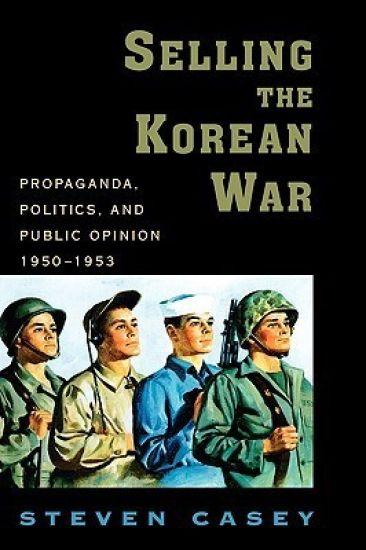
Selling the Korean War

Selling the Korean War

Steven Casey

Oxford University Press Inc
2008
sidottu
How presidents spark and sustain support for wars remains an enduring and significant problem. Korea was the first limited war the U.S. experienced in the contemporary period - the first recent war fought for something less than total victory. In Selling the Korean War, Steven Casey explores how President Truman and then Eisenhower tried to sell it to the American public. Based on a massive array of primary sources, Casey subtly explores the government's selling activities from all angles. He looks at the halting and sometimes chaotic efforts of Harry Truman and Dean Acheson, Dwight Eisenhower and John Foster Dulles. He examines the relationships that they and their subordinates developed with a host of other institutions, from Congress and the press to Hollywood and labor. And he assesses the complex and fraught interactions between the military and war correspondents in the battlefield theater itself. From high politics to bitter media spats, Casey guides the reader through the domestic debates of this messy, costly war. He highlights the actions and calculations of colorful figures, including Senators Robert Taft and Joseph McCarthy, and General Douglas MacArthur. He details how the culture and work routines of Congress and the media influenced political tactics and daily news stories. And he explores how different phases of the war threw up different problems - from the initial disasters in the summer of 1950 to the giddy prospects of victory in October 1950, from the massive defeats in the wake of China's massive intervention to the lengthy period of stalemate fighting in 1952 and 1953.
The War Beat, Europe

The War Beat, Europe

Steven Casey

Oxford University Press Inc
2021
nidottu
From the North African desert to the bloody stalemate in Italy, from the London blitz to the D-Day beaches, a group of highly courageous and extremely talented American journalists reported the war against Nazi Germany for a grateful audience. Based on a wealth of previously untapped primary sources, War Beat, Europe provides the first comprehensive account of what these reporters witnessed, what they were allowed to publish, and how their reports shaped the home front's perception of some of the most pivotal battles in American history. In a dramatic and fast-paced narrative, Steven Casey takes readers from the inner councils of government, where Franklin D. Roosevelt and George Marshall held clear views about how much blood and gore Americans could stomach, to the command centers in London, Algiers, Naples, and Paris, where many reporters were stuck with the dreary task of reporting the war by communiqué. At the heart of this book is the epic journey of reporters like Wes Gallagher and Don Whitehead of the Associated Press, Drew Middleton of the New York Times, Bill Stoneman of the Chicago Daily News, and John Thompson of the Chicago Tribune; of columnists like Ernie Pyle and Hal Boyle; and of photographers like Margaret Bourke-White and Robert Capa. These men and women risked their lives on countless occasions to get their dispatches and their images back home. In providing coverage of war in an open society, they also balanced the weighty responsibility of adhering to censorship regulations while working to sell newspapers and maintaining American support for the war. These reporters were driven by a combination of ambition, patriotism, and belief in the cause. War Beat, Europe shows how they earned their reputation as America's golden generation of journalists and wrote the first draft of World War II history for posterity.
The Skeptic Isle

The Skeptic Isle

Steven Casey

OXFORD UNIVERSITY PRESS INC
2025
sidottu
A major reassessment of the British government's communication of the goals of World War II and how its propaganda undermined the people's faith in the reliability of war news and the credibility of political leaders. While waging war against enemies overseas, governments also need to win the hearts and minds of their own citizens. The media is critical to delivering the official message, raising public support for war, maintaining morale, spelling out what is to be achieved, downplaying setbacks, and presenting a bright vision of the postwar future. In public memory, the British people were united in their support for World War II. Yet this popular image of the People's War neglects the fact that the war had to be sold. In this work stretching from appeasement in 1938 through victory, award-winning historian Steven Casey examines how media, government, and armed forces worked to convince the British public to support the war, as well as the ways the British home front often questioned and challenged the official line. Using a vast array of primary sources, some of them previously untapped, he looks at the broad range of problems and policies that needed to be defended and explained, censored and concealed. The venues range widely from the battlefield to the football field, from the rubble-strewn cities of blitzed Britain to the faraway outposts of Empire. In his chronological narrative of the war, Casey shines light on numerous high-profile episodes, including Munich and Dunkirk, the Battle of Britain and Blitz, evacuation and rationing, and the campaigns in the Africa, Asia, and Europe. Throughout, Casey stresses how the British military forged a relationship with reporters, how this relationship shaped news coverage of the fighting, and how this coverage in turn exerted a profound impact on every other dimension of the government's private and public actions. No one before has examined how all the branches of the armed services kept the home front informed about progress and especially setbacks. Officials, Casey argues, failed to communicate effectively with the British people, which undermined public trust and called the credibility of the political leadership into question. Remarkably, the BBC and Fleet Street sometimes relayed German communiqués to the public because the British government failed to release timely reports of its own. The Skeptic Isle provides a bold reassessment of how the British government sold the Second World War to the British public. It powerfully showcases how the attempt to mold and manipulate coverage of battles created a major credibility gap that cast a long shadow over the British government's efforts to sell the different dimensions of the Second World War to the home front.
Selling the Korean War

Selling the Korean War

Steven Casey

Oxford University Press Inc
2010
nidottu
How presidents spark and sustain support for wars remains an enduring and significant problem. Korea was the first limited war the U.S. experienced in the contemporary period - the first recent war fought for something less than total victory. In Selling the Korean War , Steven Casey explores how President Truman and then Eisenhower tried to sell it to the American public. Based on a massive array of primary sources, Casey subtly explores the government's selling activities from all angles. He looks at the halting and sometimes chaotic efforts of Harry Truman and Dean Acheson, Dwight Eisenhower and John Foster Dulles. He examines the relationships that they and their subordinates developed with a host of other institutions, from Congress and the press to Hollywood and labor. And he assesses the complex and fraught interactions between the military and war correspondents in the battlefield theater itself. From high politics to bitter media spats, Casey guides the reader through the domestic debates of this messy, costly war. He highlights the actions and calculations of colorful figures, including Senators Robert Taft and JHoseph McCarthy, and General Douglas MacArthur. He details how the culture and work routines of Congress and the media influenced political tactics and daily news stories. And he explores how different phases of the war threw up different problems - from the initial disasters in the summer of 1950 to the giddy prospects of victory in October 1950, from the massive defeats in the wake of China's massive intervention to the lengthy period of stalemate fighting in 1952 and 1953.
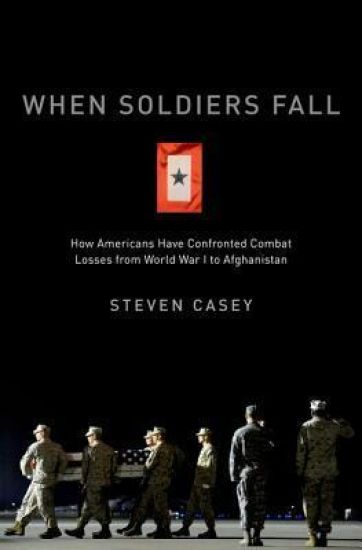
When Soldiers Fall

When Soldiers Fall

Steven Casey

Oxford University Press Inc
2014
sidottu
The extent to which combat casualties influence the public's support for war is one of the most frequently and fiercely debated subjects in current American life and has cast an enormous shadow over both the Iraq and Afghanistan conflicts. The common assumption, based largely on U.S. experience in past wars, is that the public is in some way casualty averse or casualty shy, and that as losses increase its support for a war will inexorably decline. Yet this assumption has been adopted as conventional wisdom without any awareness of one of the most important dimensions of the issue: how has the public become aware of the casualties sustained during particular wars? To what extent has the government tried to manipulate or massage the figures? When and why have these official figures been challenged by opportunistic political opponents or aggressive scoop-seeking reporters? As Steven Casey demonstrates, at key moments in most wars what the public actually receives is not straightforward and accurate casualty totals, but an enormous amount of noise based on a mixture of suppression, suspicion, and speculation. This book aims to correct this gap in information by showing precise what casualty figures the government announced during its various wars, the timing of these announcements, and any spin officials may have placed upon these, using a range of hitherto untapped primary documents. Among the nuggets he has uncovered is that during World War I the media depended on Axis figures and that the Army and Navy did not announce casualty figures for an entire year during World War II. Organized chronologically, the book addresses the two world wars, the limited wars in Korea and Vietnam, and the recent conflicts that are part of the War on Terror. Using sources such as the private military command papers of Generals Patton, MacArthur, and Westmoreland, and previously unopened New York Times archives, it offers the first analysis of how the U.S. government has publicized combat casualties during these wars, and how these official announcements have been debated and disputed by other voices in the polity. Casey discusses factors such as changes of presidential administration, the improvement of technology, the sending of war correspondents to cover multiple conflicts, and the increasing ability to identify bodies. Casey recreates the complicated controversies that have surrounded key battles, and in doing so challenges the simplicity of the oft-repeated conventional wisdom that "as casualties mount, support decreases. " By integrating military and political history, he presents a totally new interpretation of U.S. domestic propaganda since 1917, filling a major gap left by a spate of recent books. Finally, it provides a fresh and engaging new perspective on some of the biggest battles in recent American history, including the Meuse-Argonne, D-Day, the Battle of the Bulge, China's intervention in the Korean War, the Tet Offensive, and the recent campaigns in Iraq and Afghanistan. This book should speak to the military, political, and media history markets, and it should also reach a wider audience that is debating contemporary casualty figures.
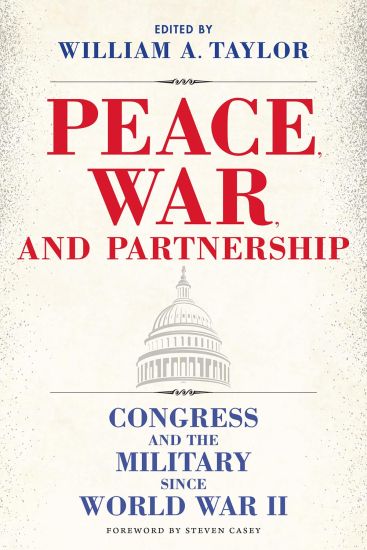
Peace, War, and Partnership

Peace, War, and Partnership

Steven Casey

TEXAS A M UNIVERSITY PRESS
2023
sidottu
Covering the period from World War II through the Trump presidency, Peace, War, and Partnership: Congress and the Military Since World War II unpacks the vital and dynamic relationship between Congress and the military, two entities that have worked together, at times with different purposes, to solve myriad important issues impacting the United States in both peace and war. Congress and the military have had their periods of cooperation. However, they have also had alternating periods of resistance to each other, based on distinct conceptions of national interests and divergent strategies. Their partnership has been a symbiotic relationship in which one entity or the other has ebbed and flowed in power depending on the circumstances. They have altered each other in far-reaching ways and transformed American society as a result of their liaisons.Peace, War, and Partnership analyzes the significant, powerful, and central relationship between Congress and the military. It investigates intersections of policy, politics, and society to theorize the impact of this relationship on the United States in the modern era. This work also offers a better understanding of earlier attempts by policy makers in Congress and the military to provide national security, contextualizing highly relevant current issues such as military service, proliferation, foreign intervention, national security, joint operations, diplomacy, alliances, mobilization, post-conflict resolution, citizenship, and military innovation. It illuminates crucial questions involving military policies in American democracy, and their sway on America historically and today, sparking and informing public debate about its implications now and for the future.
Seven Plays By Sean O'casey

Seven Plays By Sean O'casey

Sean O'Casey; Ronald Ayling; Steven M. Studebaker

Red Globe Press
1985
nidottu
This edition of Sean O'Casey's major plays is designed specifically for students and teachers. The plays are supported by a full introduction, covering O'Casey's career and critical responses to the plays, full notes and a bibliography.
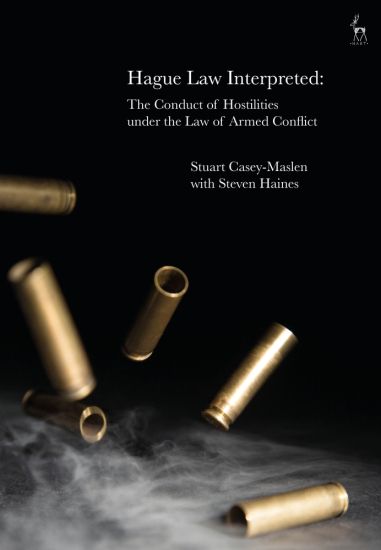
Hague Law Interpreted

Hague Law Interpreted

Stuart Casey-Maslen; Steven Haines

Hart Publishing
2018
sidottu
Given the centrality of Hague Law to the lawful prosecution of warfare, the relative paucity of dedicated works is surprising. The general formulation of Hague Law rules is largely uncontroversial, but this clarity stands in stark contrast to their interpretation and practical application. How precisely, for instance, the fundamental rules of distinction and proportionality in attack are to dictate and constrain the planning and practice of warfare continues to be highly uncertain. This important new publication fills the gap in the literature. Offering a comprehensive assessment of Hague Law, it explores questions of definitions and accountability and navigates the substantive rules and their application to different types of warfare.
Hague Law Interpreted

Hague Law Interpreted

Stuart Casey-Maslen; Steven Haines

Hart Publishing
2021
nidottu
Given the centrality of Hague Law to the lawful prosecution of warfare, the relative paucity of dedicated works is surprising. The general formulation of Hague Law rules is largely uncontroversial, but this clarity stands in stark contrast to their interpretation and practical application. How precisely, for instance, the fundamental rules of distinction and proportionality in attack are to dictate and constrain the planning and practice of warfare continues to be highly uncertain. This important new publication fills the gap in the literature. Offering a comprehensive assessment of Hague Law, it explores questions of definitions and accountability and navigates the substantive rules and their application to different types of warfare.
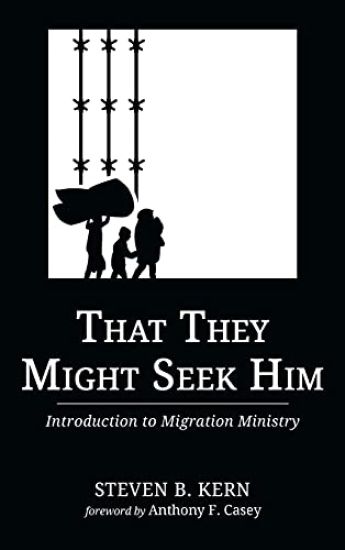
That They Might Seek Him

That They Might Seek Him

Steven B Kern; Anthony F Casey

Wipf Stock Publishers
2021
sidottu
While state governments determine the ""Who?"" ""How many?"" and ""Under what conditions?"" of immigration, God has determined the ""Why?"" He orchestrates the times and locations of the nations ""that they might seek Him"" (Acts 17:24-27). The sovereign God of the universe has redemptive purpose in the movements of the people. In many instances, the formerly ""unreached"" are moving ""within reach."" In God's plan, Christ-followers are instruments of compassion and ambassadors of hope. They are invited to respond. That They Might Seek Him: Introduction to Migration Ministry is written with this responsibility in mind. Targeting both students and practitioners, it informs, inspires, and equips. -Learn what the Bible says about migration . . . then and now. -Respond to factors at play in immigration policy development. -Embrace the challenges of message contextualization and migrant integration. -Identify tools for fruitful engagement. -Develop a strategy for fruitful ministry.
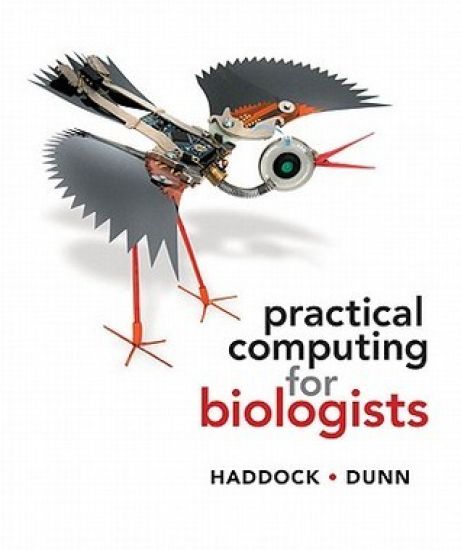
Practical Computing for Biologists

Practical Computing for Biologists

Steven H. D. Haddock; Casey W. Dunn

Oxford University Press Inc
2010
nidottu
Published by Sinauer Associates, an imprint of Oxford University Press. Increasingly, scientists find themselves facing exponentially larger data sets and analyses without suitable tools to deal with them. Many biologists end up using spreadsheet programs for most of their data-processing tasks and spend hours clicking around or copying and pasting, and then repeating the process for other data files. Practical Computing for Biologists shows you how to use many freely available computing tools to work more powerfully and effectively. The book was born out of the authors' own experience in developing tools for their research and helping other biologists with their computational problems. Although many of the techniques are relevant to molecular bioinformatics, the motivation for the book is much broader, focusing on topics and techniques that are applicable to a range of scientific endeavors. Twenty-two chapters organized into six parts address these topics (and more; see Contents): * Searching with regular expressions * The Unix command line * Python programming and debugging * Creating and editing graphics * Databases * Performing analyses on remote servers * Working with electronics While most of the concepts and examples apply to any operating system, the main narrative focuses on Mac OS X. Where there are differences for Windows and Linux users, parallel instructions are provided in the margin and in an appendix. The book is designed to be used as a self-guided resource for researchers, a companion book in a course, or as a primary textbook. Practical Computing for Biologists will free you from the most frustrating and time-consuming aspects of data processing so you can focus on the pleasures of scientific inquiry.