Kirjojen hintavertailu. Mukana 11 244 527 kirjaa ja 12 kauppaa.

Kirjahaku

Etsi kirjoja tekijän nimen, kirjan nimen tai ISBN:n perusteella.

1000 tulosta hakusanalla Steven Connor

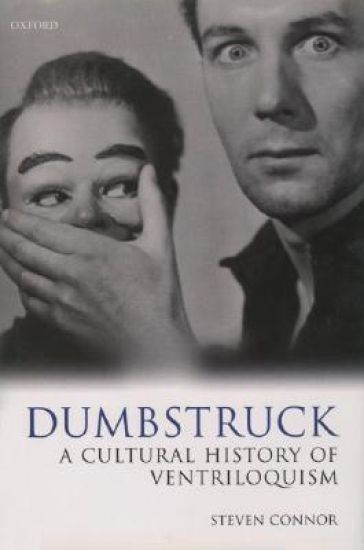
Dumbstruck - A Cultural History of Ventriloquism

Dumbstruck - A Cultural History of Ventriloquism

Steven Connor

Oxford University Press
2000
sidottu
Why can none of us hear our own recorded voice without wincing? Why is the telephone still full of such spookiness and erotic possibility? Why does the metaphor of ventriloquism, the art of 'seeming to speak where one is not', speak so resonantly to our contemporary technological condition? These are the kind of questions which impel Steven Connor's wide-ranging, restlessly inquisitive history of ventriloquism and the disembodied voice. He tracks his subject from its first recorded beginnings in ancient Israel and Greece, through the fulminations of early Christian writers against the unholy (and, they believed, obscenely produced) practices of pagan divination, the aberrations of the voice in mysticism, witchcraft and possession, and the strange obsession with the vagrant figure of the ventriloquist, newly conceived as male rather than female, during the Enlightenment. He retrieves the stories of some of the most popular and versatile ventriloquists and polyphonists of the nineteenth century, and investigates the survival of ventriloquial delusions and desires in spiritualism and the 'vocalic uncanny' of technologies like telephone, radio, film, and internet. Learned but lucid, brimming with anecdote and insight, this is much more than an archaeology of one of the most regularly derided but tenaciously enduring of popular arts. It is also a series of virtuoso philosophical and psychological reflections on the problems and astonishments, the raptures and absurdities of the unhoused voice.

Waiting for Godot and Endgame

Waiting for Godot and Endgame

Steven Connor

Red Globe Press
1992
nidottu
This text gathers together interpretations of Beckett's best-known plays, illustrating a range of theoretical approaches from deconstruction to reader-response theory, psychoanalysis and feminism. Included, as well, is an introduction by Steven Connor, assessing the mutual relations between Beckett's work and contemporary literary theory. There are also introductory notes to the essays. The essays are contibuted by: Mary Bryden, James Calderwood, Steven Connor, Jane Hale, Sylvie Henning, Wolfgang Iser, Andrew Kennedy, Paul Lawley, Jeffrey Nealon, Judith Roof, and Gabriele Schwab. Steven Connor has written books on Dickens, Beckett and Postmodernist Culture.
Charles Dickens

Charles Dickens

Steven Connor

Longman
1996
nidottu
Dickens is second only to Shakespeare in the range and intensity of critical discussion which his work has provoked. His writing is central to literature and culture across the English-speaking world. In this important new anthology, Steven Connor gathers together representative examples of the range of new critical approaches to Dickens over the last two decades.
Postmodernist Culture

Postmodernist Culture

Steven Connor

JOHN WILEY AND SONS LTD
1996
nidottu
In this completely revised and considerably expanded new edition, Steven Connor considers the recent work of the most influential postmodern theorists, including Lyotard and Jameson, and offers accounts both of the work of newly emerging theorists and new areas of postmodernist culture which have developed over the last decade, especially in law, music, dance, spatial theory, ethnography, ecology, and the new technologies.
James Joyce

James Joyce

Steven Connor

Liverpool University Press
2012
nidottu
The works of James Joyce have long been regarded as central to European modernism. It is also clear what a continuing provocation and source of renewal Joyce’s works are for contemporary cultural theory, especially feminism, post modernism and postcolonialism. This new edition of Steven Connor’s book is an animated, accessible critique to the whole range of Joyce’s work, from Dubliners through to Finnegans Wake. It contains a revised bibliography and critical evaluation, taking account of the ever-rowing corpus of literary criticism of Joyce and his work. Steven Connor is a foremost scholar of modern literature, and his book traces the leading concerns of Joyce’s work with language, sexual and cultural identity, and the transforming experiences of modernity, and considers the relations between Joyce and postmodernity.
The Book of Skin

The Book of Skin

Steven Connor

Cornell University Press
2003
nidottu
Skin, Steven Connor argues, has never been more visible. The Book of Skin explores the multiple functions of the skin in the cultures of the West. In this vividly illustrated book, Connor draws on evidence from a variety of sources including literary and other forms of public and private writing, especially medical texts, as well as painting, photography, and film, folklore and popular song.Because of its newfound visibility, skin has never been at once so manifest and so in jeopardy as it is today. This dilemma becomes evident, in Connor's view, if we examine how skin is displayed and manipulated as a site of inscription. In order to trace our culture's anxious concerns with the materiality and mortality of skin, Connor's analysis ranges from the human body itself to photography, from Medieval leprosy, Renaissance flaying, and eternal syphilis to cosmetics, plastic surgery, and skin cancers.Connor examines the chromatics of skin color and pigmentation, blushing, suntanning, paleness, darkening, tattooing, cutting, the Turin shroud, the Mummy, and the Invisible Man. He also offers engaging explanations for why particular colors are ascribed to feelings and conditions such as green for envy, purple for rage, and yellow for cowardice. Connor's insights into the obvious and yet unfamiliar terrain of the skin and its place in Western culture ameliorates the intensities and attenuations of touch in cultural history. The Book of Skin bears out James Joyce's claim that "modern man has an epidermis rather than a soul."
Beckett, Modernism and the Material Imagination

Beckett, Modernism and the Material Imagination

Steven Connor

Cambridge University Press
2014
sidottu
Steven Connor, one of the most influential critics of twentieth-century literature and culture, has spent much of his career writing and thinking about Samuel Beckett. This book presents Connor's finest published work on Beckett alongside fresh essays that explore how Beckett has shaped major themes in modernism and twentieth-century literature. Through discussions of sport, nausea, slowness, flies, the radio switch, religion and academic life, Connor shows how Beckett's writing is characteristic of a distinctively mundane or worldly modernism, arguing that it is well-attuned to our current concern with the stressed relations between the human and natural worlds. Through Connor's analysis, Beckett's prose, poetry and dramatic works animate a modernism profoundly concerned with life, worldly existence and the idea of the world as such. Lucid, provocative, wide-ranging, and richly informed by critical and cultural theory, this book is required reading for anyone teaching or studying Beckett, modernism and twentieth-century literary studies.
Beckett, Modernism and the Material Imagination

Beckett, Modernism and the Material Imagination

Steven Connor

Cambridge University Press
2014
pokkari
Steven Connor, one of the most influential critics of twentieth-century literature and culture, has spent much of his career writing and thinking about Samuel Beckett. This book presents Connor's finest published work on Beckett alongside fresh essays that explore how Beckett has shaped major themes in modernism and twentieth-century literature. Through discussions of sport, nausea, slowness, flies, the radio switch, religion and academic life, Connor shows how Beckett's writing is characteristic of a distinctively mundane or worldly modernism, arguing that it is well-attuned to our current concern with the stressed relations between the human and natural worlds. Through Connor's analysis, Beckett's prose, poetry and dramatic works animate a modernism profoundly concerned with life, worldly existence and the idea of the world as such. Lucid, provocative, wide-ranging, and richly informed by critical and cultural theory, this book is required reading for anyone teaching or studying Beckett, modernism and twentieth-century literary studies.
Charles Dickens

Charles Dickens

Steven Connor

Routledge
2017
sidottu
Dickens is second only to Shakespeare in the range and intensity of critical discussion which his work has provoked. His writing is central to literature and culture across the English-speaking world. In this important new anthology, Steven Connor gathers together representative examples of the range of new critical approaches to Dickens over the last two decades.
Giving Way

Giving Way

Steven Connor

STANFORD UNIVERSITY PRESS
2019
sidottu
In a world that promotes assertion, agency, and empowerment, this book challenges us to revalue a range of actions and attitudes that have come to be disregarded or dismissed as merely passive. Mercy, resignation, politeness, restraint, gratitude, abstinence, losing well, apologizing, taking care: today, such behaviors are associated with negativity or lack. But the capacity to give way is better understood as positive action, at once intricate and demanding. Moving from intra-human common courtesies, to human-animal relations, to the global civility of human-inhuman ecological awareness, the book's argument unfolds on progressively larger scales. In reminding us of the existential threat our drives pose to our own survival, Steven Connor does not merely champion a family of behaviors; he shows that we are more adept practitioners of them than we realize. At a time when it is on the wane, Giving Way offers a powerful defense of civility, the versatile human capacity to deflect aggression into sociability and to exercise power over power itself.
Giving Way

Giving Way

Steven Connor

Stanford University Press
2019
pokkari
In a world that promotes assertion, agency, and empowerment, this book challenges us to revalue a range of actions and attitudes that have come to be disregarded or dismissed as merely passive. Mercy, resignation, politeness, restraint, gratitude, abstinence, losing well, apologizing, taking care: today, such behaviors are associated with negativity or lack. But the capacity to give way is better understood as positive action, at once intricate and demanding. Moving from intra-human common courtesies, to human-animal relations, to the global civility of human-inhuman ecological awareness, the book's argument unfolds on progressively larger scales. In reminding us of the existential threat our drives pose to our own survival, Steven Connor does not merely champion a family of behaviors; he shows that we are more adept practitioners of them than we realize. At a time when it is on the wane, Giving Way offers a powerful defense of civility, the versatile human capacity to deflect aggression into sociability and to exercise power over power itself.
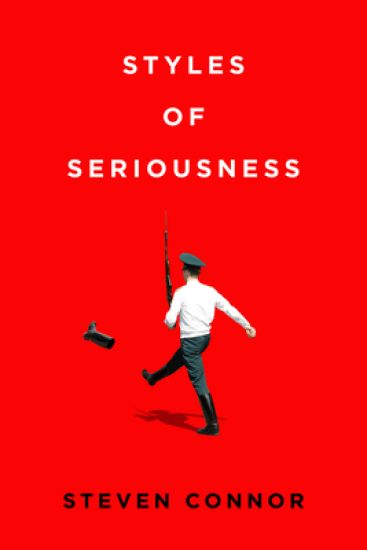
Styles of Seriousness

Styles of Seriousness

Steven Connor

STANFORD UNIVERSITY PRESS
2023
sidottu
Being serious demands serious kinds of work. In Styles of Seriousness, Steven Connor reflects on the surprisingly various ways in which a sense of the serious is made and maintained, revealing that while seriousness is the most powerful feeling, it is also the most poignantly indeterminate, perhaps because of the impossibility of being completely serious. In colloquy with philosophers such as Aristotle, Nietzsche, James, Sartre, Austin, Agamben and Sloterdijk, and writers like Shakespeare, Byron, Auden and Orwell, Connor considers the linguistic and ritual behaviors associated with different modes of seriousness: importance; intention, or ways of really "meaning things;" sincerity; solemnity; urgency; regret; warning; and ordeal. The central claim of the book is human beings are capable of taking things seriously in a way that nonhuman animals are not, for the unexpected reason that human beings are so much more versatile than most animals at not being completely serious. One always, in fact, has a choice about whether or not to take seriously something that is supposed to be so. As a consequence, seriousness depends on different kinds of formalization or stylized practice. Styles of seriousness matter, Connor shows, because human beings are incapable of simply and spontaneously existing. Being a human means having to take seriously one's style of being.
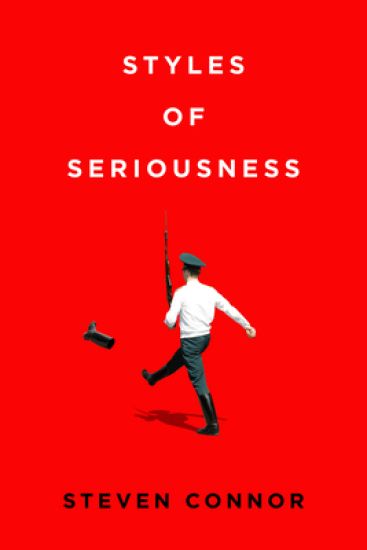
Styles of Seriousness

Styles of Seriousness

Steven Connor

STANFORD UNIVERSITY PRESS
2023
pokkari
Being serious demands serious kinds of work. In Styles of Seriousness, Steven Connor reflects on the surprisingly various ways in which a sense of the serious is made and maintained, revealing that while seriousness is the most powerful feeling, it is also the most poignantly indeterminate, perhaps because of the impossibility of being completely serious. In colloquy with philosophers such as Aristotle, Nietzsche, James, Sartre, Austin, Agamben and Sloterdijk, and writers like Shakespeare, Byron, Auden and Orwell, Connor considers the linguistic and ritual behaviors associated with different modes of seriousness: importance; intention, or ways of really "meaning things;" sincerity; solemnity; urgency; regret; warning; and ordeal. The central claim of the book is human beings are capable of taking things seriously in a way that nonhuman animals are not, for the unexpected reason that human beings are so much more versatile than most animals at not being completely serious. One always, in fact, has a choice about whether or not to take seriously something that is supposed to be so. As a consequence, seriousness depends on different kinds of formalization or stylized practice. Styles of seriousness matter, Connor shows, because human beings are incapable of simply and spontaneously existing. Being a human means having to take seriously one's style of being.
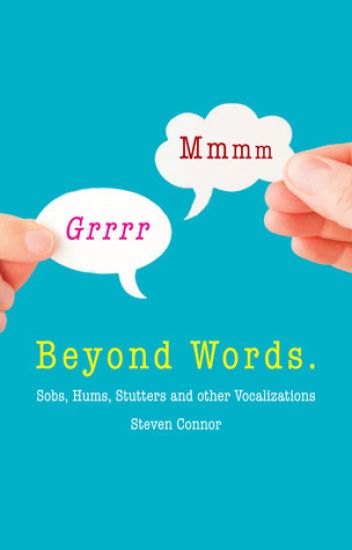
Beyond Words

Beyond Words

Steven Connor

Reaktion Books
2014
sidottu
Aristotle defined voice as 'a particular sound made by something with a soul; for nothing which does not have a soul has a voice'. Beyond Words encompasses human language outside words, the realm of the sounds of the mouth, controlled and automatic, which bring depth, meaning and confusion in equal measure to our communication as humans. Steven Connor takes in the phantasmal life of excitements, identifications and recoils associated with particular groups of vocal utterances - the guttural, the dental, the fricative and the sibilant - and reveals our beliefs, myths and responses to the growls, stutters, ums and ahs of everyday language and exchange. From the moans, whimpers and sobs of human grief, to the playful linguistic twisting of nonsense, Beyond Words probes the fringes and limits of human language, and our definitions and notions of 'voice' and meaning, to challenge our basic assumptions about what it is to communicate and where meaning lies in language. By engaging with the tics, utterances and vocal sounds usually marginalized, trivialized or ignored completely in phonetics and linguistics, Beyond Words presents the reader with a startling and fascinating new way to engage with language itself.
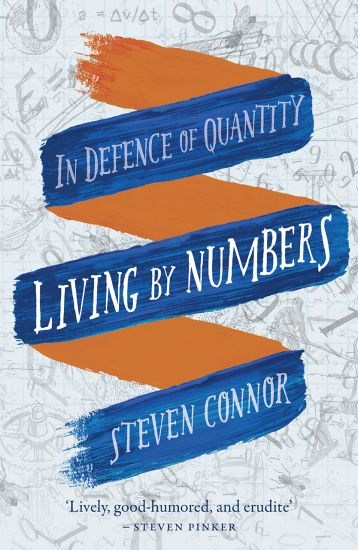
Living by Numbers

Living by Numbers

Steven Connor

Reaktion Books
2017
pokkari
Ideas about quantities, magnitudes and frequencies shape and give texture to almost everything we feel, say, dream and do. In Living by Numbers, now available in paperback, Steven Connor explores the many ways in which we live in, and by, a world of numbers. The book opens up for the first time the richness, variety and subtlety of how we do things with numbers and, just as importantly, how they do things with us.
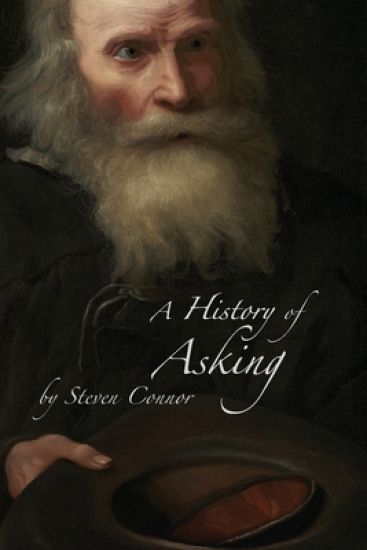
A History of Asking

A History of Asking

Steven Connor

Open Humanities Press
2023
pokkari
Asking is one of the simplest and most familiar of human actions, and has a right to be thought of as single most powerful and most variously cohering form of social-symbolic gesture. Because so much is at stake in the act of asking, asking, or asking for, almost anything, whether information, help, love or respect, can be asking for trouble, so a great deal of care must be taken with the ways in which asking occurs and is responded. A History of Asking is the first attempt to grasp the unity and variety of the technics and technologies of asking, in all its modalities, as they extend across a spectrum from weak forms like begging, pleading, praying, imploring, beseeching, entreating, suing, supplicating and soliciting, through to the more assertively and even aggressively self-authorising modes of asking, like proposing, offering, inviting, requesting, appealing, applying, petitioning, claiming and demanding. The book considers the history of 6 broad modes of petitory practice. The act of begging, both among animals and humans is considered in terms of its theatrics. The institution of the political petition, protocols for which seem to arise in also every system of government of which we have knowledge, is tracked through from late medieval to nineteenth-century Britain. The act of prayer, central to religious practice, though often the last form of religious behaviour to fall away among those lapsing from adherence, and one of the religious practices that is most likely to be adhered to in the absence of any other religious commitment, is the subject of sustained scrutiny. The appeal of prayer is essentially to the fact of participation in language, and the specific forms of commitment to the condition of being bound, bindable, or biddable by it. Wooing and the associated economics of seduction and solicitation are tracked through from the formalisation of the conventions of courtly love in the 12th century through to modern techniques of flirtation. The book revives the antique term 'suitage' in order to discuss all the forms of sueing and suitorship for favours or advantage, as well as, more broadly the act, pursued almost life-long, of trying to get one another to do things for us, in particular in indirect or vicarious forms of what may be called 'interpetition', such as the dedications of books to patrons, the institution of the testimonial or letter of reference and the practices of flattery. A History of Asking concludes with a discussion of the many ways in which our necessarily parasitic relations on each other in a complex society are both conveyed and dissimulated, especially through the ways in which we summon and salute different kinds of service.
The Madness of Knowledge

The Madness of Knowledge

Steven Connor

Reaktion Books
2019
nidottu
Many human beings have considered the powers and the limits of human knowledge, but few have wondered about the power that the idea of knowledge has over us. The Madness of Knowledge is the first book to investigate this emotional inner life of knowledge – the lusts, fantasies, dreams and fears that the idea of knowing provokes. There are in-depth discussions of the imperious will to know, of Freud’s epistemophilia, or love of knowledge, and the curiously insistent links between madness, magical thinking and the desire for knowledge. Steven Connor also probes secrets and revelations, quarreling and the history of quizzes and ‘general knowledge’, charlatanry and pretension, both the violent disdain and the sanctification of the stupid, as well as the emotional investment in the spaces and places of knowledge, from the study to the library.In an age of artificial intelligence, alternative facts and mistrust of truth, The Madness of Knowledge offers an opulent, enlarging and sometimes unnerving psychopathology of intellectual life.
The Madness of Knowledge: On Wisdom, Ignorance and Fantasies of Knowing
Many human beings have considered the powers and the limits of human knowledge, but few have wondered about the power that the idea of knowledge has over us. Steven Connor's The Madness of Knowledge is the first book to investigate this emotional inner life of knowledge--the lusts, fantasies, dreams, and fears that the idea of knowing provokes. There are in-depth discussions of the imperious will to know, of Freud's epistemophilia (or love of knowledge), and the curiously insistent links between madness, magical thinking, and the desire for knowledge. Connor also probes secrets and revelations, quarreling and the history of quizzes and "general knowledge," charlatanry and pretension, both the violent disdain and the sanctification of the stupid, as well as the emotional investment in the spaces and places of knowledge, from the study to the library. In an age of artificial intelligence, alternative facts, and mistrust of truth, The Madness of Knowledge offers an opulent, enlarging, and sometimes unnerving psychopathology of intellectual life.
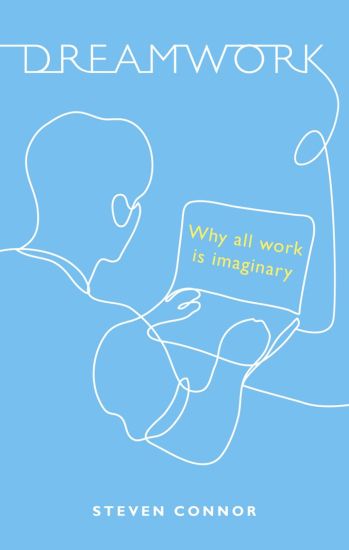
Dreamwork

Dreamwork

Steven Connor

REAKTION BOOKS
2023
sidottu
Dreamwork is a book about the ideas, dreams, dreads and ideals we have regarding work. Its central argument is that, although we depend on the idea of work for our identity as humans, we feel we must disguise from ourselves the fact that we do not know what work is. There is no example of work that nobody might under some circumstances do for fun. All work is imaginary – which is not to say that it is simply illusory, but rather that, in order to count as work, it must be imagined to be work; so that a large part of what we mean by working is this work of imagining. Work is therefore essentially mystical – just the opposite of what it is taken to be. Dreamwork looks in turn at worries about whether or not work is hard; the importance of places of work; the meanings of hobbies, holidays and sabbaths; and the history of dreams of redeeming work.