Kirjojen hintavertailu. Mukana 11 627 624 kirjaa ja 12 kauppaa.

Kirjahaku

Etsi kirjoja tekijän nimen, kirjan nimen tai ISBN:n perusteella.

1000 tulosta hakusanalla Steven L. Berg

Jewish Alcoholism and Drug Addiction

Jewish Alcoholism and Drug Addiction

Steven L. Berg

Greenwood Press
1993
sidottu
This comprehensive annotated bibliography is the first to cover Jewish alcoholism and drug addiction in detail, with 583 citations to scholarly and popular books, articles, and reports. A research consultant dealing with substance abuse, Steven Berg describes general, empirical, and theoretical studies, first-person accounts, and case studies. He compares Jewish alcoholism and addiction to other religious and ethnic group behavior. His chapters are organized also to give information about various Jewish minority alcoholism and addiction, recovery programs and the role of the rabbi in them, alcoholism in Israel, and literary portrayals of Jewish alcoholics and addicts. Author, title, and subject indexes make this guide easily accessible to researchers dealing with health and medical issues, ethnic studies, and the psychology of substance abuse.
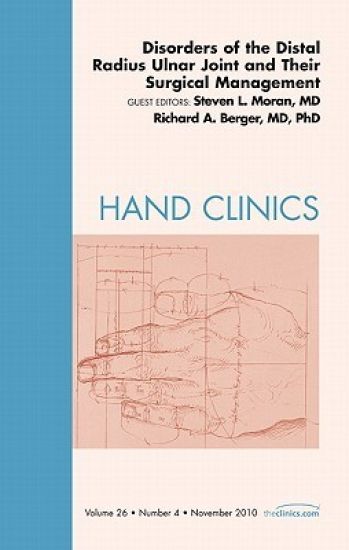
Disorders of the Distal Radius Ulnar Joint and Their Surgical Management, An Issue of Hand Clinics
Articles in this issue of Hand Clinics include "Osseous and Soft Tissue Anatomy of the DRUJ?, "Imaging of the TFCC and DRUJ?, "Surgical Approaches to the DRUJ?, "Management of Acute Dislocations and Distal Ulnar Fractures?, "Arthroscopic and Open Repair of the TFCC?, "Ulnar Impaction?, "The Sauve-Kapaji Procedure: Indications and Tips for Surgical Success?, "Split Tears of the Ulnotriquetral Ligament?, "The Management of Chronic Instability?, "DRUJ Arthroplasty?, "Salvage of Failed DRUJ Reconstruction?, "Management of Injuries to the Interosseous Membrane?, "The Management of Congenital and Acquired Problems of the DRUJ in Children?.
Henri Bergson et le problème de l'intelligence humaine

Henri Bergson et le problème de l'intelligence humaine

Joly Ahnam Dzanvoula; Stéven Modeste Yombi

Editions Universitaires Europeennes
2021
pokkari
Cet ouvrage analyse d'un point de vue pist mologique et anthropologique la probl matique de l'intelligence humaine telle que d ploy e dans le dispositif philosophique de Henri Bergson. En effet, l' tude bio-historique du d ploiement des consciences oriente l'intelligence humaine vers un versant pratique et technique. Ceci laisse entendre que pour Bergson, l'intelligence est une facult proprement humaine dont la vocation primitive est de transformer la mati re et de r pondre au besoin d'adaptation de l'homme son environnement. Une telle orientation r flexive fait de Bergson un penseur matinal de l'intelligence artificielle. Partant de cette constatation, notre tude, en s'appuyant sur la m thode comparative, tente de circonscrire dans la mesure du possible les implications et applications de l'intelligence artificielle en contexte africain. En dernier essor, elle propose des pistes susceptibles de mieux orienter les politiques d'investissement en mati re du num rique.
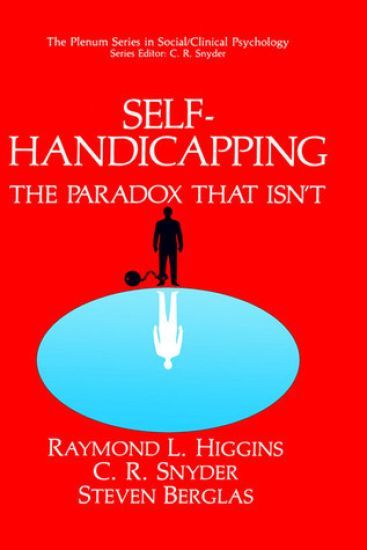
Self-Handicapping

Self-Handicapping

Raymond L. Higgins; C.R. Snyder; Steven Berglas

Kluwer Academic/Plenum Publishers
1990
sidottu
The concept of self-handicapping can be legitimately anchored in a vari­ ety of intellectual contexts, some old and some newer. As this volume reminds us, Alfred Adler was perhaps the first to articulate the signifi­ cance of various self-defeating claims and gestures for protecting the self­ concept. Thus the apparent paradox of "defeat" in the interests of "pro­ tection. " More recently (but still more than 30 years ago), Heider's "naive psychology" added attributional rhetoric to the description of self-defeat­ ing strategies. While predominantly cognitive in its thrust, the attribu­ tional approach incorporated several motivational influences-especially those involving egocentric concerns. Heider hardly violated our common sense when he suggested that people are inclined to attribute their performances in a self-serving manner: the good things I caused; the bad things were forced upon me. The notion of self-handicapping strategies, proposed by Berglas and myself a little more than a decade ago, capitalized on these homely truths while adding a particular proactive twist. We not only make ex­ cuses for our blunders; we plan our engagements and our situational choices so that self-protective excuses are unnecessary. In doing so, we use our attributional understanding to arrange things so that flawed and failing performances will not be interpreted in ways that threaten our self-esteem.
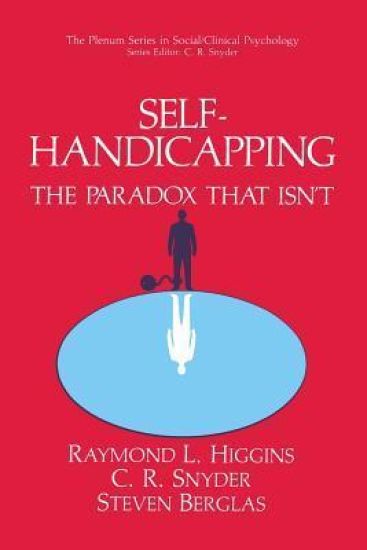
Self-Handicapping

Self-Handicapping

Raymond L. Higgins; C.R. Snyder; Steven Berglas

Springer-Verlag New York Inc.
2013
nidottu
The concept of self-handicapping can be legitimately anchored in a vari­ ety of intellectual contexts, some old and some newer. As this volume reminds us, Alfred Adler was perhaps the first to articulate the signifi­ cance of various self-defeating claims and gestures for protecting the self­ concept. Thus the apparent paradox of "defeat" in the interests of "pro­ tection. " More recently (but still more than 30 years ago), Heider's "naive psychology" added attributional rhetoric to the description of self-defeat­ ing strategies. While predominantly cognitive in its thrust, the attribu­ tional approach incorporated several motivational influences-especially those involving egocentric concerns. Heider hardly violated our common sense when he suggested that people are inclined to attribute their performances in a self-serving manner: the good things I caused; the bad things were forced upon me. The notion of self-handicapping strategies, proposed by Berglas and myself a little more than a decade ago, capitalized on these homely truths while adding a particular proactive twist. We not only make ex­ cuses for our blunders; we plan our engagements and our situational choices so that self-protective excuses are unnecessary. In doing so, we use our attributional understanding to arrange things so that flawed and failing performances will not be interpreted in ways that threaten our self-esteem.
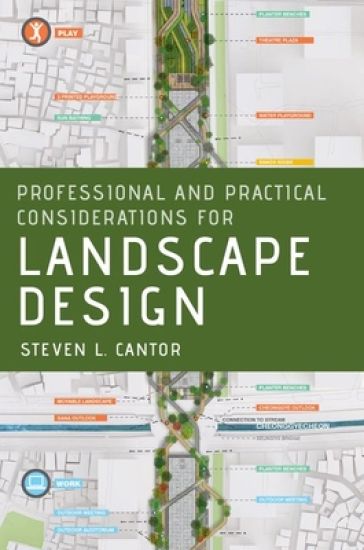
Professional and Practical Considerations for Landscape Design

Professional and Practical Considerations for Landscape Design

Steven L. Cantor

Oxford University Press Inc
2020
sidottu
Drawing on decades of professional practice and teaching experience, Steven L. Cantor's Professional and Practical Considerations for Landscape Design explains the field of landscape architecture, outlining with authority how to turn drawings of designs into creative, purposeful, and striking landscapes and landforms in today's world. This comprehensive guide consists of everything a young professional might encounter from conception through final project archiving, ensuring readers have both the tools necessary to keep up with advancements in the field and the practical business knowledge to build life-long partnerships. Each of the book's concise chapters emphasize a specific aspect of landscape architecture practice, from the administration of designs for contracts, areas of practice, human resources, marketing, construction materials, sustainability and ethics. Each chapter is written in a style that best suits the material. Alongside detailed definitions and practical "do's and don'ts" are 30 complex sample problems ranging in difficulty for both individuals and groups. An array of original photographs and clear examples in both black and white and color articulate standards and inspire future possibilities, featuring the work of Vicky Chan, founder of Avoid Obvious Architects, and Richard Alomar, Associate Professor of Landscape Architecture at Rutgers and co-founder of New York Urban Sketchers. By combining the author's unique depth of knowledge with real-world case studies from America, Asia, and Europe, Professional and Practical Considerations for Landscape Design is an up-to-date resource for every level of reader, from students in landscape architecture programs to professionals working in public or private practice, engineering, consulting, or contracting.
Professional and Practical Considerations for Landscape Design

Professional and Practical Considerations for Landscape Design

Steven L. Cantor

Oxford University Press Inc
2020
nidottu
Drawing on decades of professional practice and teaching experience, Steven L. Cantor's Professional and Practical Considerations for Landscape Design explains the field of landscape architecture, outlining with authority how to turn drawings of designs into creative, purposeful, and striking landscapes and landforms in today's world. This comprehensive guide consists of everything a young professional might encounter from conception through final project archiving, ensuring readers have both the tools necessary to keep up with advancements in the field and the practical business knowledge to build life-long partnerships. Each of the book's concise chapters emphasize a specific aspect of landscape architecture practice, from the administration of designs for contracts, areas of practice, human resources, marketing, construction materials, sustainability and ethics. Each chapter is written in a style that best suits the material. Alongside detailed definitions and practical "do's and don'ts" are 30 complex sample problems ranging in difficulty for both individuals and groups. An array of original photographs and clear examples in both black and white and color articulate standards and inspire future possibilities, featuring the work of Vicky Chan, founder of Avoid Obvious Architects, and Richard Alomar, Associate Professor of Landscape Architecture at Rutgers and co-founder of New York Urban Sketchers. By combining the author's unique depth of knowledge with real-world case studies from America, Asia, and Europe, Professional and Practical Considerations for Landscape Design is an up-to-date resource for every level of reader, from students in landscape architecture programs to professionals working in public or private practice, engineering, consulting, or contracting.
Marriage in Men's Lives

Marriage in Men's Lives

Steven L. Nock

Oxford University Press Inc
1998
sidottu
Because men and women live in worlds that are organized around gender, their marriages reflect differing realities. Marriage in Men's Lives focuses on marriage as a system of rules, customs, and expectations, and shows that marriage changes men on basic dimensions of achievement, participation in public and social life, and philanthropy because marriage reinforces such behaviours as part of adult masculinity. Using a huge database of over 6,000 interviews with men the author has studied since 1979, Nock draws some interesting and far-reaching conclusions about the nature of marriage, and predicts that marriage is definitely here to stay.
King David

King David

Steven L. McKenzie

Oxford University Press Inc
2000
sidottu
One of the most important and complex characters in the Bible, King David has been the subject of innumerable portraits, both artistic and literary. Michaelangelo's magnificent sculpture of him is perhaps the single best known work of art in the world, and the story of the humble shepherd who slew Goliath and became king has assumed a powerful mythological status. But was David a real person--and if so what kind of person was he? Through a close and critical reading of biblical texts, ancient history, and recent archeological discoveries, Steven L. McKenzie concludes that David was indeed a real person. This David, however, was no hero but a usurper, adulterer, and murderer--a Middle Eastern despot of a familiar type. McKenzie shows that the story of humble beginnings is utterly misleading: "shepherd" is a metaphor for "king," and David came from a wealthy, upper-class background. Similarly, McKenzie reveals how David's ascent to power, traditionally attributed to popularity and divine blessing, in fact resulted from a campaign of terror and assassination. While instituting a full-blown Middle Eastern monarchy, David was an aggressive leader, a devious politician, and a ruthless war chief. Throughout his scandalous reign, important figures who stood in his way died at convenient times, under questionable circumstances. Even his own sons were not spared. David's story, writes McKenzie, "reads like a modern soap opera, with plenty of sex, violence, and struggles for power." Carefully researched and vividly written, King David: An Unauthorized Biography offers a provocative reappraisal of the life of one of the Bible's most compelling figures.
King David

King David

Steven L. McKenzie

Oxford University Press Inc
2002
nidottu
Through a close and critical reading of biblical texts, ancient history, and recent archeological discoveries, Steven L. McKenzie concludes that David was indeed a real person. This David was not the humble shepherd who slew Goliath and became king, however, but was a usurper, adulterer, and murderer--a Middle Eastern despot of a familiar type. McKenzie shows that the story of humble beginnings is utterly misleading: "shepherd" is a metaphor for "king," and David came from a wealthy, upper-class background. Similarly, McKenzie reveals how David's ascent to power, traditionally attributed to popularity and divine blessing, in fact resulted from a campaign of terror and assassination. While instituting a full-blown Middle Eastern monarchy, David was an aggressive leader, a devious politician, and a ruthless war chief. Throughout his scandalous reign, important figures who stood in his way died at convenient times, under questionable circumstances. Even his own sons were not spared. David's story, writes McKenzie, "reads like a modern soap opera, with plenty of sex, violence, and struggles for power."
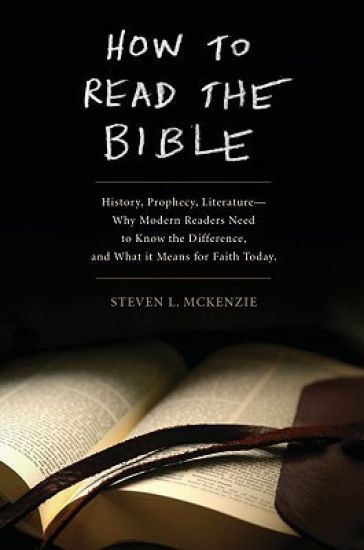
How to Read the Bible

How to Read the Bible

Steven L. McKenzie

Oxford University Press Inc
2006
sidottu
More people read the Bible than any other book. Indeed, many try to live their lives according to its words. The question is, do they understand what they're reading? As Steven McKenzie shows in this provocative book, quite often the answer is, "No." McKenzie argues that to comprehend the Bible we must grasp the intentions of the biblical authors themselves--what sort of texts they thought they were writing and how they would have been understood by their intended audience. In short, we must recognize the genres to which these texts belong. McKenzie examines several genres that are typically misunderstood, offering careful readings of specific texts to show how the confusion arises, and how knowing the genre produces a correct reading. The book of Jonah, for example, offers many clues that it is meant as a humorous satire, not a straight-faced historical account of a man who was swallowed by a fish. Likewise, McKenzie explains that the very names "Adam" and "Eve" tell us that these are not historical characters, but figures who symbolize human origins ("Adam" means man, "Eve" is related to the word for life). Similarly, the authors of apocalyptic texts--including the Book of Revelation--were writing allegories of events that were happening in their own time. Not for a moment could they imagine that centuries afterwards, readers would be poring over their works for clues to the date of the Second Coming of Christ, or when and how the world would end. For anyone who takes reading the Bible seriously and who wants to get it right, this book will be both heartening and enlightening.
How to Read the Bible

How to Read the Bible

Steven L. McKenzie

Oxford University Press Inc
2009
nidottu
More people read the Bible than any other book and, as Steven McKenzie shows in this provocative volume, most of us misread it. McKenzie argues that to comprehend the Bible we must grasp the intentions of the biblical authors themselves--what sort of texts they thought they were writing and how they would have been understood by their contemporaries. McKenzie examines several genres that are typically misunderstood, offering careful readings of specific texts to show how the confusion arises, and how knowing the genre produces a correct reading. The book of Jonah, for example, offers many clues that it is meant as a humorous satire, not a straight-faced historical account of a man who was swallowed by a fish. Likewise, the very names "Adam" (man) and "Eve" (life) tell us that these are not historical characters, but figures who symbolize human origins. For anyone who takes reading the Bible seriously and who wants to get it right, this book will be enlightening.
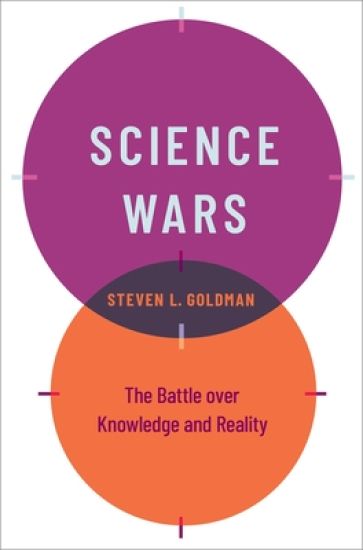
Science Wars

Science Wars

Steven L. Goldman

OXFORD UNIVERSITY PRESS INC
2022
sidottu
There is ample evidence that it is difficult for the general public to understand and internalize scientific facts. Disputes over such facts are often amplified amid political controversies. As we've seen with climate change and even COVID-19, politicians rely on the perceptions of their constituents when making decisions that impact public policy. So, how do we make sure that what the public understands is accurate? In this book, Steven L. Goldman traces the public's suspicion of scientific knowledge claims to a broad misunderstanding, reinforced by scientists themselves, of what it is that scientists know, how they know it, and how to act on the basis of it. In sixteen chapters, Goldman takes readers through the history of scientific knowledge from Plato and Aristotle, through the birth of modern science and its maturation, into a powerful force for social change to the present day. He explains how scientists have wrestled with their own understanding of what it is that they know, that theories evolve, and why the public misunderstands the reliability of scientific knowledge claims. With many examples drawn from the history of philosophy and science, the chapters illustrate an ongoing debate over how we know what we say we know and the relationship between knowledge and reality. Goldman covers a rich selection of ideas from the founders of modern science and John Locke's response to Newton's theories to Thomas Kuhn's re-interpretation of scientific knowledge and the Science Wars that followed it. Goldman relates these historical disputes to current issues, underlining the important role scientists play in explaining their own research to nonscientists and the effort nonscientists must make to incorporate science into public policies. A narrative exploration of scientific knowledge, Science Wars engages with the arguments of both sides by providing thoughtful scientific, philosophical, and historical discussions on every page.
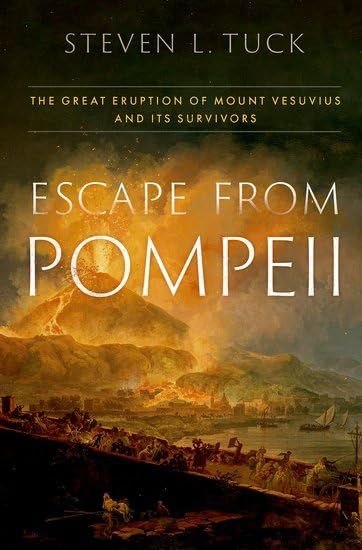
Escape from Pompeii

Escape from Pompeii

Steven L. Tuck

OXFORD UNIVERSITY PRESS INC
2026
sidottu
A story of triumph out of tragedy, uncovered in the ashes of Vesuvius The archaeological park of Pompeii is one of the most famous sites of destruction anywhere in the world. From the time of the eruption of Vesuvius in 79 CE until the eighteenth century, Pompeii and its neighbor Herculaneum lay preserved under a thick layer of volcanic material. Since excavations began three hundred years ago, Pompeii has been revealing the secrets of its victims and the ordinary shape of their lives prior to the catastrophe. But did anyone survive the disaster? In popular culture, the eruption is viewed as an apocalyptic event in which everyone died, while scholars generally assume that some escaped. Steven L. Tuck settles that debate. He starts by establishing the circumstances and timeline of the eruption and the evidence that people at both Pompeii and Herculaneum had the chance to escape the eruption. From there, he moves to the search for survivors. Using evidence from inscriptions supported by archaeological, documentary, and literary sources, Tuck finds survivors in twelve different communities and uncovers details on how they rebuilt their lives, livelihoods, and identities after fleeing the volcano. While some survivors integrated quickly into their new communities and used their new city's name in the personal names of their first generation, others preserved cultural markers from their destroyed communities through language, religious dedications, and renewed businesses. Many of the families that escaped intermarried with other refugee families, but also ran for public office in their new cities, made generous donations to their communities, and integrated while maintaining their former identity. Some refugee families came to the aid of the less fortunate by taking in poor and orphaned survivors, while others married beneath their previous station. The Roman government responded to the needs of the refugee communities with new housing, infrastructure, and services, but, as Tuck demonstrates, the real work was done by the refugees themselves. By asking new questions about Pompeii and innovatively examining the evidence, Escape from Pompeii proves the survival of Pompeians and Herculaneans after the eruption. It sheds new insight into their lives, pre- and post-eruption, and provides new conclusions about the Roman world and its response to unimaginable suffering.
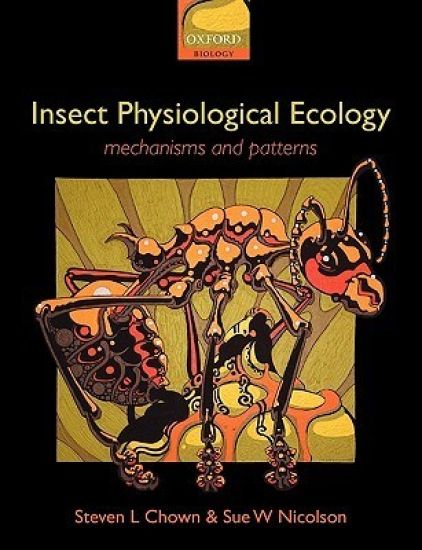
Insect Physiological Ecology

Insect Physiological Ecology

Steven L. Chown; Sue Nicolson

Oxford University Press
2004
nidottu
This book provides a modern, synthetic overview of interactions between insects and their environments from a physiological perspective that integrates information across a range of approaches and scales. It shows that evolved physiological responses at the individual level are translated into coherent physiological and ecological patterns at larger, even global scales. This is done by examining in detail the ways in which insects obtain resources from the environment, process these resources in various ways, and turn the results into energy which allows them to regulate their internal environment as well as cope with environmental extremes of temperature and water availability. The book demonstrates that physiological responses are not only characterized by substantial temporal variation, but also shows coherent variation across several spatial scales. At the largest, global scale, there appears to be substantial variation associated with the hemisphere in which insects are found. Such variation has profound implications for patterns of biodiversity as well as responses to climate change, and these implications are explicitly discussed. The book provides a novel integration of the understanding gained from broad-scale field studies of many species and the more narrowly focused laboratory investigations of model organisms. In so doing it reflects the growing realization that an integration of mechanistic and large-scale comparative physiology can result in unexpected insights into the diversity of insects.
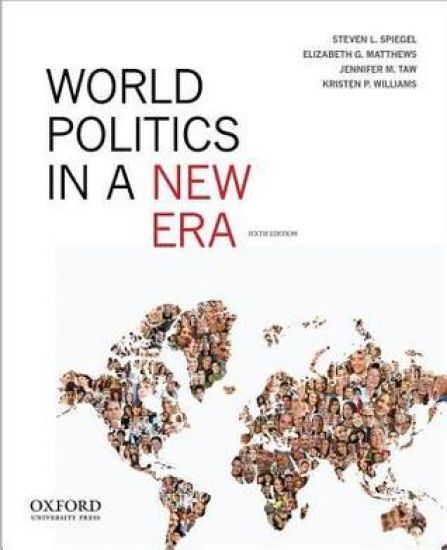
World Politics in a New Era

World Politics in a New Era

Steven L. Spiegel; Elizabeth G. Matthews; Jennifer M. Taw; Kristen P. Williams

Oxford University Press Inc
2014
nidottu
World Politics in a New Era is a comprehensive and thought-provoking text for introductory courses on world politics. Reflecting the changes that have occurred worldwide - from the collapse of the Berlin Wall to recent upheavals in the global financial sphere - the book integrates coverage of the competing threads of globalization and fragmentation, examining how they tangle and weave through studies of global politics, economics, and culture. World Politics in a New Era, 6e, provides an in-depth treatment of the field by introducing key contemporary issues along with theory; supporting these issues with historical context; and giving students the analytical tools to apply the theories to current issues. It introduces the major theories used to explain international relations - realism, liberalism, constructivism, and a few select alternatives. Discussions of these theories are then incorporated into the narrative throughout the text, creating a useful framework for analysis. Extensive historical coverage in four chapters (3-6) reviews key events in world politics from the Peace of Westphalia in 1648 to the present, offering students the best context to fully comprehend the modern political stage. Chapters 7-14 cover key topics in contemporary world politics: security, trade and investment, development, human and resource issues, global governance, and ethics.
Serfdom and Social Control in Russia

Serfdom and Social Control in Russia

Steven L. Hoch

University of Chicago Press
1989
nidottu
This book includes an excellent analysis of the material and demographic foundations of patriarchal society, which will force historians to reevaluate the profitability of the estate economy and the standard of living among Russian serfs....This is an important book which should be read by anyone interested in peasant studies and servile systems of production.
An Interdisciplinary Introduction to Image Processing
Basic principles of image processing and programming explained without college-level mathematics. This book explores image processing from several perspectives: the creative, the theoretical (mainly mathematical), and the programmatical. It explains the basic principles of image processing, drawing on key concepts and techniques from mathematics, psychology of perception, computer science, and art, and introduces computer programming as a way to get more control over image processing operations. It does so without requiring college-level mathematics or prior programming experience. The content is supported by PixelMath, a freely available software program that helps the reader understand images as both visual and mathematical objects. The first part of the book covers such topics as digital image representation, sampling, brightness and contrast, color models, geometric transformations, synthesizing images, stereograms, photomosaics, and fractals. The second part of the book introduces computer programming using an open-source version of the easy-to-learn Python language. It covers the basics of image analysis and pattern recognition, including edge detection, convolution, thresholding, contour representation, and K-nearest-neighbor classification. A chapter on computational photography explores such subjects as high-dynamic-range imaging, autofocusing, and methods for automatically inpainting to fill gaps or remove unwanted objects in a scene. Applications described include the design and implementation of an image-based game. The PixelMath software provides a "transparent" view of digital images by allowing the user to view the RGB values of pixels by zooming in on an image. PixelMath provides three interfaces: the pixel calculator; the formula page, an advanced extension of the calculator; and the Python window.