Murder Mystery / 5m, 2f 2008 Mystery Writer's of America Edgar Award nominee for Best Play. After robbing a savings and loan, Brian takes refuge in a down-and-out used book store run by Maddy and Betty. The book store's principal customer is Christopher, who steals books his brother pays for at the end of each week. A suspicious cop has the shop surrounded. Roger, a public defender, enters in a clown costume. It's his day off and he is moonlighting. After bullets fly during a comic siege, Brian turns himself in to Claudia, a no-nonsense assistant district attorney, but first he hides some of the money he has stolen. Brian's partner Eddie is under Claudia's thumb and ordered to remain mute. Late that night, Brian, Maddy, Betty, Christopher and Roger converge on the book store to retrieve the stolen money. Brian has made a deal to return the stolen money. However everyone decides to kill Brian and share the money. In confusion, Betty is shot by Maddy, Brian decides to turn himself in, but first he lets the women keep some of the money.
Mystery Drama / Stuart Kaminsky / 7m (one teen), 2f / Unit Set Winner of the 2008 Angie Award for Playwrighting! The Edgar Prize-winning author Kaminsky tells the tale of one of literature's most famous detectives: Sherlock Holmes. In a witty, imaginative story filled with twists and unexpected surprises, Detective Holmes unravels a murder only to find himself the unwilling target of the killer-at-large. Along with the aid of his loyal and inquisitive companion, Dr. Watson, Sherlock Holmes uses his masterful power of deduction to make a nebulous situation seem "simply elementary." The Final Toast is an exciting new take on the classic characters of fiction we know and love, and its ending will please even the most savvy mystery connoisseurs. The Final Toast had its world premier at the 2008 International Mystery Writer's Festival.
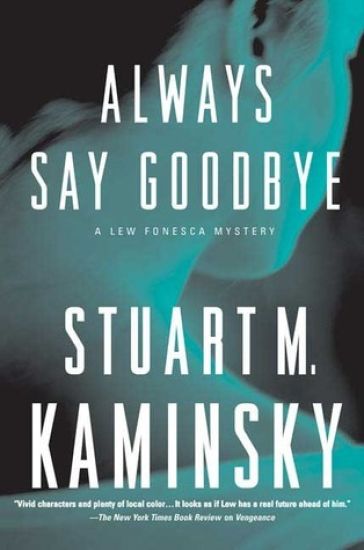
Four years ago, Lew Fonesca's wife Catherine was struck and killed in a hit-and-run. Grief-stricken, he fled to Chicago and wound up in Sarasota, Florida where he's made a living as a process server. Four years on, he's still savoring his depression like fine wine, and his therapist--and sparring partner--has had enough. It's time, she tells Lew, to get on with his life. Time to go back to Chicago and find out what really happened to his wife. Lew hates to admit it, but Ann Horowitz might be right. Even if it kills him, he has to know the truth about his wife's death. So he returns to his home, his family, his friends--and a mystery.He's resolved to dig until he finds out who killed his wife. In doing so, he'll uncover both sweet and painful memories of his past. He'll also confront a murderer who'll not hesitate to kill again to make sure hidden secrets stay buried.
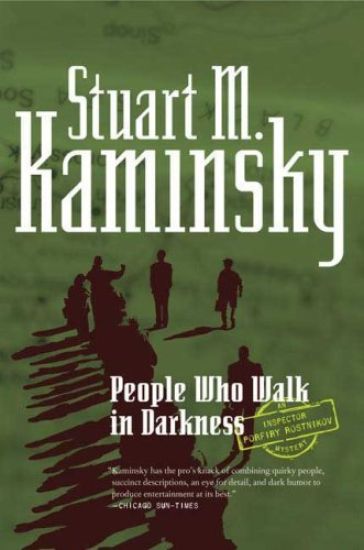
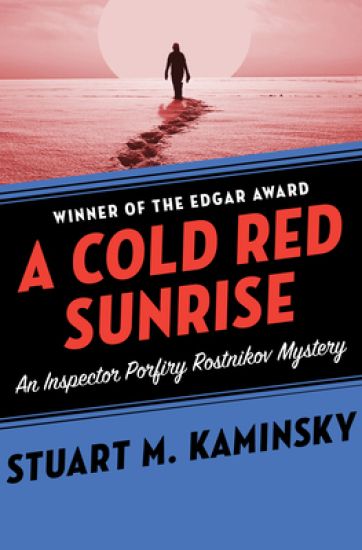
After a very long absence, Forge is delighted to be bringing back one of Edgar-Award winning Stuart Kaminsky's best loved characters, Inspector Porfiry Petrovich Rostnikov. Rostnikov is a Russian bear of a man, an honest policeman in a very dishonest post-Soviet Russia. Known as "The Washtub," Rostnikov is one of the most engaging and relevant characters in crime fiction, a sharp and caring policeman as well as the perfect tour guide to a changing (that is, disintegrating) Russia. Surviving pogroms and politburos, he has solved crimes, mostly in spite of the powers that rule his world. In People Who Walk in Darkness, Rostnikov travels to Siberia to investigate a murder at a diamond mine, where he discovers an old secret...and an even older personal problem. His compatriots head to Kiev on a trail of smuggled diamonds and kidnapped guest workers, and what they discover leads them to a vast conspiracy that not only has international repercussions but threatens them on a very personal level. People Who Walk in Darkness is a fast-paced novel of modern Russia told by one of mystery's finest storytellers.
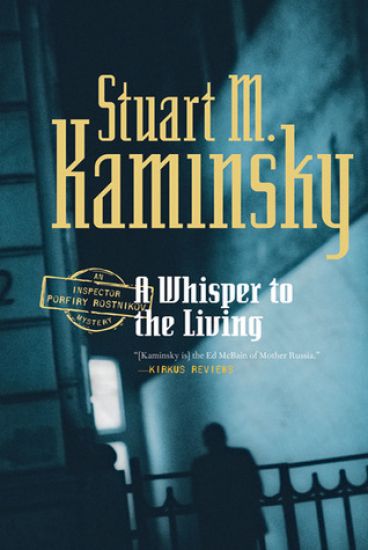
"A Whisper to the Living" continues the adventures (some would say trials and tribulations) of Inspector Porfiry Petrovich Rostnikov, an honest policeman in a very dishonest post-Soviet Union. Rostnikov is one of the most engaging and relevant characters in crime fiction, a sharp and caring policeman as well as the perfect tour guide to a changing (that is, disintegrating) Russia. This time Rostnikov and his team are searching for a serial killer who has claimed at least 40 victims. They're also handling the case of a missing boxer known as the Giant and two dead bodies who aren't missing at all the boxer's wife and his sparring partner. And then there is the problem of protecting a visiting British journalist who is working on a story about a Moscow prostitution ring and in doing so Rostnikov and his team uncover a chain of murders that lead to a source too high to be held accountable if the police want to keep their jobsOr their lives."
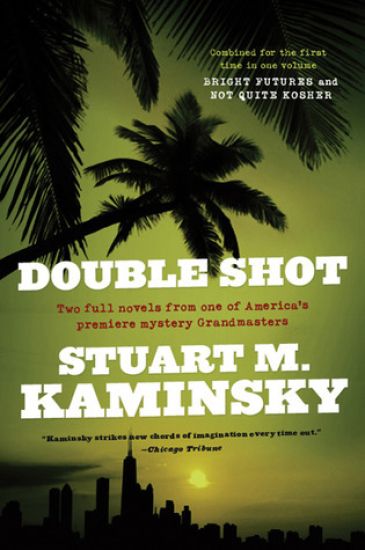
Abe Lieberman: a strong, sympathetic Chicago cop. His love for his family is matched by his quiet, zealous commitment to do what is right. Sometimes he's faced with some uncomfortable ethical choices in order to see that justice rather than the letter of the law is meted out. Lou Fonesca a world-weary guy who got in a car and just started driving after his wife died and wound up in front of a Dairy Queen in Sarasota. He now makes his way amid bail jumpers and lost wives, solving the little cases and trying to get by. What do these two men have in common? They are both created by one of America's best loved mystery authors, Stuart Kaminsky. Putting two of his most beloved series into one volume gives readers an introduction into Kaminsky's world. "Not Quite Kosher "and "Bright Futures" and are two full length novels that Kaminsky fans will cheer at. "Double Shot "introduces new readers to a national treasure in the mystery field."
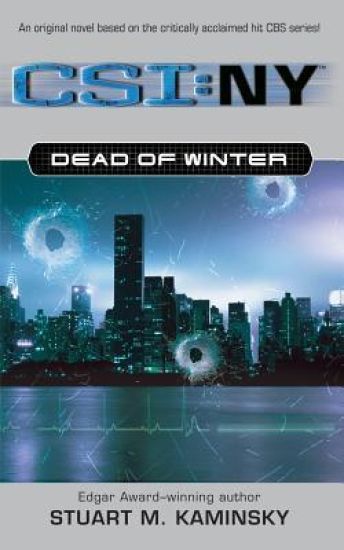
A thrilling original novel based on the television series CSI: New York Detective Mac Taylor is a dedicated and driven crime-scene investigator who believes that everything is connected and everyone has a story. He and his partner, Detective Stella Bonasera, lead a team of experts through the gritty and kinetic world of New York City. These skilled investigators, who see New York in a unique light, follow the evidence as they piece together clues and eliminate doubt to ultimately crack their cases. The body of a middle-aged man is found in the elevator of a ritzy doorman building on the Upper East Side. Mac Taylor and Aiden Burn's initial investigation yields no bullets, no DNA evidence, and no motive. Could this be the perfect crime? Meanwhile, only a few blocks away, Stella Bonasera and Danny Messer investigate the murder of a witness being held in protective custody. The law enforcement officers on duty swear that the victim spent the night in a locked hotel room--only to be found dead in the morning. From the heart of midtown to the outer boroughs, the New York CSI team must piece together the evidence and solve two puzzling crimes in the city that never sleeps.
An original novel based on the critically acclaimed hit CBS series CSI: New York, by one of the most impressive crime writers of the twentieth century. Detective Mac Taylor is a dedicated crime scene investigator who believes that everything is connected and everyone has a story. He and Detective Stella Bonasera lead a team of crack forensic experts through the gritty and kinetic world of New York City as they piece together clues and eliminate doubt to ultimately crack their cases. A modest home in a suburban Queens neighborhood is the unlikely site of a grisly crime scene: a married couple and their daughter are found brutally murdered. Missing from the scene is the couple's young son, and Mac Taylor and Danny Messer soon uncover signs of a possible kidnapping. Can they find him before it's too late? In a heavily Orthodox Jewish neighborhood in Brooklyn, the body of a devoutly religious man is found ritually displayed on the floor of his synagogue. Stella Bonasera and Aiden Burn initially suspect a fringe fundamentalist group that has had run-ins with the victim's congregation, but the group is led by a charismatic and antagonistic man who does everything he can to stonewall the team's investigation. Two very different crimes, with one thing in common: CSI investigators who won't stop until they uncover the truth.
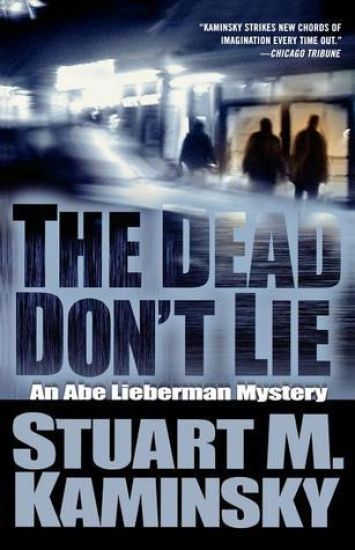
"The Dead Don't Lie" is the latest in Edgar Award winner and MWA's Grand Master Stuart Kaminsky's Abe Lieberman mystery series. Lieberman and his partner, Bill Hanrahan, are hell or heaven bent on making the mean streets of Chicago just a little safer.As usual they have their hands full. Three prominent members of the Turkish community are all brutally murdered and Lieberman must find out what, if anything, ties these murders together. It doesn't help that the key to the puzzle might be an event that took place over a century ago.Bill Hanrahan finds himself assigned to a case where a hospitalized chef claims to have been beaten by two people and shot by a third, a bespectacled Chinese man. As Bill digs deeper he finds himself at odds with an old nemesis, a man who has an unusual affinity for Bill's wife.Both Lieberman and Hanrahan struggle to do the right thing even if it means bending the letter, not the spirit, of the law.
Carl Zwick is an aging Chicago Cubs baseball player. Sometimes he feels like he's spent his life hitting into double plays, but he's finally gotten onto the right track. Then tragedy strikes him out. Anita Mills is a pretty single black mother just trying to get by. A random act of brutality in one of Chicago's rougher neighborhoods permanently ends her struggle.Richard Allen Smith walks the streets of ChiTown saying God has sent him. He has an unusual, rather nasty way of getting converts to see the light.What do these people have in common? Nothing, it would seem, except they are all part of Detective Abe Lieberman's very long day. Lieberman, a sad, baggy-eyed spaniel of a man with the patience of Job and the wisdom of Solomon is trying his best to make his beloved Chicago a better place. But when Lieberman and his partner, Bill Hanrahan, encounter these three very different situations they find that there are ties that bind and ties that can cut a man's heart out. Abe Lieberman faces a Gordian knot that he must somehow untangle--and if he makes a mistake, someone very near to him could die.
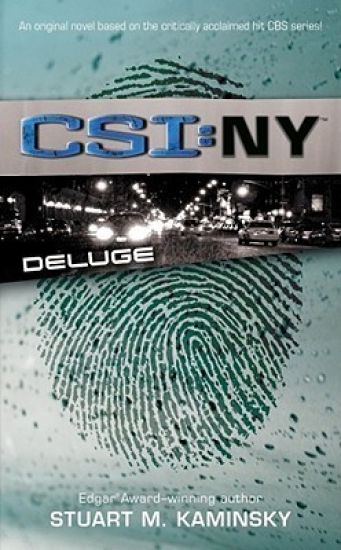
Days and nights of heavy spring rain threaten to cripple New York City. Neighborhoods are experiencing periodic blackouts. People have been reported electrocuted by fallen power lines. Flooding of some subway lines has stopped trains in their tracks. And in the midst of the deluge, the CSI team has three cases to solve. Mac Taylor and Don Flack are on the trail of the perpetrator of a string of grisly murders with one thing in common: initials carved into the victims' bodies. When an unusual connection is found between the victims' lives, Mac realizes the killer isn't finished -- not by a long shot. Lindsay Monroe and Danny Messer investigate the death of a teacher at an exclusive Manhattan private school. The victim seems like everyone's favorite teacher on the surface -- but they soon uncover a darker secret lurking beneath. Stella Bonasera and Sheldon Hawkes are on-site at a suspicious building collapse when shifting rubble traps Hawkes in a deep pit with a mysterious stranger. Tensions rise as their oxygen starts to run out.... The intrepid members of New York's crack forensic team must race against time and the elements to bring three very different criminals to justice.
On Liberty is a philosophical work by the English philosopher John Stuart Mill, originally intended as a short essay. The work, published in 1859, applies Mill's ethical system of utilitarianism to society and the state.Mill attempts to establish standards for the relationship between authority and liberty. He emphasizes the importance of individuality, which he conceived as a prerequisite to the higher pleasures-the summum bonum of utilitarianism. Furthermore, Mill criticizes the errors of past attempts to defend individuality where, for example, democratic ideals resulted in the "tyranny of the majority." Among the standards established in this work are Mill's three basic liberties of individuals, his three legitimate objections to government intervention, and his two maxims regarding the relationship of the individual to society. On Liberty was a greatly influential and well received work, although it did not go without criticism. Some attacked it for its apparent discontinuity with Utilitarianism, while others criticized its vagueness. The ideas presented in On Liberty have remained the basis of much liberal political thought. It has remained in print continuously since its initial publication. To this day, a copy of On Liberty is passed to the president of the British Liberal Democrats as a symbol of office. A copy of the same book is also presented to and then held by the president of the Liberal Party as a symbol of office. Mill's marriage to his wife Harriet Taylor Mill greatly influenced the concepts in On Liberty, which was largely finished prior to her death, and published shortly after she died.............. John Stuart Mill (20 May 1806 - 8 May 1873) was a British philosopher, political economist and civil servant. One of the most influential thinkers in the history of liberalism, he contributed widely to social theory, political theory and political economy. Dubbed "the most influential English-speaking philosopher of the nineteenth century," Mill's conception of liberty justified the freedom of the individual in opposition to unlimited state and social control. Mill was a proponent of utilitarianism, an ethical theory developed by his predecessor Jeremy Bentham. He contributed to the investigation of scientific methodology, though his knowledge of the topic was based on the writings of others, notably William Whewell, John Herschel and Auguste Comte, and research carried out for Mill by Alexander Bain. Mill engaged in written debate with Whewell. 8] A member of the Liberal Party, he was also the first Member of Parliament to call for women's suffrage. Works: A System of Logic Main article: A System of Logic Mill joined the debate over scientific method which followed on from John Herschel's 1830 publication of A Preliminary Discourse on the study of Natural Philosophy, which incorporated inductive reasoning from the known to the unknown, discovering general laws in specific facts and verifying these laws empirically. William Whewell expanded on this in his 1837 History of the Inductive Sciences, from the Earliest to the Present Time followed in 1840 by The Philosophy of the Inductive Sciences, Founded Upon their History, presenting induction as the mind superimposing concepts on facts. Laws were self-evident truths, which could be known without need for empirical verification.....
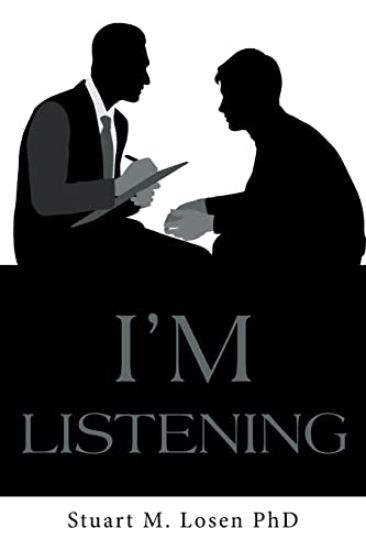
This collection of writings about my experiences as a psychotherapist and teacher first describes some of the childhood circumstances that influenced my becoming a good listener. It then highlights what I learned from two of my professors that influenced my decision me to become a psychologist. The book is primarily intended to serve as a memoir, my legacy for family and friends. It is essentially an account of my work as a psychologist, describing the skills-including careful listening-which I learned to employ with my clients in therapy and with the students I taught. It is intended, not as a textbook, to instruct about therapeutic or teaching methods, but as a description of the techniques I learned along the way to becoming a successful therapist and educator. More than simply emphasizing the importance of listening carefully to what my clients said--as well as what they didn't say-I hope to convey by my example what behavior must be attended to, what should be encouraged and what values ought to be reinforced in order to meet the needs of those seeking assistance.
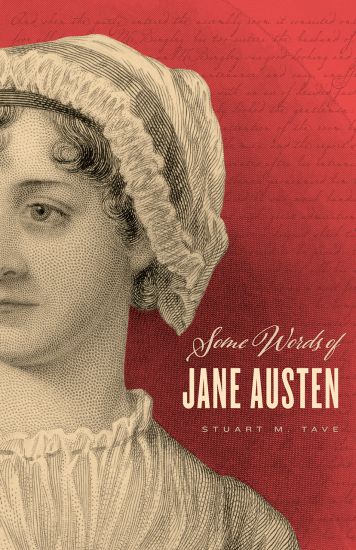
Jane Austen’s readers continue to find delight in the justness of her moral and psychological discriminations. But for most readers, her values have been a phenomenon more felt than fully apprehended. In this book, Stuart M. Tave identifies and explains a number of the central concepts across Austen’s novels—examining how words like “odd,” “exertion,” and, of course, “sensibility,” hold the key to understanding the Regency author’s language of moral values. Tracing the force and function of these words from Sense and Sensibility to Persuasion, Tave invites us to consider the peculiar and subtle ways in which word choice informs the conduct, moral standing, and self-awareness of Austen’s remarkable characters.
Through dreams and shadows and strangeness, through blinding charms and eye-opening counter-charms, through moments of mortification and laughter—thus Stuart M. Tave traces the journey of the lovers, clowns, and fairies who populate comedies from A Midsummer Night's Dream to Waiting for Godot. Tave avoids the pitfalls of theory, taking instead a close look at particular works to give us a sense of the relations between certain dramas and novels that are called comedies. The result is a wonderfully readable book that renews our delight in the enchanting possibilities of literature. A Midsummer Night's Dream, in its "perfection," is Tave's point of departure. Its characters fall neatly into the three groups of Tave's title and fulfill to perfection their functions of desire, foolishness, and power. From the magical concord of Shakespeare's resolution, Tave moves to works whose character face ever greater difficulties in reaching a happy conclusion. From Jonson and Austen to Chekhov and Beckett, he meets comedies on their own terms, illuminating the complex and individual genius of each. A masterpiece of practical criticism, Lovers, Clowns, and Fairies rediscovers the pleasure of reading comedies.
Through dreams and shadows and strangeness, through blinding charms and eye-opening counter-charms, through moments of mortification and laughter—thus Stuart M. Tave traces the journey of the lovers, clowns, and fairies who populate comedies from A Midsummer Night's Dream to Waiting for Godot. Tave avoids the pitfalls of theory, taking instead a close look at particular works to give us a sense of the relations between certain dramas and novels that are called comedies. The result is a wonderfully readable book that renews our delight in the enchanting possibilities of literature. A Midsummer Night's Dream, in its "perfection," is Tave's point of departure. Its characters fall neatly into the three groups of Tave's title and fulfill to perfection their functions of desire, foolishness, and power. From the magical concord of Shakespeare's resolution, Tave moves to works whose character face ever greater difficulties in reaching a happy conclusion. From Jonson and Austen to Chekhov and Beckett, he meets comedies on their own terms, illuminating the complex and individual genius of each. A masterpiece of practical criticism, Lovers, Clowns, and Fairies rediscovers the pleasure of reading comedies.