
Kirjahaku
Etsi kirjoja tekijän nimen, kirjan nimen tai ISBN:n perusteella.
1000 tulosta hakusanalla Stuart M. Lynn

On a sweltering June evening in 1937, American Juliet Stuart Poyntz left her boardinghouse in Manhattan and walked toward Central Park, three short blocks away. She was never seen or heard from again. Seven months passed before a formal missing person's report was made, since Poyntz worked for the Soviet Secret Police and her friends (many of whom were anti-Stalinist radicals in the United States) were scared to alert authorities. Her disappearance coincided with Josef Stalin's purges of his political enemies in the Soviet Union and it was feared that Poyntz was a casualty of Soviet brutality.In Where Is Juliet Stuart Poyntz?, Denise M. Lynn argues that Poyntz's sudden disappearance was the final straw for many on the American political left, who then abandoned Marxism and began to embrace anti-communism. In the years to follow, the left crafted narratives of her disappearance that became central to the Cold War. While scholars have thoroughly analyzed the influence of the political right in the anti-communism of this era, this captivating and compelling study is unique in exploring the influence of the political left.

On Liberty By: John Stuart Mill: On Liberty is a philosophical work in the English language by 19th century philosopher John Stuart M
John Stuart Mill
Createspace Independent Publishing Platform
2018
nidottu
On Liberty is a philosophical work by the English philosopher John Stuart Mill, originally intended as a short essay. The work, published in 1859, applies Mill's ethical system of utilitarianism to society and the state.Mill attempts to establish standards for the relationship between authority and liberty. He emphasizes the importance of individuality, which he conceived as a prerequisite to the higher pleasures-the summum bonum of utilitarianism. Furthermore, Mill criticizes the errors of past attempts to defend individuality where, for example, democratic ideals resulted in the "tyranny of the majority." Among the standards established in this work are Mill's three basic liberties of individuals, his three legitimate objections to government intervention, and his two maxims regarding the relationship of the individual to society. On Liberty was a greatly influential and well received work, although it did not go without criticism. Some attacked it for its apparent discontinuity with Utilitarianism, while others criticized its vagueness. The ideas presented in On Liberty have remained the basis of much liberal political thought. It has remained in print continuously since its initial publication. To this day, a copy of On Liberty is passed to the president of the British Liberal Democrats as a symbol of office. A copy of the same book is also presented to and then held by the president of the Liberal Party as a symbol of office. Mill's marriage to his wife Harriet Taylor Mill greatly influenced the concepts in On Liberty, which was largely finished prior to her death, and published shortly after she died.............. John Stuart Mill (20 May 1806 - 8 May 1873) was a British philosopher, political economist and civil servant. One of the most influential thinkers in the history of liberalism, he contributed widely to social theory, political theory and political economy. Dubbed "the most influential English-speaking philosopher of the nineteenth century," Mill's conception of liberty justified the freedom of the individual in opposition to unlimited state and social control. Mill was a proponent of utilitarianism, an ethical theory developed by his predecessor Jeremy Bentham. He contributed to the investigation of scientific methodology, though his knowledge of the topic was based on the writings of others, notably William Whewell, John Herschel and Auguste Comte, and research carried out for Mill by Alexander Bain. Mill engaged in written debate with Whewell. 8] A member of the Liberal Party, he was also the first Member of Parliament to call for women's suffrage. Works: A System of Logic Main article: A System of Logic Mill joined the debate over scientific method which followed on from John Herschel's 1830 publication of A Preliminary Discourse on the study of Natural Philosophy, which incorporated inductive reasoning from the known to the unknown, discovering general laws in specific facts and verifying these laws empirically. William Whewell expanded on this in his 1837 History of the Inductive Sciences, from the Earliest to the Present Time followed in 1840 by The Philosophy of the Inductive Sciences, Founded Upon their History, presenting induction as the mind superimposing concepts on facts. Laws were self-evident truths, which could be known without need for empirical verification.....
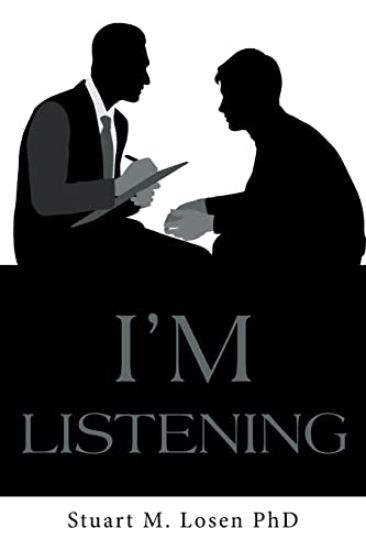
This collection of writings about my experiences as a psychotherapist and teacher first describes some of the childhood circumstances that influenced my becoming a good listener. It then highlights what I learned from two of my professors that influenced my decision me to become a psychologist. The book is primarily intended to serve as a memoir, my legacy for family and friends. It is essentially an account of my work as a psychologist, describing the skills-including careful listening-which I learned to employ with my clients in therapy and with the students I taught. It is intended, not as a textbook, to instruct about therapeutic or teaching methods, but as a description of the techniques I learned along the way to becoming a successful therapist and educator. More than simply emphasizing the importance of listening carefully to what my clients said--as well as what they didn't say-I hope to convey by my example what behavior must be attended to, what should be encouraged and what values ought to be reinforced in order to meet the needs of those seeking assistance.
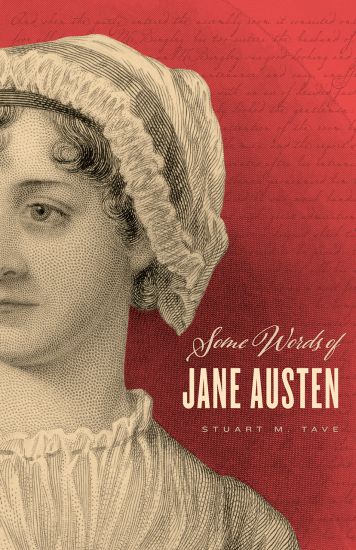
Jane Austen’s readers continue to find delight in the justness of her moral and psychological discriminations. But for most readers, her values have been a phenomenon more felt than fully apprehended. In this book, Stuart M. Tave identifies and explains a number of the central concepts across Austen’s novels—examining how words like “odd,” “exertion,” and, of course, “sensibility,” hold the key to understanding the Regency author’s language of moral values. Tracing the force and function of these words from Sense and Sensibility to Persuasion, Tave invites us to consider the peculiar and subtle ways in which word choice informs the conduct, moral standing, and self-awareness of Austen’s remarkable characters.

Through dreams and shadows and strangeness, through blinding charms and eye-opening counter-charms, through moments of mortification and laughter—thus Stuart M. Tave traces the journey of the lovers, clowns, and fairies who populate comedies from A Midsummer Night's Dream to Waiting for Godot. Tave avoids the pitfalls of theory, taking instead a close look at particular works to give us a sense of the relations between certain dramas and novels that are called comedies. The result is a wonderfully readable book that renews our delight in the enchanting possibilities of literature. A Midsummer Night's Dream, in its "perfection," is Tave's point of departure. Its characters fall neatly into the three groups of Tave's title and fulfill to perfection their functions of desire, foolishness, and power. From the magical concord of Shakespeare's resolution, Tave moves to works whose character face ever greater difficulties in reaching a happy conclusion. From Jonson and Austen to Chekhov and Beckett, he meets comedies on their own terms, illuminating the complex and individual genius of each. A masterpiece of practical criticism, Lovers, Clowns, and Fairies rediscovers the pleasure of reading comedies.

Through dreams and shadows and strangeness, through blinding charms and eye-opening counter-charms, through moments of mortification and laughter—thus Stuart M. Tave traces the journey of the lovers, clowns, and fairies who populate comedies from A Midsummer Night's Dream to Waiting for Godot. Tave avoids the pitfalls of theory, taking instead a close look at particular works to give us a sense of the relations between certain dramas and novels that are called comedies. The result is a wonderfully readable book that renews our delight in the enchanting possibilities of literature. A Midsummer Night's Dream, in its "perfection," is Tave's point of departure. Its characters fall neatly into the three groups of Tave's title and fulfill to perfection their functions of desire, foolishness, and power. From the magical concord of Shakespeare's resolution, Tave moves to works whose character face ever greater difficulties in reaching a happy conclusion. From Jonson and Austen to Chekhov and Beckett, he meets comedies on their own terms, illuminating the complex and individual genius of each. A masterpiece of practical criticism, Lovers, Clowns, and Fairies rediscovers the pleasure of reading comedies.
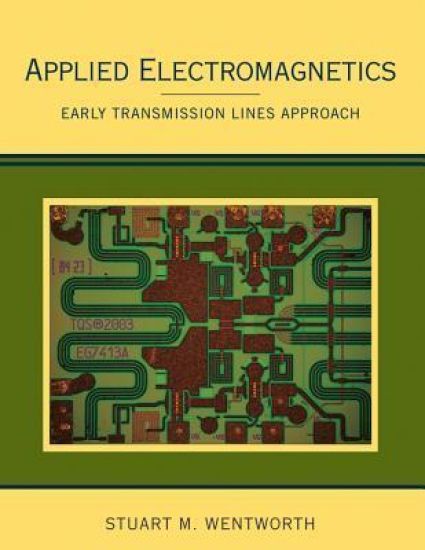
The revolution in wireless communications calls for a new focus in the electrical engineering curriculum. Stuart M. Wentworth fills that need with his new Applied Electromagnetics: A Transmission Lines First Approach. Incorporating the popular MATLAB program throughout, it features practical applications for wireless systems, transmission lines, waveguides (including optical fiber), antennas, and microwave systems. Designed for use in a one- or two-semester sequence at the junior and senior level, it offers students both detailed theoretical grounding and hands-on experience in harmony with today’s professional practice.

Fundamentals of Electromagnetics with Engineering Applications
Stuart M. Wentworth
John Wiley Sons Inc
2006
sidottu
The revolution in wireless communications calls for a new focus in the electrical engineering curriculum. Stuart M. Wentworth fills that need with his new Fundamentals of Electromagnetics with Engineering Applications. Incorporating the popular MATLAB program throughout, it features practical applications for wireless systems, transmission lines, waveguides (including optical fiber), antennas, and microwave systems. Designed for use in a one- or two-semester sequence at the junior and senior level, it offers students both detailed theoretical grounding and hands-on experience in harmony with today’s professional practice. Part 1 of the text features a classical organization of electromagnetic fundamentals, beginning with electrostatics and basic vectors. Once the students understand simple vectors, coordinate systems and electrostatic fields, they are ready to use more complicated vector algebra as they learn about magnetostatics. Then, time variation is introduced as students learn about dynamic fields and plane waves. Electromagnetic applications are covered in the second part of the text, with emphasis on those applications related to wireless communications. Part 2 covers transmission lines, waveguide (including optical fiber), antennas, electromagnetic interference, and a brief treatment of microwave engineering.

Essentials of Medical Genomics
Stuart M. Brown; John G. Hay; Harry Ostrer
John Wiley Sons Inc
2008
sidottu
Six new chapters on vital topics of interest such as multilocus SNP genotyping (SNP chips), RNAi, ChIP-chip, and genomic tiling arraysNew edition responds to reviewers' and users' desire for greater coverage—now the most useful handbook on the market!Practical, concise summary of everything about genomics and emerging technologies a busy physician or medical student should knowCovers concepts and techniques that are in use in medicine now, as well as those on the cutting-edge of science relevant to medicine, from bioinformatics to DNA diagnostics and proteomicsNEW: Includes chapter-end exercises, enhancing the utility of the new edition as a textbookNEW: PowerPoint slides of images available at instructor website

This encyclopedia is a compendium of all types of composite materials, covering their analysis, formulation, design, evaluation, processing, manufacture, testing and reliability.

Murder Mystery / 5m, 2f 2008 Mystery Writer's of America Edgar Award nominee for Best Play. After robbing a savings and loan, Brian takes refuge in a down-and-out used book store run by Maddy and Betty. The book store's principal customer is Christopher, who steals books his brother pays for at the end of each week. A suspicious cop has the shop surrounded. Roger, a public defender, enters in a clown costume. It's his day off and he is moonlighting. After bullets fly during a comic siege, Brian turns himself in to Claudia, a no-nonsense assistant district attorney, but first he hides some of the money he has stolen. Brian's partner Eddie is under Claudia's thumb and ordered to remain mute. Late that night, Brian, Maddy, Betty, Christopher and Roger converge on the book store to retrieve the stolen money. Brian has made a deal to return the stolen money. However everyone decides to kill Brian and share the money. In confusion, Betty is shot by Maddy, Brian decides to turn himself in, but first he lets the women keep some of the money.

Mystery Drama / Stuart Kaminsky / 7m (one teen), 2f / Unit Set Winner of the 2008 Angie Award for Playwrighting! The Edgar Prize-winning author Kaminsky tells the tale of one of literature's most famous detectives: Sherlock Holmes. In a witty, imaginative story filled with twists and unexpected surprises, Detective Holmes unravels a murder only to find himself the unwilling target of the killer-at-large. Along with the aid of his loyal and inquisitive companion, Dr. Watson, Sherlock Holmes uses his masterful power of deduction to make a nebulous situation seem "simply elementary." The Final Toast is an exciting new take on the classic characters of fiction we know and love, and its ending will please even the most savvy mystery connoisseurs. The Final Toast had its world premier at the 2008 International Mystery Writer's Festival.
Shelley has long been viewed as a dreamer isolated from reality, a “beautiful and ineffectual angel,” in Arnold’s words. In contrast, Stuart Sperry’s book emphasizes the life forces originating in the poet’s childhood that impelled and shaped his career, and reasserts Shelley’s relevance to the social and cultural dilemmas of contemporary life.Concentrating on the major narrative and dramatic poems and the patterns of development they reveal, Sperry reintegrates Shelley’s poetry with his life by showing how, following the traumatic events of his early years, the poet sought to preserve and extend those life impulses by creating a network of personal relationships that provided the inspiration and model for his poems. As the circumstances of his life and his relationships to others changed and as his thought evolved, he was led to reshape his major poems. Three chapters at the center of the book, devoted to Shelley’s visionary masterpiece Prometheus Unbound, provide the finest introduction so far to its conceptions and intent as well as a powerful vindication of the poet’s enduring idealism. In defining Shelley’s true originality, Sperry defends the poet against his harshest critics by suggesting that his vision of human potential may represent a vital resource against the competitive drives and self-destructive compulsions of our own day.Sperry’s approach to the poetry through the formative events of Shelley’s early life provides an excellent biographical introduction. His reinterpretation of the major works and the career will appeal to first-time readers as well as to mature students of Shelley.
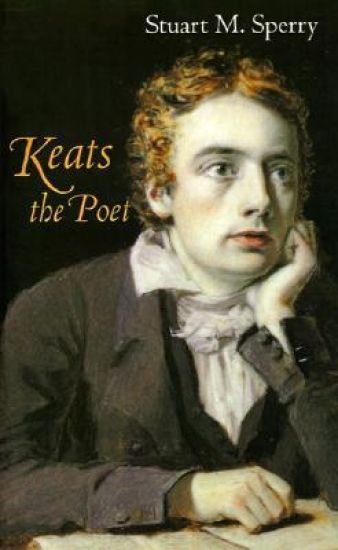
Keats the Poet was first published in 1973, just as the crest of all the New-Critical exegeses had passed, leaving the critical literature with a wealth of fine readings, but without a real organizing program within which to view them. Stuart Sperry established such a frame of reference. Further, he did so with such prescience that even the most radical deconstructive or new historical approaches to Keats today must bear witness to their inception in Sperry's emphasis on, and subtle demonstration of, the centrality of "indeterminacy' in the poet. Now available in paperback for the first time, this work will enlighten a new generation of readers.

This is the first time these essays have been collected and identified as De Quincey's. Each essay or article is reprinted with full annotation and the author's reasons for attributing it to De Quincey. The essays vary in length and in subject matter: some are addressed to "The Editor"; some are critical reviews of contemporary magazines; some are week-to-week political commentaries on issues facing the second Tory party. Together they show De Quincey, the journalist, working on a variety of subjects that occur in his writing before and after this time, from the financing of empires to an attack on Macaulay or an analysis of Burke's mind and style. Originally published in 1966. The Princeton Legacy Library uses the latest print-on-demand technology to again make available previously out-of-print books from the distinguished backlist of Princeton University Press. These editions preserve the original texts of these important books while presenting them in durable paperback and hardcover editions. The goal of the Princeton Legacy Library is to vastly increase access to the rich scholarly heritage found in the thousands of books published by Princeton University Press since its founding in 1905.
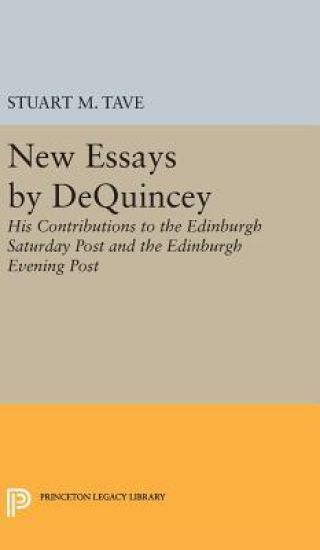
This is the first time these essays have been collected and identified as De Quincey's. Each essay or article is reprinted with full annotation and the author's reasons for attributing it to De Quincey. The essays vary in length and in subject matter: some are addressed to "The Editor"; some are critical reviews of contemporary magazines; some are week-to-week political commentaries on issues facing the second Tory party. Together they show De Quincey, the journalist, working on a variety of subjects that occur in his writing before and after this time, from the financing of empires to an attack on Macaulay or an analysis of Burke's mind and style. Originally published in 1966. The Princeton Legacy Library uses the latest print-on-demand technology to again make available previously out-of-print books from the distinguished backlist of Princeton University Press. These editions preserve the original texts of these important books while presenting them in durable paperback and hardcover editions. The goal of the Princeton Legacy Library is to vastly increase access to the rich scholarly heritage found in the thousands of books published by Princeton University Press since its founding in 1905.
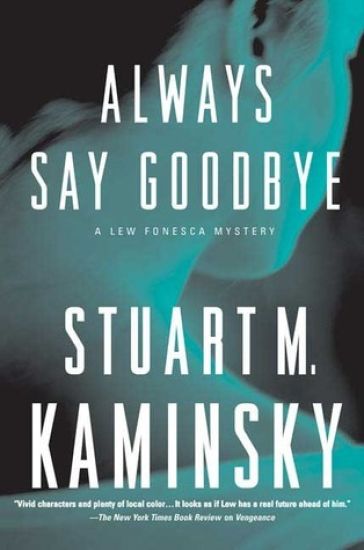
Four years ago, Lew Fonesca's wife Catherine was struck and killed in a hit-and-run. Grief-stricken, he fled to Chicago and wound up in Sarasota, Florida where he's made a living as a process server. Four years on, he's still savoring his depression like fine wine, and his therapist--and sparring partner--has had enough. It's time, she tells Lew, to get on with his life. Time to go back to Chicago and find out what really happened to his wife. Lew hates to admit it, but Ann Horowitz might be right. Even if it kills him, he has to know the truth about his wife's death. So he returns to his home, his family, his friends--and a mystery.He's resolved to dig until he finds out who killed his wife. In doing so, he'll uncover both sweet and painful memories of his past. He'll also confront a murderer who'll not hesitate to kill again to make sure hidden secrets stay buried.