Kirjojen hintavertailu. Mukana 11 244 527 kirjaa ja 12 kauppaa.

Kirjahaku

Etsi kirjoja tekijän nimen, kirjan nimen tai ISBN:n perusteella.

1000 tulosta hakusanalla Stuart Marks

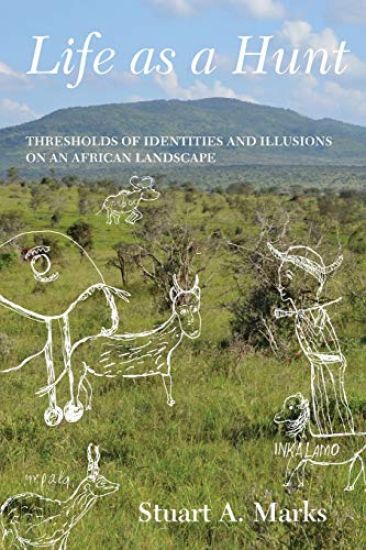
Life as a Hunt

Life as a Hunt

Stuart Marks

Berghahn Books
2016
sidottu
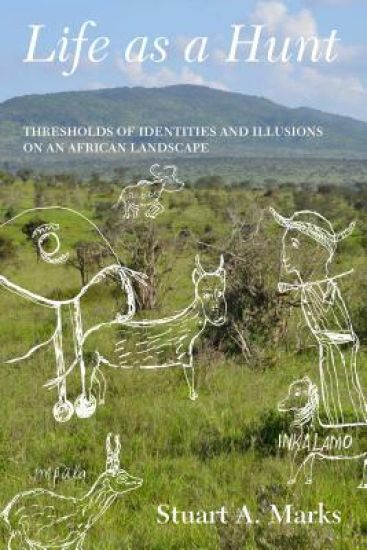
The "extensive wilderness" of Zambia’s central Luangwa Valley is the homeland of the Valley Bisa whose cultural practices have enriched this environment for centuries. Beginning with the intrusions of warlords and later British colonials, successive generations have experienced the callousness and challenges of colonialism. Their homeland, a slender corridor surrounded by three national parks and an escarpment, is a microcosm of the political, economic and cultural battlefields surrounding most African protected areas today. The story of the Valley Bisa diverges from the myths that conservationists, administrators, and philanthropists, tell about Africa’s environmental and wildlife crises.
Life as a Hunt

Life as a Hunt

Stuart Marks

Berghahn Books
2020
pokkari
The "extensive wilderness" of Zambia’s central Luangwa Valley is the homeland of the Valley Bisa whose cultural practices have enriched this environment for centuries. Beginning with the intrusions of warlords and later British colonials, successive generations have experienced the callousness and challenges of colonialism. Their homeland, a slender corridor surrounded by three national parks and an escarpment, is a microcosm of the political, economic and cultural battlefields surrounding most African protected areas today. The story of the Valley Bisa diverges from the myths that conservationists, administrators, and philanthropists, tell about Africa’s environmental and wildlife crises.
The Imperial Lion

The Imperial Lion

Stuart A Marks

Routledge
2019
sidottu
In the 1950s biologists became alarmed by the plight of Africa’s wildlife. Since then they have sought to arrest its decline, but increasing competition between wild fauna and expanding human populations shows that protection alone has been inadequate. The conservationists’ position and strategies have been progressively eroded: large-scale game cropping schemes have failed to produce expected revenues, the consequences of the tourist industry have been unexpectedly detrimental, and educational programs have rarely convinced rural Africans to conserve resources. Dr. Marks argues that the management and conservation of wild animals in Third World countries must include cultural as well as biological dimensions and that changes in human social systems will be necessary to sustain wildlife and the environmental processes. He describes indigenous attempts to manage wildlife and suggests new research initiatives that would lead to wildlife policies more in keeping with human development needs and with the realities of the rural countryside.
The Imperial Lion

The Imperial Lion

Stuart A Marks

Routledge
2021
nidottu
In the 1950s biologists became alarmed by the plight of Africa’s wildlife. Since then they have sought to arrest its decline, but increasing competition between wild fauna and expanding human populations shows that protection alone has been inadequate. The conservationists’ position and strategies have been progressively eroded: large-scale game cropping schemes have failed to produce expected revenues, the consequences of the tourist industry have been unexpectedly detrimental, and educational programs have rarely convinced rural Africans to conserve resources. Dr. Marks argues that the management and conservation of wild animals in Third World countries must include cultural as well as biological dimensions and that changes in human social systems will be necessary to sustain wildlife and the environmental processes. He describes indigenous attempts to manage wildlife and suggests new research initiatives that would lead to wildlife policies more in keeping with human development needs and with the realities of the rural countryside.
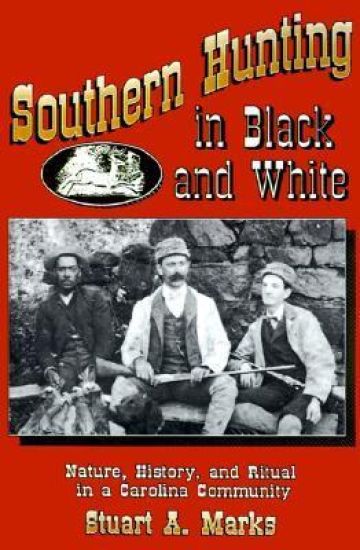
Southern Hunting in Black and White

Southern Hunting in Black and White

Stuart A. Marks

Princeton University Press
1992
pokkari
For many Southern men living in or close to rural landscapes, hunting is a passion. But it is not a timeless activity in a cultural void. Whether pursuers of fox or raccoon, deer or rabbits, quail or dove, Southern hunters reveal for Stuart Marks complex patterns of male bonding, social status, and relationships with nature. Marks, who has written two outstanding books on hunting in Africa, was born and has long lived in the South. Examining Southern hunting from frontier times through the antebellum era to the present day, he shows it to be a litmus test of rural identity. "Drawing on the latest anthropological theory, statistical sources, extensive interviews, and historical research, [Marks] has crafted a multifaceted account of Southern hunting. Relations of race, property, gender, and region appear in fresh guises in this innovative and intriguing study. The portrayal of the contemporary state of hunting is especially interesting, revealing both the continuities with the past and the new pressures on the sport."--Virginia Quarterly Review
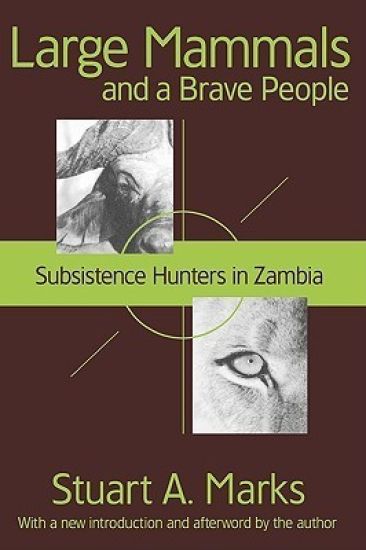
Large Mammals and a Brave People

Large Mammals and a Brave People

Stuart A. Marks

Routledge
2017
sidottu
The Valley Bisa people inhabit the Luangwa Valley in central Zambia. Among them, the hunter, who tracks such large game as the lion, elephant, and buffalo, commands great respect and esteem from the other members of the lineage who traditionally rely on him for their subsistence and protection. Although the social organization and technology of the Bisa people have undergone tremendous change in the last one hundred years, the role of hunter retains its social importance, and the legitimizing hunting rituals have their roots in local history. Drawing on data collected during his fieldwork among the Bisa continuing since the 1960s, Stuart Marks describes the changes that have occurred in hunting patterns, the sociological variables that govern an individual's decision to become a hunter, and the common cosmological convictions that hunters bring to their profession. Available for the first time in paperback, the new introduction and afterword to this edition reflect on methodological and ideological changes in the anthropological study of African peoples as well as updating the circumstances of the Bisa people since the book's first appearance in 1976. Through the interventions of the larger national society the Bisa have lost much of their land and access to important portions of their resources while experiencing repression in their struggles to maintain livelihoods with what local assets are left. Nevertheless, Marks notes that they face their hardships with tolerance, integrity, persistence, and humility. The general reader, as well as prehistorians and anthropologists concerned with human evolution and hunting societies, will find this volume useful. It will also be of interest to wildlife managers and ecologists.
Large Mammals and a Brave People

Large Mammals and a Brave People

Stuart A. Marks

AldineTransaction
2005
nidottu
The Valley Bisa people inhabit the Luangwa Valley in central Zambia. Among them, the hunter, who tracks such large game as the lion, elephant, and buffalo, commands great respect and esteem from the other members of the lineage who traditionally rely on him for their subsistence and protection. Although the social organization and technology of the Bisa people have undergone tremendous change in the last one hundred years, the role of hunter retains its social importance, and the legitimizing hunting rituals have their roots in local history. Drawing on data collected during his fieldwork among the Bisa continuing since the 1960s, Stuart Marks describes the changes that have occurred in hunting patterns, the sociological variables that govern an individual's decision to become a hunter, and the common cosmological convictions that hunters bring to their profession. Available for the first time in paperback, the new introduction and afterword to this edition reflect on methodological and ideological changes in the anthropological study of African peoples as well as updating the circumstances of the Bisa people since the book's first appearance in 1976. Through the interventions of the larger national society the Bisa have lost much of their land and access to important portions of their resources while experiencing repression in their struggles to maintain livelihoods with what local assets are left. Nevertheless, Marks notes that they face their hardships with tolerance, integrity, persistence, and humility. The general reader, as well as prehistorians and anthropologists concerned with human evolution and hunting societies, will find this volume useful. It will also be of interest to wildlife managers and ecologists.
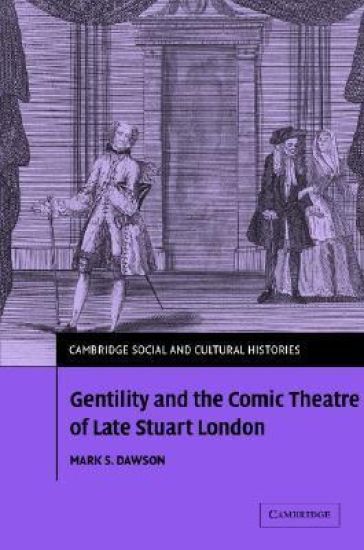
Gentility and the Comic Theatre of Late Stuart London

Gentility and the Comic Theatre of Late Stuart London

Mark S. Dawson

Cambridge University Press
2005
sidottu
Where Adam delved and Eve span Who was then the gentleman? Mark Dawson's approach to this riddle is not to study the lives of those said to belong to early modern England's gentry. He suggests we remain skeptical of all answers to this question and consider what was at stake whenever it was posed. We should conceive of gentility as a mutable process of social delineation. Gentility was a matter of power and language; cultural definition and social domination. Neither consistently defined nor applied to particular social groups, gentility was about identifying society's elite. The book examines how gentility was portrayed through plays at London's theatres (1660–1725). Employing a rich assembly of sources, comedies with their cits and fops, periodicals, correspondence of theatre patrons and polemic from its detractors, Dawson revises several of social history's conclusions about the gentry and offers new interpretations to students of late Stuart drama.
Stuart

Stuart

Alexander Masters

Harpercollins Publishers
2006
pokkari
â??Stuart does not like the manuscript. Heâ??s after a bestseller, â??like what Tom Clancy writesâ?. â??But you are not an assassin trying to frazzle the president with anthrax bombs,â? I point out. You are an ex-homeless, ex-junkie psychopath, I do not add.â??
Stuart

Stuart

Alexander Masters

Fourth Estate Ltd
2019
nidottu
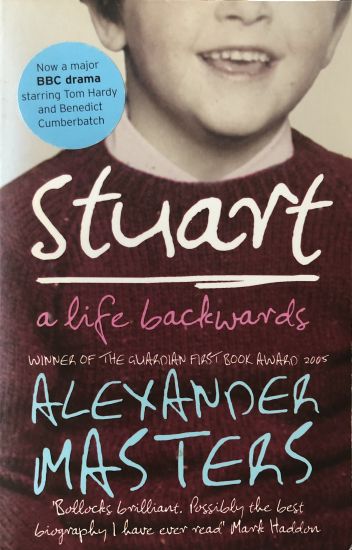
The winner of the Guardian First Book Award that reinvented the biographic form. One of the ten books – novels, memoirs and one very unusual biography – that make up our Matchbook Classics’ series, a stunningly redesigned collection of some of the best loved titles on our backlist. Stuart: A Life Backwards expanded the possibilities of what a biography could be: the stories it could tell, and how it could tell them. It is about a remarkable friendship between a reclusive writer (‘a middle-class scum ponce, if you want to be honest about it, Alexander’), and Stuart Shorter, a thief, hostage-taker, psycho and street raconteur. Told backwards – Stuart’s idea – it starts with a deeply troubled thirty-two-year-old stepping out in front of the 11.15 train from London to King’s Lynn, and ends with a ‘happy-go-lucky little boy’ of twelve. Compelling, humane and funny, it is as extraordinary and unexpected as the life it describes.
Stuart

Stuart

Alice L. Luckhardt

Arcadia Publishing (SC)
2016
nidottu
Explore the life and early times of Stuart, Florida through the lens of vintage images.On the southeast coast of Florida in the 1880s, a quaint little community was nestled along the tranquil waters of the St. Lucie River in a wilderness of tropical beauty, one of the region's last frontiers. As lucrative pineapple crops and the commercial fishing industry began to flourish, trade boats brought necessary supplies, and new settlers arrived on river steamers. With land available for homesteading or for sale at $1.25 an acre, the small village soon to be known as Stuart would become a mecca for innovative, hardworking young men seeking business and financial opportunities. By the dawn of the 20th century, the railroad had been established, and the town, forged by the fortitude of early pioneers, thrived, eventually becoming a beautiful, friendly incorporated city.
Stuart

Stuart

Alice L. Luckhardt

Arcadia Publishing Library Editions
2016
sidottu
On the southeast coast of Florida in the 1880s, a quaint little community was nestled along the tranquil waters of the St. Lucie River in a wilderness of tropical beauty, one of the region s last frontiers. As lucrative pineapple crops and the commercial fishing industry began to flourish, trade boats brought necessary supplies, and new settlers arrived on river steamers. With land available for homesteading or for sale at $1.25 an acre, the small village soon to be known as Stuart would become a mecca for innovative, hardworking young men seeking business and financial opportunities. By the dawn of the 20th century, the railroad had been established, and the town, forged by the fortitude of early pioneers, thrived, eventually becoming a beautiful, friendly incorporated city."
Stuart Little

Stuart Little

E. B. White

Harpercollins
2005
sidottu
The classic story by E. B. White, author of the Newbery Honor Book Charlotte's Web and The Trumpet of the Swan, about one small mouse on a very big adventure.Stuart Little is no ordinary mouse. Born to a family of humans, he lives in New York City with his parents, his older brother George, and Snowbell the cat. Though he's shy and thoughtful, he's also a true lover of adventure.Stuart's greatest adventure comes when his best friend, a beautiful little bird named Margalo, disappears from her nest. Determined to track her down, Stuart ventures away from home for the very first time in his life. He finds adventure aplenty. But will he find his friend?Stuart Little joins E. B. White favorites Charlotte's Web and The Trumpet of the Swan as classic illustrated novels that continue to speak to today's readers. Whether you curl up with your young reader to share these books or hand them off for independent reading, you are helping to create what are likely to be all-time favorite reading memories.