Kirjojen hintavertailu. Mukana 12 390 323 kirjaa ja 12 kauppaa.

Kirjahaku

Etsi kirjoja tekijän nimen, kirjan nimen tai ISBN:n perusteella.

1000 tulosta hakusanalla Sumit Sarin

Oracle 8 DBA Tips and Techniques

Oracle 8 DBA Tips and Techniques

Sumit Sarin

Osborne/McGraw-Hill
2000
pokkari
This text is a complement to "Oracle Press DBA Handbooks" and "starter kit." It is organized and structured to provide time-saving, undocumented methods for the DBA's comprehensive job. It contains a CD-ROM with scripts of time-saving techniques.
Customer Knowledge Management

Customer Knowledge Management

Soumit Sain; Silvio Wilde
Springer International Publishing AG
2014
sidottu
Customer focus is the most important challenge of the future. Providing good customer service depends on how well companies know their customers and clearly identify their needs. Availability of customer knowledge, which is knowledge from, for and about the customer, thus becomes crucial in offering customized products or services. This can be gained most efficiently from direct interaction with customers, but requires the use of interpersonal and organizational soft skills. This book presents the interrelationship between customer knowledge management, customer focus and soft skills and also provides concrete advice on how the management of customer knowledge can be optimized.
Customer Knowledge Management

Customer Knowledge Management

Soumit Sain; Silvio Wilde

Springer International Publishing AG
2016
nidottu
Customer focus is the most important challenge of the future. Providing good customer service depends on how well companies know their customers and clearly identify their needs. Availability of customer knowledge, which is knowledge from, for and about the customer, thus becomes crucial in offering customized products or services. This can be gained most efficiently from direct interaction with customers, but requires the use of interpersonal and organizational soft skills. This book presents the interrelationship between customer knowledge management, customer focus and soft skills and also provides concrete advice on how the management of customer knowledge can be optimized.
Sabrina's Suit

Sabrina's Suit

William Stuart Gould

WMG Ltd.
2019
nidottu
SABRINA'S SUITThe Anatomy of a Medical Malpractice CaseSabrina Friday, a striking Doctor of Psychology, was born with a spinal defect, the result of her father's exposure to Agent Orange in Viet Nam. Nonetheless, she easily adapts and leads a perfectly normal life until a pregnancy leaves her with medical challenges so profound, her life is changed forever. She and her husband bring suit against the doctor and hospital they believe responsible for the tragedy. This is the narrative of that medical practice lawsuit.Sample
Sumit

Sumit

VDM Publishing House
2010
nidottu
Observera att förlaget som ger ut denna produkt baserar innehållet i sina produkter på fria källor som Wikipedia. Boken är med stor sannolikhet endast ett utdrag ur dessa informationskällor, alltså inte en vanlig bok i den bemärkelsen.
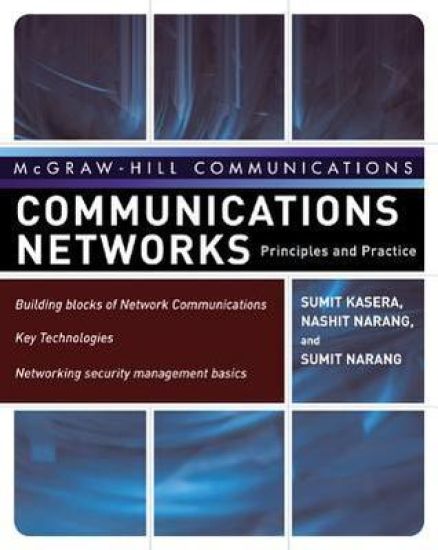
Communication Networks

Communication Networks

Sumit Kasera

McGraw-Hill Professional
2006
sidottu
Publisher's Note: Products purchased from Third Party sellers are not guaranteed by the publisher for quality, authenticity, or access to any online entitlements included with the product.Clear, operations-focused, and half the size of traditional academic textbooks, this book is the easiest way for communications engineers and students to master the complexities of network behaviorThis unique guide to communication networks fundamentals takes a new approach. Rather than following the standard (and increasingly outmoded) OSI network model, it is organized around networking concepts. Rather than plunge readers into the alphabet soup of communications protocols and technologies, Kasera starts with a concept like “routing,” and explains each technology in terms of how it helps to perform that function. The book is designed for communications engineers and technicians, as well as students.
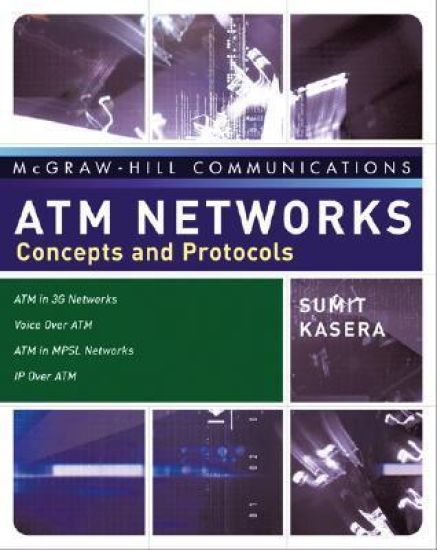
ATM Networks

ATM Networks

Sumit Kasera

McGraw-Hill Professional
2006
sidottu
Publisher's Note: Products purchased from Third Party sellers are not guaranteed by the publisher for quality, authenticity, or access to any online entitlements included with the product.Because of its high quality of service and ability to deliver voice, data, and video on a single platform, ATM is a hugely popular networking technology. This book provides an exhaustive engineering introduction to technology basics and key applicationsATM (Asynchronous Transfer Mode) is a breakthrough networking technology. It provides a single platform for voice, video and data, driving network convergence, all with very high quality of service. This book provides a comprehensive, engineering-level introduction to ATM networks. It explores fundamental concepts in detail, explains and illustrates the 3 levels of the ATM protocol reference model, details the process of internetworking with LANs and WANs, as well as IP, and covers all major ATM applications.
Writing Social History

Writing Social History

Sumit Sarkar

OUP India
1999
nidottu
The eight essays in this volume seek to combine an empirical study of themes in late-colonial Indian history with an intervention in current debates about the extent and nature of Western colonial cultural domination.
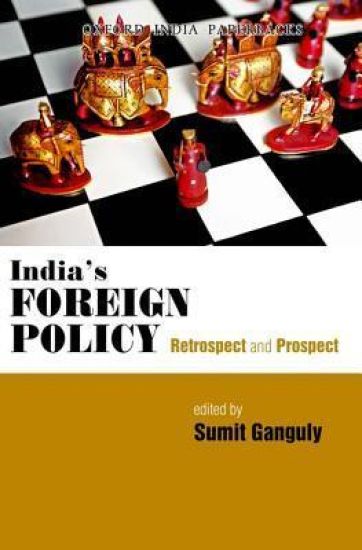
India's Foreign Policy

India's Foreign Policy

Sumit Ganguly

OUP India
2011
nidottu
This book provides a fairly comprehensive account of the evolution of India's foreign policy from 1947 to the present day. It is organized primarily in the form of India's relations with its neighbours and with key states in the global order. All the chapters in this volume utilize the level of analysis approach, a well-established conceptual scheme in the study of international politics in organizing the substantive cases. They provide crisp and lucid accounts of its developments in various parts of the world. The book is significant because there are no other viable edited volumes on the evolution of Indian foreign policy. Each chapter follows a common conceptual framework using the level of analysis approach. This framework looks at the evolution of India's foreign policy from the standpoints of systemic, national, and decision-making perspectives. In the introductory chapter, the editor carefully spells out the intellectual antecedents of the level of analysis framework in straightforward, lucid, and discursive prose, and applies to the substantive chapters in the volume.
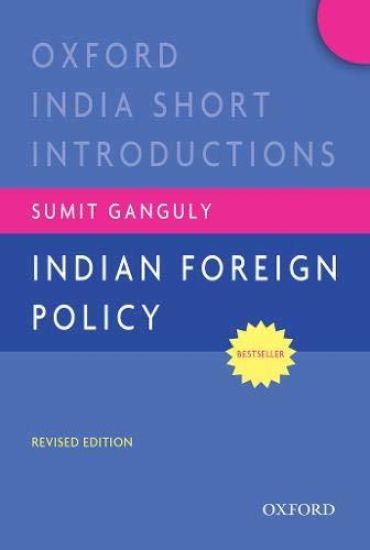
Indian Foreign Policy (Revised Edition)
Updated and revised, this short introduction has become a go-to source for its clarity and succinct account of the evolution of Indian foreign policy over seven decades of India's decolonization. It explains how the three approaches to the study of international politics-decision-making, national/domestic, and systemic/global-have helped in formulating and implementing India's foreign policies. The five chapters cover the ideational period, starting immediately after Independence and ending with the Sino-Indian border war of 1962; the period between 1962 and the end of the Cold War; India's greater acceptance of the importance of material capabilities following the end of the Cold War; current trends and debates in Indian foreign policy, including analysis on Narendra Modi's regime; and bookending the introduction by discussing challenges and the possible way ahead.
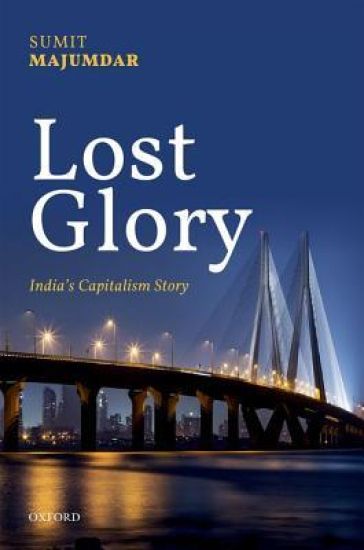
Lost Glory

Lost Glory

Sumit K Majumdar

Oxford University Press
2018
sidottu
Lost Glory: India's Capitalism Story deconstructs India's industrialization story, challenging contemporary ideas about her economy. Based on careful and detailed empirical analyses of India's industrialization, for a period of almost seven decades, the book provides deeply-nuanced depictions of the history of political economy, that have affected India's industrialization over the course of a century. These dimensions of India's economic history have never before been collated and presented. The presentation takes readers on a definitive evidence-based survey of India's industrial landscape. It includes a detailed historical description of the intellectual origins of India's modern industrialization, anchored in a privileged view of economic policy making. Grounded in deep historical and political analyses, that account for the variations, continuities, and changes in institutional contingencies, the facts derived on India's long-term economic performance are used to put the record straight. The findings of the book will transform debate, and set the agenda for thoughtfully assessing what course the Indian economy needs to follow.
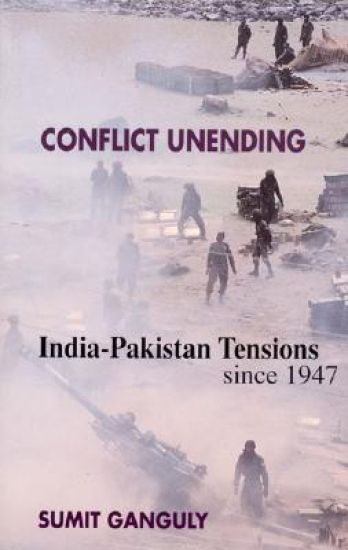
Conflict Unending

Conflict Unending

Sumit Ganguly

Columbia University Press
2002
sidottu
The escalating tensions between India and Pakistan have received renewed attention of late. Since their genesis in 1947, the nations of India and Pakistan have been locked in a seemingly endless spiral of hostility over the disputed territory of Kashmir. Ganguly asserts that the two nations remain mired in conflict due to inherent features of their nationalist agendas. Indian nationalist leadership chose to hold on to this Muslim-majority state to prove that minorities could thrive in a plural, secular polity. Pakistani nationalists argued with equal force that they could not part with Kashmir as part of the homeland created for the Muslims of South Asia. Ganguly authoritatively analyzes why hostility persists even after the dissipation of the pristine ideological visions of the two states and discusses their dual path to overt acquisition of nuclear weapons, as well as the current prospects for war and peace in the region.
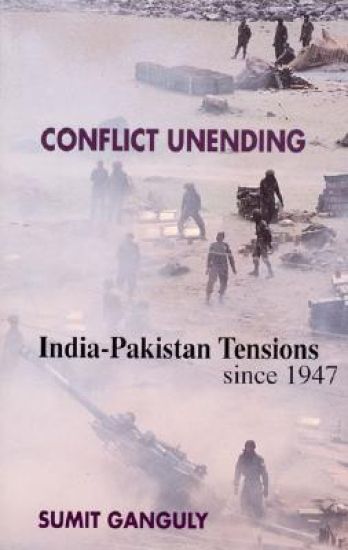
Conflict Unending

Conflict Unending

Sumit Ganguly

Columbia University Press
2002
pokkari
The escalating tensions between India and Pakistan have received renewed attention of late. Since their genesis in 1947, the nations of India and Pakistan have been locked in a seemingly endless spiral of hostility over the disputed territory of Kashmir. Ganguly asserts that the two nations remain mired in conflict due to inherent features of their nationalist agendas. Indian nationalist leadership chose to hold on to this Muslim-majority state to prove that minorities could thrive in a plural, secular polity. Pakistani nationalists argued with equal force that they could not part with Kashmir as part of the homeland created for the Muslims of South Asia. Ganguly authoritatively analyzes why hostility persists even after the dissipation of the pristine ideological visions of the two states and discusses their dual path to overt acquisition of nuclear weapons, as well as the current prospects for war and peace in the region.
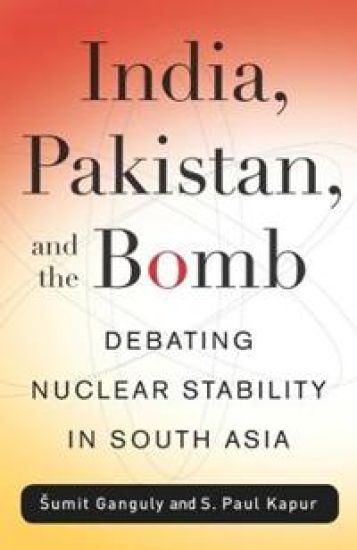
India, Pakistan, and the Bomb

India, Pakistan, and the Bomb

Sumit Ganguly; S. Paul Kapur

Columbia University Press
2010
sidottu
In May 1998, India and Pakistan put to rest years of speculation as to whether they possessed nuclear technology and openly tested their weapons. Some believed nuclearization would stabilize South Asia; others prophesized disaster. Authors of two of the most comprehensive books on South Asia's new nuclear era, Sumit Ganguly and S. Paul Kapur, offer competing theories on the transformation of the region and what these patterns mean for the world's next proliferators. Ganguly begins with an outcome-based approach emphasizing the results of militarized conflict. In his opinion, nuclear weapons have prevented Indo-Pakistani disputes from blossoming into full-scale war. Kapur counters with a process-based approach stressing the specific pathways that lead to conflict and escalation. From his perspective, nuclear weapons have fueled a violent cycle of Pakistani provocation and Indian response, giving rise to a number of crises that might easily have spun into chaos. Kapur thus believes nuclear weapons have been a destabilizing force in South Asia and could similarly affect other parts of the world. With these two major interpretations, Ganguly and Kapur tackle all sides of an urgent issue that has profound regional and global consequences. Sure to spark discussion and debate, India, Pakistan, and the Bomb thoroughly maps the potential impact of nuclear proliferation.
India, Pakistan, and the Bomb

India, Pakistan, and the Bomb

Sumit Ganguly; S. Paul Kapur

Columbia University Press
2012
pokkari
In May 1998, India and Pakistan put to rest years of speculation as to whether they possessed nuclear technology and openly tested their weapons. Some believed nuclearization would stabilize South Asia; others prophesized disaster. Authors of two of the most comprehensive books on South Asia's new nuclear era, Sumit Ganguly and S. Paul Kapur, offer competing theories on the transformation of the region and what these patterns mean for the world's next proliferators. Ganguly begins with an outcome-based approach emphasizing the results of militarized conflict. In his opinion, nuclear weapons have prevented Indo-Pakistani disputes from blossoming into full-scale war. Kapur counters with a process-based approach stressing the specific pathways that lead to conflict and escalation. From his perspective, nuclear weapons have fueled a violent cycle of Pakistani provocation and Indian response, giving rise to a number of crises that might easily have spun into chaos. Kapur thus believes nuclear weapons have been a destabilizing force in South Asia and could similarly affect other parts of the world. With these two major interpretations, Ganguly and Kapur tackle all sides of an urgent issue that has profound regional and global consequences. Sure to spark discussion and debate, India, Pakistan, and the Bomb thoroughly maps the potential impact of nuclear proliferation.
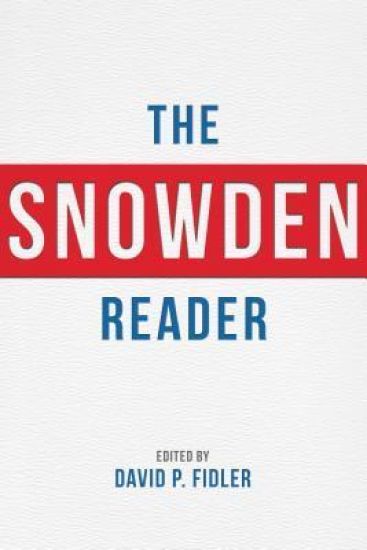
The Snowden Reader

The Snowden Reader

Sumit Ganguly

Indiana University Press
2015
sidottu
When Edward Snowden began leaking NSA documents in June 2013, his actions sparked impassioned debates about electronic surveillance, national security, and privacy in the digital age. The Snowden Reader looks at Snowden's disclosures and their aftermath. Critical analyses by experts discuss the historical, political, legal, and ethical issues raised by the disclosures. Over forty key documents related to the case are included, with introductory notes explaining their significance: documents leaked by Snowden; responses from the NSA, the Obama administration, and Congress; statements by foreign leaders, their governments, and international organizations; judicial rulings; findings of review committees; and Snowden's own statements. This book provides a valuable introduction and overview for anyone who wants to go beyond the headlines to understand this historic episode.
The Snowden Reader

The Snowden Reader

Sumit Ganguly

Indiana University Press
2015
pokkari
When Edward Snowden began leaking NSA documents in June 2013, his actions sparked impassioned debates about electronic surveillance, national security, and privacy in the digital age. The Snowden Reader looks at Snowden's disclosures and their aftermath. Critical analyses by experts discuss the historical, political, legal, and ethical issues raised by the disclosures. Over forty key documents related to the case are included, with introductory notes explaining their significance: documents leaked by Snowden; responses from the NSA, the Obama administration, and Congress; statements by foreign leaders, their governments, and international organizations; judicial rulings; findings of review committees; and Snowden's own statements. This book provides a valuable introduction and overview for anyone who wants to go beyond the headlines to understand this historic episode.
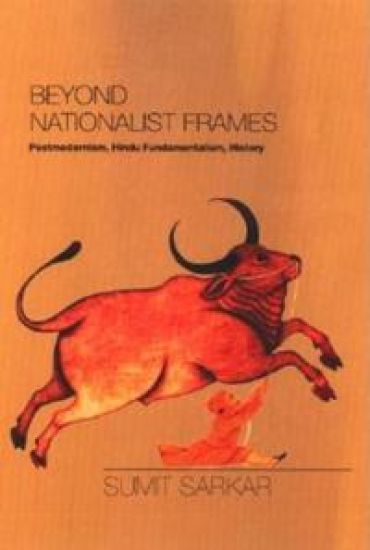
Beyond Nationalist Frames

Beyond Nationalist Frames

Sumit Sarkar

Indiana University Press
2002
sidottu
The political context in which historians of India find themselves today, says Sumit Sarkar, is dominated by the advance of the Hindu Right and globalized forms of capitalism, while the historian's intellectual context is dominated by the marginalization of all varieties of Marxism and an academic shift to cultural studies and postmodern critique. In Beyond Nationalist Frames, one of India's foremost contemporary historians offers his view of how the craft of history should be practiced in this complex conjuncture. In studies of colonial time-keeping, Rabindranath Tagore's fiction, and pre-Independence Bengal, Sarkar explores new approaches to the writing of history. Essays on contemporary politics consider the implications of the "Hindu Bomb," the rewriting of national history textbooks by Hindu fundamentalists, and the issue of conversion to Christianity. Scholars in all the fields touched by recent developments in South Asian historiography—anthropology, feminist theory, comparative literature, cultural studies—will find this a stimulating and provocative collection of essays, as will anyone interested in Indian politics.
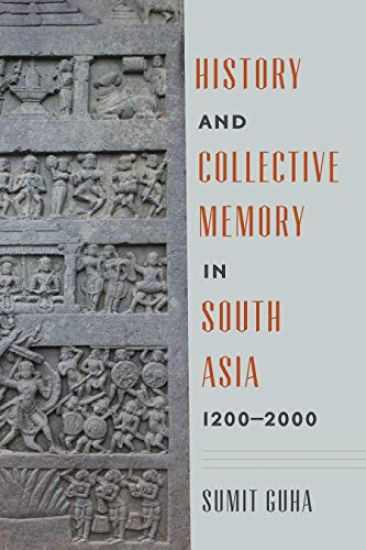
History and Collective Memory in South Asia, 1200–2000

History and Collective Memory in South Asia, 1200–2000

Sumit Guha

University of Washington Press
2019
pokkari
In this far-ranging and erudite exploration of the South Asian past, Sumit Guha discusses the shaping of social and historical memory in world-historical context. He presents memory as the result of both remembering and forgetting and of the preservation, recovery, and decay of records. By describing how these processes work through sociopolitical organizations, Guha delineates the historiographic legacy acquired by the British in colonial India; the creation of the centralized educational system and mass production of textbooks that led to unification of historical discourses under colonial auspices; and the divergence of these discourses in the twentieth century under the impact of nationalism and decolonization.Guha brings together sources from a range of languages and regions to provide the first intellectual history of the ways in which socially recognized historical memory has been made across the subcontinent. This thoughtful study contributes to debates beyond the field of history that complicate the understanding of objectivity and documentation in a seemingly post-truth world.
History and Collective Memory in South Asia, 1200–2000

History and Collective Memory in South Asia, 1200–2000

Sumit Guha

University of Washington Press
2019
sidottu
In this far-ranging and erudite exploration of the South Asian past, Sumit Guha discusses the shaping of social and historical memory in world-historical context. He presents memory as the result of both remembering and forgetting and of the preservation, recovery, and decay of records. By describing how these processes work through sociopolitical organizations, Guha delineates the historiographic legacy acquired by the British in colonial India; the creation of the centralized educational system and mass production of textbooks that led to unification of historical discourses under colonial auspices; and the divergence of these discourses in the twentieth century under the impact of nationalism and decolonization.Guha brings together sources from a range of languages and regions to provide the first intellectual history of the ways in which socially recognized historical memory has been made across the subcontinent. This thoughtful study contributes to debates beyond the field of history that complicate the understanding of objectivity and documentation in a seemingly post-truth world.