Kirjojen hintavertailu. Mukana 11 244 527 kirjaa ja 12 kauppaa.

Kirjahaku

Etsi kirjoja tekijän nimen, kirjan nimen tai ISBN:n perusteella.

1000 tulosta hakusanalla Sumit Sharma

Composite Materials

Composite Materials

Sumit Sharma

CRC Press
2021
sidottu
Composite materials find diverse applications in areas including aerospace, automotive, architecture, energy, marine and military. This comprehensive textbook discusses three important aspects including manufacturing, mechanics and dynamic mechanical analysis of composites. The textbook comprehensively presents fundamental concepts of composites, manufacturing techniques and advanced topics including as advances in composite materials in various fields, viscoelastic behavior of composites, toughness of composites and Nano mechanics of composites in a single volume. Topics such as polymer matrix composites, metal matrix composites, ceramic matrix composites, micromechanical behavior of a lamina, micromechanics and nanomechanics are discussed in detail.Aimed at senior undergraduate and graduate students for a course on composite materials in the fields of mechanical engineering, automobile engineering and electronics engineering, this book: Discusses mechanics and manufacturing techniques of composite materials in a single volume. Explains viscoelastic behavior of composites in a comprehensive manner. Covers fatigue, creep and effect of thermal stresses on composites. Discusses concepts including bending, buckling and vibration of laminated plates in detail. Explains dynamic mechanical analysis (DMA) of composites.
Composite Materials

Composite Materials

Sumit Sharma

TAYLOR FRANCIS LTD
2024
nidottu
Composite materials find diverse applications in areas including aerospace, automotive, architecture, energy, marine and military. This comprehensive textbook discusses three important aspects including manufacturing, mechanics and dynamic mechanical analysis of composites. The textbook comprehensively presents fundamental concepts of composites, manufacturing techniques and advanced topics including as advances in composite materials in various fields, viscoelastic behavior of composites, toughness of composites and Nano mechanics of composites in a single volume. Topics such as polymer matrix composites, metal matrix composites, ceramic matrix composites, micromechanical behavior of a lamina, micromechanics and nanomechanics are discussed in detail.Aimed at senior undergraduate and graduate students for a course on composite materials in the fields of mechanical engineering, automobile engineering and electronics engineering, this book: Discusses mechanics and manufacturing techniques of composite materials in a single volume. Explains viscoelastic behavior of composites in a comprehensive manner. Covers fatigue, creep and effect of thermal stresses on composites. Discusses concepts including bending, buckling and vibration of laminated plates in detail. Explains dynamic mechanical analysis (DMA) of composites.
Molecular Dynamics Simulation of Nanocomposites using BIOVIA Materials Studio, Lammps and Gromacs
Molecular Dynamics Simulation of Nanocomposites using BIOVIA Materials Studio, Lammps and Gromacs, Second Edition introduces the three major software packages essential for the molecular dynamics simulation of nanocomposites, providing detailed instructions on utilizing each. This content is accompanied by real-world examples that illustrate when each should be applied. Numerous case studies demonstrate how each software package predicts various properties of nanocomposites, encompassing metal-matrix, polymer-matrix, and ceramic-matrix based nanocomposites. Explored properties include mechanical, thermal, optical, and electrical characteristics. This is a valuable resource for students, researchers, and scientists working in the field of molecular dynamics simulation. All chapters have been fully updated to reflect the latest developments in the field, and this new edition has been enriched with additional chapters covering Al composites, machine learning, polymer coatings, and graphene-based materials and carbon nanotubes.
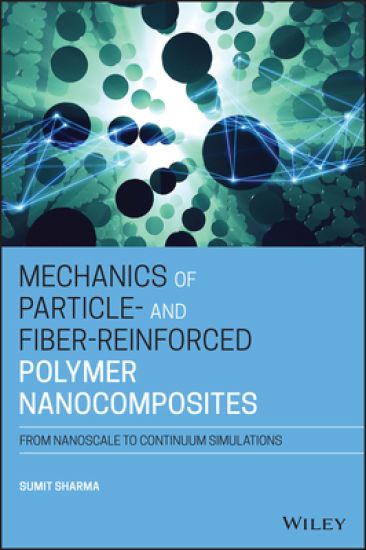
Mechanics of Particle- and Fiber-Reinforced Polymer Nanocomposites
Learn to model your own problems for predicting the properties of polymer-based composites Mechanics of Particle- and Fiber-Reinforced Polymer Nanocomposites: Nanoscale to Continuum Simulations provides readers with a thorough and up-to-date overview of nano, micro, and continuum approaches for the multiscale modeling of polymer-based composites. Covering nanocomposite development, theoretical models, and common simulation methods, the text includes a variety of case studies and scripting tutorials that enable readers to apply and further develop the supplied simulations. The book describes the foundations of molecular dynamics and continuum mechanics methods, guides readers through the basic steps required for multiscale modeling of any material, and correlates the results between the experimental and theoretical work performed. Focused primarily on nanocomposites, the methods covered in the book are applicable to various other materials such as carbon nanotubes, polymers, metals, and ceramics. Throughout the book, readers are introduced to key topics of relevance to nanocomposite materials and structures—supported by journal articles that discuss recent developments in modeling techniques and in the prediction of mechanical and thermal properties. This timely, highly practical resource: Explains the molecular dynamics (MD) simulation procedure for nanofiber and nanoparticle reinforced polymer compositesCompares results of experimental and theoretical results from mechanical models at different length scalesCovers different types of fibers and matrix materials that constitute composite materials, including glass, boron, carbon, and KevlarReviews models that predict the stiffness of short-fiber composites, including the self-consistent model for finite-length fibers, bounding models, and the Halpin-Tsai equationDescribes various molecular modeling methods such as Monte Carlo, Brownian dynamics, dissipative particle dynamics, and lattice Boltzmann methodsHighlights the potential of nanocomposites for defense and space applications Perfect for materials scientists, materials engineers, polymer scientists, and mechanical engineers, Mechanics of Particle- and Fiber-Reinforced Polymer Nanocomposites is also a must-have reference for computer simulation scientists seeking to improve their understanding of reinforced polymer nanocomposites.
Drone Development from Concept to Flight

Drone Development from Concept to Flight

Sumit Sharma

PACKT PUBLISHING LIMITED
2024
nidottu
Learn and apply the principles behind building and flying drones using components like BLDC motors and speed controllers, AeroGCS ground software, Ardupilot and PX4 open-source flight stacksalong with examples and best practices Key Features Get to grips with multicopter physics (roll, pitch, and yaw) and 3D dynamics for defining a drone's flight Optimize drone performance with powerful propulsion systems such as BLDS motors, lipo batteries, and ESCs Build a custom survey drone to learn vital aspects of drone assembly, configuration, testing, and maiden flight Purchase of the print or Kindle book includes a free PDF eBook Book DescriptionUnlock opportunities in the growing UAV market where drones are revolutionizing diverse sectors like agriculture, surveying, and the military. This book walks you through the complete drone development life cycle, from concept to pilot stage, prototyping, and ultimately, a market-ready product, with domain-specific applications. Starting with an introduction to unmanned systems, principles of drone flight, and it's motion in 3D space, this book shows you how to design a propulsion system tailored to your drone’s needs. You’ll then get hands on with the entire drone assembly process, covering airframe, components, and wiring. Next, you’ll enhance drone connectivity and navigation with communication devices, such as RFD900, Herelink, and H-16 Pro GCS and hardware protocols like I2C, and UART. The book also guides you in using the open-source flight software ArduPilot and PX4, along with firmware architecture and PID tuning for advanced control. Additionally, you’ll go learn about AeroGCS, Mission Planner, and UGCS ground control stations, tips for maiden flight and log analysis for optimizing performance while building a custom survey drone with a 60-min endurance, 10km range, live video feed, and photography options. By the end of this book, you’ll be equipped with all you need to build and fly your own drones and UAVs.What you will learn Explore the design principles for multicopter flight and its physics of motion Grasp terminologies associated with UAV flight systems Implement power trail, communication, and propulsion conceptsin drone design Use IMUs and sensors in flight controllers, and protocols like I2C, SPI, and MAvlink Familiarize yourself with open-source drone flight stacks and ground control station software Apply the control law used in multicopter and the basics of PIDs Delve into modes of flying with remote controllers and analysis of flight logs Who this book is forThis book is for beginner-level drone engineers, robotics engineers, hardware and design engineers, and hobbyists who want to enter the drone industry and enhance their knowledge of the physics, mechanics, avionics, and programming of drones, multicopters, and UAVs. While not a prerequisite, a basic understanding of circuits, microcontrollers, and electronic instruments like multimeter, camera, and batteries, along with fundamental concepts in physics and mathematics, will be helpful.
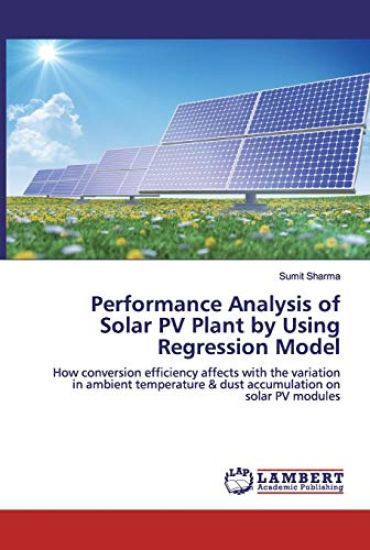
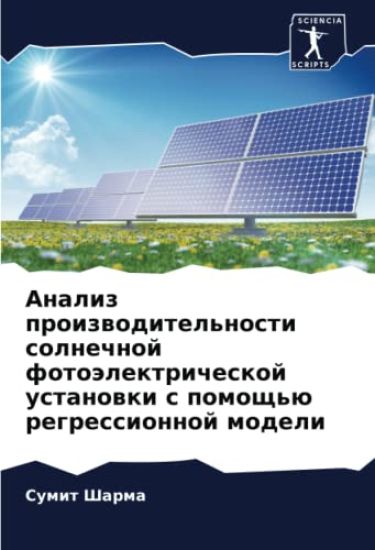
Performance Analysis of Solar PV Plant by Using Regression Model

Performance Analysis of Solar PV Plant by Using Regression Model

Sumit Sharma

LAP Lambert Academic Publishing
2019
pokkari
Solar energy has enormous potential to serve for present energy demand of the world. Photovoltaic is an elegant process of converting the sun energy into electricity. Photovoltaic cells become matchless in transforming the sunshine into electrical energy with no air and noise pollutions. In this work an effort had been made for estimating the effects of dust addition and ambient temperature on conversion efficiency of a 62 KWp Rooftop SPV module. The performance has been evaluated by use of Capacity Utilization Factor and Performance Ratio parameters. This work estimating the decrease in the output power and conversion efficiency as a function of dust accumulation & ambient temperature. A multivariate linear regressions (MLR) model is established to estimate the system's output performance with the consideration of conversion efficiency as the dependent variable and ambient temperature and dust exposure day as the independent variables. It was employed in calculating losses in system efficiency due to dust accumulation. The average efficiency reductions due to dust is 0.872%/day, energy loss is 9.935 kWh/m-sq using MLR model.