Kirjojen hintavertailu. Mukana 11 627 463 kirjaa ja 12 kauppaa.

Kirjahaku

Etsi kirjoja tekijän nimen, kirjan nimen tai ISBN:n perusteella.

1000 tulosta hakusanalla Susan L. Mizruchi

Henry James

Henry James

Susan L. Mizruchi

Oxford University Press Inc
2021
nidottu
An elegant introduction to one of America's most complex and influential writers. From his childhood in a family of leading American intellectuals through his mature life as a major American man of letters, Henry James (1843-1916) created a unique body of fiction that represents one of the greatest achievements in the nation's literary history. James's transnational life in the US and England and his extraordinary siblings (the philosopher William James and diarist Alice James) made his life as complicated as the fictions he produced. In this elegant introduction to the work of Henry James, Susan L. Mizruchi places the notoriously difficult and obscure writings in their historical and biographical context. As James grew in confidence as a writer, his fictions evolved accordingly. These complex accounts of human experience engage with the vital issues of both James's era and our own. Among the works treated in this introduction are Washington Square, The Europeans, Daisy Miller, The Portrait of a Lady, The Golden Bowl, and The Turn of the Screw. Through his novels, as well as his journalistic and critical endeavors, James explores themes related to gender relations, human sexuality, the nature of modernity, the threat of relativism, the rise of mass culture, and the role of art. Since their creation, James's writings have been a consistent subject of both literary theory and popular culture, receiving a diverse array of theoretical treatments, from formalism, deconstruction, phenomenology, and pragmatism to Marxism, new historicism, and gender and queer theory. James's novels have been adapted into numerous films by directors including William Wyler, Peter Bogdanovich, Michael Winner, Merchant/Ivory, and Jane Campion. The impact of Henry James cannot be overstated.
Brando's Smile

Brando's Smile

Susan L. Mizruchi

WW Norton Co
2014
sidottu
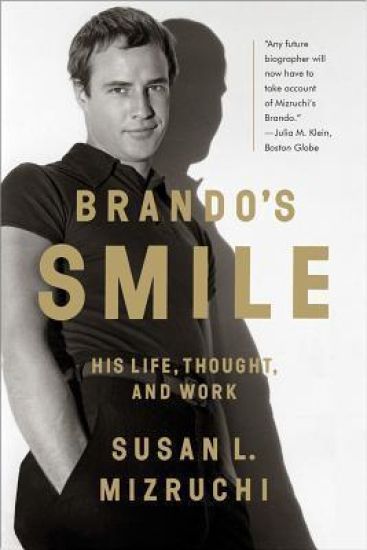
When people think about Marlon Brando, they think of the movie star, the hunk, the scandals. In Brando’s Smile, Susan L. Mizruchi reveals the Brando others have missed: the man who collected four thousand books; the man who rewrote scripts, trimming his lines to make them sharper; the man who consciously used his body and employed the objects around him to create believable characters; the man who loved Emily Dickinson’s poetry. To write this biography, Mizruchi gained unprecedented access to a vast number of annotated books from Brando’s library, hand-edited copies of screenplays, private letters, and recorded interviews that have never before been quoted in a biography. Original interviews with some of the still-living players from Brando’s life, including Ellen Adler, his one-time girlfriend and the daughter of his acting teacher Stella Adler, provide even deeper insight into the complex person whose intelligence belied the high-school dropout. Mizruchi shows how Brando’s embrace of foreign cultures and social outsiders led to his brilliant performances in unusual roles—a gay man, an Asian, a German soldier—to test himself and to foster empathy on a global scale. We also meet the political Brando: the civil rights activist, the close friend of James Baldwin, the actor who declined his Oscar to support Indian rights. More than seventy stunning—and many rare—photographs of Marlon Brando illuminate this portrait of the man who has left an astounding cultural legacy.
Brando's Smile

Brando's Smile

Susan L. Mizruchi

WW NORTON CO
2015
nidottu
When people think about Marlon Brando, they think of the film star, the hunk and the scandals. Susan L. Mizruchi finds the Brando others have missed: the man who collected four thousand books; the man who rewrote scripts, trimming his lines to make them sharper; the man who consciously used his body and employed the objects around him to create believable characters; the man who used his fame to foster American Indian and civil rights. From Brando’s letters, audiotapes and annotated screenplays and books—many never before available—Mizruchi gives us a complex person whose intelligence belies the school dropout. She shows how Brando’s embrace of foreign cultures and outsiders led to brilliant performances in unusual roles, fostering empathy on a global scale. In portraying a fuller Brando, Mizruchi portrays a more fascinating man than the one we thought we knew.
The Science of Sacrifice

The Science of Sacrifice

Susan L. Mizruchi

Princeton University Press
1998
pokkari
From ritual killings to subtle acts of self-denial, the practice and rhetoric of sacrifice has a special centrality in modern American literature. In a compelling interdisciplinary investigation, Susan Mizruchi portrays an episode in American cultural history when the literary movement of realism and the fledgling field of sociology both converged in the belief that sacrifice is basic to sociality. This is a book about the fascination that sacrifice held for writers--principally Herman Melville, Henry James, and W.E.B. Du Bois--and also for those who articulated the main tenets of modern social theory, an inquiry that eventually spans historical events such as public lynchings and the political scapegoating of immigrants a century ago. The execution in Billy Budd Sailor, the death of Du Bois's first-born son in The Souls of Black Folk, Henry James's preoccupation with renunciation and scapegoating, and the self-denying working classes of Norris and Stein all illustrate repeated stagings of sacrificial rituals from a Biblical past. For Mizruchi, the peculiar persistence of this aesthetic construct becomes a guide to a rich theological and social-scientific tradition distinctive to the late nineteenth and early twentieth centuries, and including such influential works as Smith's Lectures on the Religion of the Semites, Frazer's Golden Bough, and Ross's Sin and Society. The major features of sacrifice--its original association with spiritual doubt, its function as a form of spiritual economics that sustained divisions between the fortunate and the bereft, and its role in fixing boundaries between aliens and kin--held strong symbolic value for writers struggling to reconcile faith with rationalism, and communal coherence with capitalist expansion. Mizruchi eloquently demonstrates how the conceptual power of sacrifice made it a key mediator of cultural change, from the decline of sympathy and the significance of "race" in an emerging multicultural society to the revival of maternal self-sacrifice.
The Power of Historical Knowledge

The Power of Historical Knowledge

Susan L. Mizruchi

Princeton University Press
2014
pokkari
In this provocative study, Susan Mizruchi argues that the act of writing history is the key to the political concerns of American novelists. Using nineteenth-century theories of history as well as recent narratological models, she examines reconstructions of the past in The House of the Seven Gables (1851), The Bostonians (1886), The Wings of the Dove (1902), and An American Tragedy (1925). Her special focus allows us to see that the efforts (on the part of characters and narrators alike) to reshape the past reveal both anxieties about the self and larger struggles for political power. Professor Mizruchi demonstrates the deepening connections between narrative and political coercion from Hawthorne to Dreiser, whose novels (as she further shows) both incorporate, and portray their characters incorporating, the conditions of their contemporary worlds. Her argument addresses a major contemporary dialogue on the subversive qualities of American texts and the place of history in literary interpretation. Originally published in 1988. The Princeton Legacy Library uses the latest print-on-demand technology to again make available previously out-of-print books from the distinguished backlist of Princeton University Press. These editions preserve the original texts of these important books while presenting them in durable paperback and hardcover editions. The goal of the Princeton Legacy Library is to vastly increase access to the rich scholarly heritage found in the thousands of books published by Princeton University Press since its founding in 1905.
The Power of Historical Knowledge

The Power of Historical Knowledge

Susan L. Mizruchi

Princeton University Press
2016
sidottu
In this provocative study, Susan Mizruchi argues that the act of writing history is the key to the political concerns of American novelists. Using nineteenth-century theories of history as well as recent narratological models, she examines reconstructions of the past in The House of the Seven Gables (1851), The Bostonians (1886), The Wings of the Dove (1902), and An American Tragedy (1925). Her special focus allows us to see that the efforts (on the part of characters and narrators alike) to reshape the past reveal both anxieties about the self and larger struggles for political power. Professor Mizruchi demonstrates the deepening connections between narrative and political coercion from Hawthorne to Dreiser, whose novels (as she further shows) both incorporate, and portray their characters incorporating, the conditions of their contemporary worlds. Her argument addresses a major contemporary dialogue on the subversive qualities of American texts and the place of history in literary interpretation. Originally published in 1988. The Princeton Legacy Library uses the latest print-on-demand technology to again make available previously out-of-print books from the distinguished backlist of Princeton University Press. These editions preserve the original texts of these important books while presenting them in durable paperback and hardcover editions. The goal of the Princeton Legacy Library is to vastly increase access to the rich scholarly heritage found in the thousands of books published by Princeton University Press since its founding in 1905.
The Rise of Multicultural America

The Rise of Multicultural America

Mizruchi Susan L.

The University of North Carolina Press
2009
nidottu
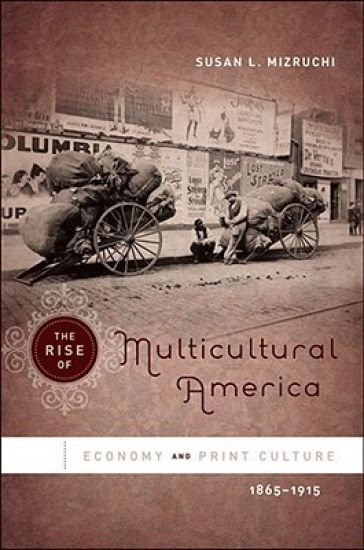
This is the first multicultural modern capitalist society.Between the Civil War and World War I, the United States underwent the most rapid economic expansion in history. At the same time, the country experienced unparalleled rates of immigration. In ""The Rise of Multicultural America"", Susan Mizruchi examines the convergence of these two extraordinary developments. No issue was more salient in postbellum American capitalist society, she argues, than the country's bewilderingly diverse population. This era marked the emergence of Americans' self-consciousness about what we today call multiculturalism.Mizruchi approaches this complex development from the perspective of print culture, demonstrating how both popular and elite writers played pivotal roles in articulating the stakes of this national metamorphosis. In a period of widespread literacy, writers assumed a remarkable cultural authority as best-selling works of literature and periodicals reached vast readerships and immigrants could find newspapers and magazines in their native languages. Mizruchi also looks at the work of journalists, photographers, social reformers, intellectuals, and advertisers. Identifying the years between 1865 and 1915 as the founding era of American multiculturalism, Mizruchi provides a historical context that has been overlooked in contemporary debates about race, ethnicity, immigration, and the dynamics of modern capitalist society. Her analysis recovers a legacy with the potential both to invigorate current battle lines and to highlight points of reconciliation.
Red-Headed Rebel Susan L. Mitchell

Red-Headed Rebel Susan L. Mitchell

Hilary Pyle

ARLEN HOUSE
2021
nidottu
Described by W. B. Yeats as "the nearest approach they have to a true poet," Susan Mitchell (1866–1926) was an active and valued member of Dublin society. Originally from Carrick-on-Shannon and raised by Unionist aunts in Dublin, she rebelled against privileged society and the Protestant Church in which she was raised. By a trick of fate, Mitchell exchanged her life as a gentlewoman in provincial Ireland for that of a journalist working on progressive publications in Dublin, where she gained a reputation for lampooning contemporary politics and the literary world. Pyle provides readers a glimpse of her satirical commentary and singular perspective on Dublin’s tumultuous years.
In the Sport

In the Sport

Susan L. Taylor

HarperPerennial
1994
nidottu
Twenty-two lifelines to personal growth and fulfillment from the editor in chief of Essence magazine. When Susan L. Taylor rose to editor in chief of Essence magazine more than a decade ago, she began writing an editorial column in which she shares her thoughts and feelings about how developing one's inner awareness ensures the wisdom and clarity needed to create a deeply satisfying and fulfilling life. The monthly column called "In the Spirit" is one of the most popular in the magazine. Susan L. Taylor connects with the reader in a personal and meaningful way, in a voice that is sisterly, informed, and motivating. She challenges her readers to transcend their fears, to face inevitable challenges in their lives courageously, and to use change as an opportunity to grow. "We limit ourselves because change may well mean dealing with the disapproval of the very people we rely on for support. Often words of inspiration and motivation, but she also suggests specific methods for working through problems and improving our emotional and spiritual health. "We are not powerless spectators of life. We are co-creators with God, and all around is are the gifts, the clay, that we can use to shape our world," she says. Susan L. Taylor writes passionately about what she has seen and learned in the course of her travels throughout the United States, Caribbean, and Africa. Her essays have helped many to balance the demanding world of work and business with the personal world of family and friendship. She shares bits of her own life--her loves, her trails, and triumphs--and the lessons she's learned. Many of Susan L. Taylor's readers already collect her editorials and find in them a source of encouragement, self-affirmation, empowerment, and peace of mind. Now they can have new essays and a few previously published favorites elegantly bound in a gift-sized paperback edition to keep for themselves or to give as a gift of love to those who are special to them.
Human Fatigue Risk Management

Human Fatigue Risk Management

Susan L. Murray; Matthew S. Thimgan

Academic Press Inc
2016
nidottu
Human Fatigue Risk Management: Improving Safety in the Chemical Processing Industry teaches users everything they need to know to mitigate the risk of fatigued workers in a plant or refinery. As human fatigue has been directly linked to several major disasters, the book explores the API RP 755 guidelines that were released to reduce these types of incidents. This book will help users follow API RP 755 and/or implement a fatigue risk management system in their organization. Susan Murray, a recognized expert in the field of sleep deprivation and its relation to high hazard industries, has written this book to be useful for HSE managers, plant and project managers, occupational safety professionals, and engineers and managers in the chemical processing industry. As scheduling of shifts is an important factor in reducing fatigue and accident rates, users will learn the benefits of more frequent staff rotation and how to implement an ideal scheduling plan. The book goes beyond API RP 755, offering more detailed understanding of why certain measures for managing fatigue are beneficial to a company, including examples of how theory can be put into practice. It is a simple, digestible book for managers who are interested in addressing human factor issues at their workplace in order to raise safety standards.
Overreach

Overreach

Susan L. Shirk

OXFORD UNIVERSITY PRESS INC
2022
sidottu
For decades, China's rise to power was characterized by its reassurance that this rise would be peaceful. Then, as Susan L. Shirk, shows in this sobering, clear-eyed account of China today, something changed. For three decades after Mao's death in 1976, China's leaders adopted a restrained approach to foreign policy. They determined that any threat to their power, and that of the Chinese Communist Party, came not from abroad but from within—a conclusion cemented by the 1989 Tiananmen crisis. To facilitate the country's inexorable economic ascendence, and to prevent a backlash, they reassured the outside world of China's peaceful intentions. Then, as Susan Shirk shows in this illuminating, disturbing, and utterly persuasive new book, something changed. China went from fragile superpower to global heavyweight, threatening Taiwan as well as its neighbors in the South China Sea, tightening its grip on Hong Kong, and openly challenging the United States for preeminence not just economically and technologically but militarily. China began to overreach. Combining her decades of research and experience, Shirk, one of the world's most respected experts on Chinese politics, argues that we are now fully embroiled in a new cold war. To explain what happened, Shirk pries open the "black box" of China's political system and looks at what derailed its peaceful rise. As she shows, the shift toward confrontation began in the mid-2000s under the mild-mannered Hu Jintao, first among equals in a collective leadership. As China's economy boomed, especially after the Global Financial Crisis of 2008, Hu and the other leaders lost restraint, abetting aggression toward the outside world and unchecked domestic social control. When Xi Jinping took power in 2012, he capitalized on widespread official corruption and open splits in the leadership to make the case for more concentrated power at the top. In the decade following, and to the present day—the eve of the 20th CCP Congress when he intends to claim a third term—he has accumulated greater power than any leader since Mao. Those who implement Xi's directives compete to outdo one another, provoking an even greater global backlash and stoking jingoism within China on a scale not seen since the Cultural Revolution. Here is a devastatingly lucid portrait of China today. Shirk's extensive interviews and meticulous analysis reveal the dynamics driving overreach. To counter it, she argues, the worst mistake the rest of the world, and the United States in particular, can make is to overreact. Understanding the domestic roots of China's actions will enable us to avoid the mistakes that could lead to war.
Capacity beyond Coercion

Capacity beyond Coercion

Susan L. Ostermann

OXFORD UNIVERSITY PRESS INC
2022
sidottu
State capacity is often equated with coercion. However, history has shown that it is extremely difficult for states with weak capacity to ensure compliance with their laws. In Capacity beyond Coercion, Susan L. Ostermann examines the largely unexplored capacities that allow coercively weak states to promote law-following behavior. Utilizing extensive data collected in adjacent districts in India and Nepal, she demonstrates how coercively weak states can significantly increase compliance by behaving pragmatically and designing implementation strategies around known barriers to compliance. In particular, she examines variation in compliance with conservation, education, and child labor regulations, investigating the mechanisms by which the Indian and Nepali states have, despite limited enforcement capacity, secured compliance with regulations that run counter to customary norms and to the self-interest of target populations. She argues that one such barrier is imperfect legal knowledge and shows how states that have engaged in what she terms "regulatory pragmatism" may circumvent this compliance barrier. They do so by designing implementation strategies for on-the-ground realities. Exploring two such efforts--delegated enforcement and information dissemination through local leaders, Ostermann demonstrates that states that suffer from limited coercive capacity but behave pragmatically can still bring about large-scale compliance. Given that many states have weak enforcement capacity, the findings in Capacity beyond Coercion point a way forward for more effective and responsive governance throughout the developing world.
Reforming the Reform

Reforming the Reform

Susan L. Moffitt; Michaela Krug O'Neill; David K. Cohen

THE UNIVERSITY OF CHICAGO PRESS
2023
sidottu
An expansive study of the problems encountered by educational leaders in pursuit of reform, and how these issues cyclically translate into future topics of reform. School reform is almost always born out of big dreams and well-meaning desires to change the status quo. But between lofty reform legislation and the students whose education is at stake, there are numerous additional policies and policymakers who determine how reforms operate. Even in the best cases, school reform initiatives can perpetuate problems created by earlier reforms or existing injustices, all while introducing new complications. In Reforming the Reform, political scientist Susan L. Moffitt, education policy scholar Michaela Krug O’Neill, and the late policy and education scholar David K. Cohen take on a wide-ranging examination of the many intricacies of school reform. With a particular focus on policymakers in the spaces between legislation and implementation, such as the countless school superintendents and district leaders tasked with developing new policies in the unique context of their district or schools, the authors identify common problems that arise when trying to operationalize ambitious reform ideas. Their research draws on more than 250 interviews with administrators in Tennessee and California (chosen as contrasts for their different political makeup and centralization of the education system) and is presented here alongside survey data from across the United States as well as archival data to demonstrate how public schools shoulder enormous responsibilities for the American social safety net. They provide a general explanation for problems facing social policy reforms in federalist systems (including healthcare) and offer pathways forward for education policy in particular.
Reforming the Reform

Reforming the Reform

Susan L. Moffitt; Michaela Krug O'Neill; David K. Cohen

THE UNIVERSITY OF CHICAGO PRESS
2023
nidottu
An expansive study of the problems encountered by educational leaders in pursuit of reform, and how these issues cyclically translate into future topics of reform. School reform is almost always born out of big dreams and well-meaning desires to change the status quo. But between lofty reform legislation and the students whose education is at stake, there are numerous additional policies and policymakers who determine how reforms operate. Even in the best cases, school reform initiatives can perpetuate problems created by earlier reforms or existing injustices, all while introducing new complications. In Reforming the Reform, political scientist Susan L. Moffitt, education policy scholar Michaela Krug O’Neill, and the late policy and education scholar David K. Cohen take on a wide-ranging examination of the many intricacies of school reform. With a particular focus on policymakers in the spaces between legislation and implementation, such as the countless school superintendents and district leaders tasked with developing new policies in the unique context of their district or schools, the authors identify common problems that arise when trying to operationalize ambitious reform ideas. Their research draws on more than 250 interviews with administrators in Tennessee and California (chosen as contrasts for their different political makeup and centralization of the education system) and is presented here alongside survey data from across the United States as well as archival data to demonstrate how public schools shoulder enormous responsibilities for the American social safety net. They provide a general explanation for problems facing social policy reforms in federalist systems (including healthcare) and offer pathways forward for education policy in particular.
Rasa

Rasa

Susan L. Schwartz

Columbia University Press
2004
sidottu
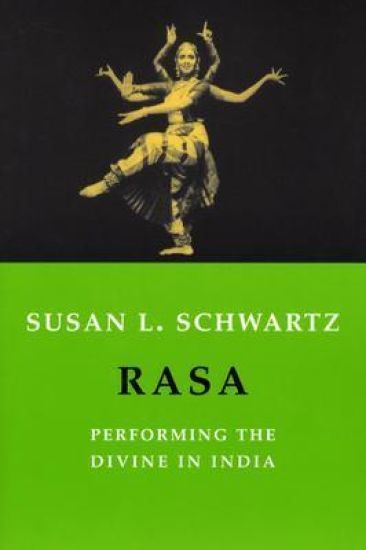
While many people outside India find the images, sounds, and practices of Indian performing arts compelling and endeavor to incorporate them into the "global" repertoire, few are aware of the central role of religious belief and practice in Indian aesthetics. Completing the trilogy that includes Darsan: Seeing the Divine and Mantra: Hearing the Divine in India and America, this volume focuses on how rasa has been applied in a range of Indian performance traditions. "Rasa" is taste, essence, flavor. How is it possible that a word used to describe a delicious masala can also be used to critique a Bharata Natyam performance? Rasa expresses the primary goals of performing arts in India in all the major literary, philosophical, and aesthetic texts, and it provides the cornerstone of the oral traditions of transmission. It is also essential to the study and production of sculpture, architecture, and painting. Yet its primary referent is cuisine. This book articulates the religious sensibility underlying the traditional performing arts as well as other applications of rasa and examines the relationships between the arts and religion in India today.
Rasa

Rasa

Susan L. Schwartz

Columbia University Press
2004
pokkari
While many people outside India find the images, sounds, and practices of Indian performing arts compelling and endeavor to incorporate them into the "global" repertoire, few are aware of the central role of religious belief and practice in Indian aesthetics. Completing the trilogy that includes Darsan: Seeing the Divine and Mantra: Hearing the Divine in India and America, this volume focuses on how rasa has been applied in a range of Indian performance traditions. "Rasa" is taste, essence, flavor. How is it possible that a word used to describe a delicious masala can also be used to critique a Bharata Natyam performance? Rasa expresses the primary goals of performing arts in India in all the major literary, philosophical, and aesthetic texts, and it provides the cornerstone of the oral traditions of transmission. It is also essential to the study and production of sculpture, architecture, and painting. Yet its primary referent is cuisine. This book articulates the religious sensibility underlying the traditional performing arts as well as other applications of rasa and examines the relationships between the arts and religion in India today.
Japanese American Midwives

Japanese American Midwives

Susan L. Smith

University of Illinois Press
2005
nidottu
In the late nineteenth century, Japan's modernizing quest for empire transformed midwifery into a new woman's profession. With the rise of Japanese immigration to the United States, Japanese midwives (sanba) served as cultural brokers as well as birth attendants for Issei women. They actively participated in the creation of Japanese American community and culture as preservers of Japanese birthing customs and agents of cultural change. Japanese American Midwives reveals the dynamic relationship between this welfare state and the history of women and health. Susan L. Smith blends midwives' individual stories with astute analysis to demonstrate the impossibility of clearly separating domestic policy from foreign policy, public health from racial politics, medical care from women's caregiving, and the history of women and health from national and international politics. By setting the history of Japanese American midwives in this larger context, Smith reveals little-known ethnic, racial, and regional aspects of women's history and the history of medicine.
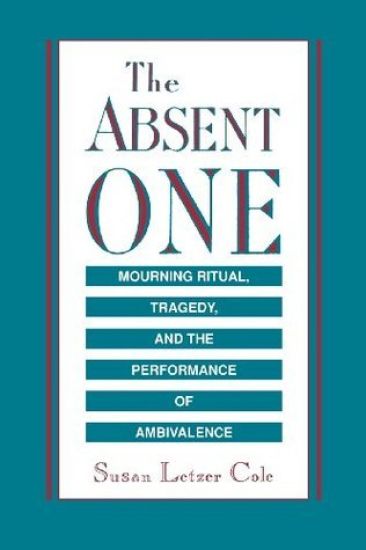
The Absent One

The Absent One

Susan L. Cole

Pennsylvania State University Press
1990
sidottu
Here is presented a new theory of the origins of tragedy, based on its perceived kinship with mourning ritual. Mourners and tragic protagonists alike journey through dangerous transitional states, confront the uncanny, express themselves in antithetical style, and, above all, enact their ambivalence toward their beloved dead. Elements common to both tragedy and mourning ritual are first identified in actual Chinese, African, and Greek funerary rites and then analyzed in tragedies by Aeschylus, Sophocles, Shakespeare, Racine, Ibsen, O’Neill, Miller, Beckett, and Ionesco. Included is a firsthand account of exploration of the tragedy-mourning link in the rehearsal process of the great experimental theater director, Joseph Chaikin. Opening her first chapter, Dr. Cole says, “The grave is the birthplace of tragic drama and ghosts are its procreators. For tragedy is the performance of ambivalence which ghosts emblematize: what we fear in particular—the revenant, the ghost returning to haunt us—is also what we desire—the extending of life beyond the moment of death.”
The Absent One

The Absent One

Susan L. Cole

Pennsylvania State University Press
1991
pokkari
Here is presented a new theory of the origins of tragedy, based on its perceived kinship with mourning ritual. Mourners and tragic protagonists alike journey through dangerous transitional states, confront the uncanny, express themselves in antithetical style, and, above all, enact their ambivalence toward their beloved dead. Elements common to both tragedy and mourning ritual are first identified in actual Chinese, African, and Greek funerary rites and then analyzed in tragedies by Aeschylus, Sophocles, Shakespeare, Racine, Ibsen, O’Neill, Miller, Beckett, and Ionesco. Included is a firsthand account of exploration of the tragedy-mourning link in the rehearsal process of the great experimental theater director, Joseph Chaikin. Opening her first chapter, Dr. Cole says, “The grave is the birthplace of tragic drama and ghosts are its procreators. For tragedy is the performance of ambivalence which ghosts emblematize: what we fear in particular—the revenant, the ghost returning to haunt us—is also what we desire—the extending of life beyond the moment of death.”