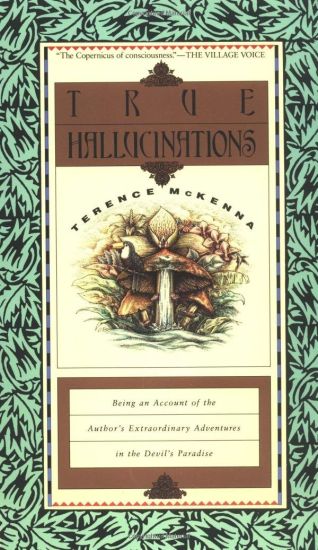
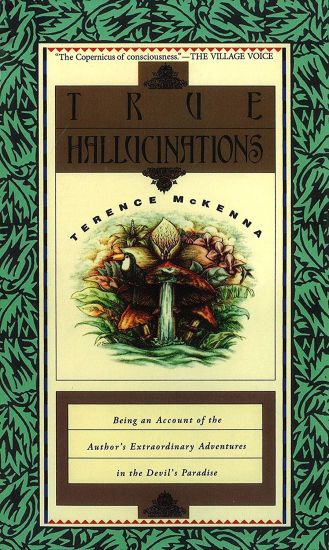
This mesmerizing, surreal account of the bizarre adventures of Terence McKenna, his brother Dennis, and a small band of their friends, is a wild ride of exotic experience and scientific inquiry. Exploring the Amazon Basin in search of mythical shamanic hallucinogens, they encounter a host of unusual characters -- including a mushroom, a flying saucer, pirate Mantids from outer space, an appearance by James and Nora Joyce in the guise of poultry, and translinguistic matter -- and discover the missing link in the development of human consciousness and language.
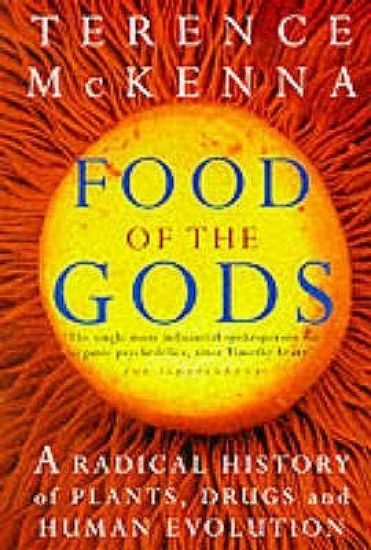
"Deserves to be the modern classic on mind-altering drugs and hallucinogens."--The Washington Post Ethnobotanist Terence Mckenna, hailed by Tom Robbins as "the most important--and most entertaining--visionary scholar in America," explores humanity's symbiotic relationship with spirits, tobacco, marijuana, opium, psilocybin, and more, from prehistoric times to today. Why, as a species, are humans so fascinated by altered states of consciousness? Can altered states reveal something to us about our origins and our place in nature? In Food of the Gods, Terence McKenna's research on man's ancient relationship with chemicals opens a doorway to the divine, and perhaps a solution for saving our troubled world. McKenna provides a revisionist look at the historical role of drugs in the East and the West, from ancient spice, sugar, and rum trades to marijuana, cocaine, synthetics, and even television--illustrating the human desire for the "food of the gods" and the powerful potential to replace abuse of illegal drugs with a shamanic understanding, insistence on community, reverence for nature, and increased self-awareness.
Reissued because of the current interest in Ecstasy, this is McKenna's extraordinary quest to discover the fruit of the Tree of Knowledge. He wonders why we are so fascinated by altered states of consciousness, do they reveal something about our origins as human beings and our place in nature?
Colin explica con la ayuda de expertos en el tema como John Allegro, Jordan Maxwell y Terence Mc Kenna como el hongo amanita, la seta de los pitufos ha sido influyente en la creacion de mitos y religiones: -desde papa noel-hasta el cristianismo-el hinduismo y el islam-incluso alicia en el pais de las maravillasTodos ellos, la navidad y la pascua, est n basados en el man de los judios y de los antiguos chamanes: la amanita muscaria o mata moscas. La amanita muscaria siempre ha sido una seta mágica de los mitos y leyendas. Ya que nuestros ancestros no poseian la tecnología moderna, y en algún aspecto, gracias a dios que no, porque de ahí surgieron bellas películas, bailes, historias, cuentos, vestidos, gorros, medicinas, diseños y hasta las religiones y sectas tóxicas. El cuerpo principal de un hongo está constituido por una red de fibrillas de aspecto similar a las raíces miniaturizadas de un árbol.Para ello, forma un "huevo", o aglomerado de hifas, que, bajo el estímulo adecuado, experimentará una brutal y vertiginosa erección para dar lugar a una seta. Brutal, porque las proporciones del miembro son cientos de veces mayores que las del huevo, y vertiginosa, porque de la noche al día el fruto brota de la "nada". De ahí la expresión "proliferan como setas", y de ahí también el mito de que las setas son el resultado de la caída de un rayo durante una tormenta. Pero no tiene nada que ver con rayos -con las tormentas, ya es otro cantar-. La explicación es que la seta ya está totalmente formada en el interior del huevo, y lo único que hace es hinchar sus células de agua. Algo paralelo a cuando la sangre inunda los cuerpos cavernosos del pene. Una erección en toda regla.
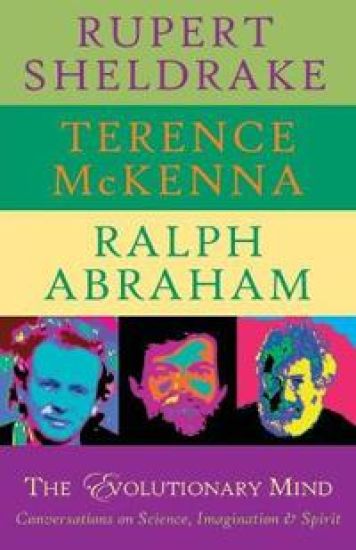
A wide-ranging investigation of the ecology of inner and outer space the role of chaos theory in the dynamics of human creation and the rediscovery of traditional wisdom. In this book of trialogues the late psychedelic visionary and shamanologist Terence McKenna, acclaimed biologist and originator of the morphogenetic fields theory Rupert Sheldrake and mathematician and chaos theory scientist Ralph Abraham explore the relationships between chaos and creativity and their connection to cosmic consciousness. Their observations call into question our current views of reality morality and the nature of life in the universe. The authors challenge the reader to the deepest levels of thought with wide-ranging investigations of the ecology of inner and outer space the role of chaos in the dynamics of human creation and the resacralization of the world. Among the provocative questions the authors raise are: Is Armageddon a self-fulfilling prophecy? Are we humans the imaginers or the imagined? Are the eternal laws of nature still evolving? What is the connection between physical light and the light of consciousness? Part ceremony part old-fashioned intellectual discussion these trialogues are an invitation to a new understanding of what Jean Houston calls the dreamscapes of our everyday waking life.
Stimulating and often startling discussions between three friends, all highly original thinkers: Rupert Sheldrake, controversial biologist, Terence McKenna, psychedelic visionary, and Ralph Abraham, chaos mathematician. Their passion is to break out of paradigms that retard our evolution and to explore new possibilities. Through challenge and synergy they venture where few have gone before, leading their readers on an exciting journey of discovery. Their discussions focus on the evolution of the mind, the role of psychedelics, skepticism, the psychic powers of animals, the structure of time, the life of the heavens, the nature of God, and transformations of consciousness."Three fine thinkers take us plunging into the universe of chaos, mind, and spirit. Instead of leaving us lost, they bring us back with startling insights and more wonder than we knew we had." --Matthew Fox, "Original Blessing and Sheer Joy""A jam-session of the mind, an intellectual movable feast, an on-going conversation that began over twenty years ago and remains as lively and relevant today as it ever was. Sadly, Terence had to leave the conversation a little earlier than planned. But the appearance of this book of trialogues at this critical, historical juncture is a reaffirmation of the potency of the optimistic vision that the trialogues express." --Dennis McKenna, brother of the late Terence McKennaRupert Sheldrake is a biologist and author of many books including "The Sense of Being Stared At, And Other Aspects of the Extended Mind." Ralph Abraham is a mathematician, one of the pioneers of chaos theory and the author of several books including "Chaos, Gaia, Eros: A Chaos Pioneer Uncovers the Three Great Streams of History." The late Terence McKenna was a scholar of shamanism, ethno-botanist, psychedelic researcher and author of many books including "Food of the Gods and True Hallucinations."
Sacred Mushrooms and the Law is the only book covering the legal landscape underlying psychedelic mushrooms. All federal and state laws concerning mushrooms are covered, and charts outline potential punishments.
The Adelphoe (The Brothers) of Terence is a Latin adaptation of a comedy of the same name by the Greek comic playwright Menander. The theme of the play is the perennially interesting question of the relationship between the generations and the proper way to bring up a son. In the introduction Mr Martin considers Terence in the context of Roman comedy generally and discusses the background of the Adelphoe. There is also a section on metre and scansion and a short analysis of the textual tradition. The full and detailed commentary, besides elucidating the text, seeks at all times to help the reader to understand the work as a play to be enjoyed. The edition is intended for use by students at school and university and for anyone wishing to read and appreciate the play in the original.
Terence's Eunuchus (The Eunuch) was his most successful play in his lifetime but has been surprisingly neglected by modern commentators. In this first ever full-scale commentary in English, Professor Barsby provides a thorough examination of the play in terms of its literary and dramatic qualities, its staging, and its relationship to the two plays of Menander's on which it is based. The commentary includes scene-by-scene discussions which bring out the development of character and plot, and the notes offer a close study of Terence's language in comparison with that of his predecessor Plautus. A full introduction puts Terence in his historical and literary context, and there are two appendices, one on metre and the other giving text and translation of the remains of Menander's Eunouchos and Kolax.
Terence's Hecyra raises social, literary and theatrical issues of great interest to modern students of Roman comedy and, indeed, of Roman culture more broadly. The play pays strikingly close attention to the domestic problems of women and experiments boldly with traditional comic forms, not only in its creation of anticipatory suspense, but through its variations on traditional situations and roles and its metatheatrical qualities. In addition, Terence's response in his prologues to the play's two putative failures is important, if tendentious, evidence for the mechanics of theatrical performance in the second century, especially the conjunction of theatrical and gladiatorial shows. This edition opens the play's many interpretive challenges to wider scrutiny while remaining attentive to the linguistic needs of students at all levels.
Terence's Hecyra raises social, literary and theatrical issues of great interest to modern students of Roman comedy and, indeed, of Roman culture more broadly. The play pays strikingly close attention to the domestic problems of women and experiments boldly with traditional comic forms, not only in its creation of anticipatory suspense, but through its variations on traditional situations and roles and its metatheatrical qualities. In addition, Terence's response in his prologues to the play's two putative failures is important, if tendentious, evidence for the mechanics of theatrical performance in the second century, especially the conjunction of theatrical and gladiatorial shows. This edition opens the play's many interpretive challenges to wider scrutiny while remaining attentive to the linguistic needs of students at all levels.
In English translations that achieve a lively readability without sacrificing the dramatic and comic impact of the original Latin, this volume presents all six comedies: The Girl from Andros (Andria), The Self-Tormentor (Heautontimorumenos), The Eunuch (Eunouchus), Phormios, The Brothers (Adelphoe), and Her Husband's Mother (Hecyra).