
Kirjahaku
Etsi kirjoja tekijän nimen, kirjan nimen tai ISBN:n perusteella.
1000 tulosta hakusanalla Thomas Fahy

The Writing Dead features original interviews with the writers of today’s most frightening and fascinating shows. They include some of television’s biggest names—Carlton Cuse (Lost and Bates Motel), Bryan Fuller (Hannibal, Dead Like Me, Wonderfalls, and Pushing Daisies), David Greenwalt (Angel and Grimm), Gale Anne Hurd (The Walking Dead, The Terminator series,Aliens, and The Abyss), Jane Espenson (Buffy the Vampire Slayer and Battlestar Galactica), Brian McGreevy (Hemlock Grove), Alexander Woo (True Blood), James Wong (The X-Files, Millennium, American Horror Story, and Final Destination), Frank Spotnitz (The X-Files and Millennium), Richard Hatem (Supernatural, The Dead Zone, and The Mothman Prophecies), Scott Buck (Dexter), Anna Fricke (Being Human), and Jim Dunn (Haven).The Writing Dead features thought-provoking, never-before-published interviews with these top writers and gives the creators an opportunity to delve more deeply into the subject of television horror than anything found online. In addition to revealing behind-the-scene glimpses, these writers discuss favorite characters and storylines and talk about what they find most frightening. They offer insights into the writing process reflecting on the scary works that influenced their careers. And they reveal their own personal fascinations with the genre.The thirteen interviews in The Writing Dead also mirror the changing landscape of horror on TV—from the shows produced by major networks and cable channels to shows made exclusively for online streaming services such as Netflix and Amazon Studios. The Writing Dead will appeal to numerous fans of these shows, to horror fans, to aspiring writers and filmmakers, and to anyone who wants to learn more about why we like being scared.
In Dining with Madmen: Fat, Food, and the Environment in 1980s Horror, author Thomas Fahy explores America's preoccupation with body weight, processed foods, and pollution through the lens of horror. Conspicuous consumption may have communicated success in the eighties, but only if it did not become visible on the body. American society had come to view fatness as a horrifying transformation—it exposed the potential harm of junk food, gave life to the promises of workout and diet culture, and represented the country's worst consumer impulses, inviting questions about the personal and environmental consequences of excess.While changing into a vampire or a zombie often represented widespread fears about addiction and overeating, it also played into concerns about pollution. Ozone depletion, acid rain, and toxic waste already demonstrated the irrevocable harm being done to the planet. The horror genre—from A Nightmare on Elm Street to American Psycho—responded by presenting this damage as an urgent problem, and, through the sudden violence of killers, vampires, and zombies, it depicted the consequences of inaction as terrifying.Whether through Hannibal Lecter's cannibalism, a vampire's thirst for blood in The Queen of the Damned and The Lost Boys, or an overwhelming number of zombies in George Romero's Day of the Dead, 1980s horror uses out-of-control hunger to capture deep-seated concerns about the physical and material consequences of unchecked consumption. Its presentation of American appetites resonated powerfully for audiences preoccupied with body size, food choices, and pollution. And its use of bodily change, alongside the bloodlust of killers and the desolate landscapes of apocalyptic fiction, demanded a recognition of the potentially horrifying impact of consumerism on nature, society, and the self.

In Dining with Madmen: Fat, Food, and the Environment in 1980s Horror, author Thomas Fahy explores America's preoccupation with body weight, processed foods, and pollution through the lens of horror. Conspicuous consumption may have communicated success in the eighties, but only if it did not become visible on the body. American society had come to view fatness as a horrifying transformation—it exposed the potential harm of junk food, gave life to the promises of workout and diet culture, and represented the country's worst consumer impulses, inviting questions about the personal and environmental consequences of excess.While changing into a vampire or a zombie often represented widespread fears about addiction and overeating, it also played into concerns about pollution. Ozone depletion, acid rain, and toxic waste already demonstrated the irrevocable harm being done to the planet. The horror genre—from A Nightmare on Elm Street to American Psycho—responded by presenting this damage as an urgent problem, and, through the sudden violence of killers, vampires, and zombies, it depicted the consequences of inaction as terrifying.Whether through Hannibal Lecter's cannibalism, a vampire's thirst for blood in The Queen of the Damned and The Lost Boys, or an overwhelming number of zombies in George Romero's Day of the Dead, 1980s horror uses out-of-control hunger to capture deep-seated concerns about the physical and material consequences of unchecked consumption. Its presentation of American appetites resonated powerfully for audiences preoccupied with body size, food choices, and pollution. And its use of bodily change, alongside the bloodlust of killers and the desolate landscapes of apocalyptic fiction, demanded a recognition of the potentially horrifying impact of consumerism on nature, society, and the self.

Truman Capote--along with his most famous works In Cold Blood and Breakfast at Tiffany's--continues to have a powerful hold over the American popular imagination. His glamorous lifestyle, which included hobnobbing with the rich and famous and frequenting the most elite nightclubs in Manhattan, makes him the subject of ongoing interest for public and academic audiences alike. In Understanding Truman Capote, Thomas Fahy provides a new direction for Capote studies that offers a way to reconsider the author's work. By reading Capote's work in its historical context, Fahy reveals the politics shaping his writing and refutes any notion of Capote as disconnected from the political. Instead this study positions him as a writer deeply engaged with the social anxieties of the 1940s and 1950s. Understanding Truman Capote also applies a highly interdisciplinary framework to the author's writing that includes discussions of McCarthyism, the Lavender Scare, automobile culture, juvenile delinquency, suburbia, Beat culture, the early civil rights movement, female sexuality as embodied by celebrities such as Marilyn Monroe, and atomic age anxieties. This new approach to Capote studies will be of interest in the fields of literature, history, film, suburban studies, sociology, gender/sexuality studies, African American literary studies, and American and cultural studies.Capote's writing captures the isolation, marginalization, and persecution of those who deviated from or failed to achieve white middle-class ideals and highlights the artificiality of mainstream idealizations about American culture. His work reveals the deleterious consequences of nostalgia, the insidious impact of suppression, the dangers of Cold War propaganda, and the importance of equal rights. Ultimately Capote's writing reflects a critical engagement with American culture that challenges us to rethink our understanding of the 1940s and 1950s.

The Writing Dead features original interviews with the writers of today's most frightening and fascinating shows. They include some of television's biggest names--Carlton Cuse (Lost and Bates Motel), Bryan Fuller (Hannibal, Dead Like Me, Wonderfalls, and Pushing Daisies), David Greenwalt (Angel and Grimm), Gale Anne Hurd (The Walking Dead, The Terminator series,Aliens, and The Abyss), Jane Espenson (Buffy the Vampire Slayer and Battlestar Galactica), Brian McGreevy (Hemlock Grove), Alexander Woo (True Blood), James Wong (The X-Files, Millennium, American Horror Story, and Final Destination), Frank Spotnitz (The X-Files and Millennium), Richard Hatem (Supernatural, The Dead Zone, and The Mothman Prophecies), Scott Buck (Dexter), Anna Fricke (Being Human), and Jim Dunn (Haven).The Writing Dead features thought-provoking, never-before-published interviews with these top writers and gives the creators an opportunity to delve more deeply into the subject of television horror than anything found online. In addition to revealing behind-the-scene glimpses, these writers discuss favorite characters and storylines and talk about what they find most frightening. They offer insights into the writing process reflecting on the scary works that influenced their careers. And they reveal their own personal fascinations with the genre.The thirteen interviews in The Writing Dead also mirror the changing landscape of horror on TV--from the shows produced by major networks and cable channels to shows made exclusively for online streaming services such as Netflix and Amazon Studios. The Writing Dead will appeal to numerous fans of these shows, to horror fans, to aspiring writers and filmmakers, and to anyone who wants to learn more about why we like being scared.

Truman Capote--along with his most famous works In Cold Blood and Breakfast at Tiffany's--continues to have a powerful hold over the American popular imagination. His glamorous lifestyle, which included hobnobbing with the rich and famous and frequenting the most elite nightclubs in Manhattan, makes him the subject of ongoing interest for public and academic audiences alike. In Understanding Truman Capote, Thomas Fahy provides a new direction for Capote studies that offers a way to reconsider the author's place in literary criticism, the canon, and the classroom.By reading Capote's work in its historical context, Fahy reveals the politics shaping his writing and refutes any notion of Capote as disconnected from the political. Instead this study positions him as a writer deeply engaged with the social anxieties of the 1940s and 1950s. Understanding Truman Capote also applies a highly interdisciplinary framework to the author's writing that includes discussions of McCarthyism, the Lavender Scare, automobile culture, juvenile delinquency, suburbia, Beat culture, the early civil rights movement, female sexuality as embodied by celebrities such as Marilyn Monroe, and atomic age anxieties. This new approach to Capote studies will be of interest in the fields of literature, history, film, suburban studies, sociology, gender/sexuality studies, African American literary studies, and American and cultural studies.Capote's writing captures the isolation, marginalization, and persecution of those who deviated from or failed to achieve white middle-class ideals and highlights the artificiality of mainstream idealizations about American culture. His work reveals the deleterious consequences of nostalgia, the insidious impact of suppression, the dangers of Cold War propaganda, and the importance of equal rights. Ultimately Capote's writing reflects a critical engagement with American culture that challenges us to rethink our understanding of the 1940s and 1950s.

Winner of the Pulitzer Prize in drama as well as Tony Awards for best play and best actor, Tracy Letts has emerged as one of the greatest playwrights of the twenty-first century.Understanding Tracy Letts, the first book dedicated to his writing, is an introduction to his plays and an invitation to engage more deeply with his work--both for its emotional power and cultural commentary.Experiencing a Tracy Letts play often feels akin to reading a Cormac McCarthy novel, watching a Cohen Brothers film, and seeing an episode of Breaking Bad at the same time. His characters can be ruthlessly cruel and funny, selfish and generous, delusional and incisive, and deceptive and painfully honest. They keep secrets. They harbor biases and misconceptions. And in their quest to find love and understanding, they often end up being the greatest impediments to their own happiness. As a writer, Letts can move seamlessly from the milieu of a Texas trailer park to the pulsating nightlife of London's countercultural scene, the stifling quiet of small-town Ohio to the racial tensions of urban Chicago. He thrives in the one-act format, in plays like Mary Page Marlow and The Minutes, as well as the epic scope of August: Osage County and Linda Vista. With a musician's sense of timing, Letts shifts between humor and heartache, silence and sound, and the mundane and the poetic. And he fearlessly tackles issues such as gender bias, racism, homophobia, and disability rights. Contemporary American life thus becomes a way to comment on the country's troubled history from Native American genocide to the civil rights movement. The personal narratives of his characters become gateways to the political.Understanding Tracy Letts celebrates the range of Letts's writing, in part, by applying different critical approaches to his works. Whether through the lens of disability studies, the conspiracy genre, food studies, the feminist politics of quilting, or masculinity studies, these readings help bring out the thematic richness and sociopolitical dimensions of Letts's work.

Winner of the Pulitzer Prize in drama as well as Tony Awards for best play and best actor, Tracy Letts has emerged as one of the greatest playwrights of the twenty-first century.Understanding Tracy Letts, the first book dedicated to his writing, is an introduction to his plays and an invitation to engage more deeply with his work--both for its emotional power and cultural commentary.Experiencing a Tracy Letts play often feels akin to reading a Cormac McCarthy novel, watching a Cohen Brothers film, and seeing an episode of Breaking Bad at the same time. His characters can be ruthlessly cruel and funny, selfish and generous, delusional and incisive, and deceptive and painfully honest. They keep secrets. They harbor biases and misconceptions. And in their quest to find love and understanding, they often end up being the greatest impediments to their own happiness. As a writer, Letts can move seamlessly from the milieu of a Texas trailer park to the pulsating nightlife of London's countercultural scene, the stifling quiet of small-town Ohio to the racial tensions of urban Chicago. He thrives in the one-act format, in plays like Mary Page Marlow and The Minutes, as well as the epic scope of August: Osage County and Linda Vista. With a musician's sense of timing, Letts shifts between humor and heartache, silence and sound, and the mundane and the poetic. And he fearlessly tackles issues such as gender bias, racism, homophobia, and disability rights. Contemporary American life thus becomes a way to comment on the country's troubled history from Native American genocide to the civil rights movement. The personal narratives of his characters become gateways to the political.Understanding Tracy Letts celebrates the range of Letts's writing, in part, by applying different critical approaches to his works. Whether through the lens of disability studies, the conspiracy genre, food studies, the feminist politics of quilting, or masculinity studies, these readings help bring out the thematic richness and sociopolitical dimensions of Letts's work.
Samantha Ranvali can't sleep. Haunted by nightmares and the memory of a man who attacked her years ago, she seeks a cure for her insomnia through an experimental study called "Endymion's Circle." The treatment seems to be a success, but after her first full night of sleep in months, Samantha learns that one of the other participants in the study has been murdered. The body is found crucified upside down, and a recording of J. S. Bach's "Goldberg Variations" plays at the scene. As an old lover investigates the crime, he draws Samantha into a mystery that spans over two hundred years and suggests something far more sinister than the police expect. And with each night of Samantha's newfound sleep, she awakens to another ritualistic crime. Every clue takes her deeper into her own past, her own history of loss, pain, and desperation. Every murder reveals that a dark curse has taken hold of her world. And every clue brings her closer to the revelation that she is the next victim. Here is stunning suspense that plays masterfully with the conventions of the genre and perfectly blends historical richness with modern-day terror.

College rule (also known as medium ruled paper) is the most common lined paper in use in the United States. It is generally used in middle school through to college and is also popular with adults. This is a good choice for teen or adult notebooks and composition books (known as exercise books outside the US).
Many scholars believe that the Gospel of Thomas, the famous collection of Jesus' sayings found in Nag Hammadi in 1945, makes all the difference for our understanding of the origins of Christianity. The gospel has been studied closely for the new light it throws on pre-canonical traditions and for the different world of wisdom it seems to represent. Without denying the value of such approaches, the present book takes a different approach. It does not look backward to the earlier sources of the gospel nor to the historical Jesus, but seeks to locate Thomas on the map of early Christian literature and history by comparing the gospel to other related writings and traditions. These include the writings ascribed to the mysterious apostle, Judas Thomas, other documents from Nag Hammadi, Paul and Stoic teachers, and the Gospel of Matthew. No single interpretative key for the understanding of the gospel is proposed. Rather, the book opens up several new readings and historical explanations which can usefully be explored. Uro also argues that the conventional methods scholars have been using in their studies are in need of rethinking and refinement. Among many conclusions is the author's belief that Thomas is an early second-century work written by people who, like many other first- and second-century Christians, understood Jesus' message in terms of the Hellenistic belief in the divine origin of the self.

Thomas
Dean Son
2012
nidottu

Thomas
Egmont UK Ltd
2001
sidottu
Age 18 months+. One of 4 new titles in this super value, bestselling collectable series of board books with plush cover characters. Perfect for the youngest reader, these cuddle, play and read titles represent the ultimate book-plus product.
Thomas
EGMONT CHILDRENS BOOKS
2004
nidottu
One of six bumper value, super-sized, fun activity books publishing together. In these Really Big Activity Books you'll find pages and pages of fun, time-filling, colouring, puzzling and dot-to-dotting activities.
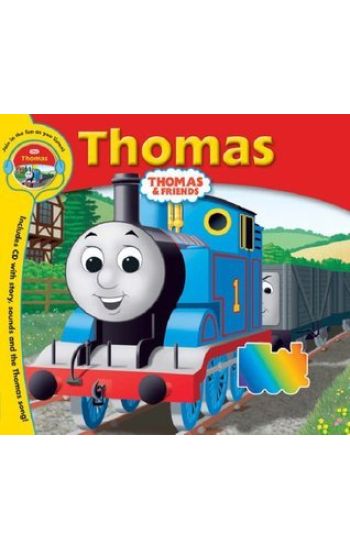
Thomas
Egmont Books Ltd
2007
muu
Lets you sing along, and read along as Thomas, James, Gordon, Henry, Bertie, Terence and Toby all appear in their own adventures, complete with bump, crash and 'peep! peep!' sound effects! This work allows you to choose your favourite character or collect them all.


Thomas began as a question. Imaginea pious young Englishman kneels in prayer. Weighed down by guilt, he prays for a sense of purpose and for the opportunity to serve God and find redemption. On the other side of the world, a young Maori girl sits with her family beneath a star-studded sky. A little distance off, warriors are opening an earth oven, and the air fills with the odor of cooked human flesh. Within two decades or so, they will become lovers. And so the question is, What combination of character and circumstance could have made this possible? Taken from history, Thomas follows the life of Thomas Kendall, one of the first missionaries to New Zealand. With his wife and growing family, he settled at Rangihoua in the Bay of Islands. Living in wretched, primitive conditions, in discord with his colleagues and defiance of his superiors, he was drawn into the world of the Maori. Beset by the twin demons of Utter Doubt and Utter Certainty, he struggled to bring redemption to the Maori and to find it for himself and failed spectacularly.

Thomas began as a question. Imaginea pious young Englishman kneels in prayer. Weighed down by guilt, he prays for a sense of purpose and for the opportunity to serve God and find redemption. On the other side of the world, a young Maori girl sits with her family beneath a star-studded sky. A little distance off, warriors are opening an earth oven, and the air fills with the odor of cooked human flesh. Within two decades or so, they will become lovers. And so the question is, What combination of character and circumstance could have made this possible? Taken from history, Thomas follows the life of Thomas Kendall, one of the first missionaries to New Zealand. With his wife and growing family, he settled at Rangihoua in the Bay of Islands. Living in wretched, primitive conditions, in discord with his colleagues and defiance of his superiors, he was drawn into the world of the Maori. Beset by the twin demons of Utter Doubt and Utter Certainty, he struggled to bring redemption to the Maori and to find it for himself and failed spectacularly.