Spirited text and whimsical, sea-bright illustrations encourage wary fledglings to achieve the impossible, all in their own good time. "Breathe . . . try . . . jump . . . FLY " With trademark energy and warmth, acclaimed creator Timothy Basil Ering delivers another picture book hero for young children to root for and relate to. The time has come for three young sandpipers to soar, but Earnest seems tied to the ground. He has wings and tail feathers just like his brother and sister; what makes him so afraid? Magic will happen, Mom promises, when he's ready. But no matter how much she and Dad coach him or his siblings cheer him on, Earnest's efforts only lead him into danger. Perhaps, with his family's support and a little trust in himself, they'll lead him out again.
An endearing tale of a boy overcoming his bedtime fears with a little help from Dad – and the promise of wormcake in the morning.From the illustrator of the multiple award-winning The Tale of Despereaux, comes the endearing tale of Hamilton Squidlegger – a boisterous youngster with a huge fear of the dark. During the day Hamilton is fearless! He can triumph over all the frackensnappers, skelecragons and bracklesneeds in the swamp. But at night? Well, he quakes in terror... Will his dad be able to help him remain fearless in his own mud all night long? The perfect bedtime read, this terrific dad-and-son adventure tale involving monsters, seafaring and wormcake is brought to life by Timothy Basil Ering's colourful, energetic signature artwork and hugely imaginative language.
Spirited text and whimsical, sea-bright illustrations encourage wary fledglings to achieve the impossible, all in their own good time.“Breathe . . . try . . . jump . . . FLY!”With trademark energy and warmth, acclaimed creator Timothy Basil Ering delivers another picture book hero for young children to root for and relate to. The time has come for three young sandpipers to soar, but Earnest seems tied to the ground. He has wings and tail feathers just like his brother and sister; what makes him so afraid? Magic will happen, Mum promises, when he’s ready. But no matter how much she and Dad coach him or his siblings cheer him on, Earnest’s efforts only lead him into danger. Perhaps, with his family’s support and a little trust in himself, they’ll lead him out again.
Patience, cooperation, and wonder conspire in an enchantingly quirky story of a boy who finds a mysterious treasure in a junk pile and creates a monster to guard it. Reprint.
This book is designed to teach Visual Basic programming to preteen kids with a hands-on approach and a step by step teaching style. This book is preteen tested, and their feedback was used in the writing. Whether you are 8 or 88 years old, this book is an easy and fast way to learn how to program a computer using one of the most prominent programming languages of our time. The Color images in this book are key to making it simple and easy to follow (and why the book is expensive). Although this book is written using Visual Studio 2010, this book can be used, and the programs will work, in any version of Visual Studio.
Taking an informal approach, Hagle presents a review of the basic mathematical concepts that underlie most quantitative analysis in the social sciences. After an algebra review featuring sets and combinations, Hagle discusses limits and continuity. Calculus is presented next, with an introduction to differential calculus. Multivariate functions, partial derivatives and integral calculus are discussed; the author concludes with a discussion of matrix algebra. Aimed at readers who have taken one or two courses in algebra, this volume is packed with helpful definitions, equations, and examples as well as alternative notations. A useful appendix of common math symbol and Greek letters is also included.
Aimed at providing readers who want a quick "refresher course" in mathematics with an informal review, Timothy M. Hagle's volume offers dozens of worked-out examples of such mathematical concepts as algebra sets, limits, continuity, differential calculus, multivariate functions, partial derivatives, integral calculus, and matrix algebra. In addition, Hagle provides problem sets so that readers can practice their grasp of standard mathematical procedures (answers to these problem sets are contained in the appendixes). Written in a friendly style, Basic Math for Social Scientists: Problems and Solutions provides readers with an informal approach to mathematical procedures without proofs.
Learning the Kuna LanguageOne Word at a TimeLocated on the North shore of the Republic of Panama, just West of the Colombian border, the Guna Yala, often referred to as the San Blas islands, is a Caribbean archipelago with one island for every day of the year, each one blessed with white sand beaches and gently swaying palm treesThe native tongue of the Kuna, is pronounced Guna or Tulekaya. From A to Z this basic Kuna/Spanish/English dictionary details a litany of necessary translations for common words and phrases most likely to be encountered in the San Blas Islands. Here are a few examples designed to whet your appettite.A Listing of Basic Kuna WordsKuna/EnglishOlasu - Nose ring worn by Guna women.Guna Yala - The San Blas Islands.Guna - An indigenous native of Guna Yala.Sahila - Village leader.Tulemola - Clothing.Oros - Rice.Madu - Bread.Ua or Tilapia - Fish.Dulup or Skungit - Lobster.Koibir or Ogob - Coconut.Cabi - Coffee.Cayuca - Canoe carved from a tree trunk.Erragon - A Kuna god.Nuchus - A holy, wooden doll.Poni - An evil spirit.Kuna - Kuna land.Ico-inna - Feast related to coming of age, puberty.Tilapia - A fish.Congresos - A town meeting.In Kuna mola means shirtIn Dulegaya, the Kuna's native language, mola means shirt or clothing. The mola art form originated with the tradition of Kuna women painting their bodies with geometric designs, using available natural colors. Molas, form the traditional outfit of a Kuna woman, two mola panels are incorporated as front and back panels in a blouse. Full costumes includes a patterned wrapped skirt (saburet), a red and yellow headscarf (musue), arm and leg beads (wini), a gold nose ring (olasu) and earrings in addition to the mola blouse dulemor.Dulegaya is the primary language of daily life in the comarcas, and the majority of Kuna children speak the language. Spanish is also widely used, especially in education and written documents. Although it is relatively viable, Kuna is considered to be one of the world's endangered languages.Must Know Words & Phrases English/DulegayaHello - NaHow are you? - Bede nued guddi?Fine - NuediFine, thank you. And you? - An nuedi. Bedina?What is your name? - Igi be nuga?My name is.. - An nugaNice to meet you - An yeel itoeWhere are you from? - Be bia lidi?I am from - An .. ginedi.Yes - ElleNo - SuliThanks - Dot NuetPlease - Uis anga saetOk - Nued gudii oGood - Nabir, nuediWelcome - Nuegambi use be nonikiI'm happy - An yee ito diiI'm warm - An uerba itoeI'm hungry - An uku itoeI'm thirsty - An gobieI'm cold - An dambe itoeI'm sleepy - An nue gapieGood bye - Degi maloGood luck - Nuedgine, nuegan biSee you tomorrow - An banedese be dakoeI had a good time - An yer ittosaSuffice it to say, BASIC KUNA is a good, pocket beginners guide you handily can carry on your travels in your back pocket or backpack.Dedicated to Abi SuaThis book is dedicated to, Abi, Sua, the infant child born on the San Blas island, Nargana (circa 1985) of sailor parents, an English father from the Channel Islands and a Brazilian mother from Fortaleza, whom had sought shelter from a vicious storm at sea. The author met the family while on one of his trips researching this book.
Learn Euskara One Word at TimeNo matter whether traveling to the Basque country as a tourist, an exchange student, or with the intention of moving there as an expatriate, this guide will serve you well. Euskara is a distinct and unique idiom, rich with words and phrases. Intended for English speakers, this book shares common slang words and phrases that will help you communicate in everyday situations like ordering dinner in a restaurant, shopping at the market for fresh produce, flirting, getting street directions, or hiring a taxi.That said, be advised this little book is neither a complete course in learning the Basque Language, neither is it a textbook. Instead, it is a basic introduction to the Basque language, a good pocket beginners guide you can handily carry on your travels either in your back pocket or tucked away in a backpack. As an eBook, it is even more portable. Before you go, consider taking the time to learn a few Basque words and phrases so you can speak street Euskara like a local. This guide contains a wealth of words and expressions that you can look up when you hear, or read them, in order to know what is going on around you. Even better, spend a night curled up with the book gaining familiarity with the wisdom it contains. That way, when you hear a vaguely familiar word on the street, you will know which page to consult in order to refresh your memory. Knowing at least some street talk will pay big dividends. Instead of being seen as some soul-less gringo tourist, the locals will hold you in much higher esteem. As a result, you may make new friends, and as a bonus perhaps get a better hotel room or lower prices while shopping.A Sampling of Basque Vocabulary/HitztegiaStreets - KaleakShops - DendakBeaches - HondartzakRestaurants - JatetxeakDance clubs - Dantza klubakHotels - HotelakGrocery stores - Janari-dendaMarket - MerkatuaTapas: - PintxosSeafood - ItsaskiFish - ArrainakPart One, from A to Z, lists words in English along with their Basque translation. Then in part two, vocabulary is listed in groups to make them easy to find, ie: Colours, animals, places, food, flavours, days of the week, weather and people, and so on. Know that modern Basque is spoken by about a half million people in Euskal Herria, a region spanning the Spanish/French border, that encompasses four provinces in Spain and three in France. In Bilbao, because of the city's size and diversity, one mainly hears Spanish. That said, some Basque words and phrases like, Kaixo, Agur, and Eskerrik asko, are more frequently spoken than their Spanish counterparts. But mere miles away in smaller villages, Basque/Euskara is the first language.Top Twenty Basque Words You Should KnowAgur - GoodbyeAita - DadAma - MomArratsalde on - Good afternoonAupa - Howdy/heyBai - YesBai ote? - Really?Barkatu - Excuse meEgun on - Good morningErdera - Any language other than BasqueEskerrik asko - Thank youEuskara - BasqueEz - No Gabon - Good evening/Good nightGeldi - StopHementxe - Over / right here Kaixo - HelloLasai - Take it easyMesedez - PleaseOngi etorri - WelcomeOsaba - UncleTopa - Cheers Zorte on - Good luckConsider investing in your future happiness by reading this dictionary before you travel to the Basque Country. Click the Buy Button at the top of your page and a minute from now you can begin exploring the language and culture of this charismatic land and its people.
This report is part of a larger RAND Corporation study on the societal foundations of national competitiveness. The authors surveyed Chinese and Russian thinking about the qualities of nations that tend to produce competitive advantage and found that both China and Russia hold starkly different views from most U.S. and Western officials and analysts about the societal sources of competitive advantage.
Dr. Crack studied PhD-level option pricing at MIT and Harvard Business School, taught undergrad-, MBA-, and PhD-level option pricing at Indiana University (winning many teaching awards), was an independent consultant to the New York Stock Exchange, worked as an asset management practitioner in London, and traded options for 20+ years. This unique mix of learning, teaching, consulting, practice, and trading is reflected in every page. This revised 7th edition gives clear explanations of Black-Scholes option pricing theory, and discusses direct applications of the theory to trading. The presentation does not go far beyond basic Black-Scholes for three reasons: First, a novice need not go far beyond Black-Scholes to make money in the options markets; Second, all high-level option pricing theory is simply an extension of Black-Scholes; and Third, there already exist many books that look far beyond Black-Scholes without first laying the firm foundation given here. The trading advice does not go far beyond elementary call and put positions because more complex trades are simply combinations of these. UNIQUE SELLING POINTS -The basic intuition you need to trade options for the first time, or interview for an options job. -Honest advice about trading: there is no simple way to beat the markets, but if you have skill this advice can help make you money, and if you have no skill but still choose to trade, this advice can reduce your losses. -Full immersion treatment of transactions costs (T-costs). -Lessons from trading stated in simple terms. -Stylized facts about the markets (e.g., how to profit from reversals, when are T-costs highest/lowest during the trading day, implications of the market for corporate control, etc.). -How to apply European-style Black-Scholes pricing to the trading of American-style options. -Leverage through margin trading compared with leverage through options, including worked spreadsheet examples. -Binomial and Trinomial models compared. -Black-Scholes pricing code for HP17B, HP19B, and HP12C. -Five accompanying Excel sheets: forecast T-costs for options using simple models; explore option sensitivities including the Greeks; compare stock trading to option trading; GameStop example; and, explore P(ever ITM). -Practitioner Bloomberg Terminal screenshots to aid learning. -Simple discussion of continuously-compounded returns. -Introduction to "paratrading" (trading stocks side-by-side with options). -Unique "regrets" treatment of early exercise decisions and trade-offs for American-style calls and puts. -Unique discussion of put-call parity and option pricing. -How to calculate Black-Scholes in your head in 10 seconds (also in Heard on The Street: Quantitative Questions from Wall Street Job Interviews). -Special attention to arithmetic Brownian motion with general pricing formulae and comparisons of Bachelier (1900) with Black-Scholes. -Careful attention to the impact of dividends in analytical American option pricing. -Dimensional analysis and the adequation formula (relating FX call and FX put prices through transformed Black-Scholes formulae). -Intuitive review of risk-neutral pricing/probabilities and how and why these are related to physical pricing/probabilities. -Careful distinction between the early Merton (non-risk-neutral) hedging-type argument and later Cox-Ross/Harrison-Kreps risk-neutral pricing -Simple discussion of Monte-Carlo methods in science and option pricing. -Simple interpretations of the Black-Scholes formula and PDE and implications for trading. -Careful discussion of conditional probabilities as they relate to Black-Scholes. -Intuitive treatment of high-level topics e.g., bond-numeraire interpretation of Black-Scholes (where N(d2) is P(ITM)) versus the stock-numeraire interpretation (where N(d1) is P(ITM)). -Introduction and discussion of the risk-neutral probability that a European-style call or put option is ever in the money during its life.
This book describes the two excursions accessed from the Monterrey International Airport on the north side of Monterrey, Nuevo León, Mexico. Excellent exposures of salt diapirs and flanking strata in La Popa basin, northeastern Mexico, contain world-class examples of salt–sediment interaction that provided the basis for the concept of halokinetic sequences. The basin also contains one of the first secondary salt welds described in outcrop. Two one-day excursions described here provide an easily accessible overview of salt–sediment relations within a short distance of Monterrey, Nuevo León, Mexico. Excursion 1 constitutes an introduction to basin stratigraphy, an introduction to halokinetic sequences at El Papalote diapir, and a visit to a salt-cored detachment fold near Hidalgo, Nuevo León. Excursion 2 is a visit to La Popa salt weld, where stops at several parts of the weld permit comparison of different structural styles developed along the weld. Each excursion begins and ends at theMarriott Courtyard Aeropuerto Hotel, near the Monterrey airport.
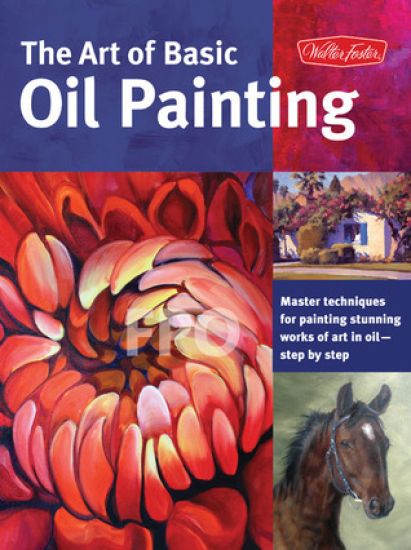
From the days of the early Masters, oil painting has inspired and intrigued artists of all skill levels. In "The Art of Basic Oil Painting," artists interested in learning how to work with this complex and multifaceted medium will find inspiration through clear, step-by-step painting lessons covering a variety of approachable subjects. First, artists will be guided through the tools and materials required for oil painting, including brushes, supports, mediums, palettes, and paint. This inclusive book also has sections on basic drawing techniques and color theory, as well as brief overviews of perspective, composition, lighting, and painting from photographs. Expert oil painters then guide artists along the way by outlining basic painting techniques, demonstrating how to work with various mediums, teaching the intricacies of color mixing, and much more in an easy-to-digest format. Artists will enjoy working their way through step-by-step projects spanning a wide range of appealing subjects, including portraits, landscapes, seascapes, still lifes, and florals. Full of inspiring and beautiful works of art, "The Art of Basic Oil Painting "also features techniques for rendering light and shadow, creating textures, and achieving lifelike results. With its fresh approach and plethora of tips and techniques, this book provides contemporary instruction for rendering realistic works of art in a long-standing, timeless medium. Whether you are a beginning artist looking to get started in oil painting or an experienced painter looking to improve your breadth of knowledge, "The Art of Basic Oil Painting" offers a comprehensive guide that no fine oil artist should be without.
An easy-to-understand guide to psychopharmacology for non-medical helping professionals Basic Psychopharmacology for Mental Health Professionals provides up-to-date information on the latest medications in easy-to-understand language. This practical and engaging text includes numerous case studies that illustrate the skills needed for successful practice in the field. The 3rd Edition is updated to the DSM-5, and it includes updated information and research on the newest medications. Additional clinical case examples have also been added throughout the text.
The first comprehensive guide to ESD protection and I/O design Basic ESD and I/O Design is the first book devoted to ESD (electrostatic discharge) protection and input/output design. Addressing the growing demand in industry for high-speed I/O designs, it bridges the gap between ESD research and current VLSI design practices and provides a much-needed reference for practicing engineers who are frequently called upon to learn the subject on the job. This volume presents an integrated treatment of ESD, I/O, and process parameter interactions that both I/O designers and process designers can use. It examines key factors in I/O and ESD design and testing, and helps the reader consider ESD and reliability issues up front when making I/O choices. Emphasizing clarity and simplicity, this book focuses on design principles that can be applied widely as this dynamic field continues to evolve. Basic ESD and I/O Design: *Describes strategies for design-oriented ESD protection *Explains layout methods that enhance ESD protection designs *Addresses basic I/O designs, including new problems such as mixed voltage interfaces *Discusses fabrication aspects affecting ESD and I/O protection *Illustrates concepts using numerous figures and examples *Expresses device physics in terms of simple electrical circuit models *Cross-references the material to standard texts in the field Essential for engineers in industry and anyone designing circuits, systems, or devices for future technologies, Basic ESD and I/O Design is also a useful reference for researchers and graduate students involved in core VLSI design or computer architecture.
This concise monograph series focuses on the implementation of various engineering principles in the conception, design, development, analysis and operation of biomedical, biotechnological and nanotechnology systems and applications. Authors are encouraged to submit their work in the following core topics, but authors should contact the commissioning editor before submitting a proposal: BIoMeDIcAL DeVIceS & MATeRIALS Trauma Analysis Vibration and Acoustics in Biomedical Applications Innovations in Processing, Characterization and Applications of Bioengineered Materials Viscoelasticity of Biological Tissues and Ultrasound Applications Dynamics, and Control in Biomechanical Systems Clinical Applications of Bioengineering Transport Phenomena In Biomedical Applications Computational Modeling and Device Design Safety and Risk Analysis of Biomedical Engineering Modeling and Processing of Bioinspired Materials and Biomaterials NANoMeDIcAL DeVIceS & MATeRIALS Bio Nano Materials Nano Medical Sciences Materials for Drug & Gene Delivery Nanotechnology for Central Nervous System Nanomaterials & Living Systems Interactions Biosensing, Diagnostics & Imaging Cancer Nanotechnology Micro & Nano Fluidics Environmental Health & Safety Soft Nanotechnology & Colloids