This book is inspired by true events. It's about a toddler named Brandon who loves playing with his monster truck. He's sad because he and his family have to move to a different house. At this time, the only thing that keeps Brandon happy is his monster truck. He has two older brothers whom he just loves chasing around with his monster truck. Once they get settled into their new home, they have a huge surprise for Brandon
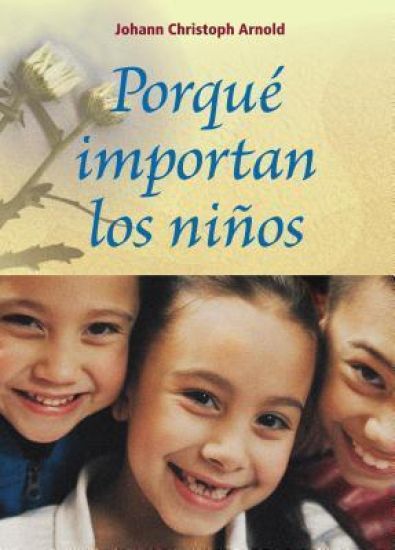
Raising a child has never been more challenging. If you ever doubt yourself or wonder if it is worth the heartache, read this little book. If you worry that your family will not weather life’s storms or if you fear losing your children to the prevailing culture, read it again. Why Children Matter offers biblical wisdom and commonsense advice on how to hold a family together and raise children with character. Johann Christoph Arnold, a father, grandfather and pastor, has written eleven books, including three on parenting and children’s education. As the fabric of family and society is torn apart, this book offers up concrete steps to encourage parents faced with difficult child-rearing decisions.
Criar a un niño nunca ha sido más difícil. Si alguna vez dudas de tí mismo o te preguntas si vale la pena, lee este pequeño libro. Si te preocupas que tu familia no capea las tormentas de la vida o si tienes miedo de perder a tus hijos a la cultura dominante, léelo de nuevo. Porque importan los niños ofrece sabiduría bíblica y consejos de sentido común sobre la manera de mantener una familia y criar a tus hijos con carácter.
This simple prayer book, devoted to the Holy Family, offers traditional and original prayers dedicated to helping families today. Included in "The Holy Family Prayer Book, " are a variety of prayers that will help families stay spiritually grounded and ever-present in faith. "Paperback" View sample pages.
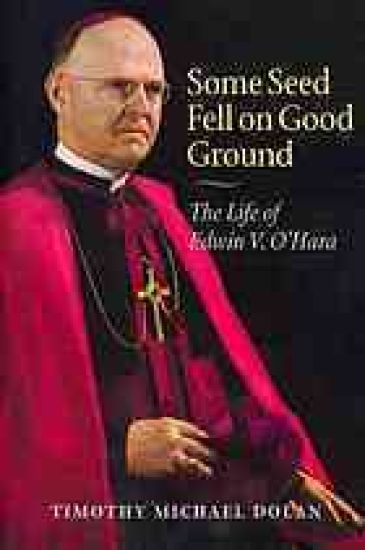
A man far ahead of his time, Archbishop Edwin V. O'Hara of Kansas City (1881-1956) orchestrated numerous initiatives that profoundly affected American Catholic life. His ceaseless activity as both priest and bishop sowed seeds that flourished long past his lifetime, from liturgical reform to Bible study, campus ministry to social justice, minimum wage legislation to founding the National Catholic Rural Life Conference. The pastoral challenges he confronted in the first half of the last century--institutional complacency; disorganization among Catholics and reluctance to openly profess their faith; ignorance of social justice principles; the defense of the Church in a sometimes hostile culture--all remain significant challenges for the American Church today.Timothy Michael Dolan, Archbishop of New York, researched and composed this biography in the early 1990s and continues to cite O'Hara as his role model of an immensely effective bishop. In an effort to revisit the pioneering work of church leaders, this book is published for the first time in paperback and features a new preface by Archbishop Dolan.
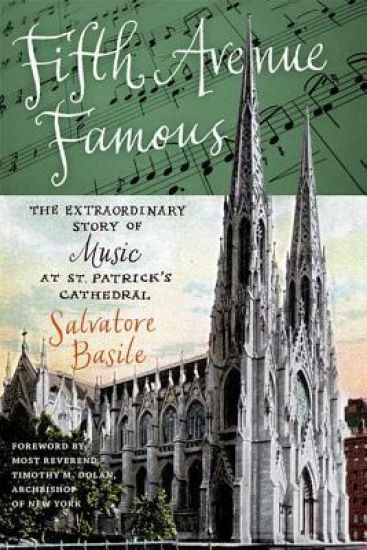
Victorian-era divas who were better paid than some corporate chairmen, the boy soprano who grew up to give Bing Crosby a run for his money, music directors who were literally killed by the job—the plot of a Broadway show or a dime-store novel? No, the unique and colorful history of St. Patrick's Cathedral. Since its inception more than 125 years ago, the Cathedral Choir has been considered the gold standard of liturgical music—an example of artistic excellence that has garnered worldwide renown. Yet behind this stately facade lies an intriguing mix of New York history, star secrets, and high-level office politics that has made the choir not only a source of prime musical entertainment but also fodder for tabloids and periodicals across the nation. In this unique and engaging book, readers are treated to a treasure trove of vibrant characters, from opera stars from around the world to the thousands of volunteer singers who brought their own hopes and dreams—and widely varying musical abilities—to the fabled choir. As the city's preeminent Catholic institution, St. Patrick's Cathedral has served one of the most dynamic and diverse communities in the world for well over a century. It has been intimately entwined with the history of New York: a major center of culture in the nation's cultural capital. The Cathedral Choir provides an extraordinary and largely overlooked insight into this history, and in Salvatore Basile's pitch-perfect exploration it becomes a microcosm for the larger trends, upheavals, and events that have made up the history of the city, the nation, and even the world. Basile also illuminates the choir's important role in New Yorkers' responses to some of the most momentous events of the past one hundred years, from world wars to world's fairs, from the sinking of the Titanic to 9/11, as well as its central role in the rituals and celebrations that have made life in the city more joyful—and bearable—for millions of people over the decades. While the phrase "church choir" usually evokes the image of a dowdy group of amateurs, the phrase "Choir of St. Patrick's Cathedral" has always meant something quite different. Salvatore Basile's splendid history shows just how different, and just how spectacular, the music of St. Patrick's is.
Victorian-era divas who were better paid than some corporate chairmen, the boy soprano who grew up to give Bing Crosby a run for his money, music directors who were literally killed by the job—the plot of a Broadway show or a dime-store novel? No, the unique and colorful history of St. Patrick's Cathedral. Since its inception more than 125 years ago, the Cathedral Choir has been considered the gold standard of liturgical music—an example of artistic excellence that has garnered worldwide renown. Yet behind this stately facade lies an intriguing mix of New York history, star secrets, and high-level office politics that has made the choir not only a source of prime musical entertainment but also fodder for tabloids and periodicals across the nation. In this unique and engaging book, readers are treated to a treasure trove of vibrant characters, from opera stars from around the world to the thousands of volunteer singers who brought their own hopes and dreams—and widely varying musical abilities—to the fabled choir. As the city's preeminent Catholic institution, St. Patrick's Cathedral has served one of the most dynamic and diverse communities in the world for well over a century. It has been intimately entwined with the history of New York: a major center of culture in the nation's cultural capital. The Cathedral Choir provides an extraordinary and largely overlooked insight into this history, and in Salvatore Basile's pitch-perfect exploration it becomes a microcosm for the larger trends, upheavals, and events that have made up the history of the city, the nation, and even the world. Basile also illuminates the choir's important role in New Yorkers' responses to some of the most momentous events of the past one hundred years, from world wars to world's fairs, from the sinking of the Titanic to 9/11, as well as its central role in the rituals and celebrations that have made life in the city more joyful—and bearable—for millions of people over the decades. While the phrase "church choir" usually evokes the image of a dowdy group of amateurs, the phrase "Choir of St. Patrick's Cathedral" has always meant something quite different. Salvatore Basile's splendid history shows just how different, and just how spectacular, the music of St. Patrick's is.
Teach Me to Be Generous tells the remarkable story of Regis High School, the Jesuit school on New York's Upper East Side that was founded in 1914 by an anonymous donor as a school for Catholic boys whose families could not otherwise afford a Catholic education. Enabled by the philanthropy of the founding family for nearly a century, and now by alumni and friends carrying on that tradition of generosity, Regis has been able to provide tuition-free, all-scholarship education for its entire history. It also holds the distinction of being the first free-standing Jesuit high school in the United States, with no connection to any Jesuit colleges or universities. Regis High School's unique story is told by an engaging storyteller and historian who has taught at the school for more than ten years. Father Andreassi offers captivating glimpses into the lives and daily experiences of Regis's students and faculty while chronicling the development of the school's educational philosophy and spiritual approach in its first century. Filled with entertaining anecdotes alongside wider historical context and illuminating statistical analysis, Teach Me to Be Generous tracks Regis High School through the decades of the twentieth century to the present day—from the generosity of a devout Catholic widow, through the Depression and World War II, to changes in demographics of the Catholic community and shifts in the landscape of Catholic education in New York City. During the school's first few decades, Regis admitted thousands of Catholic boys, mostly from poor or lower-middle-class families, helping prepare them for success in college and leadership positions in the professions. Because of the closing of dozens of urban Catholic schools and the general decline of the quality of New York City's public schools, in more recent years the school has faced the challenge of remaining true to its mission in offering an education to Catholic boys "who otherwise would not be able to afford a Catholic education." Teach Me to Be Generous paints a vivid portrait of the first one hundred years of an exceptional institution and looks with hope and confidence to its future.
Eberhard Arnold; Michael Plato; Alexi Sargeant; Susannah Black; Stephanie Bennett; Johann Christoph Arnold; Philip Britts; John Rhodes; Chico Fajardo-Heflin; Mark Bauerlein; Michael T. McRay; C. S. Lewis; Wendell Berry; Alfred Delp; Timothy Cardinal Dolan; Maureen Swinger
This issue of Plough Quarterly explores the effects of technology on human flourishing. Whether its artificial intelligence, genome editing, Big Tech monopolies, or social media–induced depression, we live in a world that is being reshaped by technology from the ground up. How do we stay human? This issue of Plough Quarterly addresses challenges ranging from the lure of transhumanism to the erosion of silence by the smartphone. Technophobia is no answer, our contributors agree, but neither is a refusal to tackle real dangers. They ask: Why not try living without a computer or a television? Why give tablets to children when Steve Jobs refused to give them to his kids? Why write using a keyboard when you could wield a fountain pen? Technological asceticism of this kind won’t solve society-wide dilemmas. But it can help us maintain the spiritual independence needed to respond to them rightly. Also in this issue: original poetry by Jacob Stratman; reviews of new books by Ian Johnson, Steve Roud, and Markus Rathey; insights from Wendell Berry, Viktor Frankl, Ivan Illich, Carl Sandburg, C. S. Lewis, Alfred Delp, and Christoph Blumhardt; and art by Pieter Bruegel the Elder, Jack Baumgartner, Nicholas Roerich, Rachel Newling, Kay Polk, Suellen McCrary, Stephen Scott Young, Jie Wei Zhou, Kiéra Malone, Torkel Pettersson, Mari Rast, Albrecht Dürer, René Magritte, and Kyle T. Webster. Plough Quarterly features stories, ideas, and culture for people eager to put their faith into action. Each issue brings you in-depth articles, interviews, poetry, book reviews, and art to help you put Jesus’ message into practice and find common cause with others.
How's your spiritual appetite? In "Spiritual Hors d'ouevres" author Rev. Ronald Ramson, offers a "few trays" to "whet your spiritual appetite." With snippets of Ramson's life mixed in, it offers interesting, provocative, informative "starters" for further reflection. Spiritual Hors d'oeuvres covers a wide variety of subjects for your prayer and reflection. Bon Appetite
Cardinal Timothy M. Dolan offers a powerful, universal message on God's grace and the healing power of Jesus to get us through tough and turbulent times. Drawn from sermons and writings offered during the early days of the 2020 COVID-19 pandemic, I Am with You provides solace, hope, and healing for anyone suffering through illness, grief, job loss, isolation, or anxiety. A Message from Cardinal Dolan: Dear Readers, I offer the words in this book to you for many reasons, but here are three. One, to capture a moment in time--in history--when all of us, including our holy Church, were challenged in ways we never expected. Two, to help us look back on this time and sense where God was present during the pandemic. And three, to help us to look forward by reminding all of us that whatever we are facing in life, Jesus is always with us. Always. - CARDINAL TIMOTHY M. DOLAN
Inspiring reflections and meditations to quiet the noise of our everyday lives and draw us closer to Jesus--from Cardinal Timothy Dolan, one of the most compelling Catholic leaders of our time In the Gospels, Jesus asks what may be the most important question of our lives: "Who do you say I am?" In our bustling world, this can be a difficult question to answer; often we are distracted or believe we lack the time or presence of mind to fully explore how we feel. But just a few minutes devoted to God each day can go a long way toward keeping us centered and focused on what really matters. In Who Do You Say I Am?, Cardinal Timothy Dolan, Archbishop of New York, offers beautiful insights on the importance of Jesus and the Church in our day-to-day lives. With short daily reflections crafted to inspire anyone seeking to appreciate and deepen their faith, Cardinal Dolan explores the lessons of Jesus and offers fresh new understandings of the saints, prayer, the Bible, beauty, and the pursuit of God, especially in light of the often turbulent nature of faith itself. Whether at the start of each day, before retiring to sleep each night, or anytime during the day, readers can build a deeper and more personal relationship with God through this step-by-step devotional.
Provides a detailed examination and encouraging explanation of faith, hope, humility, love and chastity, human formation, patience, penance, joy, and obedience.
While much attention has rightly been given to abuse survivors and institutional accountability, less has been said about how the sexual abuse crisis has shaped the experience of clergy themselves. Drawing on findings from the National Study of Catholic Priests (NSCP)—the most comprehensive survey of American priests in over 50 years— Rebuilding Trust explores how the abuse crisis and the Church’s institutional response have affected priestly well-being and morale, perceptions of episcopal leadership, and the culture of the presbyterate more broadly. The study reveals a striking breakdown in trust between priests and their bishops, exacerbated by concerns over due process in the wake of an abuse allegation, inconsistent application of abuse prevention policies, and a widening ideological divide between younger and older clergy. The book combines sociological analysis with theological, psychological, historical, canonical, and pastoral perspectives to contextualize these findings. Contributors from various fields examine shifts in the priesthood over the past few decades, assess the implementation of the 2002 Charter for the Protection of Children and Young People (the "Dallas Charter") and explore practical strategies for strengthening clergy formation, fostering fraternity, and improving bishop-priest relationships. By integrating empirical research with theological reflection, this volume offers a timely and necessary addition to the discussion of how the Church can rebuild trust, support priests, and cultivate a healthier presbyterate. It will be essential reading for Church leaders, seminary formators, scholars of Catholicism, and anyone concerned with the future of the priesthood in the United States.
The polarization in the Church today can be traced back to a more fundamental crisis in theology, one which has failed to connect our mundane experiences and the mysteries of the Christian faith with the person of Jesus Christ. Ecclesial discourse on the so-called ‘hot- button issues’ of the day too often take place without considering the foundation and goal of the Church. And this is unfortunately due to a similar tendency in the academic theology that informs that ecclesial discourse. In short, much of post-conciliar Catholic theology is adrift, floating aimlessly away from the center of the Christian faith, who is Christ.The Center is Jesus Christ Himself is a collection of essays which anchor theological reflection in Jesus Christ. These diverse essays share a unified focal point, but engage with a variety of theological subdisciplines (e.g., dogmatic, moral, Biblical, etc.), areas (e.g., Christology, Pneumatology, missiology, etc.), and periods (e.g., patristic, medieval, and modern). Given the different combinations of sub-disciplines, areas, and periods, theology is susceptible to fragmentation when it is not held together by some principle of unity. A theology in which the person of Jesus Christ serves as that principle of unity is a Christocentric theology. Together, the essays illustrate not only what Christocentric theology looks like, but also what the consequences are when Christ is dislodged from the center, whether by a conspicuous silence on, or by a relativization of, his unique salvific mission.The volume is published in honor of Emeritus Professor of Systematic Theology at Boston College, Rev. Dr. Robert P. Imbelli, who dedicated his teaching and writing to bringing Christ back to the center of Catholic theological discourse.
In a robust and engaging manner, David Bohr offers us a thorough review and timely reanalysis of the Catholic diocesan priesthood. Biblical, historical, and sacramental voices dialogue with the relevant documents of the Second Vatican Council, other papal pronouncements, and the perspectives of some of the major commentators on the state of the Catholic priesthood today. Clergy and laity alike will find in BohrG??s models of priestly ministry and the topics of consecration, mission, and celibacy a flash point reigniting the discussion of the past, present, and future of the Catholic diocesan priesthood.
One of the world's most respected religion journalists profiles New York's Archbishop Timothy Dolan, one of the country's--and possibly the world's--most important Catholic leaders through lengthy exclusive interviews. Unique among the current leadership of the Catholic Church, Archbishop Dolan shares his insightful perspective in this series of conversations on the present and future of Catholicism. In these pages Dolan shares a perspective which is typically not part of the information an average person would know through today's media. This omission often leaves outsiders with a terribly flawed grasp of what's actually happening in the Church. Legitimate stories on, for example, abuse and Church authority can't be dissolved by reactive conspiracy theories about how the media is out to get the Catholic Church. That said, if these scandals are all there is to the Catholic Church, why would anyone bother being Catholic? It may not be surprising that there are an estimated 22 million ex-Catholics out there, yet it is revealing that even more people have chosen to remain with the Church. Tens of millions of Americans, and hundreds of millions more around the world, still turn to the Church for inspiration, for its sacramental life, for its experience of community and service. In every diocese in America you can find parishes that are flourishing. The faith represented there is not an exaggerated religious frenzy that feeds an uncritical view of the Church. Catholics are nothing if not sober realists about the humanity of their institutions and leaders. They see the Church not as a debating society or a multinational enterprise, but a family--with all the flaws and dysfunction, but also all the joy and life, of families everywhere. This is why Archbishop Dolan is such an important part of the Church's emerging landscape. In A People of Hope Dolan is seen at his best, capturing an upbeat, hopeful, affirming Catholicism that's the untold story about the Church today. As readers spend time with Dolan here, they may find that his love for people and zest for friendship is what's truly fundamental about the man, not a PR device calculated to conceal some other agenda. Dolan can and does draw lines in the sand when he believes that core matters of Catholic identity are at stake. He's well aware that we live in a deeply secular world in the West, in which powerful pressures, both subtle and overt, seek to blur the counter-cultural message of Catholicism on many fronts. One key to Dolan's character, however, is that changing hearts, not knocking heads, is always his first instinct. John Allen draws out a picture of future trends by exploring where Dolan wants to lead, and how will a Church that increasingly bears his imprint look and feel? To understand this, what's really necessary is to get inside his head and then let him speak for himself. To that end Allen frames questions in a way that allows Dolan to expand on the topic himself as much as possible. The result is a book more "with" Dolan than a book "about" him, which is indeed the best way to understand the man. At the end, one can agree or disagree with Dolan's outlook, but one may at least be better equipped to understand why thoughtful modern women and men might still believe there's something worth considering in the Catholic message. Whatever the future may have in store for Dolan--staying in New York until he dies, being called to Rome to work in a senior Vatican post, or something else entirely--he will be a force in the Catholic Church both nationally and internationally for some time to come, and it's well worth trying to discern what that might mean.
When the Sisters Said Farewell tells an important story of the contributions of Catholic elementary schools to the United States by chronicling the experiences and insights of religious women (nuns) who were the last members of their communities to serve in parish elementary schools, and of those lay men and women who were the first to serve in those roles traditionally filled by the sisters. The dramatic numerical transition from the preponderance of religious women to lay leadership from the 1960s to the 1980s has been documented; this book describes the how and why sisters left Catholic schools. This narrative also provides instructive insights about leadership, transitions, and current trends in religious life and Catholic education. As all educators in Catholic, private, and public schools grapple with questions of delivering an excellent education, this book offers a glimpse into the workings of one of the most amazing educational enterprises in the history of the United States.
A series of devotional letters written weekly to a friend serving overseas in farm-based training for unemployed youth. The letters are centered around the variety of references to agriculture in the Bible.
This volume brings together in a single text meditations given by Cardinal Martini during two separate retreats based on the Second Letter to Timothy. We are shown the figure of Timothy, Paul's young and very faithful disciple who is carrying out his service as bishop in the Church at Ephesus in a community that is no longer as joyful and conquering as it was at the beginning. It is weary and caught up in a difficult and confused situation. Martini believes that this is the best choice for reflecting on what it means to evangelise today. He offers a continuous reading of one of the most important of Paul's Pastoral Letters. Cardinal Martini draws out fundamental teachings for today's Church and society from the Apostle's life experience and message: the Christian horizon of meaning, the need to preserve the 'deposit of faith', to proclaim the gospel of the primacy of grace over law, of the essential over the relative, of the mystery of the cross and the Eucharist, the relationship between the Pastoral Letters and 'pastoral work' in our times.