Kirjojen hintavertailu. Mukana 12 395 401 kirjaa ja 12 kauppaa.

Kirjahaku

Etsi kirjoja tekijän nimen, kirjan nimen tai ISBN:n perusteella.

1000 tulosta hakusanalla Timothy M. Hagle

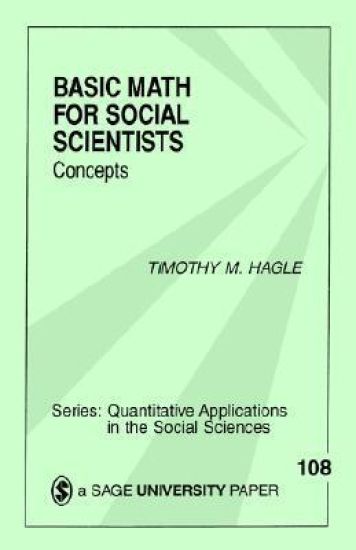
Basic Math for Social Scientists

Basic Math for Social Scientists

Timothy M. Hagle

SAGE Publications Inc
1995
nidottu
Taking an informal approach, Hagle presents a review of the basic mathematical concepts that underlie most quantitative analysis in the social sciences. After an algebra review featuring sets and combinations, Hagle discusses limits and continuity. Calculus is presented next, with an introduction to differential calculus. Multivariate functions, partial derivatives and integral calculus are discussed; the author concludes with a discussion of matrix algebra. Aimed at readers who have taken one or two courses in algebra, this volume is packed with helpful definitions, equations, and examples as well as alternative notations. A useful appendix of common math symbol and Greek letters is also included.
Basic Math for Social Scientists

Basic Math for Social Scientists

Timothy M. Hagle

SAGE Publications Inc
1996
nidottu
Aimed at providing readers who want a quick "refresher course" in mathematics with an informal review, Timothy M. Hagle's volume offers dozens of worked-out examples of such mathematical concepts as algebra sets, limits, continuity, differential calculus, multivariate functions, partial derivatives, integral calculus, and matrix algebra. In addition, Hagle provides problem sets so that readers can practice their grasp of standard mathematical procedures (answers to these problem sets are contained in the appendixes). Written in a friendly style, Basic Math for Social Scientists: Problems and Solutions provides readers with an informal approach to mathematical procedures without proofs.
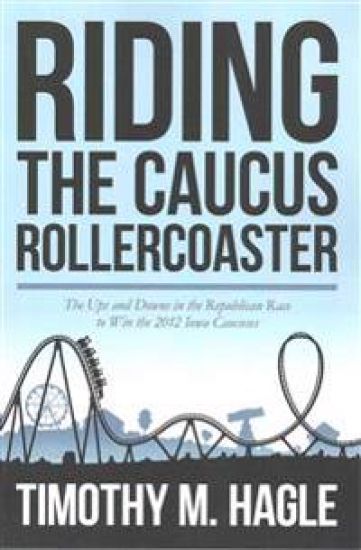
Riding the Caucus Rollercoaster: The Ups and Downs in the Republican Race to Win the 2012 Iowa Caucuses
The Iowa Caucuses are a critical and closely watched part of the presidential nomination process. The 2012 Republican Iowa Caucus race was one of the most interesting and turbulent, and, as it turned out, the closest in caucus history. From the early stages of the race in March, 2011, through Caucus Day on January 3, 2012, no less than six candidates held the lead in Iowa or in national polls. The constantly changing dynamics of the race gave it an almost rollercoaster feel as candidates quickly rose and fell in the polls.In Riding the Caucus Rollercoaster Tim Hagle, a University of Iowa political science professor, examines the events that shaped the ever-changing 2012 caucus race. As a critical observer of the Iowa Caucuses, Hagle provides insight into the factors that affected each candidate's support among Iowa's caucus-goers. Each chapter provides Hagle's analysis of the events that occurred during the prior two or three week period and how those events affected the standing of the candidates. The point-in-time approach of the chapters allows the reader to get a sense of how the campaigns developed and changed from an on-the-ground perspective. Hagle takes us from the early stages when it wasn't even clear which candidates would enter the GOP nomination race, through the intense, final days when several candidates had fallen away and support for Santorum was surging. Along the way, Hagle provides explanations of the Iowa Caucuses and the Iowa Straw Poll, discusses why grassroots organizing is so critical to caucus success, and highlights pitfalls that campaigns should avoid. Riding the Caucus Rollercoaster is a valuable read for anyone interested in presidential campaigns, grassroots politics, or the Iowa Caucuses.
Prayer With Timothy M Williams

Prayer With Timothy M Williams

Timothy Mario Williams

Lulu.com
2022
pokkari
Prayer With Timothy M Williams take you on a journey from the beginning with God and Who God is through the believer point of view Timothy will share his life and critical things that happen in his life that required miracles that only a supreme being could fix it. He will share blessings that only God could have given. You will be challenge to see God in your life. What does God mean to you? How do you see God? Do talk to God? Your faith in God will be uplifted through the powerful revelation of God shared with you in this book. Every page will lead you to the next enjoy the wonders of God
Dynamics and Simulation of Flexible Rockets

Dynamics and Simulation of Flexible Rockets

Timothy M. Barrows; Jeb S. Orr

Academic Press Inc
2020
nidottu
Dynamics and Simulation of Flexible Rockets provides a full state, multiaxis treatment of launch vehicle flight mechanics and provides the state equations in a format that can be readily coded into a simulation environment. Various forms of the mass matrix for the vehicle dynamics are presented. The book also discusses important forms of coupling, such as between the nozzle motions and the flexible body.This book is designed to help practicing aerospace engineers create simulations that can accurately verify that a space launch vehicle will successfully perform its mission. Much of the open literature on rocket dynamics is based on analysis techniques developed during the Apollo program of the 1960s. Since that time, large-scale computational analysis techniques and improved methods for generating Finite Element Models (FEMs) have been developed. The art of the problem is to combine the FEM with dynamic models of separate elements such as sloshing fuel and moveable engine nozzles. The pitfalls that may occur when making this marriage are examined in detail.
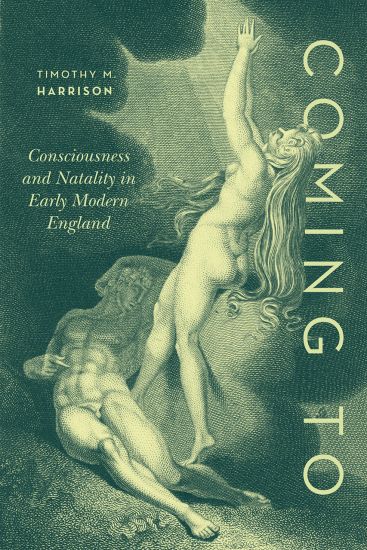
Coming To

Coming To

Timothy M. Harrison

University of Chicago Press
2020
sidottu
In Coming To, Timothy M. Harrison uncovers the forgotten role of poetry in the history of the idea of consciousness. Drawing our attention to a sea change in the English seventeenth century, when, over the course of a half century, “conscience” made a sudden shift to “consciousness,” he traces a line that leads from the philosophy of René Descartes to the poetry of John Milton, from the prenatal memories of theologian Thomas Traherne to the unresolved perspective on natality, consciousness, and ethics in the philosophy of John Locke. Each of these figures responded to the first-person perspective by turning to the origins of how human thought began. Taken together, as Harrison shows, this unlikely group of thinkers sheds new light on the emergence of the concept of consciousness and the significance of human natality to central questions in the fields of literature, philosophy, and the history of science.
Coming To

Coming To

Timothy M. Harrison

University of Chicago Press
2020
nidottu
In Coming To, Timothy M. Harrison uncovers the forgotten role of poetry in the history of the idea of consciousness. Drawing our attention to a sea change in the English seventeenth century, when, over the course of a half century, “conscience” made a sudden shift to “consciousness,” he traces a line that leads from the philosophy of René Descartes to the poetry of John Milton, from the prenatal memories of theologian Thomas Traherne to the unresolved perspective on natality, consciousness, and ethics in the philosophy of John Locke. Each of these figures responded to the first-person perspective by turning to the origins of how human thought began. Taken together, as Harrison shows, this unlikely group of thinkers sheds new light on the emergence of the concept of consciousness and the significance of human natality to central questions in the fields of literature, philosophy, and the history of science.
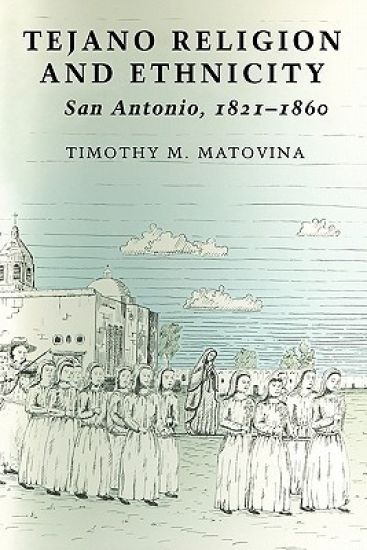
Tejano Religion and Ethnicity

Tejano Religion and Ethnicity

Timothy M. Matovina

University of Texas Press
1995
pokkari
While the flags of Spain, Mexico, the Republic of Texas, and the United States successively flew over San Antonio, its Tejano community (Texans of Spanish or Mexican descent) formed a distinct ethnic identity that persisted despite rapid social and cultural changes. In this pioneering study, Timothy Matovina explores the central role of Tejano Catholicism in forging this unique identity and in binding the community together.The first book-length treatment of the historical role of religion in a Mexican-origin community in the United States, this study covers three distinct periods in the emergence of Tejano religious and ethnic identity: the Mexican period (1821-1836), the Texas Republic (1836-1845), and the first decade and a half after annexation into the United States (1845-1860). Matovina's research demonstrates how theories of unilateral assimilation are inadequate for understanding the Tejano community, especially in comparison with the experiences of European immigrants to the United States.As residents of the southwestern United States continue to sort out the legacy of U.S. territorial expansion in the nineteenth century, studies like this one offer crucial understanding of the survival and resilience of Latino cultures in the United States. Tejano Religion and Ethnicity will be of interest to a broad popular and scholarly audience.
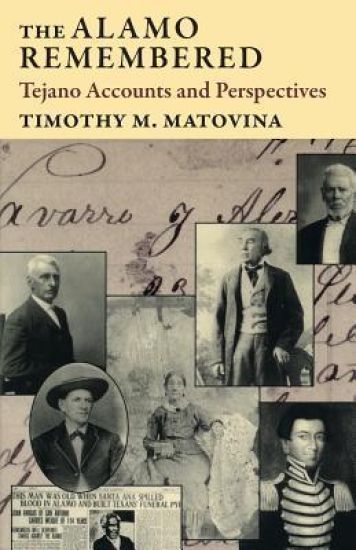
The Alamo Remembered

The Alamo Remembered

Timothy M. Matovina

University of Texas Press
1995
pokkari
As Mexican soldiers fought the mostly Anglo-American colonists and volunteers at the Alamo in 1836, San Antonio's Tejano population was caught in the crossfire, both literally and symbolically. Though their origins were in Mexico, the Tejanos had put down lasting roots in Texas and did not automatically identify with the Mexican cause. Indeed, as the accounts in this new collection demonstrate, their strongest allegiance was to their fellow San Antonians, with whom they shared a common history and a common plight as war raged in their hometown.Timothy M. Matovina here gathers all known Tejano accounts of the Battle of the Alamo. These accounts consist of first reports of the battle, including Juan N. Seguín's funeral oration at the interment ceremony of the Alamo defenders, conversations with local Tejanos, unpublished petitions and depositions, and published accounts from newspapers and other sources. This communal response to the legendary battle deepens our understanding of the formation of Mexican American consciousness and identity.
The Architecture of Paul Rudolph

The Architecture of Paul Rudolph

Timothy M. Rohan

Yale University Press
2014
sidottu
The first major study of one of the most important architects of the postwar era Equally admired and maligned for his remarkable Brutalist buildings, Paul Rudolph (1918–1997) shaped both late modernist architecture and a generation of architects while chairing Yale’s department of architecture from 1958 to 1965. Based on extensive archival research and unpublished materials, The ArchitectureofPaul Rudolph is the first in-depth study of the architect, neglected since his postwar zenith. Author Timothy M. Rohan unearths the ideas that informed Rudolph’s architecture, from his Florida beach houses of the 1940s to his concrete buildings of the 1960s to his lesser-known East Asian skyscrapers of the 1990s. Situating Rudolph within the architectural discourse of his day, Rohan shows how Rudolph countered the perceived monotony of mid-century modernism with a dramatically expressive architecture for postwar America, exemplified by his Yale Art and Architecture Building of 1963, famously clad in corrugated concrete. The fascinating story of Rudolph’s spectacular rise and fall considerably deepens longstanding conceptions about postwar architecture: Rudolph emerges as a pivotal figure who anticipated new directions for architecture, ranging from postmodernism to sustainability.
Loyalists and Community in North America

Loyalists and Community in North America

Timothy M. Barnes; Robert M Calhoon

Praeger Publishers Inc
1994
sidottu
This book is the first collection of Loyalist scholarship to span the 13 independent states and the Florida and Canadian provinces that remained loyal to the Crown in the American Revolution. The Loyalists disrupted the colonial communities in which they lived in ways that helped define the Revolution. Loyalist garrison towns became a pathological environment of violence and suspicion, which brought out the worst in patriot, British, and Loyalist behavior. In Canada, Loyalist exiles tried to create model Anglo-American communities, but in the end had to jettison Loyalist ideology to claim a new British North American identity.
Biliary Tract and Primary Liver Tumors, An Issue of Surgical Oncology Clinics of North America
This issue of Surgical Oncology Clinics of North America is devoted to "Biliary Tract and Primary Liver Tumors" and is edited by Timothy Pawlik, MD, of the Johns Hopkins Hospital in Baltimore. Expert authors in this issue review this topic in articles such as: Epidemiology and Risk Factors of Biliary Tract Tumors and Primary Liver Tumors; Imaging of the Patient with a Biliary Tract or Primary Liver Tumor; Percutaneous and Endoscopic Approaches to Biliary Tract Tumors and Primary Liver Tumors; Intrahepatic Cholangiocarcinoma; Hilar Cholangiocarcinoma; Distal Cholangiocarcinoma; Hepatocellular Carcinoma; Staging of Biliary Tract and Primary Liver Tumors; Intra-arterial Therapies: Primary Liver Tumors; Radiotherapy: Primary Liver Tumors; Systemic and Targeted Therapy; and Palliation: Treating Patients with Inoperable Biliary Tract and Primary Liver Tumors.
Africa in World Politics

Africa in World Politics

Timothy M. Shaw

Palgrave Macmillan
1989
sidottu
Africa's international relations are in a state of transition as the continent enters the last decade of the twentieth century. Old assumptions about development, security, diplomacy and dependence are being challenged by new realities of debt, drought, devaluation and destabilisation. Collective self-reliance remains elusive despite the demise of nationalism. This collection identifies the major issues in Africa's foreign and development policies and prospects as she enters the 1990s.
Commonwealth

Commonwealth

Timothy M. Shaw

Routledge
2007
sidottu
The Commonwealth consists of only a quarter of the world’s states and yet the Commonwealth Secretariat and Foundation have made and continue to make a significant contribution to global politics.Commonwealth is a superb examination of an often neglected but crucial force in world affairs. Timothy M. Shaw; explains the history, structure and future of the Commonwealthdemonstrates the central role that the Commonwealth has played in advancing decolonization and supporting multiculturalism, democracy and human rightsdetails the significant links between Commonwealth institutions and myriad networks concerned with education, development, gender, health, islands, literature, media and sportexamines the Commonwealth within the context of wider debates about ‘global’ governance and globalization.
Commonwealth

Commonwealth

Timothy M. Shaw

Routledge
2007
nidottu
The Commonwealth consists of only a quarter of the world’s states and yet the Commonwealth Secretariat and Foundation have made and continue to make a significant contribution to global politics.Commonwealth is a superb examination of an often neglected but crucial force in world affairs. Timothy M. Shaw; explains the history, structure and future of the Commonwealthdemonstrates the central role that the Commonwealth has played in advancing decolonization and supporting multiculturalism, democracy and human rightsdetails the significant links between Commonwealth institutions and myriad networks concerned with education, development, gender, health, islands, literature, media and sportexamines the Commonwealth within the context of wider debates about ‘global’ governance and globalization.
Aesthetics and Morals in the Philosophy of David Hume
The book has two aims. First, to examine the extent and significance of the connection between Hume's aesthetics and his moral philosophy; and, second, to consider how, in light of the connection, his moral philosophy answers central questions in ethics.The first aim is realized in chapters 1-4. Chapter 1 examines Hume's essay "Of the Standard of Taste" to understand his search for a "standard" and how this affects the scope of his aesthetics. Chapter 2 establishes that he treats beauty in nature and art and moral beauty as similar in kind, and applies the conclusions about his aesthetics to his moral thought. Chapter 3 solves a puzzle to which this gives rise, namely, how individuals both accept general standards that they also contravene in the course of aesthetic and moral activity. Chapter 4 takes up the normative aspect of Hume's approach by understanding moral character through his view of moral beauty.The second aim of the book is realized in chapters 5-7 by entertaining three objections against Hume's moral philosophy. First, if morality is an immediate reaction to the beauty of vice and the deformity of virtue, why is perfect virtue not the general condition of every human individual? Second, if morality consists of sentiments that arise in the subject, how can moral judgments be objective and claim universal validity? And third, if one can talk of "general standards" governing conduct, how does one account for the diversity of moral systems and their change over time? The first is answered by showing that like good taste in aesthetics, 'right taste' in morals requires that the sentiments are educated; the second, by arguing against the view that Hume is a subjectivist and a relativist, and the third (chapter 6), by showing that his approach contains a view of progress left untouched by any personal prejudices Hume himself might harbor. The book concludes in chapter 7 by showing how Hume's view of philosophy affects the scope of any normative ethics.
Aesthetics and Morals in the Philosophy of David Hume
The book has two aims. First, to examine the extent and significance of the connection between Hume's aesthetics and his moral philosophy; and, second, to consider how, in light of the connection, his moral philosophy answers central questions in ethics.The first aim is realized in chapters 1-4. Chapter 1 examines Hume's essay "Of the Standard of Taste" to understand his search for a "standard" and how this affects the scope of his aesthetics. Chapter 2 establishes that he treats beauty in nature and art and moral beauty as similar in kind, and applies the conclusions about his aesthetics to his moral thought. Chapter 3 solves a puzzle to which this gives rise, namely, how individuals both accept general standards that they also contravene in the course of aesthetic and moral activity. Chapter 4 takes up the normative aspect of Hume's approach by understanding moral character through his view of moral beauty.The second aim of the book is realized in chapters 5-7 by entertaining three objections against Hume's moral philosophy. First, if morality is an immediate reaction to the beauty of vice and the deformity of virtue, why is perfect virtue not the general condition of every human individual? Second, if morality consists of sentiments that arise in the subject, how can moral judgments be objective and claim universal validity? And third, if one can talk of "general standards" governing conduct, how does one account for the diversity of moral systems and their change over time? The first is answered by showing that like good taste in aesthetics, 'right taste' in morals requires that the sentiments are educated; the second, by arguing against the view that Hume is a subjectivist and a relativist, and the third (chapter 6), by showing that his approach contains a view of progress left untouched by any personal prejudices Hume himself might harbor. The book concludes in chapter 7 by showing how Hume's view of philosophy affects the scope of any normative ethics.