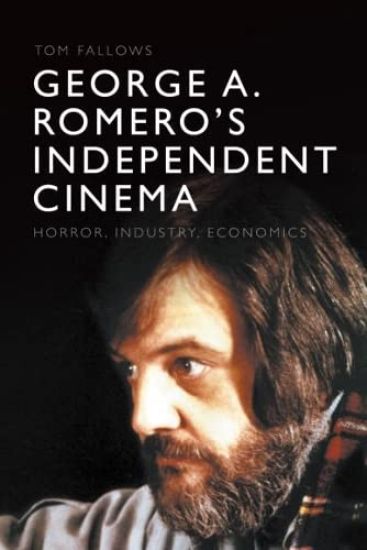
George A. Romero is recognised as one of the most culturally significant horror auteurs in American cinema. From his debut Night of the Living Dead onwards, he demonstrated a commitment to politically challenging low-budget genre cinema, gaining fan adoration and critical esteem. Romero's cult status may be assured, but the activities of the Pittsburgh-based production company that facilitated a substantial part of his output have largely been untold. George A. Romero's Independent Cinema is the first in-depth analysis of Romero's Laurel Entertainment, revealing the decision-making and business planning that takes place away from Hollywood, while offering an industry-determined analysis of such films as his zombie masterpiece Dawn of the Dead and the seldom-discussed Martin and Knightriders. Tracking Laurel Entertainment across four decades, this book draws upon business and economic studies to critically recast historical developments in the American independent film sector, providing a forensic-level insight into a media production company whose output redefined horror cinema.
Examines George A. Romero's regional production company Laurel Entertainment and its contribution to American cinema Reframes key academic analysis on auteur filmmaking, cult horror and independent cinema from an industrial perspective Integrates business and economic theory to provide a new paradigm for understanding American film production practices Offers a unique close study of a regional American production company specialising in horror content Presents the first academic analysis of Laurel Entertainment and independent film producer Richard Rubinstein Draws upon original interviews with George A. Romero and his collaborators George A. Romero is recognised as one of the most culturally significant horror auteurs in American cinema. From his debut Night of the Living Dead onwards, he demonstrated a commitment to politically challenging low-budget genre cinema, gaining fan adoration and critical esteem. Romero's cult status may be assured, but the activities of the Pittsburgh-based production company that facilitated a substantial part of his output have largely been untold. George A. Romero's Independent Cinema is the first in-depth analysis of Romero's Laurel Entertainment, revealing the decision-making and business planning that takes place away from Hollywood, while offering an industry-determined analysis of such films as his zombie masterpiece Dawn of the Dead and the seldom-discussed Martin and Knightriders. Tracking Laurel Entertainment across four decades, this book draws upon business and economic studies to critically recast historical developments in the American independent film sector, providing a forensic-level insight into a media production company whose output redefined horror cinema.
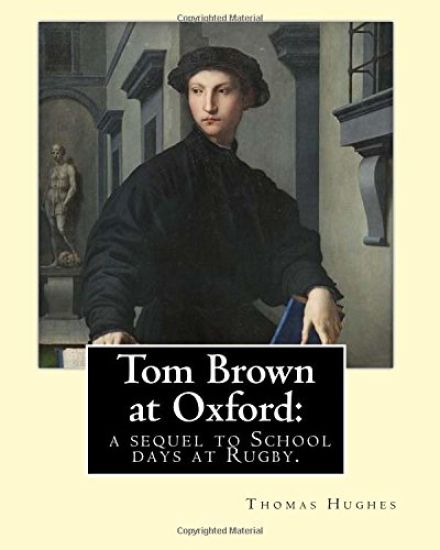
Tom Brown at Oxford is a novel by Thomas Hughes, first published in serial form in Macmillan Magazine in 1859. It was published in two volumes in book form in 1861.It is a sequel to the better-known Tom Brown's School Days. The story follows the character of Tom Brown to St Ambrose's College, Oxford. The novel offers a vivid impression of university life in the mid nineteenth centuryThe book was out of print for many years but is available in Britain from Wordsworth Classics with 'Tom Brown's Schooldays' and as the copyright on the text has expired is now available on the Project Gutenberg ebook site. Editions of the serialized form are available at from the Hathi Trust. The illustrator Sydney Prior Hall (1842-1922), portrait painter and illustrator, was one of the leading reportage artists of the later Victorian period........ Thomas Hughes QC (20 October 1822 - 22 March 1896) was an English lawyer, judge, politician and author. He is most famous for his novel Tom Brown's School Days (1857), a semi-autobiographical work set at Rugby School, which Hughes had attended. It had a lesser-known sequel, Tom Brown at Oxford (1861). Hughes had numerous other interests, in particular as a Member of Parliament, in the British co-operative movement, and in a settlement in Tennessee reflecting his values. Early life Hughes was the second son of John Hughes, editor of the Boscobel Tracts (1830) and was born in Uffington, Berkshire (now Oxfordshire). He had six brothers, and one sister, Jane Senior who later became Britain's first female civil servant. At the age of eight he was sent to Twyford School, a preparatory public school near Winchester, where he remained until the age of eleven. In February 1834 he went to Rugby School, which was then under the celebrated Thomas Arnold, a contemporary of his father at Oriel College, Oxford. Hughes excelled at sports rather than in scholarship, and his school career culminated in a cricket match at Lord's Cricket Ground. In 1842 he went on to Oriel College, and graduated B.A. in 1845. At Oxford, he played cricket for the university team in the annual University Match against Cambridge University, also at Lord's, and a match that is still now regarded as first-class cricket. Legal career Hughes was called to the bar in 1848, became Queen's Counsel in 1869 and a bencher in 1870. He was appointed to a county court judgeship in the Chester district in July 1882. Works While living at Wimbledon, Hughes wrote his famous story Tom Brown's School Days, which was published in April 1857. He is associated with the novelists of the "muscular school", a loose classification but centred on the fiction of the Crimean War period.Although Hughes had never been a member of the sixth form at Rugby, his impressions of the headmaster Thomas Arnold were reverent. Hughes also wrote The Scouring of the White Horse (1859), Tom Brown at Oxford (1861), Religio Laici (1868), Life of Alfred the Great (1869) and the Memoir of a Brother. His brother, George Hughes, was the model for the Tom Brown character...........
The riveting, revelatory, and sole authorized account of the critical first decades of Tennessee Williams's life. Tennessee Williams, author of such indelible masterpieces as The Glass Menagerie and A Streetcar Named Desire, is considered by many to be the greatest literary artist of the American theater. Tom is Lyle Leverich's definitive account based on his exclusive access to letters, diaries, unpublished manuscripts, and family documents of Williams's early life and of the events that shaped this most autobiographical of dramatists. It tells the story of the marital traumas of his bullying father and overly protective mother, the mental disorders that institutionalized his beloved sister Rose, his stalled academic career, and his confused sexuality and early successes as a writer; and it leaves Thomas Lanier Williams on the brink of fame with The Glass Menagerie and his transformation into the celebrated persona of Tennessee.
Appearing no different than the average man who worked hard for a living, he nicely blends in with his neighbours and co-workers. Although socially awkward at times, nobody takes notice of his peculiarities, but beneath his somewhat normal veneer resides a pulsating black heart, bent upon cruelty and domination. Contains adult content. Composed in captivating narrative and compelling dialogue, the story flows at a brisk tempo. The plot contains more than a few strategically placed unexpected twists which should maintain the reader's interest throughout. The characters are presented in a multi-dimensional fashion revealing the intricacies of their unique personalities and individual agendas. Navigating the plot to a well conceived conclusion, the author could leave the reader with the sense of time well spent in the reading of this story
Tom is a cat in trouble. The worst possible kind of trouble: he's been turned into a human. Transformed by an irascible old magician in need of a famulus -- a servant and an assistant, Tom is as good at being a servant as a cat ever is. The assistant part is more to Tom's taste: he rather fancies impressing the girl cats and terrorizing the other toms by transforming himself into a tiger. But the world of magic, a vanished and cursed princess, and a haunted skull, and a demon in the chamber-pot, to say nothing of conspiring wizards and the wickedest witch in the west, all seem to be out to kill Tom. He is a cat coming to terms with being a boy, dealing with all this. He has a raven and a cheese as... sort of allies.And of course there is the princess.If you were looking for 'War and Peace' this is the wrong book for you. It's a light-hearted and gently satirical fantasy, full of terrible puns and... cats.
Tom non come gli altri miei racconti. Non un racconto di fantascienza. Non saprei definire il suo genere. Ma forse non nemmeno un racconto. Forse qualcosa di pi o di diverso, forse esso stesso un'avvertenza. Se non volete farvi domande alla fine della lettura, allora vi consiglio di non leggerlo. Tutto il tempo che ho dedicato alla sua scrittura e alla preparazione di questa edizione stato pervaso da un'atmosfera che non saprei spiegare. Cos come non ho saputo spiegare come abbia fatto a perdere il treno che mi avrebbe condotto a Milano assieme con decine di miei colleghi, costringendomi cos a prendere da solo il successivo. Devo dire, per , che in questo modo e solo in questo modo ho avuto finalmente l'opportunit di poter stare un po' con i miei pensieri e buttare gi quanto state per... affrontare.
Tom a young man of twenty-one arrives home from the army to his widowed mother only to find she has a new man in her life and has sold the farm to go live abroad.His mother has already found him somewhere to live and work for a lady a few miles away at another farm.Mrs. Williams his new landlady and boss owns both her own farm plus his fathers and another to the others side of her but does not employ any workers as she has five strapping daughters ranging in ages from twenty-one to thirty-six and between them all work the largest farm in the county.As the women, don't have any social time for themselves they make Tom their entertainment.
This has been the life and times of Tom Edwards, a boy raised during the greatest depression then known to England. He relates his memories of the second Great War, of his experiences joining the Royal Navy as an apprentice, and of his time in many parts of Africa. Tom recalls his experiences in an anti-terrorist unit, of sailing around the world in a 30-foot boat and being chased by pirates off the coast of Columbia, and then being wrecked off the coast of New Zealand in a hurricane. Throughout the autobiography Tom, Tom Edwards has maintained a sense of humour and tells things as he remembers them. No autobiography is completely true, but it is as near the truth as circumspection allows. If Tom's recall of events and dates fail in some areas, you must forgive him, as an eighty-two-year-old mind has its limitations. Tom can recall Edward the Eighth's abdication speech verbatim and his mother's co-op number from seventy years ago, but events chronologically closer often elude him. About the Author: Tom Edwards was born in Hampshire, England, where he spent his early years. After completing his education, he served six years in the Fleet Air Arm branch of the Royal Navy.He then made his living for several years as an artist before moving to Southern Africa, where he worked as a reporter as well as a mining engineer in South Africa, Zambia and Namibia, finally settling in what was then Rhodesia. After travelling the world, he now lives at Lake Macquarie in New South Wales, Australia. His next book is titled The Hunter. His was a life full of adventure. Gazing at the heavens while lying on the cabin roof of a 30-foot boat one thousand miles from the nearest land, gave Tom Edwards a sense of his incredible insignificance in the scheme of things. He learned that most people are kind, generous and innately good, if treated with respect. He loved the era in which he was born, when foul language was never used in the home or in company. It was an era when women wore dresses and were modest and chaste; when men were courteous and manly; when a child could roam without fear; and mothers stayed home to look after their family. People lived closer together and had time to converse. They were mainly poor in wealth and chattels, but rich in friendships and family experiences.He will be forever grateful for being born into that era, before too many of the endearing trappings of living became passe. More About the Author: During the Rhodesian conflict, Tom Edwards joined the reserve branch of the security forces where he served on border patrol and in the Marine Division. There he acquired much of the material for his first book If I Should Die. He and a friend bought a thirty-foot boat and sailed around the world for four years; a trip bedevilled by pirates and hurricanes. After being shipwrecked, Tom continued on his own to South Africa via Christmas Island, Cocos Keeling and the Seychelles. His penultimate adventure was to walk from John O'Groats in northern Scotland to Land's End in southern England, which took him forty-six days. At the ripe old age of eighty, he and the son of a friend sailed a 30-foot boat from Hobart, Tasmania, to Lake Macquarie in New South Wales, where he lives today. http://sbpra.com/TomEdwards
This book is about Tom's life story and his amazing full-circle moments. It is centered upon the very idea that events and people are not coincidental at all. There absolutely is meaning, deep meaning. A higher power has been at work right in the middle of Tom's life from the beginning, accomplishing a purpose. Despite the enemy's best efforts to destroy or kill him, God's mantle of protection has prevailed.Picture an average-sized man, not quite 6 feet tall and barely 170 pounds. He's seventy-something, with silver-white hair and a face well-lined with age. Now imagine the character and personality of an excited kid telling you about the biggest fish he ever caught. Put those two images together in your mind, and you have Tom. That guy wants to share his story with you, and he wants you to know it's all true. This is not a work of fiction designed to entertain you. These things really happened, and people's lives were touched.
TOM: ODEJŚĆ CZY POZWOLISZ PRAWDY KWIATOM KU SNOM- BABILONIE? ALBOWIEM: KWIATY BUDZĄ SIĘ W TOBIE PRAWDZIWE. Autor Konrad Stawiarski. Motto: Źr dla. 1. Platki dloni w ten dzień Plyną po prozie życia. Księgą są tego stulecia, Latwiej im wybrac, Sen zatopiony w prawdy Okazalym lustrze dni, Plynąc strumieniem jawy, Dzisiaj jak nigdy dane mi. 2. W konwaliach Twojego glosu, Patetyczne zdumienie, Ptak w nad stadem ptak w. Myśmy ptacy szelestnie. Na ramionach lekko Unosimy dzień sloneczny. Dźwigamy książki naszych sl w, Wypowiedzianych calym życiem. 3. W krysztalkach źrenic Rysuje się pejzaż g r. Zimny czas melodii, Oglasza ogladę grani. Jeszcze wiecznośc Usposabia widnokręgi sloneczne Do muzyki las w, i polan. Kwiaty budzą się w Tobie prawdziwe. 04. 05. 2021. Konrad Stawiarski. Poeta, pisarz, sonecista, Pokolenie 83'
TOM was written as "roman-a-clef," meaning that names, places, and some events have been changed, but not the essence of a real story. It is a personal journey of dashed hopes, brokenness, and disappointment. And, it is the story of unlikely human connection, of faith struggle, the wonder of life, and ultimately, of hope. It is adult fiction. TOM's story is not intended for children and youth. This novella includes vulgar language, violent imagery, and mature, difficult subjects.