Revised and updated, this edition contains new anecdotes, new revelations, and discussion of the ethical, social, and professional issues arising from the computer revolution, such as computer crime, software theft, hacking, viruses, and the invasion of privacy.
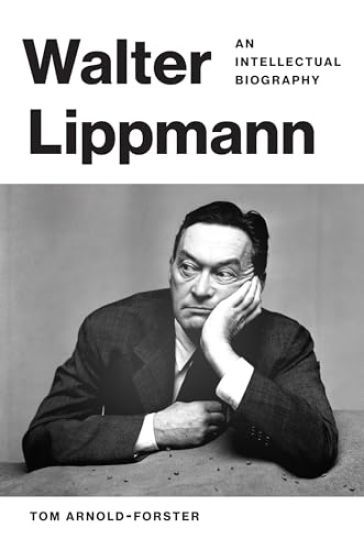
The life and ideas of one of the twentieth century’s leading political thinkersWalter Lippmann (1889–1974) was among the most influential and wide-ranging political writers in modern America. As both a journalist and political theorist, he shaped ideas about liberalism and democracy, the nature of public opinion, US power and empire, and the roles of journalists, experts, and citizens. Tom Arnold-Forster provides a bold historical reassessment of Lippmann’s intellectual life, offering fresh perspectives on a career at the intersection of daily news and democratic theory.This incisive book shows how Lippmann helped define the public debates of American liberalism from the Progressive Era to the Cold War. By exploring his ideas in their historical context, Arnold-Forster challenges the claim that Lippmann was primarily a theorist of expertise and technocracy. Instead, Lippmann emerges as a strikingly political thinker, public-facing and multifarious, who focused on what politics meant and how it worked in modern democracies. Covering subjects from press freedom to urban reform to economic and foreign policy, while tracing the evolution from his early liberal socialism to later conservative liberalism, this book explores Lippmann’s thought as reflecting the protean character of liberal politics and the crises and paradoxes of democracy.Walter Lippmann: An Intellectual Biography is a richly historical account of a complex political thinker. Lippmann’s ideas played a formative role in the twentieth century and resonate powerfully with our fraught present.
An intrepid sleuth and articulate tutor, Wessels teaches us to read a landscape the way we might solve a mystery. What exactly is the meaning of all those stone walls in the middle of the forest? Why do beech and birch trees have smooth bark when the bark of all other northern species is rough? How do you tell the age of a beaver pond and determine if beavers still live there? Why are pine trees dominant in one patch of forest and maples in another? What happened to the American chestnut? Turn to this book for the answers, and no walk in the woods will ever be the same.
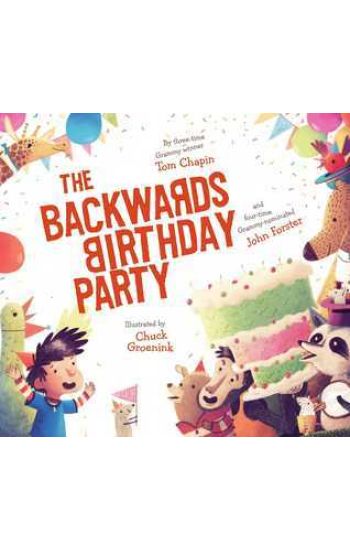
Have a happy birthday--the backwards way Full of fun and based on the hit song from Tom Chapin and John Forster, this is a celebratory birthday bash like no other. Put your clothes on inside out, heat up the ice cream, and hang on to your party hats--because everything's out of whack at the backwards birthday party From beloved, three-time Grammy-winning singer-songwriter Tom Chapin, four-time Grammy-nominated singer-songwriter John Forster, and with stunning illustrations from Chuck Groenink comes the zaniest birthday party you'll ever attend.
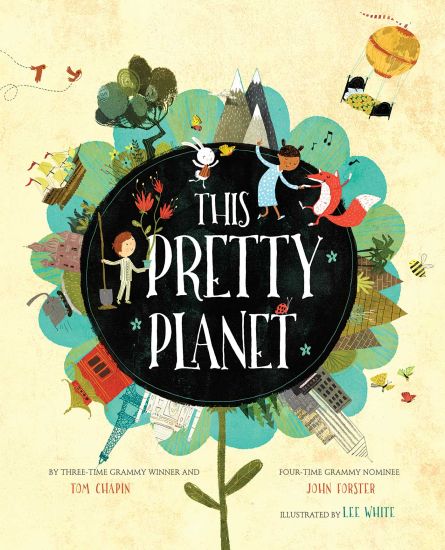
Based on the touching song “This Pretty Planet” by Tom Chapin and John Forster, this hopeful and whimsically illustrated picture book celebrates the pretty planet we call home.Winds blow. Tides flow. Shooting stars descend. Our lives begin, middle, and end on This pretty planet. From icy tundras to sandy beaches, lush forests to tall mountains, this exuberant picture book journeys around the globe and presents the natural wonders of the planet with a contagious sense of awe and whimsy. Young readers will get lost in the detailed illustrations as the narration serves as a gentle reminder of why we must care for and protect our pretty planet.
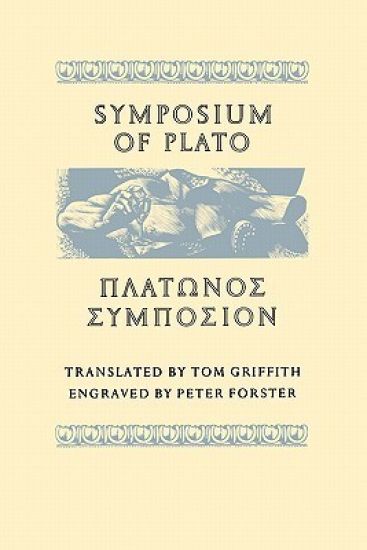
A superb example of the bookmaker's and translator's art, this new edition of Plato's Symposium exhibits aesthetic, literary, and intellectual excellences rarely found together in a single volume. Tom Griffith's translation of this foundation work of Western culture is unsurpassed for the balance it achieves between readability and fidelity to Plato's Greek. For felicity of phrasing, freshness, care to match the sense of the Greek rather than its wording, and for its idiomatic rendering of the spoken word, it has no peer. Originally published in a limited edition with facing Greek and color wood engravings, Griffith's translation is here presented in reduced format that retains the aesthetic quality of the original version at an affordable price.
The riveting, revelatory, and sole authorized account of the critical first decades of Tennessee Williams's life. Tennessee Williams, author of such indelible masterpieces as The Glass Menagerie and A Streetcar Named Desire, is considered by many to be the greatest literary artist of the American theater. Tom is Lyle Leverich's definitive account based on his exclusive access to letters, diaries, unpublished manuscripts, and family documents of Williams's early life and of the events that shaped this most autobiographical of dramatists. It tells the story of the marital traumas of his bullying father and overly protective mother, the mental disorders that institutionalized his beloved sister Rose, his stalled academic career, and his confused sexuality and early successes as a writer; and it leaves Thomas Lanier Williams on the brink of fame with The Glass Menagerie and his transformation into the celebrated persona of Tennessee.
Appearing no different than the average man who worked hard for a living, he nicely blends in with his neighbours and co-workers. Although socially awkward at times, nobody takes notice of his peculiarities, but beneath his somewhat normal veneer resides a pulsating black heart, bent upon cruelty and domination. Contains adult content. Composed in captivating narrative and compelling dialogue, the story flows at a brisk tempo. The plot contains more than a few strategically placed unexpected twists which should maintain the reader's interest throughout. The characters are presented in a multi-dimensional fashion revealing the intricacies of their unique personalities and individual agendas. Navigating the plot to a well conceived conclusion, the author could leave the reader with the sense of time well spent in the reading of this story
Tom is a cat in trouble. The worst possible kind of trouble: he's been turned into a human. Transformed by an irascible old magician in need of a famulus -- a servant and an assistant, Tom is as good at being a servant as a cat ever is. The assistant part is more to Tom's taste: he rather fancies impressing the girl cats and terrorizing the other toms by transforming himself into a tiger. But the world of magic, a vanished and cursed princess, and a haunted skull, and a demon in the chamber-pot, to say nothing of conspiring wizards and the wickedest witch in the west, all seem to be out to kill Tom. He is a cat coming to terms with being a boy, dealing with all this. He has a raven and a cheese as... sort of allies.And of course there is the princess.If you were looking for 'War and Peace' this is the wrong book for you. It's a light-hearted and gently satirical fantasy, full of terrible puns and... cats.
Tom non come gli altri miei racconti. Non un racconto di fantascienza. Non saprei definire il suo genere. Ma forse non nemmeno un racconto. Forse qualcosa di pi o di diverso, forse esso stesso un'avvertenza. Se non volete farvi domande alla fine della lettura, allora vi consiglio di non leggerlo. Tutto il tempo che ho dedicato alla sua scrittura e alla preparazione di questa edizione stato pervaso da un'atmosfera che non saprei spiegare. Cos come non ho saputo spiegare come abbia fatto a perdere il treno che mi avrebbe condotto a Milano assieme con decine di miei colleghi, costringendomi cos a prendere da solo il successivo. Devo dire, per , che in questo modo e solo in questo modo ho avuto finalmente l'opportunit di poter stare un po' con i miei pensieri e buttare gi quanto state per... affrontare.
Tom a young man of twenty-one arrives home from the army to his widowed mother only to find she has a new man in her life and has sold the farm to go live abroad.His mother has already found him somewhere to live and work for a lady a few miles away at another farm.Mrs. Williams his new landlady and boss owns both her own farm plus his fathers and another to the others side of her but does not employ any workers as she has five strapping daughters ranging in ages from twenty-one to thirty-six and between them all work the largest farm in the county.As the women, don't have any social time for themselves they make Tom their entertainment.
This has been the life and times of Tom Edwards, a boy raised during the greatest depression then known to England. He relates his memories of the second Great War, of his experiences joining the Royal Navy as an apprentice, and of his time in many parts of Africa. Tom recalls his experiences in an anti-terrorist unit, of sailing around the world in a 30-foot boat and being chased by pirates off the coast of Columbia, and then being wrecked off the coast of New Zealand in a hurricane. Throughout the autobiography Tom, Tom Edwards has maintained a sense of humour and tells things as he remembers them. No autobiography is completely true, but it is as near the truth as circumspection allows. If Tom's recall of events and dates fail in some areas, you must forgive him, as an eighty-two-year-old mind has its limitations. Tom can recall Edward the Eighth's abdication speech verbatim and his mother's co-op number from seventy years ago, but events chronologically closer often elude him. About the Author: Tom Edwards was born in Hampshire, England, where he spent his early years. After completing his education, he served six years in the Fleet Air Arm branch of the Royal Navy.He then made his living for several years as an artist before moving to Southern Africa, where he worked as a reporter as well as a mining engineer in South Africa, Zambia and Namibia, finally settling in what was then Rhodesia. After travelling the world, he now lives at Lake Macquarie in New South Wales, Australia. His next book is titled The Hunter. His was a life full of adventure. Gazing at the heavens while lying on the cabin roof of a 30-foot boat one thousand miles from the nearest land, gave Tom Edwards a sense of his incredible insignificance in the scheme of things. He learned that most people are kind, generous and innately good, if treated with respect. He loved the era in which he was born, when foul language was never used in the home or in company. It was an era when women wore dresses and were modest and chaste; when men were courteous and manly; when a child could roam without fear; and mothers stayed home to look after their family. People lived closer together and had time to converse. They were mainly poor in wealth and chattels, but rich in friendships and family experiences.He will be forever grateful for being born into that era, before too many of the endearing trappings of living became passe. More About the Author: During the Rhodesian conflict, Tom Edwards joined the reserve branch of the security forces where he served on border patrol and in the Marine Division. There he acquired much of the material for his first book If I Should Die. He and a friend bought a thirty-foot boat and sailed around the world for four years; a trip bedevilled by pirates and hurricanes. After being shipwrecked, Tom continued on his own to South Africa via Christmas Island, Cocos Keeling and the Seychelles. His penultimate adventure was to walk from John O'Groats in northern Scotland to Land's End in southern England, which took him forty-six days. At the ripe old age of eighty, he and the son of a friend sailed a 30-foot boat from Hobart, Tasmania, to Lake Macquarie in New South Wales, where he lives today. http://sbpra.com/TomEdwards