Kirjojen hintavertailu. Mukana 12 401 925 kirjaa ja 12 kauppaa.

Kirjahaku

Etsi kirjoja tekijän nimen, kirjan nimen tai ISBN:n perusteella.

1000 tulosta hakusanalla Tony Harrison

Tony Harrison

Tony Harrison

Clarendon Press
1997
sidottu
Tony Harrison: Loiner is published to celebrate the poet and playwright Tony Harrison's sixtieth birthday through an exploration of his work, including his best-known poem v.. Harrison (1937- ) has been called `our best English poet', and has been awarded a number of prizes for his poetry, including the Geoffrey Faber Memorial Prize, the Royal Television Society Award, the Prix Italia, and the Whitbread Prize for Poetry. This book gives his work the serious critical attention it merits, with essays from a number of prominent contributors, including Richard Eyre and Melvyn Bragg, and a foreword by Grey Gowrie. The collection ranges from personal recollections of working with Tony Harrison and personal responses to his poems, to detailed critical analyses of his techniques and themes, covering Harrison's short poems and sonnet sequence, his plays, his television poem-films, and his libretti, spanning the years 1955-1997. A `loiner' is a native of Leeds, where Tony Harrison was born and spent the early part of his life, and from which he was dispossessed by the enforced translation of the state scholarship system. The word also connotes other aspects of Tony Harrison: the `loins' of his poetry--its energy and physicality--and the `loners' who are its main protagonists--men and women dispossessed of their class, nation, language, and identity. At sixty, Harrison is at his poetic peak, producing plays, film-scripts, libretti, journalistic responses to social and national strife, impassioned speeches of love and outrage--always in poetry. Tony Harrison: Loiner introduces the major themes and forms of our most exciting and cosmopolitan as well as technically accomplished poet, and reassesses his achievement and place in twentieth-century literature.
Tony Harrison Plays 6

Tony Harrison Plays 6

Tony Harrison

Faber Faber
2019
pokkari
Tony Harrison's sixth collection includes a foreword by Lee Hall. The book contains Harrison's translation of Euripides's Hecuba, which inaugurated the modern amphitheatre of Delphi in 2005; the remarkable Fram, which opened at the National Theatre in 2008; and Iphigenia in Crimea, after Euripides, which premiered on BBC Radio 3 to mark Tony Harrison's eightieth birthday in 2016.'Tony is that incredibly rare beast: as great a playwright as he is a poet.' Lee Hall 'I am convinced that Tony Harrison is one of the truly great poets writing in English today.' Melvyn BraggHecuba 'Harrison's urgent translation never lets us forget the aching topicality of Euripides' study of the powerful and the powerless.' Guardian Fram'Harrison brings gloriously rich life to the stage, by turns funny and rending. His couplets are a feast for rhyme junkies.' Financial Times'As visually resplendent a piece of theatre as you will see all year. The words more than hold their own, however, expressing in rhymes to be relished that poetry might yet, if not lead us out of the darkness, at least make us feel ashamed we're still stuck in it.' Sunday Times Iphigenia in Crimea Set in Sebastapol, 1854, inthe midst of the Crimean war, a lieutenant decides to stage an all-male production of Euripides's tragedy. After initial raucous incredulity, the atmosphere changes as the men commit themselves to the drama until, as it draws to a close, ancient and modern worlds collide and warfare resumes in earnest.
Tony Harrison

Tony Harrison

Edith Hall

BLOOMSBURY PUBLISHING PLC
2022
nidottu
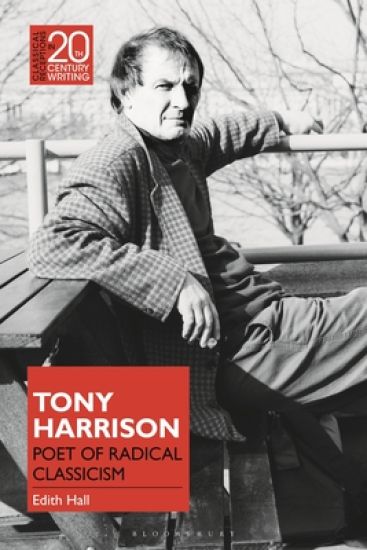
Longlisted for the 2022 Runciman AwardThis is the first book-length study of the classicism of Tony Harrison, one of the most important contemporary poets in England and the world. It argues that his unique and politically radical classicism is inextricable from his core notion that poetry should be a public property in which communal problems are shared and crystallised, and that the poet has a responsibility to speak in a public voice about collective and political concerns. Enriched by Edith Hall’s longstanding friendship with Harrison and involvement with his most recent drama, inspired by Euripides’ Iphigenia in Tauris, it also asserts that his greatest innovations in both form and style have been direct results of his intense engagements with individual works of ancient literature and his belief that the ancient Greek poetic imagination was inherently radical.Tony Harrison's large body of work, for which he has won several major and international prizes, and which features on the UK National Curriculum, ranges widely across long and short poems, plays, translations and film poems. Having studied Classics at Grammar School and University and having translated ancient poets from Aeschylus to Martial and Palladas, Harrison has been immersed in the myths, history, literary forms and authorial voices of Mediterranean antiquity for his entire working life and his classical interests are reflected in every poetic genre he has essayed, from epigrams and sonnets to original stage plays, translations of Greek drama and Racine, to his experimental and harrowing film poems, where he has pioneered the welding of tightly cut video materials to tightly phrased verse forms. This volume explores the full breadth of his oeuvre, offering an insightful new perspective on a writer who has played an important part in shaping our contemporary literary landscape.
Tony Harrison

Tony Harrison

Edith Hall

Bloomsbury Academic
2021
sidottu
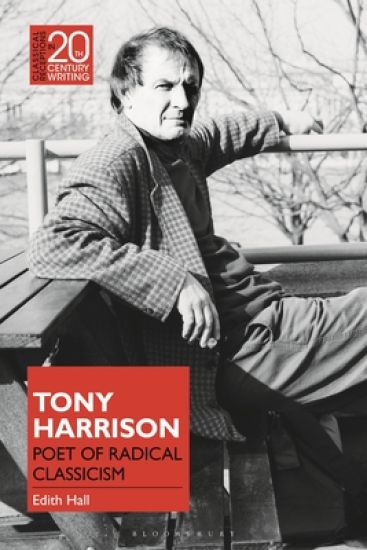
Longlisted for the 2022 Runciman AwardThis is the first book-length study of the classicism of Tony Harrison, one of the most important contemporary poets in England and the world. It argues that his unique and politically radical classicism is inextricable from his core notion that poetry should be a public property in which communal problems are shared and crystallised, and that the poet has a responsibility to speak in a public voice about collective and political concerns. Enriched by Edith Hall’s longstanding friendship with Harrison and involvement with his most recent drama, inspired by Euripides’ Iphigenia in Tauris, it also asserts that his greatest innovations in both form and style have been direct results of his intense engagements with individual works of ancient literature and his belief that the ancient Greek poetic imagination was inherently radical.Tony Harrison's large body of work, for which he has won several major and international prizes, and which features on the UK National Curriculum, ranges widely across long and short poems, plays, translations and film poems. Having studied Classics at Grammar School and University and having translated ancient poets from Aeschylus to Martial and Palladas, Harrison has been immersed in the myths, history, literary forms and authorial voices of Mediterranean antiquity for his entire working life and his classical interests are reflected in every poetic genre he has essayed, from epigrams and sonnets to original stage plays, translations of Greek drama and Racine, to his experimental and harrowing film poems, where he has pioneered the welding of tightly cut video materials to tightly phrased verse forms. This volume explores the full breadth of his oeuvre, offering an insightful new perspective on a writer who has played an important part in shaping our contemporary literary landscape.
Tony Harrison and the Classics

Tony Harrison and the Classics

Oxford University Press
2022
sidottu
Tony Harrison and the Classics comprises fifteen chapters examining the lasting importance of Tony Harrison's classical education, the extent of the influence of Greek and Roman texts on his subjects, themes, and styles, his contribution to knowledge and understanding of classical literature, his popularization of classical works, and his innovative treatment of classical drama in plays which have been performed globally. Harrison's work fosters debates about the role and perception of the classics and adaptations of classical literature in relation to education, 'high' and 'popular' culture, accessibility, and reception. A unifying theme of the collection is the way in which Harrison finds in classical literature fruitful matter for the articulation and dramatization of his longstanding preoccupations: language, class, access to art, and the causes and effects of war. Through his adaptations and translations, Harrison uses classical drama to stage interventions in modern politics, but neither idealizes nor romanticizes the ancient world, depicting inequality, bigotry, greed, and brutality.
Tony Harrison and the Holocaust

Tony Harrison and the Holocaust

Antony Rowland

Liverpool University Press
2001
nidottu
This book argues that Tony Harrison’s poetry is barbaric. It revisits one of the most misquoted passages of twentieth-century philosophy: Theodor Adorno’s apparent dismissal of post-Holocaust poetry as ‘impossible’ or ‘barbaric’. His statement is reinterpreted as opening up the possibility that the awkward and embarrassing poetics of writers such as Harrison might be re-evaluated as committed responses to the worst horrors of twentieth-century history. Most of the existing critical work on Harrison focuses on his representation of class, which occludes his interest in other aspects of historiography. The poet’s predilection for establishing links between the atrocities perpetrated by the Nazis, the bombing of Hiroshima and Nagasaki, and the prospect of global annihilation is examined as a commitment to oppose the dangers of linguistic silence. Hence Harrison’s work can be read fruitfully within the growing field of Holocaust Studies: his texts enter into arguments about the ethics of representing traumatic incidents that still haunt the contemporary. Harrison’s status as a ‘non-victim’ author of the events is stressed throughout. His writing of the Holocaust, allied bombings and atom bomb is mediated by his reception of the events through newsreels as a child, and his adoption and subversion, as an adult poet, of traditional poetic forms such as the elegy and sonnet. This book also discusses the ways in which Holocaust literature engages with a number of concepts challenged or altered by the historical events, such as love, mourning, memory, humanism, culture and barbarism, articulacy and silence.
New Light on Tony Harrison

New Light on Tony Harrison

Oxford University Press
2019
sidottu
New Light on Tony Harrison was developed from a conference marking the 80th birthday of the prizewinning British poet Tony Harrison. Contributors include practising poets, playwrights, specialists in Classics, Theatre, Translation Studies, English and World Literature, and professionals in media where Harrison's extensive work has been least researched. The aim of the volume is to explore new approaches to the understanding of the work of one of our most important poets. The volume examines four main areas: - Tony Harrison's more recent poems - The continuation of his relationship with ancient theatre after the landmark Oresteia and Trackers of the 1980-1990 decade, alongside his evolving dramatic relationship with Euripides and with French authors (Hugo, Molière, Racine) - Harrison's profound contribution during his periods of residence abroad in Africa, North America, Moscow and Prague, and his popularity in French and Italian translation; - His extensive body of poems written specifically for television and radio. This is a must for fans of Tony Harrison's work and for those with an interest in, or studying English Literature, Classical Mythology, Theatre Studies, and Film courses.
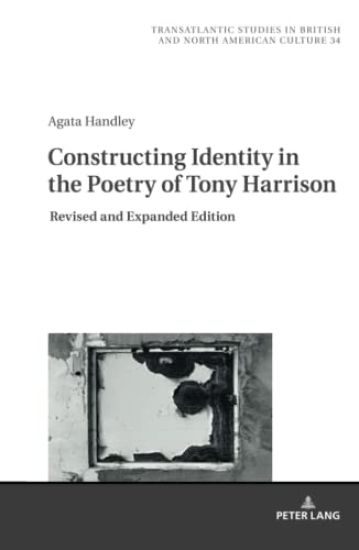
Constructing Identity in the Poetry of Tony Harrison
When, in 1948, Tony Harrison entered Leeds Grammar School as a scholarship boy, he found himself, as Richard Hoggart saw, “at the friction point of two cultures”. His schooling introduced him to the “classics”; but it also deprived him of a clear identification with the place where he grew up. His work reflects and explores this tension; and it may be seen, in some ways, as a form of “identity construction.” The book examines key texts such as v. and the School of Eloquence sequence, where this “construction” takes different forms—oscillating between identity as a state, or a process; as continuity, or change; or as the outcome of conformity, or revolt. This second edition has been extensively revised and includes a new chapter on Harrison’s Elegies.
Selected Poems

Selected Poems

Tony Harrison

Penguin Books Ltd
2013
pokkari
A revised edition of Tony Harrison's award-winning Selected Poems This indispensable new selection of Tony Harrison's poems includes over sixty poems from his famous sonnet sequence The School of Eloquence and the remarkable long poem 'v.', a meditation in a vandalized Leeds graveyard which caused enormous controversy when it was broadcast on Channel 4 in 1987 and is now regarded as one of the key poems of the late twentieth century.This substantially revised and updated edition now also features a generous selection of Harrison's most recent work, including the acclaimed poems he wrote for the Guardian on the Gulf War and then from the front line in the Bosnian War which won him the Wilfred Owen Award for Poetry in 2007.Selected Poems is a collection to be savoured by fans of Carol Ann Duffy, Seamus Heaney, Simon Armitage and Sophie Hannah.'A voracious appetite for language. Brilliant, passionate, outrageous, abrasive, but also, as in the family sonnets, immeasurably tender' Harold Pinter'In the front rank of contemporary British poets. Harrison's range is exhilarating, his clarity and technical mastery a sharp pleasure' Melvyn Bragg'The poem "v." is the most outstanding social poem of the last twenty-five years. Seldom has a British poem of such personal intensity had such universal range' Martin Booth'Poems written in a style which I feel I have all my life been waiting for' Stephen Spender'A poet of great technical accomplishment whose work insists that it is speech rather than page-bound silence' Sean O'Brien, The Oxford Companion to Twentieth-Century Poetry
Collected Poems

Collected Poems

Tony Harrison

Penguin Books Ltd
2016
pokkari
Tony Harrison published his first pamphlet of poems in 1964 and for over fifty years has been a prominent force in modern poetry. His poetic range is truly far-reaching, from the intimate tenderness of family life and personal love, to war poems written from Bosnia and savage public outcries against politicians. In The Collected Poems, Harrison draws deeply both on classical tradition and on the vernacular of the street. Combining the private and the public in a way Harrison has made distinctly his own, and drawing on his working-class upbringing in Leeds, these are powerful poems for modern times.This is the first complete paperback collection of one of Britain's most controversial and critically acclaimed poets.'Tony Harrison is the greatest poet of the second half of the 20th century. . . He writes brilliantly about class, love and Britain' Daniel Radcliffe'Harrison is a masterly technician, and the most fiery and indelible English poet of the age. This book is a vineyard on a volcano' Paul Farley
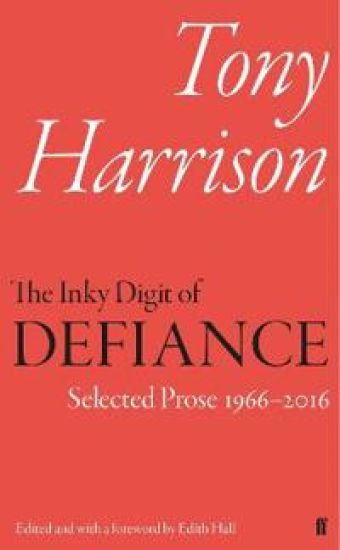
The Inky Digit of Defiance

The Inky Digit of Defiance

Tony Harrison

Faber Faber
2017
sidottu
In this richly varied selection of Tony Harrison's provocative prose of the last fifty years, the great poet of page, stage and screen presents a lifetime's thinking about art and politics, creativity and mortality. In so doing, he takes us on an extraordinary journey through languages and across continents and millennia, from his Nigerian Lysistrata to the British Raj of his version of Racine's Phèdre, to post-Communist Europe for the film Prometheus to a one-off performance of The Kaisers of Carnuntum at the Roman amphitheatre between Vienna and Bratislava, tothe peace camp at Greenham Common, and from a Leeds street bonfire celebrating the defeat of Japan by the new atomic bomb to wines made from the vines on volcanoes.A collection of work filled with passion and humour that educates as it dazzles.'Slangy, rooted, erudite, rhythmic, Harrison is a titan among poets; a unique Yorkshire brew of Auden, Byron, Brecht and Kipling, with a slug of Roman satire.' Independent
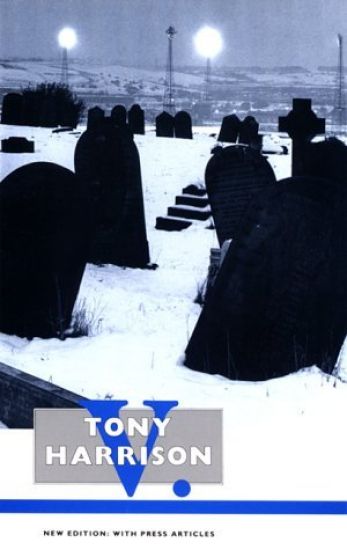
v.

v.

Tony Harrison

Bloodaxe Books Ltd
1989
nidottu
Tony Harrison's v. was written during the Miners' Strike of 1984-85 when he visited his parents' grave in a Leeds cemetery and found it vandalised by obscene graffiti. In the book-length poem, he confronts the foul-mouthed skinhead thug responsible, who becomes a foil for his own anger and alienation. The political and media reaction to v. would make a book in itself. This is that book. As well as Tony Harrison's poem and Graham Sykes's photographs, this new edition of v. includes press articles, letters, reviews, a defence of the poem and film by director Richard Eyre, and a transcript of the phone calls logged by Channel Four on the night of the broadcast. Channel Four’s film of v. won the Royal Television Society’s Best Original Programme Award. The Star: 'A plan to televise a poem packed with obscenities caused outrage last night. ITV chiefs intend to screen a reading of Tony Harrison's verse v. which is full of four-letter words.' Daily Mail: A torrent of four-letter filth… the most explicitly sexual language yet beamed into the nation's living rooms… the crudest, most offensive word is used 17 times.' Gerald Howarth, MP: 'It is full of expletives and I can't see that it serves any artistic purpose whatsoever.' Mary Whitehouse: 'This work of singular nastiness.' Sir Harold Pinter: 'The criticism against the poem has been offensive, juvenile and, of course, philistine. It should certainly be broadcast.' Sir Richard Eyre: 'If I had the slightest influence over educational policy in this country, I'd see that v. was a set text in every school in the country, but of course if we lived in that sort of country, the poem wouldn't have needed to be written.'
Snake Catcher

Snake Catcher

Tony Harrison

melbourne books
2014
pokkari
Tony has spent his whole life surrounded by reptiles. His work and his animals are regularly featured on TV and in movies. That means he has a tale or two to tell. In Snake Catcher, Tony shares entertaining and informative stories, written by award-winning Australian writer, David Blissett. You are part of the action as Tony enters a suburban bedroom to bag a large and lethal Eastern Brown Snake. You will meet Tiger, the Lace Monitor who is afraid of heights. And you will find out what happens when you try to flush a venomous snake down the toilet. However, more than telling great stories and showing great pictures, this book has another purpose. Tony wants to dispel the myth that 'the only good snake is a dead snake.? He shares his insights into some truly fascinating reptiles, and gives common-sense advice about living safely with them.
Men's Health

Men's Health

Tony Harrison; Karen Dignan

Churchill Livingstone
1999
nidottu
Mens health covers a variety of physical, psychological, social, lifestyle and political factors, all of which will be covered in the book. As the whole concept is still emerging, the text will not attempt to be either comprehensive or definitive, but will be seen to add to the pool of knowledge and help set the agenda for future work.
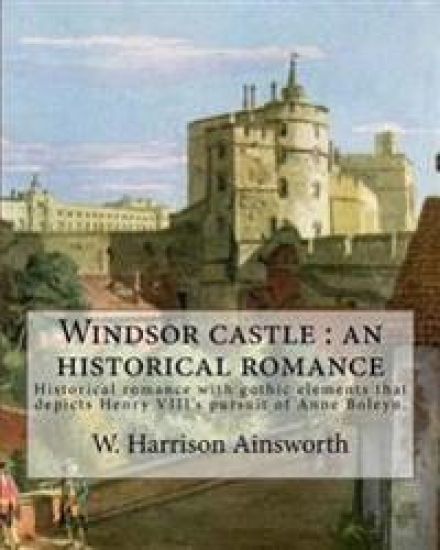
Windsor castle: an historical romance. By: W. Harrison Ainsworth, illustrated By: George Cruikshank and Tony Johannot, With desing By:

Windsor castle: an historical romance. By: W. Harrison Ainsworth, illustrated By: George Cruikshank and Tony Johannot, With desing By:

George Cruikshank; Tony Johannot; W. Alfred DeLamotte

Createspace Independent Publishing Platform
2017
nidottu
Windsor Castle is a novel by William Harrison Ainsworth serially published in 1842. It is a historical romance with gothic elements that depicts Henry VIII's pursuit of Anne Boleyn. Intertwined with the story are the actions of Herne the Hunter, a legendary ghost that haunts Windsor woods.The first mention of Windsor Castle comes in a letter to Crossley 17 November 1841: 1] "I am just now finishing Old St. Paul's and am consequently very busy ...] I have made all arrangements to start my Magazine at Christmas next, and have engaged Tony Johannot (the artist), who is now at work for me Windsor Castle, of course, forms the main feature of the design, and I propose commencing the story with Henry the Eighth entering into the Castle on the morning of St. George's Day, 1529, attended by Anne Boleyn and the Cardinals Wosley and Campeggio. I intend making Lord Surrey the hero of the story. what say you?"Ainsworth wrote Windsor Castle in 1842 while he was publishing The Miser's Daughter. During this time, he was constantly working to publish the novel by April, and Ainsworth only stopped when his mother, Ann Ainsworth, died on 15 March 1842.John Forster wrote to Ainsworth following the death of Ann to offer assistance with the work: "I imagine that you will defer the Windsor Castle this month - but should you not do so, I might be of some assistance to you. I have all my Henry VIII books here, and if you told me some particular thing you wanted - it may be horrible conceit - but somehow I think I might be of some beggarly service to you. At all events, in that or lesser matters, try if for old affection's sake you can discover anything for me to do for you".After declining the service of Forster, it was published in a serialised form in the Ainsworth's Magazine starting July 1842 and ending in June 1843. There was some overlap with The Miser's Daughter, and George Cruikshank, illustrator of The Miser's Daughter later became illustrator of Windsor Castle after the prior work finished. It was published by Henry Colburn as a three-decker novel in 1843.... STORY: The focus of the novels is on the events surrounding Henry VIII's replacing Catherine of Aragon with Anne Boleyn as his wife. During Henry's pursuit of Boleyn, the novel describes other couples, including the Earl of Surrey and Lady Elizabeth Fitzgerald, a match Henry does not support. However, some of the individuals oppose Henry and his desires for Boleyn, including Thomas Wyat who wants her for himself and Cardinal Wolsey, who uses his own daughter, Mabel Lyndwood, to lure Henry away from Boleyn. Eventually, Wolsey turns to outting Wyat's desires for Boleyn to the Court, which almost results in Wyat's execution but is stopped before that point. Wolsey is then kicked out of the court and is executed himself.Intertwined with the Court is the story of Herne the Hunter, a spirit of Windsor Forest. He is an evil force that seeks to take the souls of various individuals, and Henry tries to stop him, but is never able to do so. Eventually, Wyat and Lyndwood are captured by Herne. The two fall in love and try to escape, but Mabel drowns. As the main plot progresses, Catherine accepts her fate but also warns Boleyn that Henry will treat her in the same way. It is revealed that Boleyn was involved with Henry Norris, and Henry uses this as evidence to have Boleyn executed. The story ends with Boleyn being replaced by Jane Seymour... William Alfred Delamotte (Weymouth 1775 - 1863 Oxford), was an English painter and engraver... Tony Johannot ( 9. November 1803 in Offenbach am Main; + 4. August 1852 in Paris) war ein franz sischer Radierer, Holzschnittzeichner, Lithograf, Maler und Illustrator.... George Cruikshank (27 September 1792 - 1 February 1878) was a British caricaturist and book illustrator, praised as the "modern Hogarth" during his life. His book illustrations for his friend Charles Dickens, and many other authors, reached an international audience...
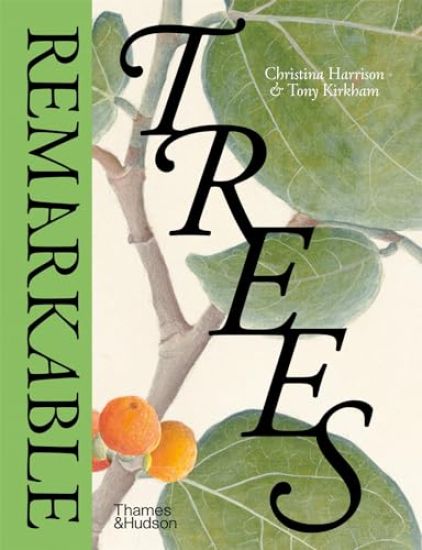
Remarkable Trees

Remarkable Trees

Christina Harrison; Tony Kirkham

THAMES HUDSON LTD
2024
sidottu
A celebration of the beauty, diversity, importance and sheer wonder of the most remarkable trees, with exquisite illustrations from the incomparable collections of the Royal Botanic Gardens, Kew. More than 60,000 species of trees are found in an amazing variety of forms, sizes and habitats. Every tree has its own story and here are over 60, selected for their particular resonance and connection with humankind and representing most of the world’s major zones and ecologies. In this compact edition, portraits that combine vivid cultural and historical narrative with a firm scientific grounding, the authors reveal the details of trees from around the world, both familiar and strange. We use timbers for building and creating, have discovered which tree fruits and seeds taste delicious, and which can kill or cure us, and which species can add colour and spirituality to our lives – from the timber of mahogany to the delights of chocolate and pomegranate, from the medicinal tea tree to the deadly manchineel, and from fragrant frankincense to the highly prized dragon’s blood tree. Artists and botanists alike have been inspired by trees for centuries, and a varied and beautiful range of images from the unrivalled archive at Kew illustrate the stories, to create this enlightening and enchanting book.
The Changing Constitution

The Changing Constitution

Kevin Harrison; Tony Boyd

Edinburgh University Press
2006
nidottu
This textbook provides an introduction to the topical subject of constitutional change in Britain. It considers the historical origins of the constitution but its main focus is on recent reforms and their likely impact. It includes chapters on: *The Legislature: The House of Commons and the House of Lords *The Executive *The Judiciary *The Debate over a Written Constitution and a Bill of Rights for the UK *Devolution: Northern Ireland, Scotland, Wales and the English Regions *Electoral Reform and Referenda *The European Union and the United Kingdom Constitution *The 'Hollowing Out of the State' The key theme running throughout the book is the debate as to whether the constitution has undergone a revolutionary transformation or has gradually evolved. Key Features: *Includes up-to-date examples of constutional change in Britain *Offers a readable, stimulating and provocative introduction to the subject *Covers all the major issues surrounding the constitution in Britain