Kirjojen hintavertailu. Mukana 11 627 463 kirjaa ja 12 kauppaa.

Kirjahaku

Etsi kirjoja tekijän nimen, kirjan nimen tai ISBN:n perusteella.

1000 tulosta hakusanalla Tony Kushner

Tony Kushner

Tony Kushner

McFarland Co Inc
2006
pokkari
Playwright Tony Kushner is a voice of intellectualism, neo-socialism, gay activism and political outrage in an era when the political pendulum has swayed to the right. Through scalding humor, thought, and compassion, he explores political dynamics and the human condition in the modern era, shedding light on and giving hope for the direst of circumstances. His best known work, Angels in America, delves beneath the anti-gay rhetoric and political superficiality of the AIDS pandemic to true suffering and transformation. His political epic Homebody/Kabul engages the issue of terrorism and conflicting fundamental beliefs. In this book 11 scholars explore the works of Tony Kushner across his career. Several address Angels: one explores the presentation of homosexuality by Kushner compared to that of Tennessee Williams, who wrote in a less tolerant era; another places Angels in the contexts of Hegel's concept of freedom and the gay revolution; a third discusses the play in terms of queer theory and politics. Homebody/Kabul is examined in two essays, one analyzing media reaction, the other exploring cultural and economic differences, religious fundamentalism and the "West's luxurious predominance in the world." Other studies address relationships in Kushner's works to William Inge's 1950 play Come Back, Little Sheba; the plays of experimentalist Adrienne Kennedy; and fascist creep in the era of playwrights W.H. Auden and Christopher Isherwood, among other topics.
Tony Kushner in Conversation

Tony Kushner in Conversation

The University of Michigan Press
1997
nidottu
In the Fall of 1992, Millennium Approaches, the first part of Tony Kushner's Angels in America, won England's prestigious Evening Standard award as the season's Best Play. By the Spring of 1993, Millennium had come to Broadway and won its highest honor, the Tony Award for Best Play, and the distinguished Pulitzer Prize for drama as well. Through its epic theatrical panorama of the intimate and political dynamics that arise when individuals, histories, and cultures intersect, Millennium captured the imagination and the conscience of all who saw it. Its ability to deeply move the audience in personal, communal, and political ways was admirably (and astoundingly) matched by the subsequent production of the play's second part, Perestroika, which brought Kushner yet another Evening Standard award and Tony Award for Best Play (1994). Tony Kushner has, almost overnight, become the premier American male playwright to "represent" the 1990s, as David Mamet and August Wilson dominated critical attention in the 1980s. The phenomenally positive response to Angels in America was matched by the equally enthusiastic reception of its young, politically engaged playwright, who impressed journalists and scholars with his eloquent intellect, wit, and moral convictions. Kushner spoke for a younger generation of American artists and activists whose art is intimately connected to social vision and "revolutionary" possibilities in the public and private sectors. His role as a generational (read "national," "liberal," "socialist," "Jewish," "queer") spokesman has provided him with a public platform from which to address concerns that lie at the center of national debate. In a short time Kushner has captured and retained a nation's fascination, and his opinions are widely sought out on a wide range of topics. And, most often, the platform from which Kushner expresses his ideas is the personal interview, in which he boldly confronts Americans to rethink, even to reinvent, themselves as the Millennium approaches. Tony Kushner in Conversation is the first book to compile Kushner's most significant interviews of the past decade, tracing his career from its early years to his maturing artistic and political visions. The collection includes pieces that first appeared in an amazingly broad range of periodicals as well as interviews not previously published, such as his appearance on PBS on The Charlie Rose Show. In addition to Angels in America, Tony Kushner is author of Slavs! and is currently finishing work on Henry Box Brown, scheduled to have its world premiere at the Royal National Theatre in the summer of 1997. Robert Vorlicky is Associate Professor of Drama at Tisch School of the Arts, New York University.
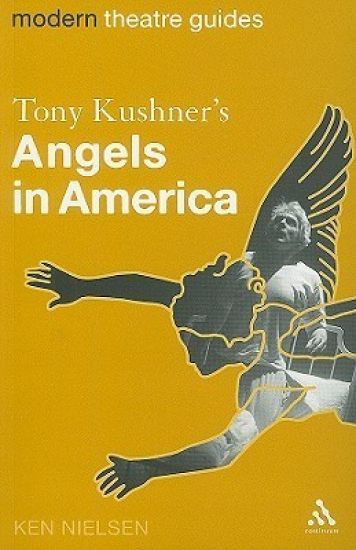
Tony Kushner's Angels in America

Tony Kushner's Angels in America

Ken Nielsen

BLOOMSBURY PUBLISHING PLC
2008
sidottu
Angels in Americapaveda new way for American theatrein its combination of heightened theatricality and politics.Tony Kushner has emerged as one of the American theatres leading playwrights and productions worldwide have meant the play hasbecome recognised asthemost important American play in decades. With the scope of characters sexual, class and religious affiliations in the play, Angels in Americaoffers a uniquepossibility to discuss the construction of American identity in the late 1980s and 1990s. This guide provides a comprehensive critical introduction to the play, giving students an overview of the background and context; detailed analysis of the play including its structure, style and characters; analysis of key production issues and choices; overview of the performance history from the first performances of Millennium Approaches and Perestroika to recent productions and the 2003 HBO adaptation; and an annotated guide to further reading highlighting key critical approaches.
Tony Kushner's Angels in America

Tony Kushner's Angels in America

Ken Nielsen

Continuum International Publishing Group Ltd.
2008
nidottu
This book offers an ideal introduction to studying the text in performance and production."Angels in America" paved a new way for American theatre in its combination of heightened theatricality and politics. Tony Kushner has emerged as one of the American theatre's leading playwrights and productions worldwide have meant the play has become recognised as the most important American play in decades. With the scope of characters' sexual, class and religious affiliations, "Angels in America" offers a unique possibility to discuss the construction of American identity in the late 1980s and 1990s.This guide provides a comprehensive critical introduction to the play, giving students an overview of the background and context; detailed analysis of the play including its structure, style and characters; analysis of key production issues and choices; overview of the performance history from the first performances of Millennium Approaches and Perestroika to recent productions and the 2003 HBO adaptation; and an annotated guide to further reading highlighting key critical approaches." Continuum Modern Theatre Guides" offer concise, accessible and informed introductions to the key plays of modern times. Each book is carefully structured to offer a systematic study of the play in its biographical, historical, social and political context, an in-depth study of the text, an overview of the work's production history including screen adaptations, and practical workshopping exercises. They also include a timeline and suggestions for further reading which highlight key critical approaches. This will enable students to develop their understanding of playwrights and theatre-makers, as well as inspiring them to broaden their studies.
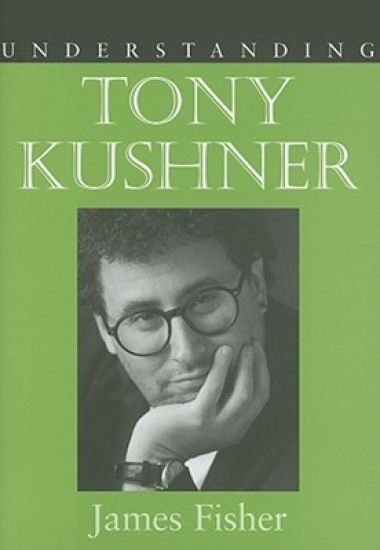
Understanding Tony Kushner

Understanding Tony Kushner

James Fisher

University of South Carolina Press
2008
sidottu
This is a comprehensive guide to the writing career of the author of ""Angels in America"".""Understanding Tony Kushner"" surveys the acclaimed writings of the author of the Pulitzer Prize - winning drama ""Angels in America"" and coauthor of the Academy Award-nominated screenplay for the film ""Munich"". Viewing Kushner as a sociopolitical dramatist in the tradition of Henrik Ibsen, George Bernard Shaw, and Bertolt Brecht, James Fisher guides readers through Kushner's influences and creations to map the importance of the writer's body of work in expanding the postmodern literary and cultural landscapes. After grounding his discussions in Kushner's early plays, ""A Bright Room Called Day"" and ""Hydriotaphia"", or ""The Death of Dr. Brown"", Fisher engages with the two plays of ""Angels in America"" to identify the major themes to be revisited in subsequent works. Fisher reads the depiction of the clash of values in the mid-1980s in Angels as Kushner's placement of humanity's fate at the nexus of divergent views on morality, politics, religion, history, gender, and sexuality, views that complicate individual and national identity and beg the overarching question, is change to be embraced or challenged? Fisher concludes with an exploration of how Kushner moves his themes from stage to screen in Munich and the forthcoming film Lincoln, both directed by Steven Spielberg.
The Theater of Tony Kushner

The Theater of Tony Kushner

James Fisher

Routledge
2021
sidottu
The Theater of Tony Kushner is a comprehensive portrait of the forty-year long career of dramatist Tony Kushner as playwright, screenwriter, essayist, and public intellectual and political activist.Following an introduction examining the influences of Kushner’s development as an artist, this updated second edition features individual chapters on his major plays, including A Bright Room Called Day, Hydriotaphia, or The Death of Dr. Browne, Angels in America, Slavs! Thinking About the Longstanding Problems of Virtue and Happiness, Homebody/Kabul, Caroline, or Change, and The Intelligent Homosexual’s Guide to Capitalism and Socialism with a Key to the Scriptures, along with chapters on Kushner’s adaptations, one-act plays, and screenplays, including his two Academy Award-nominated screenplays, Munich and Lincoln.A book for anyone interested in theater, film, literature, and the ways in which the past informs the present, this second edition of The Theater of Tony Kushner explores how his writings reflect key elements of American society, from politics and economics to race, gender, and spirituality, all with the hope of inspiring America to live up to its ideals.
The Theater of Tony Kushner

The Theater of Tony Kushner

James Fisher

Routledge
2021
nidottu
The Theater of Tony Kushner is a comprehensive portrait of the forty-year long career of dramatist Tony Kushner as playwright, screenwriter, essayist, and public intellectual and political activist.Following an introduction examining the influences of Kushner’s development as an artist, this updated second edition features individual chapters on his major plays, including A Bright Room Called Day, Hydriotaphia, or The Death of Dr. Browne, Angels in America, Slavs! Thinking About the Longstanding Problems of Virtue and Happiness, Homebody/Kabul, Caroline, or Change, and The Intelligent Homosexual’s Guide to Capitalism and Socialism with a Key to the Scriptures, along with chapters on Kushner’s adaptations, one-act plays, and screenplays, including his two Academy Award-nominated screenplays, Munich and Lincoln.A book for anyone interested in theater, film, literature, and the ways in which the past informs the present, this second edition of The Theater of Tony Kushner explores how his writings reflect key elements of American society, from politics and economics to race, gender, and spirituality, all with the hope of inspiring America to live up to its ideals.
The American Stage: Writing on Theater from Washington Irving to Tony Kushner (Loa #203)
Here is the story, told firsthand through electric, deeply engaged writing, of America's living theater, high and low, mainstream and experimental. Drawing on history, criticism, memoir, fiction, poetry, and parody, editor Laurence Senelick presents writers with the special knack "to distill both the immediate experience and the recollected impression, to draw the reader into the charmed circle and conjure up what has already vanished." Through the words of playwrights and critics, actors and directors, and others behind the footlights, the entertainments and high artistic strivings of successive eras come vividly, sometimes tumultuously, to life. Observers from Washington Irving and Fanny Trollope to Walt Whitman and Mark Twain evoke the world of the nineteenth-century playhouse in all its raucous vitality. Henry James confesses his early enthusiasm for playgoing; Willa Cather reviews provincial productions of Uncle Tom's Cabin and Antony and Cleopatra. The increasing diversity and ambition of the American theater is reflected in Hutchins Hapgood's account of New York's Yiddish theaters at the turn of the century, Carl Van Vechten's review of the Sicilian actress Mimi Aguglia, Alain Locke's comments on the emerging African-American theater in the 1920s, and Ezra Pound's response to James Joyce's play Exiles and theatrical modernism. Enthusiasts for the New Stagecraft, such as Lee Simonson and Djuna Barnes, are matched by champions of pop culture such as Gilbert Seldes and Fred Allen. S. J. Perelman lampoons Clifford Odets; Edmund Wilson acclaims Minsky's Burlesque; Harold Clurman explains Stanislavski's Method; Gore Vidal dissects the compromises of commercial playwriting. A host of playwrights--among them Thornton Wilder, Arthur Miller, Tennessee Williams, Lorraine Hansberry, Edward Albee, Wendy Wasserstein, David Mamet, and Tony Kushner--are joined by such renowned critics as Stark Young, George Jean Nathan, Brooks Atkinson, and Eric Bentley. LIBRARY OF AMERICA is an independent nonprofit cultural organization founded in 1979 to preserve our nation's literary heritage by publishing, and keeping permanently in print, America's best and most significant writing. The Library of America series includes more than 300 volumes to date, authoritative editions that average 1,000 pages in length, feature cloth covers, sewn bindings, and ribbon markers, and are printed on premium acid-free paper that will last for centuries.
Post-Marxism, Representation, and Resistance in Tony Kushner's Political Plays
The book is a study of the politics in Tony Kushner’s political plays as representing the New Left politics that speaks for the unrepresented or under-represented people. This book studies the complex and varied nuances of Kushner’s political thought that he has written into four of Kushner’s ‘political’ plays. Arnab Ray argues that Kushner’s work conveys the imminent ideological emptiness in the world as the millennium approached its end while simultaneously exemplifying the hope brought on by the turn of a new millennium. Thus, this book positions Kushner as a playwright of hope as he illumines a path that he thinks may lead to a better future. However, as Kushner himself has said, it is “a teleology, not a guarantee.” Ray argues that it is in Kushner’s post-Marxist Leftist political thought that the teleology lies.
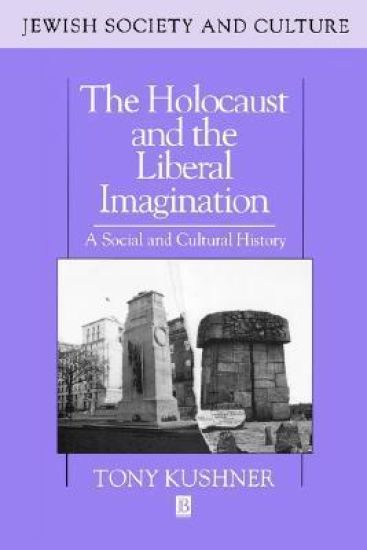
The Holocaust and the Liberal Imagination

The Holocaust and the Liberal Imagination

Tony Kushner

Blackwell Publishers
1994
nidottu
The Holocaust and the Liberal Imagination attempts to explain and not to condemn the responses and reactions of the democratic world to the attempted destruction of European Jewry. It concentrates on the impact of the Holocaust on ordinary people in the democracies and examines the actions of the nation-state in the light of popular responses. Ultimately this study argues that the Holocaust is not simply German, Jewish or continental history but is an integral but neglected part of the experience of many countries away from the killing fields. It is the first social and cultural history of its subject.
The Battle of Britishness

The Battle of Britishness

Tony Kushner

Manchester University Press
2012
sidottu
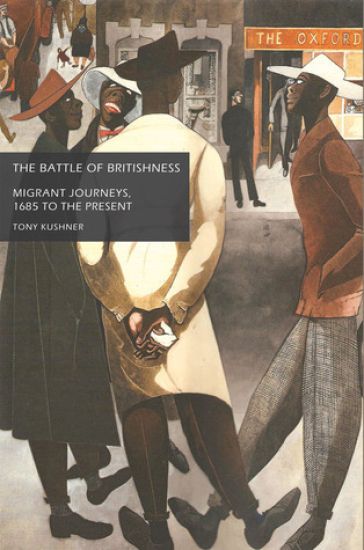
This pioneering study of migrant journeys to Britain begins with Huguenot refugees in the 1680s and continues to asylum seekers and east European workers today. Analyzing the history and memory of migrant journeys, covering not only the response of politicians and the public but also literary and artistic representations, then and now, Kushner's volume sheds new light on the nature and construction of Britishness from the early modern era onwards. It is an essential tool for those wanting to understand why people come to Britain (or are denied entry) and how migrants have been viewed by state and society alike. The journeys covered vary from the famous (including the Empire Windrush in 1948) to the obscure, such as the Volga German transmigrants passing through Britain in the 1870s. While employing a broadly historical approach, Kushner incorporates insights from many other disciplines and employs a comparative methodology to highlight the importance of the symbolic as well as the physical nature of such journeys.
The Battle of Britishness

The Battle of Britishness

Tony Kushner

Manchester University Press
2014
nidottu
This pioneering study of migrant journeys to Britain begins with Huguenot refugees in the 1680s and continues to asylum seekers and East European workers today. Analysing the history and memory of migrant journeys, covering not only the response of politicians and the public but also literary and artistic representations, then and now, Kushner’s volume sheds new light on the nature and construction of Britishness from the early modern era onwards. It is an essential tool for those wanting to understand why people come to Britain (or are denied entry) and how migrants have been viewed by state and society alike. The journeys covered vary from the famous (including the Empire Windrush in 1948) to the obscure, such as the Volga German transmigrants passing through Britain in the 1870s. While employing a broadly historical approach, Kushner incorporates insights from many other disciplines and employs a comparative methodology to highlight the importance of the symbolic as well as the physical nature of such journeys.
Remembering Refugees

Remembering Refugees

Tony Kushner

Manchester University Press
2006
nidottu
Refugee crises are one of the gravest problems facing the modern world. This book explores the paradox of why countries such as Britain pride themselves on their past treatment of refugees yet are suspicious and hostile towards asylum seekers trying to gain entry. It explores the contemporary treatment and representation of refugees ranging from the Huguenots in the sixteenth to eighteenth centuries through to the many groups that have gained entry more recently. Was the treatment of refugees such as Jews escaping Tsarist and later Nazi persecution as welcoming as politicians and others now make out? Why have some groups been remembered positively, whilst others have been forgotten? Remembering refugees plays particular attention to how historians and those in the heritage industry have dealt with the refugee presence. By adopting an original and critical framework, it asks why a variety of academic disciplines, as well as politicians, the media and the general public, have difficulty with refugees. A richly textured book that utilizes a huge range of sources from parliamentary debates through to novels, films and autobiographical writing, it argues that the current panic about refugees and asylum seekers says more about the moral failings of contemporary society than it does about those fleeing persecution.