Praca dotyczy stanowiska Unii Europejskiej, Republiki Federalnej Niemiec i Republiki Czeskiej w sprawie energii jądrowej po katastrofie w Fukushimie. Gl wnym celem pracy jest opisanie i por wnanie reakcji obu państw na zaistnialą sytuację. Odniesienie do historycznie uwarunkowanych stanowisk tych kraj w w sprawie energii jądrowej jeszcze przed wypadkiem, a zwlaszcza wplywu politycznego i spolecznego po wypadku.
The short paper of John von Neumann, "0ber ein okonomisches Gleichungssystem und eine Verallgemeinerung des Brouwerschen Fixpunkt- satzes", published 1937 in Vienna in German and translated into English and subsequently published in the "Review of Economic Studies" (1945- 1946) as "A Model of General Economic Equilibrium" is one of the most important contributions to modern mathematical economics, if the rele- vance of a paper is judged by the number of contributions which it ini- tiates. After the publication of the paper there was a time lag of several years until Economic Theory payed attention to von Neumann's con- tribution. One reason was that the new mathematical methods - including the modern theory of mathematical programming which was not developed at that time - made it very difficult to understand the model. An im- portant step towards a better understanding of von Neumann's model was the generalization by J. G. Kemeny, 0. Morgenstern and G. L. Thompson, "A Generalization of the Von Neumann Model of an Ex- panding Economy" (1956) which also put emphasis on the economic inter- pretation. Since its publication the occupation with the von Neumann growth model has become one of the mainstays of the theory of economic growth and the theory of general economic equilibrium. The development was along three lines: l. The theory of multisectoral balanced growth (mainly the conditions of equilibrium growth). 2. The theory of optimal growth, where the most wellknown problem is the so-called "Turnpike theorem".
Linke H nde. Viele Talente. Dein Abenteuer. Fragst du dich, wie du linksh ndige Kinder wirklich verstehen und unterst tzen kannst? Dann mache dich bereit f r eine Entdeckungsreise - f r Eltern, Therapeuten, P dagogen - alle werden etwas neues entdecken. Willkommen in deiner Schatzkiste der Linksh ndigkeit - einem Buch, das mehr ist als ein Ratgeber. Es ist dein pers nlicher Kompass durch eine faszinierende Welt voller verborgener Talente und unentdeckter St rken. Gemeinsam heben wir die Sch tze der Linksh ndigkeit: + Erschlie e unerwartete Begabungen und Talente + Verstehe die Besonderheiten der Linksh ndigkeit + Von der ersten Stifthaltung bis zum strahlenden Selbstbewusstsein + Entdecke die verborgene Kreativit t deines Kindes Diese Reise ver ndert nicht nur dein Kind, sondern auch dich und deinen Blickwinkel auf die Linksh nder. Keine trockenen Ratschl ge, sondern praktische Tipps f r jeden Tag. Viele Vorlagen und Checklisten zum Ausdrucken, damit du die praktische Anregungen gleich anwenden kannst, um dein Kind zu unterst tzen. Ob Eltern, Erzieher oder Therapeuten - dieses Buch ist der Schl ssel zum tieferen Verst ndnis. Linksh ndigkeit ist nicht anders sondern besonders. Du erh ltst Einblick in wichtige Hintergrundinformationen, wie z.B. zu historischen Begebenheiten und aktuellen Forschungsergebnissen im Zusammenhang mit der Linksh ndigkeit. Anschlie end lernst du wie du die H ndigkeit checken kannst und ab welchem Entwicklungsstand, du die H ndigkeit f rdern solltest. Erkl rungen zu grafomotorische Fertigkeiten und bungen findest du im Buch genauso wie eine detaillierte Anleitung zum entspannten Schreiben mit der linken Hand. Und du wirst verstehen wann und warum eine R ckschulung sinnvoll f r dein Kind ist, und wie du sie kraftvoll begleiten kannst. Du erh ltst mit dem Kauf des Buches den Zugang zu der Happy-Linksh nder-Online-Bibliothek, in der du viele Unterlagen zum ausdrucken und ein Workbook findest, welches dich bei der Begleitung und F rde
Dieser Buchtitel ist Teil des Digitalisierungsprojekts Springer Book Archives mit Publikationen, die seit den Anfängen des Verlags von 1842 erschienen sind. Der Verlag stellt mit diesem Archiv Quellen für die historische wie auch die disziplingeschichtliche Forschung zur Verfügung, die jeweils im historischen Kontext betrachtet werden müssen. Dieser Titel erschien in der Zeit vor 1945 und wird daher in seiner zeittypischen politisch-ideologischen Ausrichtung vom Verlag nicht beworben.
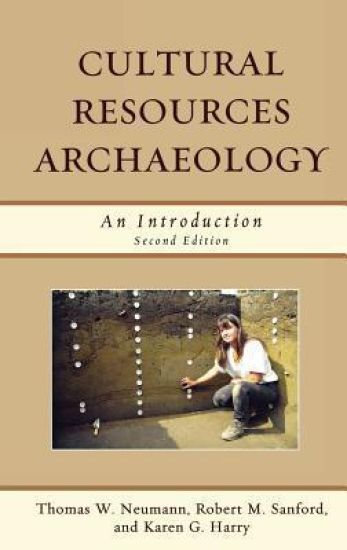
This comprehensive reference book addresses the questions and problems of cultural resource archaeology for graduate students and practicing archaeological field workers. Neumann and Sanford use their decades of field experience to discuss in great detail the complex processes involved in conducting a CRM project. Dealing with everything from law to logistics, archival research to zoological analysis, project proposals to report production, they provide an invaluable sourcebook for archaeologists who do contract work in the United States. After introducing the legal and ethical aspects of cultural resources management, the authors describe the processes of designing a proposal and contracting for work, doing background research, conducting assessment, testing, mitigation work (Phase I, II, and III), laboratory analysis, and preparing reports for project sponsors. The volume's emphasis on practical problems, use of extensive examples, and detailed advice on a host of subjects make it an ideal training manual and reference tool for archaeologists and field schools.
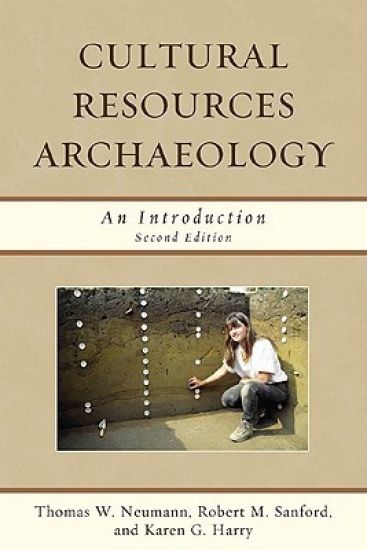
Most students who pursue a career in archaeology will find employment in cultural resource management (CRM), rather than in academia or traditional fieldwork. It is CRM, the protection and preservation of archaeological and other resources, that offers the jobs and provides the funding. Few textbooks, however, are dedicated to teaching students the techniques and practices of this field. Cultural Resources Archaeology, now brought completely up date in this second edition and replete with new case studies from the western U.S., fills in the gap. Drawing on their decades of teaching and field experience, the authors walk students through the intricacies of CRM. They clearly describe the processes of designing a project, conducting assessment, testing, doing essential mitigation work (Phases I, II, and III), and preparing reports. The book's emphasis on real-world problems and issues, use of extensive examples from around the country, and practical advice on everything from law to logistics make it an ideal teaching tool for archaeology students who dream of becoming practicing archaeologists.
Most students who pursue a career in archaeology will find employment in cultural resource management (CRM), rather than in academia or traditional fieldwork. It is CRM, the protection and preservation of archaeological and other resources, that offers the jobs and provides the funding. Few textbooks, however, are dedicated to teaching students the techniques and practices of this field. Cultural Resources Archaeology, now brought completely up date in this second edition and replete with new case studies from the western U.S., fills in the gap. Drawing on their decades of teaching and field experience, the authors walk students through the intricacies of CRM. They clearly describe the processes of designing a project, conducting assessment, testing, doing essential mitigation work (Phases I, II, and III), and preparing reports. The book's emphasis on real-world problems and issues, use of extensive examples from around the country, and practical advice on everything from law to logistics make it an ideal teaching tool for archaeology students who dream of becoming practicing archaeologists.
People typically misunderstand how power works in schools. Common thinking says that things like high-stakes testing, school reform efforts, and political mandates exert the most power on schools. The reality, however, is that power comes from everywhere. It isn’t a thing that only certain people possess, nor does it operate linearly, as in simple actions and reactions. Instead, power acts more like a web: if you exert power in one part of a school, the effects often spread across the rest of it. The usual emphasis on big, easy-to-see influences causes schools to focus on the wrong concerns (the big public ones) instead of the ones which make the most impact (the small daily ones). This book examines everyday phenomena inside schools to reveal the complexity and nuance of power and makes practical suggestions for how schools can manage power more effectively to maximize students’ learning.
People typically misunderstand how power works in schools. Common thinking says that things like high-stakes testing, school reform efforts, and political mandates exert the most power on schools. The reality, however, is that power comes from everywhere. It isn’t a thing that only certain people possess, nor does it operate linearly, as in simple actions and reactions. Instead, power acts more like a web: if you exert power in one part of a school, the effects often spread across the rest of it. The usual emphasis on big, easy-to-see influences causes schools to focus on the wrong concerns (the big public ones) instead of the ones which make the most impact (the small daily ones). This book examines everyday phenomena inside schools to reveal the complexity and nuance of power and makes practical suggestions for how schools can manage power more effectively to maximize students’ learning.