Kirjojen hintavertailu. Mukana 11 342 296 kirjaa ja 12 kauppaa.

Kirjahaku

Etsi kirjoja tekijän nimen, kirjan nimen tai ISBN:n perusteella.

1000 tulosta hakusanalla Walker Percy

Walker Percy

Walker Percy

Stuart Wright

Greenwood Press
1986
sidottu
A bibliography of philosopher and author (Love in the Ruins, The Message in the Bottle, etc.), Walker Percy, including information on separate publications, first appearace contributions to books, first appearance contributions to periodicals, interviews and published comments. This is a handy reference for collectors and students of his work.
Walker Percy

Walker Percy

Gary M. Ciuba

University of Georgia Press
2010
pokkari
In Walker Percy: Books of Revelations, Gary M. Ciuba examines how Percy’s apocalyptic vision inspires the structure, themes, and strategies of his fiction. This book explores the unity of the southern novelist’s fiction by focusing on its religious and artistic design—one of the first studies to approach Percy’s work from this perspective.Ciuba considers Percy’s six published novels—The Moviegoer, The Last Gentleman, Love in the Ruins, Lancelot, The Second Coming, and The Thanatos Syndrome—and also offers the first extended critical analysis of his unpublished work “The Gramercy Winner.” Although the novels are often seen as increasingly satiric jeremiads about the possible doom of America, Ciuba argues that Percy’s fiction is principally shaped by a demythologized and partially realized form of eschatology. This apocalyptic vision has less to do with the end of the external world than with the demise of the protagonists’ internal worldviews. According to Ciuba, Percy does more than offer direly comic warnings about the end of the world; he shows how the world actually ends and then may begin again in the everyday lives and extraordinary loves of his astonished seers.
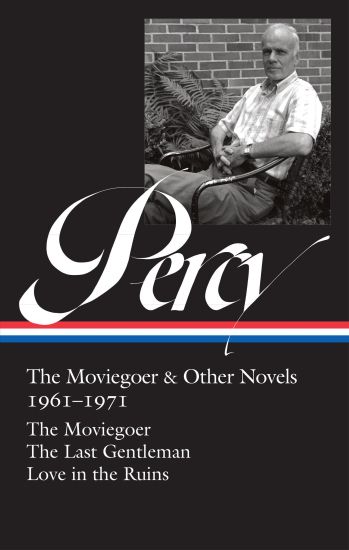
Walker Percy: The Moviegoer & Other Novels 1961-1971 (LOA #380)
In 1 volume, 3 classic early works by the Southern physician-turned-novelist who galvanized American literature with stories of spiritual searching amid modern angst Includes the landmark, National Book Award-winning The Moviegoer, in a fully annotation edition A physician-turned-writer and self-described diagnostician of "the malaise," Percy plumbed the depths of modern American angst and alienation as few other writers have. Now he joins the Library of America series with a volume collecting his first 3 books. The Moviegoer (1961), winner of the 1962 National Book Award for Fiction, is the story of John Bickerson "Binx" Bolling, a New Orleans stockbroker who finds in movies a resplendent reality that lifts him, for a time, out of the mire of everydayness. Binx is a modern-day pilgrim whose progress unfolds in what editor Paul Elie calls "the first work of what we call contemporary American fiction, the earliest novel to render a set of circumstances and an outlook that still feel recognizably ours." In The Last Gentleman (1966), Percy portrays another troubled, searching young man, this time a southerner living in New York whose intermitent amnesia and odd moments of d j vu lead him to imagine that the world catastrophe everyone fears has already occurred. A satirical work of speculative fiction, Love in the Ruins (1971) introduces lapsed-Catholic psychiatrist Dr. Thomas More, inventor of the lapsometer, a devise that measures the spiritual sickness of a near-apocalyptic America torn apart by the forces of the far right and left. Rounding out the volume are three short nonfiction pieces by Percy: his speech upon accepting the National Book Award, his special message to readers of the Franklin edition of The Moviegoer, and his address to the Publicists' Association of the National Book Awards concerning Love in the Ruins.
Walker Percy

Walker Percy

William Rodney Allen

University Press of Mississippi
2006
nidottu
This valuable and informative book is a study of Percy's five novels in the context of his southern and American literary sources and his tragic personal history. Though Percy has emphasized mainly his European existential influences, his highly allusive novels echo his tragic early years in the South, as well as his ambivalent relationship with his adoptive father William Alexander Percy and his awareness of such writers as Twain, Hemingway, and Warren.This perceptive study examines Percy's novels in the light of psychoanalytic theory, philosophy, and literary analysis. The author finds that Percy's fiction has been shaped as much by what Percy rejected as by what he embraced.
Walker Percy, the Last Catholic Novelist

Walker Percy, the Last Catholic Novelist

Kieran Quinlan

Louisiana State University Press
1998
nidottu
In this important study, Kieran Quinlan examines the theological principles and religious views that underlay Walker Percy's writing, primarily his belief in the validity and efficacy of the Roman Catholic faith, and offers some new and controversial conclusions.Quinlan grounds the writer's concerns squarely in the context of the intellectual milieu of the 1940s, citing the influence of Jacques Maritain's The Dream of Descartes and the conversions of prominent contemporaries such as Thomas Merton, Robert Lowell, and Allen Tate. In an illuminating discussion, Quinlan follows the future novelist through the events that would mold his sensibility: his father's suicide in 1929; his rearing by William Alexander Percy, himself a former Catholic, who inculcated the young man with the Stoic philosophy of Marcus Aurelius; and his contraction of tuberculosis and subsequent long convalescence, during which he studied Kierkegaard, Sartre, Camus, and Heidegger, thinkers pivotal in his own development as a Catholic novelist.With a mind keenly attuned to philosophical nuances and an impressive grasp of semiotics and theology, Quinlan deftly presents close readings of the novels, from the muted Catholicism of The Moviegoer to the explicit agendas of The Last Gentleman, Love in the Ruins, and The Thanatos Syndrome. He shows how Percy contrasts Catholicism with Stoicism in Lancelot and The Second Coming. He also sheds light on the dense and often abstruse arguments of the philosophical essays, asserting that Percy, despite his early attention to existentialism, was actually a neo-Thomist rationalist who rejected Kierkegaard's irrational ""leap of faith."" Lost in the Cosmos, Quinlan demonstrates, is an ambitious work requiring that its readers move beyond the realm of a comfortable skepticism.Critical but respectful, Quinlan points out Percy's confusion and frank lack of knowledge on the topic of linguistics. He also questions many aspects of Percy's philosophical and theological views in light of current thinking in those disciplines, stressing in particular Percy's failure to address the very real problems that an evolutionary view of the universe poses for the traditional revealed religions.Quinlan presents here a searching, lucidly written examination of a spiritual pilgrim whose vision of the world, he finally maintains, is no longer tenable (thus making Percy ""the last Catholic novelist"") yet is admirable in its steadfast dignity. It is a book that is sure to arouse controversy and debate in our understanding of an important contemporary novelist.
Walker Percy's The Moviegoer at Fifty

Walker Percy's The Moviegoer at Fifty

Louisiana State University Press
2016
sidottu
More than fifty years after its publication, Walker Percy's National Book Award Winner, The Moviegoer, still confronts, comforts, and enlightens generations of readers. This collection of twelve new essays, edited and introduced by Jennifer Levasseur and Mary A. McCay, emphasize the evolving significance of this seminal, New Orleans novel. Authors' consider the text with diverse perspectives, drawing from philosophy, theology, disability theory, contemporary music and literature, social media, and film studies.Jay Tolson opens the volume with reflections on rereading the novel on a Kindle decades after writing his important biography of Percy. H. Collin Messer, Montserrat Gin�s, Jessica Hooten Wilson, and Brian Jobe follow with illuminating essays analyzing Percy's influences, from St. Augustine and Cervantes to Heidegger and Dostoevsky. Jonathan Potter and Read Mercer Schuchardt, Mary A. McCay, Matthew Luter, and Dorian Speed delve into the novel's significance to cinema, including an exhaustive guide to its film references, a meditation on Binx Bolling as a director of his existence, and the semiotics of celebrity. Brent Walter Cline and Robert Bolton, Michael Kobre, and L. Lamar Nisly present a roadmap for Bolling's inward journey, exploring a variety of elements from the role of the broken body to the spiritual connection to Bruce Springsteen lyrics. Walker Percy's The Moviegoer at Fifty is the first critical work devoted solely to the author's debut novel. Coinciding with the centenary of Percy's birth, this collection invites both new and veteran readers to enjoy The Moviegoer with fresh perspectives that underscore its lasting relevance.
Walker Percy Remembered

Walker Percy Remembered

Harwell David Horace

The University of North Carolina Press
2010
nidottu
Walker Percy (1916-1990), the reclusive southern author most famous for his 1961 novel The Moviegoer, spent much of his adult life in Covington, Louisiana. In the spirit of traditional southern storytelling, this biography of Percy takes its shape from candid interviews with his family, close friends, and acquaintances. In thirteen interviews, we get to know Percy through his lifelong friend Shelby Foote, Percy's brothers LeRoy and Phin, his former priest, his housekeeper, and former teachers, among others--all in their own words. Over the course of the interviews, readers learn intimate details of Percy's writing process; his interaction with community members of different ethnic, religious, and socioeconomic backgrounds; and his commitment to civil rights issues. What emerges is a multidimensional portrait of Percy as a man, a friend, and a family member.
Walker Percy, Fyodor Dostoevsky, and the Search for Influence

Walker Percy, Fyodor Dostoevsky, and the Search for Influence

Jessica Hooten Wilson

Ohio State University Press
2017
pokkari
Although Walker Percy named many influences on his work and critics have zeroed in on Kierkegaard in particular, no one has considered his intentional influence: the nineteenth-century Russian novelist Fyodor Dostoevsky. In a study that revives and complicates notions of adaptation and influence, Jessica Hooten Wilson details the long career of Walker Percy. Walker Percy, Fyodor Dostoevsky, and the Search for Influence demonstrates-through close reading of both writers' works, examination of archival materials, and biographical criticism-not only how pervasive and inescapable Dostoevsky's influence was but also how necessary it was to the distinctive strengths of Percy's fiction. From Dostoevsky, Percy learned how to captivate his non-Christian readership with fiction saturated by a Christian vision of reality. Not only was his method of imitation in line with this Christian faith but also the aesthetic mode and very content of his narratives centered on his knowledge of Christ. The influence of Dostoevsky on Percy, then, becomes significant as a modern case study for showing the illusion of artistic autonomy and long-held, Romantic assumptions about artistic originality. Ultimately, Wilson suggests, only by studying the good that came before can one translate it in a new voice for the here and now.
Walker Percy's Voices

Walker Percy's Voices

Michael Kobre

University of Georgia Press
2000
sidottu
Walker Percy's novels are fraught with characters struggling toward a destiny and purpose in life who must sort through conflicting inner voices and the voices of family, friends, therapists, and mentors until they finally find their own paths. Through trial, error, and retrial, Percy's characters continuously reinvent themselves, struggling until they reach solutions, satisfaction, and maturity.In this multifaceted work, Michael Kobre analyzes Walker Percy's major fiction works—The Moviegoer, The Last Gentleman, Love in the Ruins, Lancelot, The Second Coming, and The Thanatos Syndrome—in terms of the Russian philosopher and literary scholar Mikhail Bakhtin's critical theory. Kobre begins with an introduction to Percy's view of language and consciousness and a clear, accessible explanation of Bakhtin's ideas. His subsequent discussion of the novels connects each work in turn with Percy's advancing career and explores the deepening conflict in Percy's fiction between his desire to express his own religious and moral beliefs and his commitment to the essential freedom of his art—the play of many voices in his narratives.
Walker Percy's Search for Community

Walker Percy's Search for Community

John F. Desmond

University of Georgia Press
2010
pokkari
In the first undertaking of its kind in Percy criticism, John F. Desmond traces—through Walker Percy's six published novels—the writer's central and enduring concerns with community. These concerns, Desmond argues, were grounded in the realism of such Scholastics as Aquinas and Duns Scotus—realism as updated by the semiotic theory of Charles Sanders Peirce, the American philosopher whose work Percy studied for more than forty years. Percy gleaned from Peirce the basic truth that humans are by nature relational beings, a truth reinforced by Percy's Catholic belief in mystical community.Desmond shows how Percy's theosemiotic outlook shaped each of his novels, from The Moviegoer (1961) to The Thanatos Syndrome (1987), and provided a foundation for his analysis of alienation, his critique of scientism, and his vision of community. Percy's vision of community extended from the flawed social world of modern America and Western society to the mystical community beyond time and place prophesied in the Hebrew-Christian scriptures. This vision grew more explicit as Percy's novelistic career unfolded and was of a piece with the ideas developed in his many essays and in his "self-help" parable, Lost in the Cosmos (1983).Percy saw himself as a witness to the collapse of scientific humanism in the face of consumerism, self-absorption, and violence. However, Desmond says, Percy also looked forward to a reconciliation of science, religion, and art. In one of his last public lectures, "The Fateful Rift: The San Andreas Fault in the Modern Mind," Percy called for a "new anthropology" based on a Peircean realism that accurately accounted for man's true nature as a wayfarer on a journey with others toward God. This call is echoed in the novels, in which, according to Desmond, Percy explores his vision of community "through representation of the shattered and deformed state of society and the searching of his protagonists, and through suggesting possibilities for healing their riven state."
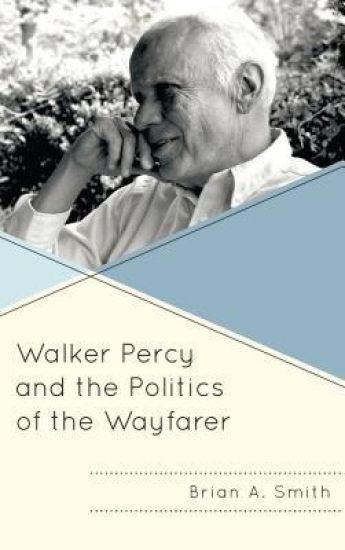
Walker Percy and the Politics of the Wayfarer
Walker Percy is one of America’s great novelists, and he ought to be known as a political thinker as well. In Walker Percy and the Politics of the Wayfarer, Brian A. Smith makes the case that we should understand Percy’s novels and essays together as a guide to living in a complex world. Percy cultivated a philosophical and literary approach that revealed the fault lines in the modern mind. He portrayed man as a wayfarer: peristantly unsatisfied and wandering in search of a perfectly complete solution to life’s dilemmas. His writing captures the restlessness of the human heart and allows us to comprehend our temptation to escape our sense of alienation and longing. Drawing ideas from philosophy, psychology, linguistics, and literature, Percy’s multidimensional account of American political life shows the ways that today’s approaches to life often fall short and leave us more unsatisfied with ourselves and others than ever. Percy hoped we would evade the temptations to escape the life of the wayfarer and accept our misplaced longings, alienation, depression, and anxiety as part of the human condition. Failing to do this might lead us to accept ever more extreme political and social ideas as the basis for life. The promise of embracing Percy’s political teaching is that we might then be able to accept ourselves as we really are in order to join with others in authentic community.
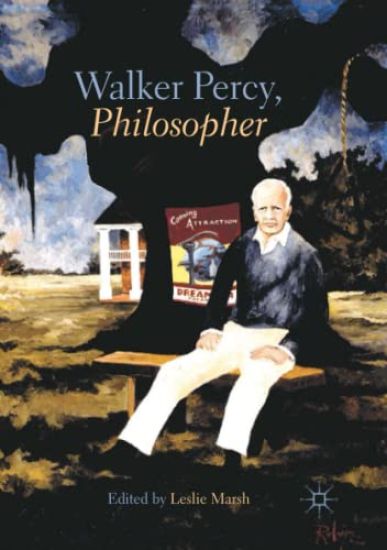
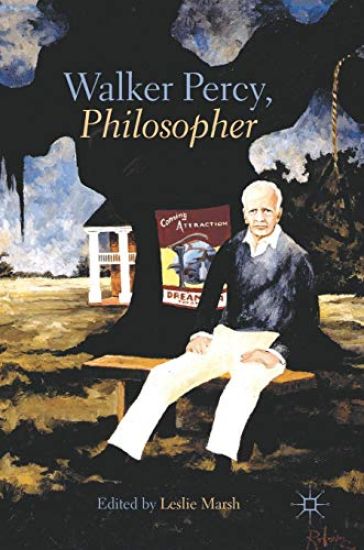
Walker Percy, Philosopher

Walker Percy, Philosopher

Springer Nature Switzerland AG
2018
nidottu
Though Walker Percy is best known as a novelist, he was first and foremost a philosopher. This collection offers a sustained examination of key aspects to his more technical philosophy (primarily semiotics and the philosophy of language) as well as some of his lesser known philosophical interests, including the philosophy of place and dislocation. Contributors expound upon Percy’s multifaceted philosophy, an invitation to literature and theology scholars as well as to philosophers who may not be familiar with the philosophical underpinnings of his work.
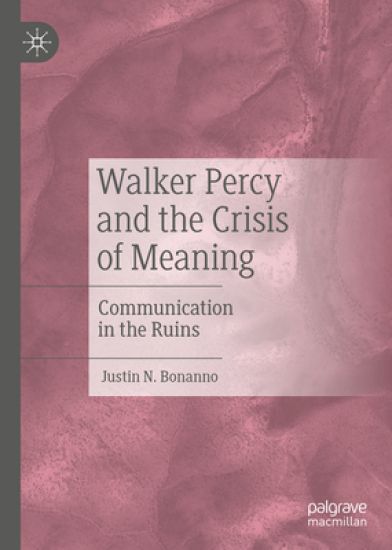
Walker Percy and the Crisis of Meaning

Walker Percy and the Crisis of Meaning

Justin N. Bonanno

Springer International Publishing AG
2023
sidottu
In this book, Justin N. Bonanno builds off of the recent philosophical work on Walker Percy’s writings. While it is valuable to appreciate Percy as a novelist, Bonanno approaches Percy from the perspective of Continental philosophy and the rhetorical tradition. Unpacking the works of several key authors that influenced Percy (e.g. Sartre and Heidegger), Bonanno offers a fresh philosophical account of Percy's ideas concerning the relationship between symbols and existence. In particular, he focuses on how Percy’s ideas emerge from the thought of Ernst Cassirer, Susanne Langer, Jacques Maritain, Jean-Paul Sartre, Gabriel Marcel, Martin Heidegger, Viktor Shklovsky, Søren Kierkegaard, and St. Thomas Aquinas.
Walker Percy, Philosopher

Walker Percy, Philosopher

Springer International Publishing AG
2018
sidottu
Though Walker Percy is best known as a novelist, he was first and foremost a philosopher. This collection offers a sustained examination of key aspects to his more technical philosophy (primarily semiotics and the philosophy of language) as well as some of his lesser known philosophical interests, including the philosophy of place and dislocation. Contributors expound upon Percy’s multifaceted philosophy, an invitation to literature and theology scholars as well as to philosophers who may not be familiar with the philosophical underpinnings of his work.
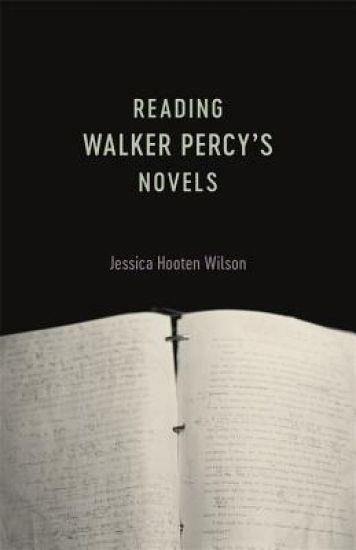
Reading Walker Percy's Novels

Reading Walker Percy's Novels

Jessica Hooten Wilson

Louisiana State University Press
2018
nidottu
Walker Percy (1916- 1990) considered novels the strongest tool with which to popularize great ideas among a broad audience, and, more than half a century after they first appeared in print, his works of fiction continue to fascinate contemporary readers. Despite their lasting appeal, however, Percy's engaging narratives also contain intellectual elements that demand further explication. Philosophical themes, including existentialism, language acquisition theory, and modern Catholic theology, provide a deeper layer of meaning in Percy's writings.Jessica Hooten Wilson's Reading Walker Percy's Novels serves as a companion guide for readers who enjoy Percy's novels but may be less familiar with the works of Sartre, Camus, Kierkegaard, and Dante. In addition to clarifying Percy's philosophies, Wilson highlights allusions to other writers within his narratives, addresses historical and political contexts, and provides insight into the creation and reception of The Moviegoer, The Last Gentleman, Love in the Ruins, Lancelot, The Second Coming, and The Thanatos Syndrome. An introduction covers aspects of Percy's biography that influenced his writing, including his deep southern roots, faith, and search for meaning in life. An appendix offers an explanation of Percy's satirical parody Lost in the Cosmos: The Last Self-Help Book.Written in an accessible and conversational style, this primer will appeal to everyone who appreciates the nuances of Walker Percy's fiction.
Eudora Welty and Walker Percy

Eudora Welty and Walker Percy

Marion Montgomery

McFarland Co Inc
2003
pokkari
Eudora Welty and Walker Percy were friends but very different writers, even though both were from the Deep South and intensely interested in the relation of place to their fiction. This work explores in each the concept of home and the importance of home to the homo viator ("man on his way"), and anti-idealism and anti-romanticism. The differences between Welty and Percy and in their fiction were revealed in the habits of their lives. Welty spent her life in Jackson, Mississippi, and was very much a member of the community. Percy was a wanderer who finally settled in Covington, Louisiana, because it was, as he called it, a "noplace." The author also asserts that Percy somewhat envied Welty and her stability in Jackson, and that for him, place was such a nagging concern that it became a personal problem to him as homo viator.
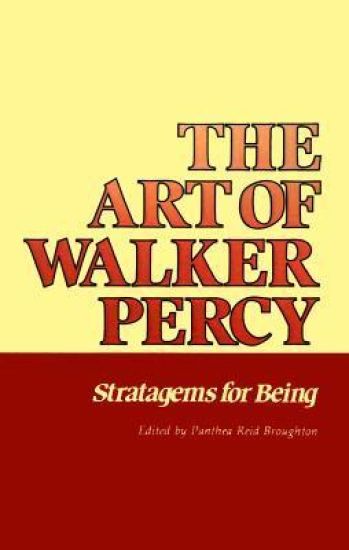
The Art of Walker Percy

The Art of Walker Percy

Louisiana State University Press
1999
nidottu
The writings of Walker Percy, as Panthea Broughton notes in her introduction, are at once both accessible and inaccessible. Because they tempt readers to identify with characters and recognise ideas, they have gained a large and enthusiastic following. But because they are subtle and complicated, they defy attempts to reduce them to transparencies. Indeed, Percy's fiction and nonfiction have a curious, baffling quality that eludes all but the most scrupulously thoughtful and sensitive readers. Through his close alignment with European novelists and philosophers, this native of Alabama has given to American fiction a classic tone that is lacking in the work of such twentieth-century writers as Hemingway and Fitzgerald.In The Art of Walker Percy Broughton has brought together essays from fifteen scholars. Writing from a conviction of the centrality and worth of Walker Percy's work, as well as from the idea that fresh criticism is of value not only to readers but to living authors as well, the essayists present diverse approaches to understanding his art.Cleanth Brooks, in his essay, compares Percy with Eric Voegelin and notes the similarity of their respective approaches to the moral problems of modern man. Martin Luschei, in an examination of the technique of The Moviegoer, shows how Percy presents his fictional world through the use of filmic art. William Poteat's critique of The Message in the Bottle deals with Percy's original contribution to the philosophy of language. Ted Spivey offers a structuralist analysis of Percy's work and suggests that in Lancelot Percy's quest takes a new direction.Still other contributors approach Percy through more traditional rubrics, such as the South, Kierkegaard's stages, dualism, and theology, in new and revelatory ways. Written specifically for this new collection, their essays present the reader with a sense of how many appropriate ""stratagems"" there are for seeing the meaning in Percy. As they bring his work into focus, therefore, they assist Walker Percy in his avowed strategy of helping us see the world.
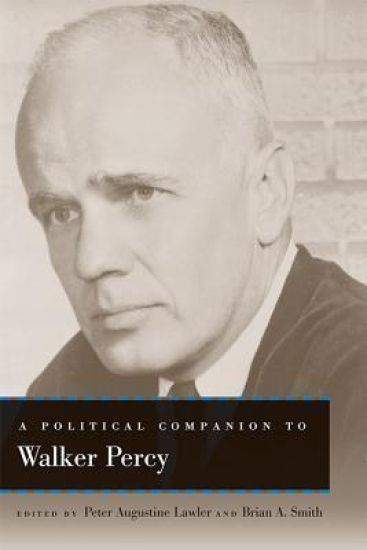
A Political Companion to Walker Percy

A Political Companion to Walker Percy

The University Press of Kentucky
2014
nidottu
In 1962, Walker Percy (1916--1990) made a dramatic entrance onto the American literary scene when he won the National Book Award for fiction with his first novel, The Moviegoer. A physician, philosopher, and devout Catholic, Percy dedicated his life to understanding the mixed and somewhat contradictory foundations of American life as a situation faced by the wandering and won-dering human soul. His controversial works combined existential questioning, scientific investigation, the insight of the southern stoic, and authentic religious faith to produce a singular view of humanity's place in the cosmos that ranks among the best American political thinking.An authoritative guide to the political thought of this celebrated yet complex American author, A Political Companion to Walker Percy includes seminal essays by Ralph C. Wood, Richard Reinsch II, and James V. Schall, S.J., as well as new analyses of Percy's view of Thomistic realism and his reaction to the American pursuit of happiness. Editors Peter Augustine Lawler and Brian A. Smith have assembled scholars of diverse perspectives who provide a necessary lens for interpreting Percy's works. This comprehensive introduction to Percy's "American Thomism" is an indispensable resource for students of American literature, culture, and politics.