Kirjojen hintavertailu. Mukana 11 342 296 kirjaa ja 12 kauppaa.

Kirjahaku

Etsi kirjoja tekijän nimen, kirjan nimen tai ISBN:n perusteella.

1000 tulosta hakusanalla Walter Lippmann

Walter Lippmann

Walter Lippmann

Mark Thomas Edwards

Oxford University Press
2023
sidottu
Walter Lippmann was arguably the most recognized and respected political journalist of the twentieth century. His "Today and Tomorrow" columns attracted a global readership of well over ten million. Lippmann was the author of numerous books, including the best-selling A Preface to Morals (1929) and U.S. Foreign Policy (1943). His Public Opinion (1922) remains a classic text within American political philosophy and media studies. Lippmann coined or popularized several keywords of the twentieth century, including "stereotype," the "Cold War," and the "Great Society." Sought out by U.S. Presidents and by America's allies and rivals around the world, Lippmann remained one of liberalism's most faithful proponents and harshest critics. Yet few people then or since encountered the "real" Walter Lippmann. That was because he kept crucial parts of himself hiding in plain sight. His extensive commentary on politics and diplomacy was bounded by his sense that America had to adjust to the loss of a common faith and morality in a "post-Christian" era. Over the course of his life, Lippmann traded in his fame as a happy secularist for the stardom of a grumpy Western Christian intellectual. Yet he never committed himself to any religious system, especially his own Jewish heritage. Walter Lippmann: American Skeptic, American Pastor considers the role of religions in Lippmann's life and thought, prioritizing his affirmation and rejection of Christian nationalisms of the left and right. It also yields fresh insights into the philosophical origins of modern American liberalism, including liberalism's blind spots in the areas of sex, race, and class. But most importantly, this biography highlights the constructive power of doubt. For Lippmann, the good life in the good society was lived in irreconcilable tension: the struggle to be free from yet loyal to a way of life; to recognize the dangers yet also necessity of a civil religion; and to strive for a just and enduring world order that can never be. In the end, Lippmann manufactured himself as the prophet of limitation for an extravagant American Century.
Walter Lippmann

Walter Lippmann

Craufurd D. Goodwin

Harvard University Press
2014
sidottu
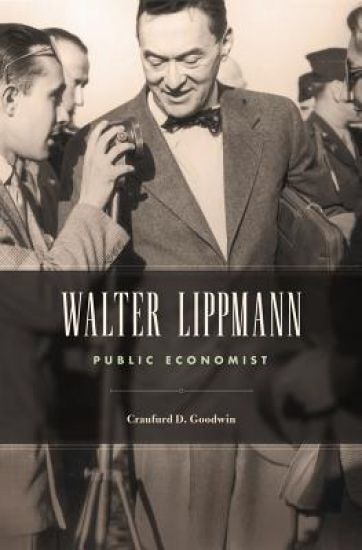
Walter Lippmann was the most distinguished American journalist and public philosopher of the twentieth century. But he was also something more: a public economist who helped millions of ordinary citizens make sense of the most devastating economic depression in history. Craufurd Goodwin offers a new perspective from which to view this celebrated but only partly understood icon of American letters.From 1931 to 1946 Lippmann pursued a far-ranging correspondence with leading economic thinkers: John Maynard Keynes, Lionel Robbins, Friedrich Hayek, Henry Simons, Adolf Berle, Frank Taussig, and others. Sifting through their divergent views, Lippmann formed his own ideas about economic policy during the Great Depression and shared them with a vast readership in his syndicated column, Today and Tomorrow. Unemployment, monetary and fiscal policy, and the merits and drawbacks of free markets were just a few of the issues he helped explain to the public, at a time when professional economists who were also skilled at translating abstract concepts for a lay audience had yet to come on the scene.After World War II Lippmann focused on foreign affairs but revisited economic policy when he saw threats to liberal democracy. In addition to pointing out the significance of the Marshall Plan and the World Bank, he addressed the emerging challenge of inflation and what he called “the riddle of the Sphinx”: whether price stability and full employment could be achieved in an economy with strong unions.
Walter Lippmann

Walter Lippmann

Tom Arnold-Forster

PRINCETON UNIVERSITY PRESS
2025
sidottu
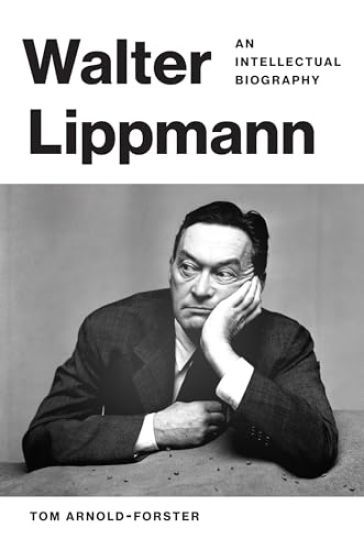
The life and ideas of one of the twentieth century’s leading political thinkersWalter Lippmann (1889–1974) was among the most influential and wide-ranging political writers in modern America. As both a journalist and political theorist, he shaped ideas about liberalism and democracy, the nature of public opinion, US power and empire, and the roles of journalists, experts, and citizens. Tom Arnold-Forster provides a bold historical reassessment of Lippmann’s intellectual life, offering fresh perspectives on a career at the intersection of daily news and democratic theory.This incisive book shows how Lippmann helped define the public debates of American liberalism from the Progressive Era to the Cold War. By exploring his ideas in their historical context, Arnold-Forster challenges the claim that Lippmann was primarily a theorist of expertise and technocracy. Instead, Lippmann emerges as a strikingly political thinker, public-facing and multifarious, who focused on what politics meant and how it worked in modern democracies. Covering subjects from press freedom to urban reform to economic and foreign policy, while tracing the evolution from his early liberal socialism to later conservative liberalism, this book explores Lippmann’s thought as reflecting the protean character of liberal politics and the crises and paradoxes of democracy.Walter Lippmann: An Intellectual Biography is a richly historical account of a complex political thinker. Lippmann’s ideas played a formative role in the twentieth century and resonate powerfully with our fraught present.
Walter Lippmann

Walter Lippmann

Sue Curry Jansen

Peter Lang Publishing Inc
2012
nidottu
Walter Lippmann has been widely misrepresented in media and communication scholarship. Classified as a utilitarian and characterized as an antidemocratic adversary of philosopher John Dewey in a legendary debate in the 1920s about the role of the public in modern democracies, Lippmann has been portrayed as the bête noir of the post-1980s revival of pragmatism and humanistic studies within the field. Consequently, his formative contributions to the field have not only been under-valued, but more importantly, the richness and continuing relevance of his generative work to the challenges of the twenty-first century are largely under-appreciated. There are, however, some recent signs of the beginnings of a Lippmann renaissance. Focusing primarily on his early career when Lippmann directly addressed the challenges posed to democracy by the emergence of new communication technologies, this book is part of that renaissance. It presents a radical reconsideration of Lippmann’s thought and legacy and offers a broad-based introduction to his theories of mass communication. Arguing that he was a political ally rather than an adversary of Dewey as well as a humanist and a democrat, influenced by William James’ pragmatism and George Santayana’s critical realism, Jansen contends that Lippmann developed a fully formed social constructivism decades before Peter L. Berger and Thomas Luckman’s seminal 1966 treatise, The Social Construction of Reality. She boldly concludes that Lippmann deserves to be recognized as a founder of the field of media and communication research.
Walter Lippmann

Walter Lippmann

Sue Curry Jansen

Peter Lang Publishing Inc
2012
sidottu
Walter Lippmann has been widely misrepresented in media and communication scholarship. Classified as a utilitarian and characterized as an antidemocratic adversary of philosopher John Dewey in a legendary debate in the 1920s about the role of the public in modern democracies, Lippmann has been portrayed as the bête noir of the post-1980s revival of pragmatism and humanistic studies within the field. Consequently, his formative contributions to the field have not only been under-valued, but more importantly, the richness and continuing relevance of his generative work to the challenges of the twenty-first century are largely under-appreciated. There are, however, some recent signs of the beginnings of a Lippmann renaissance. Focusing primarily on his early career when Lippmann directly addressed the challenges posed to democracy by the emergence of new communication technologies, this book is part of that renaissance. It presents a radical reconsideration of Lippmann’s thought and legacy and offers a broad-based introduction to his theories of mass communication. Arguing that he was a political ally rather than an adversary of Dewey as well as a humanist and a democrat, influenced by William James’ pragmatism and George Santayana’s critical realism, Jansen contends that Lippmann developed a fully formed social constructivism decades before Peter L. Berger and Thomas Luckman’s seminal 1966 treatise, The Social Construction of Reality. She boldly concludes that Lippmann deserves to be recognized as a founder of the field of media and communication research.
The Walter Lippmann Reader

The Walter Lippmann Reader

Walter Lippmann

Wilder Publications
2021
sidottu
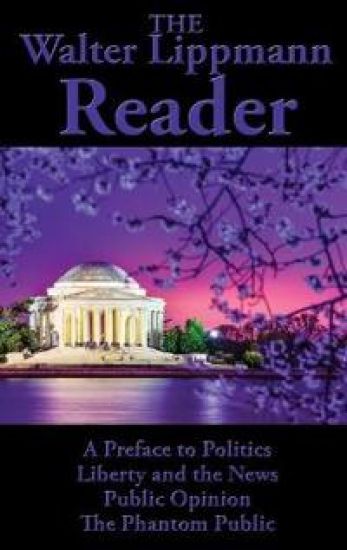
Collected in this massive 500+ page omnibus editions are Walter Lippman's four most important books. These four books are seminal texts in the fields of media studies, political science, and social psychology. The father of modern journalism, Walter Lippmann was a two-time Pulitzer Prize-winner and visionary. A Preface to Politics is most incisive comment on politics to-day is indifference. When men and women begin to feel that elections and legislatures do not matter very much, that politics is a rather distant and unimportant exercise, the reformer might as well put to himself a few searching doubts. Indifference is a criticism that cuts beneath oppositions and wranglings by calling the political method itself into question. In Liberty and the News Walter Lippmann offers us a stern warning about the importance of reliable news to the survival of a healthy democracy. He railed against bad journalism and drove home the point that the general public must be able to ascertain the truth or democracy is doomed. Public Opinion exposes how media can shape public perception and how that perception changes society. It is a critical assessment of functional democratic government, especially of the irrational and often self-serving social perceptions that influence individual behavior and prevent optimal societal cohesion. The detailed descriptions of the cognitive limitations people face in comprehending their sociopolitical and cultural environments, leading them to apply an evolving catalogue of general stereotypes to a complex reality, rendered Public Opinion The Phantom Public was Lippman's most towering achievement influencing political thought for decades to come. In it Lippman posits that the public exists merely as an illusion, myth, and inevitably a phantom; that the common man cannot be expected to know enough about events entirely beyond their control to cast an informed and meaningful vote.
The Walter Lippmann Reader

The Walter Lippmann Reader

Walter Lippmann

Wilder Publications
2021
pokkari
Collected in this massive 500+ page omnibus editions are Walter Lippman's four most important books. These four books are seminal texts in the fields of media studies, political science, and social psychology. The father of modern journalism, Walter Lippmann was a two-time Pulitzer Prize-winner and visionary. A Preface to Politics is most incisive comment on politics to-day is indifference. When men and women begin to feel that elections and legislatures do not matter very much, that politics is a rather distant and unimportant exercise, the reformer might as well put to himself a few searching doubts. Indifference is a criticism that cuts beneath oppositions and wranglings by calling the political method itself into question. In Liberty and the News Walter Lippmann offers us a stern warning about the importance of reliable news to the survival of a healthy democracy. He railed against bad journalism and drove home the point that the general public must be able to ascertain the truth or democracy is doomed. Public Opinion exposes how media can shape public perception and how that perception changes society. It is a critical assessment of functional democratic government, especially of the irrational and often self-serving social perceptions that influence individual behavior and prevent optimal societal cohesion. The detailed descriptions of the cognitive limitations people face in comprehending their sociopolitical and cultural environments, leading them to apply an evolving catalogue of general stereotypes to a complex reality, rendered Public Opinion The Phantom Public was Lippman's most towering achievement influencing political thought for decades to come. In it Lippman posits that the public exists merely as an illusion, myth, and inevitably a phantom; that the common man cannot be expected to know enough about events entirely beyond their control to cast an informed and meaningful vote.
Walter Lippmann and the American Century

Walter Lippmann and the American Century

Ronald Steel

Transaction Publishers
1999
nidottu
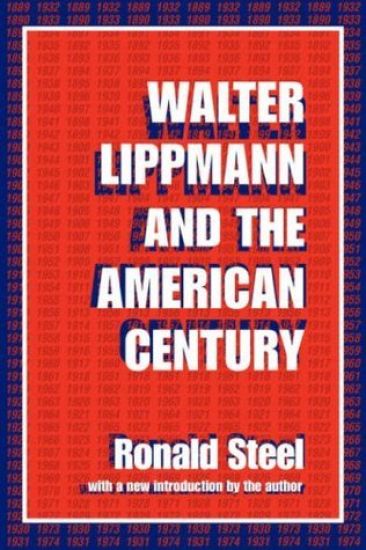
Walter Lippmann began his career as a brilliant young man at Harvard—studying under George Santayana, taking tea with William James, a radical outsider arguing socialism with anyone who would listen—and he ended it in his eighties, writing passionately about the agony of rioting in the streets, war in Asia, and the collapse of a presidency. In between he lived through two world wars, and a depression that shook the foundations of American capitalism.Walter Lippmann (1889-1974) has been hailed as the greatest journalist of his age. For more than sixty years he exerted unprecedented influence on American public opinion through his writing, especially his famous newspaper column "Today and Tomorrow." Beginning with The New Republic in the halcyon days prior to Woodrow Wilson and the First World War, millions of Americans gradually came to rely on Lippmann to comprehend the vital issues of the day.In this absorbing biography, Ronald Steel meticulously documents the philosophers and politics, the friendships and quarrels, the trials and triumphs of this man who for six decades stood at the center of American political life. Lippmann's experience spanned a period when the American empire was born, matured, and began to wane, a time some have called "the American Century." No one better captured its possibilities and wrote about them so wisely and so well, no one was more the mind, the voice, and the conscience of that era than Walter Lippmann: journalist, moralist, public philosopher.
Walter Lippmann's Philosophy of International Politics

Walter Lippmann's Philosophy of International Politics

Anwar Hussain Syed

University of Pennsylvania Press
1964
sidottu
A journalist and a political philosopher of international repute, Walter Lippman was the author of more than twenty books, scores of essays, and countless newspaper editorials, articles, and columns. There can be no doubt that during the last half century he exercised considerable influence on American public and official opinion regarding international as well as domestic politics. His syndicated column "Today and Tomorrow" regularly appeared in the New York Herald Tribune from 1931 to 1967. It was carried by a large number of other newspapers in the United States and abroad. The present work attempts to discover and state Lippmann's philosophy of international politics as it developed over the years 1913 to 1963. The book brings out the evolution of his thought on such basic questions as human nature, nation-states and nationalism, the national interest, alliances, the balance of power, idealism and realism, regionalism, the universal society, and the enforcement of international peace. Lippmann's general theory of government is examined. Also presented are his views on topical questions such as the Atlantic Community, NATO, the current French rivalry with the "Anglo-Saxons," the place of Germany in Europe, the containment of Castro's Cuba, the future of Formosa, and America's stake in the battle for the minds of men in Asia and Africa. Necessarily, the author refers to major events and developments in international politics during the past half century. On important problems and issues the views of Lippmann's contemporaries, as well as those of distinguished statesmen and philosophers of the past, have been placed alongside his own in order to indicate his connection with the main currents of thought on the subjects under discussion. Thus, while the book concerns Lippmann primarily, it contains useful references to other writers, debates, and schools of thought. The importance of Lippmann's penetrating thought on problems of world politics grew with the destructive potential of national power confrontations. This careful study is therefore a timely one, and should be of interest to professional and also lay students of international politics.
Walter Lippmann and the American Century
Walter Lippmann began his career as a brilliant young man at Harvardstudying under George Santayana, taking tea with William James, a radical outsider arguing socialism with anyone who would listen and he ended it in his eighties, writing passionately about the agony of rioting in the streets, war in Asia, and the collapse of a presidency. In between he lived through two world wars, and a depression that shook the foundations of American capitalism.Walter Lippmann (1889-1974) has been hailed as the greatest journalist of his age. For more than sixty years he exerted unprecedented influence on American public opinion through his writing, especially his famous newspaper column "Today and Tomorrow." Beginning with The New Republic in the halcyon days prior to Woodrow Wilson and the First World War, millions of Americans gradually came to rely on Lippmann to comprehend the vital issues of the day.In this absorbing biography, Ronald Steel meticulously documents the philosophers and politics, the friendships and quarrels, the trials and triumphs of this man who for six decades stood at the center of American political life. Lippmann's experience spanned a period when the American empire was born, matured, and began to wane, a time some have called "the American Century." No one better captured its possibilities and wrote about them so wisely and so well, no one was more the mind, the voice, and the conscience of that era than Walter Lippmann: journalist, moralist, public philosopher.
Walter Lippmann's Philosophy of International Politics

Walter Lippmann's Philosophy of International Politics

Anwar Hussain Syed

Literary Licensing, LLC
2012
sidottu
Walter Lippmann's Philosophy of International Politics by Anwar Hussain Syed is a comprehensive analysis of the political philosophy of Walter Lippmann, a prominent American journalist and political commentator. The book explores Lippmann's views on international politics, including his ideas on the role of the media in shaping public opinion, the importance of diplomacy and international cooperation, and the challenges of maintaining global peace and stability.Syed provides a detailed examination of Lippmann's key works, including Public Opinion, The Phantom Public, and The Cold War: A Study in US Foreign Policy. He also explores Lippmann's evolving views on international politics, from his early support for American interventionism to his later advocacy for a more restrained foreign policy.Throughout the book, Syed offers critical insights into Lippmann's philosophy, highlighting both its strengths and weaknesses. He also draws connections between Lippmann's ideas and contemporary debates in international relations, making the book a valuable resource for scholars and students alike.Overall, Walter Lippmann's Philosophy of International Politics provides a nuanced and insightful analysis of one of the most important political thinkers of the 20th century, shedding new light on his contributions to our understanding of global politics and diplomacy.This scarce antiquarian book is a facsimile reprint of the old original and may contain some imperfections such as library marks and notations. Because we believe this work is culturally important, we have made it available as part of our commitment for protecting, preserving, and promoting the world's literature in affordable, high quality, modern editions, that are true to their original work.
The Walter Lippmann Colloquium

The Walter Lippmann Colloquium

Jurgen Reinhoudt; Serge Audier

Springer International Publishing AG
2017
sidottu
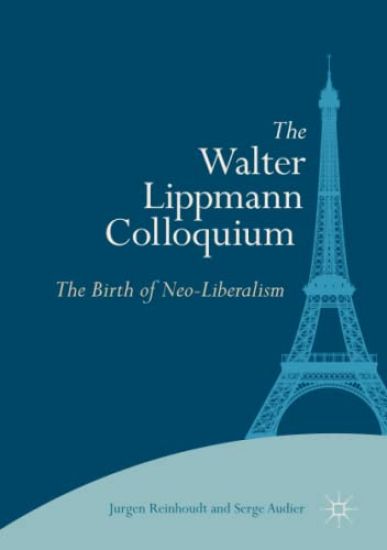
This book is an introduction to and translation of the 1938 Walter Lippmann Colloquium held in Paris, which became known as the intellectual birthplace of “neo-liberalism.” Although the Lippmann Colloquium has been the subject of significant recent interest, this book makes this crucial primary source available to a wide, English-speaking audience for the first time. The Colloquium features important—often passionate—debates involving well-known intellectual figures such as Walter Lippmann, Louis Rougier, Friedrich Hayek, Ludwig von Mises, Michael Polanyi, Jacques Rueff, Alexander Rüstow and Wilhelm Röpke. Many of the topics addressed at the Colloquium, such as the proper methods of economic intervention, the relationship between the market economy and democracy, and the relationship between economic liberalism and political liberalism are issues that still vie for our attention in the aftermath of the Great Recession.
The Walter Lippmann Colloquium

The Walter Lippmann Colloquium

Jurgen Reinhoudt; Serge Audier

Springer International Publishing AG
2018
nidottu
This book is an introduction to and translation of the 1938 Walter Lippmann Colloquium held in Paris, which became known as the intellectual birthplace of “neo-liberalism.” Although the Lippmann Colloquium has been the subject of significant recent interest, this book makes this crucial primary source available to a wide, English-speaking audience for the first time. The Colloquium features important—often passionate—debates involving well-known intellectual figures such as Walter Lippmann, Louis Rougier, Friedrich Hayek, Ludwig von Mises, Michael Polanyi, Jacques Rueff, Alexander Rüstow and Wilhelm Röpke. Many of the topics addressed at the Colloquium, such as the proper methods of economic intervention, the relationship between the market economy and democracy, and the relationship between economic liberalism and political liberalism are issues that still vie for our attention in the aftermath of the Great Recession.
Five Public Philosophies of Walter Lippmann

Five Public Philosophies of Walter Lippmann

Benjamin F. Wright

University of Texas Press
1973
nidottu
Essayist, editor, columnist, author of many books, and winner of a special Pulitzer Prize citation in 1958 for his powers of news analysis, Walter Lippmann both appraised and influenced twentieth-century American politics. No other author of the century dealt with the persistent problems of politics from so many approaches, was so widely read, or varied so widely in his conclusions. Benjamin F. Wright’s study is the first book devoted to an exposition and analysis of Lippmann’s nine “books of political philosophy,” as James Reston called them. These books provide a fascinating study of changes in the political and economic ideas of the most important journalist of his time. Lippmann’s books published in 1913 and 1914 reflect the optimism of the Progressive Era, of faith in science and in the ability of people to choose their goals and attain them. In 1922 and 1925, while editor of the New York World, Lippmann wrote searching, often pessimistic analyses of what he believed to be the prevailing assumptions regarding the nature and role of public opinion. Although in the Coolidge era he relegated government to a minor role as mediator, he became an enthusiastic defender of the achievements of the early New Deal. Two years later in a longer look, he found the same New Deal following the path toward totalitarianism. Keynes was discarded and his place taken by the economics of Adam Smith, bolstered by the common law of Coke and the Constitution of the founders. Finally, in 1955, in the extremely popular and very engaging Public Philosophy, there is a lament for the “decline of the West” and a plea to return to the age of civility and natural law. In a final analytical chapter, Wright presents a critique of Lippmann’s historical understanding and the modern applications of the tradition of natural law. He also assesses Lippmann’s inability to translate the “public philosophy” into programs or institutional changes and the failure to account for the expansion of governmental functions together with the continued strength of constitutional democracy in the West.