

Kirjahaku
Etsi kirjoja tekijän nimen, kirjan nimen tai ISBN:n perusteella.
1000 tulosta hakusanalla William Gilmore Simms
War Poetry of the South. Edited by William Gilmore Simms.
William Gilmore Simms
University of Michigan Library
2006
pokkari
William Gilmore Simms
William Peterfield Trent
Createspace Independent Publishing Platform
2016
nidottu



William Gilmore Simms and the American Frontier
University of Georgia Press
2016
pokkari
William Gilmore Simms (1807-1870), the antebellum South's foremost author and cultural critic, was the first advocate of regionalism in the creation of national literature. Now being rediscovered by a new generation of scholars, Simms has come to be acknowledged as the ancestral father of modern southern literature. This collection of essays emphasizes his multifaceted portrayal of America's westward migration and examines his depictions of the frontier from traditional and theoretical perspectives.As a whole, these essays represent a tribute to Simms's achievement and versatility. This volume will be a vital tool for all readers and scholars of nineteenth-century American literature, and for anyone interested in the development of the American frontier and its depictions in literature.
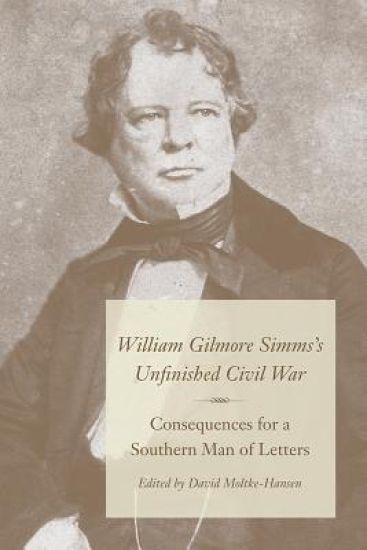
William Gilmore Simms's Unfinished Civil War
University of South Carolina Press
2012
sidottu
William Gilmore Simms’s Unfinished Civil War measures the effects of the Civil War and its aftermath on one of the Old South’s foremost intellectuals. Simms’s mid-nineteenth century poems, novels, and essays and the personal and societal trauma and destruction Simms experienced are all portrayed here.Before the war Simms was the most articulate advocate of Southern nationalism. During the war he became a prophetic critic of Confederate policy and poet of cultural ethnogenesis. The defeat of the Confederacy in 1865 shattered Simms’s understanding of the working of history and called into question his sense of a moral providence. This collection of essays by historians and literary scholars first explores William Gilmore Simms’s antebellum treatment of the role of warfare in America’s past and the South’s future. The contributors then consider the impact of the secession crisis, the Civil War, and the Confederate defeat on Simms’s and other white and black Southerners’ perceptions of their much-changed world. Next Simms’s life, published writings, and thoughts during the war and its aftermath are examined. Finally Simms’s late poetry and fictions, especially explicit and implicit commentaries on the postwar South, are analysed. His last oration, The Sense of the Beautiful, published shortly before his death in 1870, is the subject of several essays. William Gilmore Simms’s Unfinished Civil War reconstructs from both published writings and private letters the conscious and unconscious effects of the Civil War upon the writer and Southern patriot. Drawing on the fields of history, literature, and even archaeology, this interdisciplinary volume demonstrates that the anticipation, course, and consequences of the war were central in shaping Simms’s writings from the 1840s to 1870.
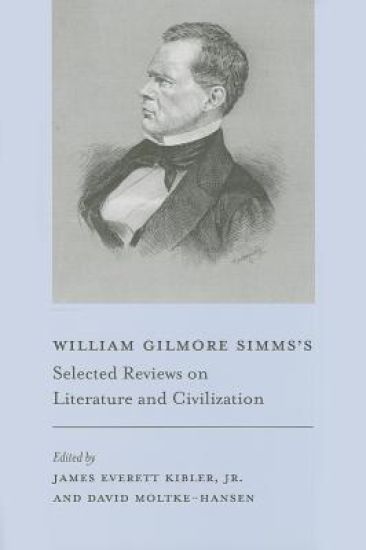
William Gilmore Simms's Selected Reviews on Literature and Civilization
University of South Carolina Press
2014
sidottu
During William Gilmore Simms's life (1806-1870), book reviews and critical essays became vital parts of American literary culture and intellectual discourse. Simms was an assiduous reviewer and essayist, proving by example the importance of those genres. William Gilmore Simms's Selected Reviews on Literature and Civilization publishes for the first time in book form sixty-two examples of the writer's hundreds of newspaper and periodical reviews and book notes as well as four important critical essays. Together, the reviews and essays reveal the regional, national, and international dimensions of Simms's intellectual interests.To frame the two distinct parts of Selected Reviews, James Everett Kibler, Jr., and David Moltke-Hansen have written a general introduction that considers the development of book reviewing and the authorship of essays in cultural and historical contexts. In part one, Kibler offers an introduction that examines Simms's reviewing habits and the aesthetic and critical values that informed the author's reviews. Kibler then publishes selected texts of reviews and provides historical and cultural backgrounds for each selection. Simms was an early proponent of the critical theories of Romantics such as William Wordsworth, Samuel Taylor Coleridge, and Edgar Allan Poe. Widely read in European history and literature, he reviewed works published in French, German, and classics in original Greek and Latin and in translation. Simms also was an early, ardent advocate of works of local color and of southern ""backwoods"" humorists of his day. Simms published notices of seven of Herman Melville's novels, the writings of Ralph Waldo Emerson, and favorably reviewed Henry David Thoreau's Walden; or, Life in the Woods.Simms published numerous review essays of twenty thousand or more words in literary journals and also republished two collections in book form. These volumes treated such subjects as Americanism in literature and the American Revolution in South Carolina. Yet, as part two of Selected Reviews demonstrates, Simms ranged much more widely in the intellectual milieu. Such cultural and political topics as the 1848 revolution in France, the history of the literary essay, the roles of women in the American Revolution, and the activities of the southern convention in Nashville in 1850 captured Simms's attention. Moltke-Hansen's introduction to part two examines Simms's roles in, and responses to, the Romantic critical revolution and the other revolutions then roiling Europe and America.
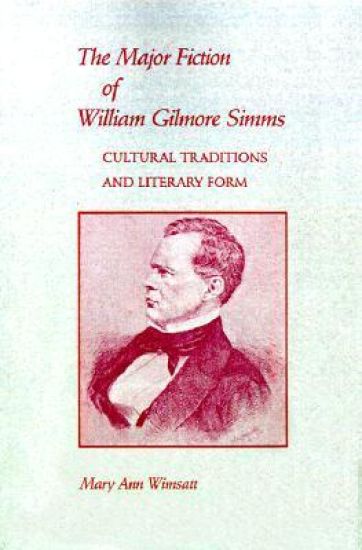
Major Fiction of William Gilmore Simms
Mary Ann Wimsatt
Louisiana State University Press
1999
nidottu
William Gilmore Simms (1806-1870) was the preeminent southern man of letters in the antebellum period, a prolific, talented writer in many genres and an eloquent intellectual spokesman of r his region. During his long career, he wrote plays, poetry, literary criticism, biography and history; but he is best remembered for his numerous novels and tales. Many Ann Wimsatt provides the first significant full-length evaluation of Simms's achievement in his long fiction, selected poetry, essays, and short fiction.Wimsatt's chief emphasis is on the thirty-odd novels that Simms published from the mid-1830s until after the Civil War. In bringing his impressive body of work to life, she makes use of biographical and historical information and also of twentieth-century literary theories of the romance, Simm's principal genre. Through analyses of such seminal works as Guy Rivers, The Yemassee, The Cassique of Kiawah, and Woodcraft, Wimsatt illuminates Simm's contributions to the romance tradition, contributions misunderstood by previous critics, and suggests how to view his novels within the light of recent literary criticism. She also demonstrates how Simms used the historical conditions of southern culture as well as events of his own life to flesh out literary patterns, and she analyses his use of low-country, frontier and mountain settings.Although critics praised Simms early in his career as ""the first American novelist of the day,"" the panic of 1837 and the changes in the book market that it helped foster severely damaged his prospects for wealth and fame. The financial recession, Wimsatt finds, together with shifts in literary taste, contributed to the decline of Simms's reputation. Simms attempted to adjust to the changing climate for fiction by incorporating two modes of nineteenth-century realism, the satiric portrayal of southern manners and southern backwoods humor, into the framework of his long romances; but his accomplishments in these areas have been undervalued or misunderstood by critics since is time.Wimsatt's book is the first to survey Simms's fiction and much of his other writing against the background of his life and literary career and the first to make extensive use of his immense correspondence. It is an important study of a neglected author who once served as the leafing symbol of literary activity in the South. It fills what has heretofore been a serious gap in southern literary studies.
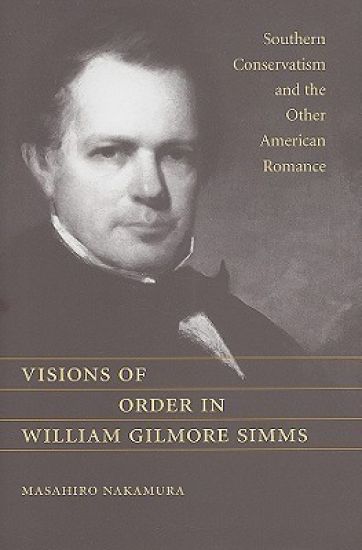
Visions of Order in William Gilmore Simms
Masahiro Nakamura
University of South Carolina Press
2009
sidottu
This is a provocative contrasting of Simms' romances with those of his Northern contemporaries. One of nineteenth-century America's foremost men of letters, William Gilmore Simms (1806-1870) of Charleston, South Carolina, distinguished himself as a historian, poet, and novelist; yet his stalwart allegiance to the ideals of the Confederacy have kept him largely marginalized from the modern literary canon. In this engaging study, Masahiro Nakamura seeks to reinsert Simms into current American literary and cultural studies through a careful consideration of Simms' Southern conservatism as a valuable literary counterpoint to the bourgeois individualist ideology of his Northern contemporaries. For Nakamura, Simms' vision of social order runs contrary to the staunch individualism expressed in traditional American romances by authors such as James Fenimore Cooper and Nathaniel Hawthorne. In his thoughtful approaches to Simms' historical depictions of the making of American history and society, Nakamura finds consistent assertions of social order against the perils of literal and metaphoric wilderness, a conservative vision that he traces to the influence of Simms' Southern genius loci. To understand how this Southern conservatism also manifests itself in Simms' fiction, Nakamura contrasts Simms' historical romances with those of Hawthorne, as representative of the New England romance tradition, to differentiate the ways in which the two writers interpret the dynamic between the individual and society. Nakamura finds that Simms' protagonists struggle to establish their places within their culture while Hawthorne's characters are often at odds with their culture. The resulting comparison enriches our understanding of both writers. To illustrate his point further, Nakamura discusses Simms' ""Martin Faber"" in terms of individualism transformed into dangerous egocentrism. He also examines Simms' conservative views on the progress of American civilization in his Revolutionary War and border romances and explores Simms' attitudes toward conflicts with Native American cultures in his colonial romances. Nakamura concludes that, while effectively employing the tradition of Sir Walter Scott's historical romance, Simms used the genre as a vehicle for advocating the merits of social order as a Southern conservative answer to Northern bourgeois romanticism, which celebrates individualism as key to the possibility of human progress.
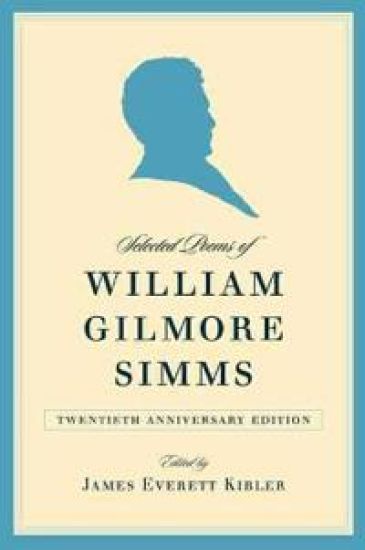
Selected Poems of William Gilmore Simms, 20th Anniversary Edition
University of South Carolina Press
2010
nidottu
This is a revised and expanded edition of poems by the renowned nineteenth-century Charleston writer and historian. This twentieth anniversary edition of ""The Selected Poems of William Gilmore Simms"", edited by James Everett Kibler, makes available once again the distinctive poetry of one of South Carolina's foremost men of letters as introduced and annotated by a distinguished scholar of Simms and his poetry. William Gilmore Simms (1806-1870) has long held the attention of scholars and general readers alike for his numerous volumes of Southern history and literature, but his poetry - which he considered the truest measure of his literary achievement - has remained largely on the periphery of Simms studies. In 1990 Kibler published the first edition of this volume to make widely available nearly two hundred of the most sophisticated examples of Simms's extant poetry - signed and unsigned, published and unpublished. These poems reveal Simms to be deeply concerned with faith, family, nature, tradition, his native Charleston, and a vision of Southern culture that, while conservative, is more broadly defined than formerly recognized. Simms' mastery of poetic forms is evident as he moves effortlessly from ballads and odes to sonnets and epigrams. His spontaneous lyrics seem modern in their vivid conveyance of emotions, a characteristic rarely matched by his contemporaries, and the rich historical imagination at work in other verses further distinguishes him. This revised edition is augmented with fifteen new poems as well as a new introduction by Kibler reflecting on the past two decades of Simms scholarship. The volume is a clarion call for renewed appreciation of a once forgotten poet now on the cusp of reinstatement as a major American voice.

A List Of The Separate Writings Of William Gilmore Simms Of South Carolina, 1806-1870 (1906)
Kessinger Publishing
2008
pokkari
The Life of Nathanael Greene, Major-General in the Army of the Revolution. Ed. by W. Gilmore Simms.
William Gilmore Simms
University of Michigan Library
2006
pokkari
The Life of Captain John Smith. the Founder of Virginia. by W. Gilmore Simms.
William Gilmore Simms
University of Michigan Library
2006
pokkari
Long considered a leading literary figure of the Old South, William Gilmore Simms (1806-1870) wrote letters, novels, short fiction, drama, essays, and poetry in his prolific career. Born in Charleston to an old South Carolina family of modest means and raised by a grandmother with whom his father left him after his mother's death, Simms felt a simultaneous sense of loyalty to and alienation from his native region. He was a major intellectual figure on the East Coast before the Civil War but saw his New York publishers abandon him after secession, of which he was a vocal supporter. Simms's novels and poetry have been published in modern editions, and he has been the subject of numerous biographies and critical studies, but until now there has been no collection covering the broad spectrum of his writings. The Simms Reader presents a selection of his nonnovelistic work - letters, short fiction, essays, historical writings, poetry, and epigrams - chosen and introduced by the preeminent Simms scholar John Caldwell Guilds.
The Tri-Color; Or The Three Days Of Blood In Paris: With Some Other Pieces
William Gilmore Simms
KESSINGER PUBLISHING, LLC
2007
nidottu