
Kirjahaku
Etsi kirjoja tekijän nimen, kirjan nimen tai ISBN:n perusteella.
1000 tulosta hakusanalla William Golding

William Golding was born in 1911 and educated at his local grammar school and Brasenose College, Oxford. He published a volume of poems in 1934 and during the war served in the Royal Navy. Afterwards he returned to being a schoolmaster in Salisbury. Lord of the Flies, his first novel, was an immediate success, and was followed by a series of remarkable novels, including The Inheritors, Pincher Martin and The Spire. He won the Booker Prize for Rites of Passage in 1980, was awarded the Nobel Prize for Literature in 1983, and was knighted in 1988. He died in 1993.
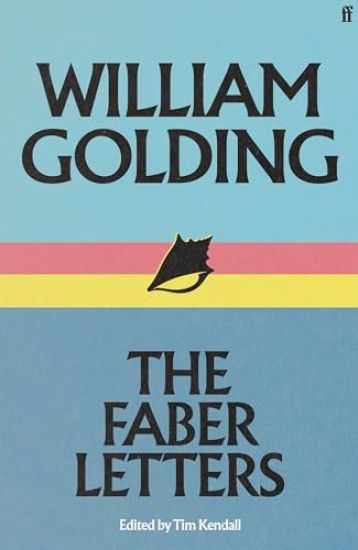
The remarkable literary collaboration between a Nobel Prizewinning novelist and his editor of more than forty years. Three people have been of major importance and influence in my life and you are one of them. There is a way in which I am as a writer at least partly your creation.-- William Golding to Charles Monteith In 1953, William Golding's novel Lord of the Flies was rescued from a 'slush pile' of unsolicited manuscripts by Charles Monteith, a new young editor at the publishing house Faber & Faber. It went on to sell over 25 million copies. Over the next forty years Monteith worked closely with Golding on every one of his novels. These letters tell the story of their remarkable collaboration. They chart Golding's transformation from unknown middle-aged schoolmaster to knighted Nobel Prizewinner, and they tell the story of a deep and mutually rewarding friendship, as 'Dear Monteith' and 'Dear Golding' become 'Dear Charles' and 'Dear Bill'. In this beautifully produced, stitch-bound volume, Tim Kendall draws on both public and private archives to reveal the relationship between one of the greatest novelists of the twentieth century and his publisher, both men who considered themselves, for different reasons, to be outsiders. Their correspondence sheds fascinating light on both the mysteries of the writing process and the vagaries of the literary world. Generous, amusing, acerbic, intimate and often irreverent, these letters encompass gossip, reading recommendations and stories of Greek island adventures as well as detailed discussion of titles, characters and Golding's dreadful spelling.

This new edition of Kevin McCarron's study includes a new chapter on Golding's posthumous book The Double Tongue, and so encompasses the whole of Golding's novels. This is a comprehensive study, questioning Lord of the Flies' status as Golding's most popular and important work and giving prominence to The Inheritors, Pincher Martin, The Spire and The Sea Trilogy. McCarron takes an interdisciplinary approach, placing particular emphasis on the anthropological perspective missing from most critical texts on Golding's writings. He also considers Golding's work from the perspective of a number of critical approaches, including the postcolonial discourse, offering readers an alternative to the standard liberal humanist approach. An in-depth evaluation of Golding's essays and travel journal provides new insight in the work of one of the 20th-century's greatest writers.
Lord of the Flies (Herr der Fliegen) von William Golding.
William Golding
Bange C. GmbH
2014
pokkari

In 1953, William Golding was a provincial schoolteacher writing books on his breaks, lunch hours and holidays. His work had been rejected by every major publisher--until an editor at Faber and Faber pulled his manuscript off the rejection pile. This was to become Lord of the Flies, a book that would sell in the millions and bring Golding worldwide recognition. Golding went on to become one of the most popular and influential British authors to have emerged since World War II. He received the Booker Prize for the novel Rites of Passage in 1980, and the Nobel Prize for Literature in 1983. Stephen King has stated that the Castle Rock in Lord of the Flies continues to inspire him, so much so that he named his entertainment company after it and has placed the Golding novel prominently in his novels Hearts in Atlantis and Cujo. Golding has been called a British Vonnegut--disheveled and darkly humorous, perverse when it would have been easier to be bitter, bitter when it would have been easier to be lazy, sometimes more disturbing than he is palatable and above all fascinating beyond measure. Yet despite the fame and acclaim, the renowned author saw himself as a monster--a reclusive depressive ruled by his fears and a man who battled alcoholism throughout his life. In addition to being a schoolteacher, Golding was a scientist, a sailor and a poet before becoming a bestselling author, and his embitterment and alienation, his family, the women in his past, along with his experiences in the war, inform his work. This is the first book to unpack the life and character of a man whose entire oeuvre dealt with the conflict between light and dark in the human soul, tracing the defects of society back to the defects of human nature itself. Drawing almost entirely on materials that have never before been made public, John Carey sheds new light on Golding. Through his exclusive access to Golding's family, Carey uses hundreds of letters, unpublished works and Golding's intimate journals to draw a revelatory and definitive portrait. An acclaimed critic, Carey enriches crucially our appreciation of the literary work of Golding, bringing us, as the best literary biographies do, back to the books. And with equal parts lyricism and driving emotion, Carey brings to light a life that is extraordinary to the point of transcendent and a writer who trusted the imagination above all things.

William Goldings "Herr der Fliegen": Eine kritische Studie Projekt
Alaa Alnajm
Verlag Unser Wissen
2025
nidottu

Understanding William Golding's Lord of the Flies: GCSE Study Guide for Summer 2015 & 2016 AQA, WJEC and OCR students
Gavin Smithers
Createspace Independent Publishing Platform
2015
nidottu
This guide has also been written specifically to assist GCSE candidates who are taking the OCR, WJEC, Edexcel and AQA exams. If that's you, then I can show you why I think having The Lord of the Flies as one of your set texts is a bonus. Read my analysis and essay writing tips and get ready to truly understand the hidden meaning of this book. It is not simply a tall tale about small boys lost on an island, but a sustained look at how we - mankind - behave given certain circumstances. I can show you how to write clear, well-structured essays that merit a high grade. Studied the Gavin's Guide way, Lord of the Flies will make you think, yet won't leave you overwhelmed. Interested? All you need is a few clear hours and an open, curious mind. Why a Gavin's Guide? It is likely you have browsed online or gone to a bookshop and discovered that there are a fair few study guides on this book already. Many of them are useful reference points for summaries of the plot and the characters. Few, if any, explain or analyse in as much detail as this guide does how Golding manages and organises our response as we read. Yet, it is understanding this - and being able to communicate that you do to your examiner - that will mean you can achieve your very best. This is a complete guide - it has more than 125 pages. As a private tutor I help individual students improve their grades. Now I would like to extend that support to you With this short guide, available in both book and Kindle formats, I can help you: *Get to grips with the plot * Grasp what motivates the characters to act as they do * Improve your essay technique * Explore key Golding themes, including fear, primitive behaviour, and violence. * Gain confidence for the extract question. *Give your very best under exam conditions. I am also ready to answer any further questions you may have on the text, via my personal email. This is a free service to buyers of my book.

Violence in William Golding's Lord of the Flies
Greenhaven Press
2009
pokkari
The Modern Allegories of William Golding
L.L. Dickson (Professor of English USA)
University Press of Florida
1990
sidottu
This study of the work of William Golding focuses on Golding's language and symbolism, establishing the 1983 Nobel Prize winner as a modern allegorist in the tradition of Hawthorne, Melville, and Conrad. Informed by the critical theories of Edwin Honig and Angus Fletcher, Dickson's is an allegorical analysis of Golding's work and provides critical studies to include nine of his novels. From the somber (""Lord of the Flies"") to the comic (""The Paper Men""), Dickson finds integral to all the novels the motif of the quest into the nature of good and evil. Central themes include the importance of human compassion and the conflict between the humanistic and the scientific, between culture and technology, and between the spiritual and the rational. Dickson draws on his own correspondence with Golding as well as on a personal interview with the author to support his convincing conclusions regarding the meaning of Golding's work, and he makes effective use of Golding's nonfiction to reinforce his argument.

Provides a politicized and historicized reading of William Golding's novels as a counter to previous, universalizing criticism. Paul Crawford here argues that an understanding of fantastic and carnivalesque modes in Golding's work is vital if we are to appreciate fully his interrogation of 20th-century life. Golding's early satirical novels question English constructions of national identity in opposition to Nazism and the ""totalitarian personality"". For Crawford, Golding can and must be studied in the wider European tradition of ""literature of atrocity"". His early novels, especially ""Lord of the Flies"", are preoccupied with atrocity, whereas the later work betrays a greater concern for the status of language and literature. In Golding's later fiction, like ""Darkness Visible"", the fantastic and carnivalesque are used in an increasingly nonsatirical manner to complement first modernist and then postmodernist self-consciousness and indeterminacy. Even his critique of class and religious authority, which carries through all of his fiction, gives way to more lighthearted productions - a symptom of which is his crude, absurd attack against the English literary industry in ""The Paper Men"". This reduction of satire marks a decline in Golding's political commitment and the production of more complex and arguably less satisfying novels. The fantastic and carnivalesque are foundational to both the satirical and nonsatirical approaches that mark Golding's early and late fiction. Crawford directly links Golding's various deployments of the fantastic and carnivalesque to historical, political, and social change.
A Study Guide for William Golding's Lord of the Flies
Cengage Learning Gale
Gale, Study Guides
2017
pokkari


GCSE REVISION NOTES FOR WILLIAM GOLDING'S LORD OF THE FLIES - Study guide: All chapters, page-by-page analysis
Joe Broadfoot
Createspace Independent Publishing Platform
2015
nidottu
In 1954 William Golding was 43 years old and a nobody. He had been demobbed from the navy at the end of World War Two and returned to his pre-war job teaching English at Bishop Wordsworth's School in Salisbury. Always hard up, he lived in what he called a "lousy council flat" with his wife, Ann, and their two young children. In 1952 he finished the novel that was to become Lord of the Flies, and sent it to five publishers and a literary agency. They all rejected it. The sixth publisher he tried was Faber and Faber, and the professional reader wrote her opinion on the typescript: "Time the Future. Absurd & uninteresting fantasy about the explosion of an atom bomb on the Colonies. A group of children who land in jungle country near New Guinea. Rubbish & dull." But the novel was rescued from the reject pile by a new recruit to Faber, and when it was finally published in September 1954 the poet Stevie Smith greeted it as "this beautiful and desperate book". In the early 1960s cultural commentators noted that Lord of the Flies was replacing Salinger's Catcher in the Rye as the bible of the American adolescent. Its anti-war tenor helped to ensure its profound impact on the young at a time when the Cold War was hotting up. Since then, his masterpiece has established itself as a modern classic. In this short, compelling guide, John Carey tells us how and why.