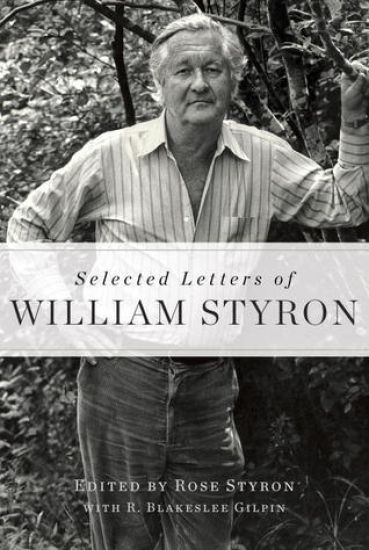
In 1950, at the age of twenty-four, William Clark Styron, Jr., wrote to his mentor, Professor William Blackburn of Duke University. The young writer was struggling with his first novel, Lie Down in Darkness, and he was nervous about whether his "strain and toil" would amount to anything. "When I mature and broaden," Styron told Blackburn, "I expect to use the language on as exalted and elevated a level as I can sustain. I believe that a writer should accommodate language to his own peculiar personality, and mine wants to use great words, evocative words, when the situation demands them." In February 1952, Styron was awarded the Prix de Rome of the American Academy of Arts and Letters, which crowned him a literary star. In Europe, Styron met and married Rose Burgunder, and found himself immersed in a new generation of expatriate writers. His relationships with George Plimpton and Peter Matthiessen culminated in Styron introducing the debut issue of The Paris Review. Literary critic Alfred Kazin described him as one of the postwar "super-egotists" who helped transform American letters. His controversial The Confessions of Nat Turner won the 1968 Pulitzer Prize, while Sophie's Choice was awarded the 1980 National Book Award, and Darkness Visible, Styron's groundbreaking recounting of his ordeal with depression, was not only a literary triumph, but became a landmark in the field. Part and parcel of Styron's literary ascendance were his friendships with Norman Mailer, James Baldwin, John and Jackie Kennedy, Arthur Miller, James Jones, Carlos Fuentes, Wallace Stegner, Robert Penn Warren, Philip Roth, C. Vann Woodward, and many of the other leading writers and intellectuals of the second half of the twentieth century. This incredible volume takes readers on an American journey from FDR to George W. Bush through the trenchant observations of one of the country's greatest writers. Not only will readers take pleasure in William Styron's correspondence with and commentary about the people and events that made the past century such a momentous and transformative time, they will also share the writer's private meditations on the very art of writing. Advance praise for Selected Letters of William Styron"I first encountered Bill Styron when, at twenty, I read The Confessions of Nat Turner. Hillary and I became friends with Bill and Rose early in my presidency, but I continued to read him, fascinated by the man and his work, his triumphs and troubles, the brilliant lights and dark corners of his amazing mind. These letters, carefully and lovingly selected by Rose, offer real insight into both the great writer and the good man."--President Bill Clinton "The Bill Styron revealed in these letters is altogether the Bill Styron who was a dear friend and esteemed colleague to me for close to fifty years. The humor, the generosity, the loyalty, the self-awareness, the commitment to literature, the openness, the candor about matters closest to him--all are on display in this superb selection of his correspondence. The directness in the artful sentences is such that I felt his beguiling presence all the while that I was enjoying one letter after another."--Philip Roth "Bill Styron's letters were never envisioned, far less composed, as part of the Styron oeuvre, yet that is what they turn out to be. Brilliant, passionate, eloquent, insightful, moving, dirty-minded, indignant, and hilarious, they accumulate power in the reading, becoming in themselves a work of literature."--Peter Matthiessen
Although Sophie's Choice by William Styron won the American Book Award for fiction, it met with some very mixed reviews. Some critics regarded the novel as bombastic and melodramatic-in short, a colossal failure. In William Styron's "Sophie's Choice," Rhoda Sirlin demonstrates that Sophie's Choice is Styron's most audacious, original, and artistically successful novel to date. First, this book will counter the many critics who have assailed the novel as anti-Semitic. Sirlin then counters the argument that Sophie's Choice is a sexist novel and that Styron and his youthful alter ego, Stingo, are misogynists. Finally, Sirlin explores the novel's powerful theme-absolute evil, showing that while insisting on the power and inextinguishability of evil in human beings and nature, Styron ultimately provides a compassionate vision of humanity struggling for meaning in an indifferent universe. Through this examination, Sirlin shows that Styron must be appreciated as one of the most audacious and humane voices in contemporary literature.
William Styron - American Writers 98 was first published in 1971. Minnesota Archive Editions uses digital technology to make long-unavailable books once again accessible, and are published unaltered from the original University of Minnesota Press editions.
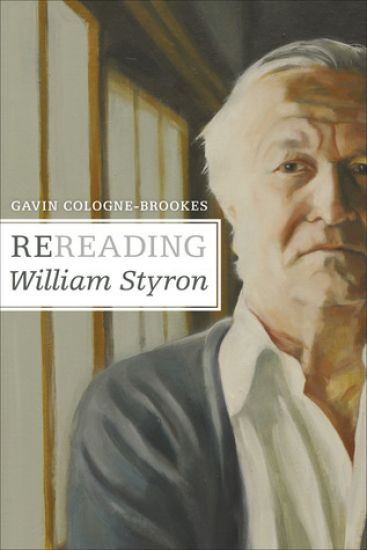
The first critical study of William Styron since his death in 2006, Rereading William Styron offers an eloquent reflection on the writer's works, world, and character. Bringing an innovative approach to literary criticism, Gavin Cologne-Brookes combines personal anecdote, scholarly research, travel writing, and primary material to provide fresh perspectives on Styron's achievements.For Cologne-Brookes, rereading unfolds in two ways: through close analysis of texts, and through remembrance. He begins with reminiscences about the man behind the books and then, giving due consideration to Styron's stories, incidental writings, and posthumous publications, interprets anew all his significant work -- from the nonfiction, including his acclaimed memoir of depression, Darkness Visible, to the novels Lie Down in Darkness, Set This House on Fire, The Confessions of Nat Turner, and Sophie's Choice. Defining the relevance of Styron's writing in terms of everyday life, Cologne-Brookes explores the intricate relationships between an author, his work, and his readership, and between history and fiction, and writing and place. The book's emphasis on subjectivity and dynamic interaction makes it unique in Styron criticism and a striking contribution to the debate about what it means to study literature.
William Styron has enjoyed a resurgence of popularity with the publication of Darkness Visible (1990), his account of his struggle with near-suicidal depression. His works are known for discussing psychological conflicts within families, religious doubt, existentialism, racial tension, and the role of history in fiction. Often compared with William Faulkner, Styron has emerged as one of the most important figures in contemporary American literature and is best known for his continuation of the Southern gothic tradition.Through original essays, reprints of previously published criticism, and excerpts from reviews, this volume traces the critical reception of Styron's writings over the last 40 years. All of Styron's novels are covered, but the majority of the selections focus on his three most important works: Lie Down in Darkness, The Confessions of Nat Turner, and Sophie's Choice. The pieces reflect a variety of critical perspectives, and the introduction overviews significant trends and omissions in Styron criticism. A bibliography lists Styron's writings, along with critical studies of his work.
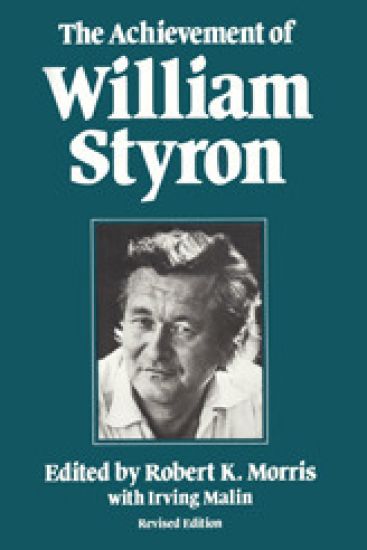
The publication of Sophie's Choice, one of William Styron's greatest literary achievements, generated a new spark in the critical discussion of the author and is the main emphasis of the interview with Styron and one of the additional essays in this revised edition. The interview was conducted by Robert K. Morris; the essay on Sophie's Choice by Richard Pearce. Other essays include Jane Flanders on Styron's southern myth, Philip W. Leon on Styron's narrative technique, and Ardner R. Cheshire, Jr., and Mary S. Strine on The Confessions of Nat Turner.Originally published in 1975, The Achievement of William Styron was the first collection of critical essays on one of America's most distinguished contemporary fiction writers, and it has become a standard work. Essays from the original edition which are included in this revised edition are those by the editors, and by Louis D. Rubin, Jr., John O. Lyons, Jan B. Gordon, Robert Phillips, and George Core.
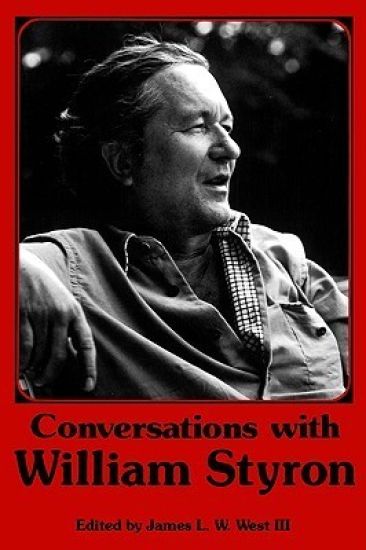
This is a selection of interviews with William Styron published during the period 1951-1984, from the months just following publication of Lie Down in Darkness, his first novel, to the period after publication of Sophie's Choice. Some twenty-five interviews are reprinted here, including six that are translated from the French and published in this country for the first time.Styron is one of the most frequently interviewed writers of his generation. Unlike Faulkner, to whom he was often compared early in his career, Styron has learned to be a patient and cooperative interview subject. His comments in these interviews reveal much about the sources of his fiction and about his early life. He also reacts to attacks on his work, comments on his mission as a writer, and describes his compositional habits.This is a useful collection for those who wish to know Styron better and to be guided by his conversations to clearer insights into his writing. For scholars and for general readers alike it will have much appeal. It gives the reader a sense of being in Styron's presence, of enjoying his flashes of wit and intellect, and of realizing how remarkable his achievement has been and how universally he is admired.
Unlock the more straightforward side of Sophie's Choice with this concise and insightful summary and analysis This engaging summary presents an analysis of Sophie's Choice by William Styron, which follows the young and inexperienced Stingo as he meets and befriends Sophie, a Polish Catholic now living in Brooklyn, and her violent, schizophrenic lover Nathan. As Stingo grows closer to Sophie, he learns that she survived the Nazi concentration camp of Auschwitz, but was forced to make the terrible choice that gives the novel its title. Now, she is racked by guilt and seems unable to escape the shadow of her past, leading her to self-destruct. Sophie's Choice is perhaps William Styron's best-known work, and was adapted into an Academy Award-winning film starring Meryl Streep. Find out everything you need to know about Sophie's Choice in a fraction of the time This in-depth and informative reading guide brings you: - A complete plot summary- Character studies- Key themes and symbols- Questions for further reflection Why choose BrightSummaries.com?Available in print and digital format, our publications are designed to accompany you on your reading journey. The clear and concise style makes for easy understanding, providing the perfect opportunity to improve your literary knowledge in no time. See the very best of literature in a whole new light with BrightSummaries.com
Die dominierende Stellung, die die Figur des Vaters im Romanwerk William Styrons einnimmt, ist aus der Geschichte des amerikanischen Sudens heraus zu erklaren, die durch eine patriarchalische Gesellschaftsstruktur sowie ein ausgepragtes Vergangenheitsbewusstsein charakterisiert ist. Anhand von drei reprasentativen Romanen des Sudstaatenautors werden verschiedene Aspekte des Vaterbildes im Hinblick auf den individualpsychologischen, den historisch-soziologischen und den metaphysischen Bereich untersucht. Dabei wird sichtbar, wie Styron literarische Konventionen seiner Vorganger verarbeitet und zu einer skeptischeren Deutung von Vaterbild, Vergangenheit und Geschichte gelangt."
The quest motif forms the framework of the journeys undertaken by the three youthful protagonists of this study. In pursuit of selfhood, the non-conformist hero of the Post-World War II American South sets out on an uncertain path leading to confrontation and finally transformation. Joseph Campbell’s ground-breaking analysis of the quest motif is the starting point for the patterns described in these journeys. The quest takes the hero through a perilous post-modern landscape often in conflict with the legacy of the past. It is a place where the optimistic mainstream of the American Dream is juxtaposed with the trauma of human suffering. Through a close textual analysis, the author elucidates multi-faceted characters and thematic while shedding new light on a reading of Southern fiction. Although significantly different novels, important common threads are revealed linking the quest motifs in these works. This study examines William Styron’s Sophie’s Choice, Flannery O’Connor’s The Violent Bear It Away and Bobbie Ann Mason’s In Country.