Kirjojen hintavertailu. Mukana 11 717 486 kirjaa ja 12 kauppaa.

Kirjahaku

Etsi kirjoja tekijän nimen, kirjan nimen tai ISBN:n perusteella.

1000 tulosta hakusanalla ART WIEDERHOLD

Art Songs of the Burgundian Era, 1415-1480

Art Songs of the Burgundian Era, 1415-1480

David Fallows

Oxford University Press
2026
sidottu
In a study as deep as it is broad, Art Song of the Burgundian Era, 1415-1480 presents a rich and thorough survey of art song in the heart of the fifteenth century, during a 65-year period characterized by the rise of French repertory and the arrival of a musical style that crossed linguistic and national lines. Across the five sections of the book, David Fallows defines and describes in detail all of the elements that characterize this remarkable repertory. The first major section on Musical Techniques defines the voicings, textures, texts and structures that make up the repertoire. Following this, Historical Background defines the major forces in the music's development, and its key composers, poets, performers, and themes. Survival looks at the evidence of the music and its practice through sources and key citations of its music and poetic text. Forms lays out the key forms of this repertoire--the ballade, rondeau, and virelai--as well as less common song forms. The book concludes with a section on the language repertories that define art song in this period. An important work of history in its own right, this volume also serves as a guide to the repertory included in Fallows's Catalogue of Polyphonic Songs, 1415-1480 (OUP 1999).
Art and Embodiment

Art and Embodiment

Paul Crowther

Oxford University Press
1993
sidottu
In his Critical Aesthetics and Postmodernism Paul Crowther argued that art and aesthetic experiences have the capacity to humanize. In Art and Embodiment he develops this theme in much greater depth, arguing that art can bridge the gap between philosophy's traditional striving for generality and completeness, and the concreteness and contingency of humanity's basic relation to the world. As the key element in his theory, he proposes an ecological definition of art. His strategy involves first mapping out and analysing the logical boundaries and ontological structures of the aesthetic domain. He then considers key concepts from this analysis in the light of a tradition in Continental philosophy (notably the work of Kant, Heidegger, Merleau-Ponty, and Hegel) which–by virtue of the philosophical significance that it assigns to art–significantly anticipates the ecological conception. On this basis Dr Crowther is able to give a full formulation of his ecological definition. Art, in making sensible or imaginative material into symbolic form, harmonizes and conserves what is unique and what is general in human experience. The aesthetic domain answers basic needs intrinsic to self-consciousness itself, and art is the highest realization of such needs. In the creation and reception of art the embodied subject is fully at home with his or her environment.
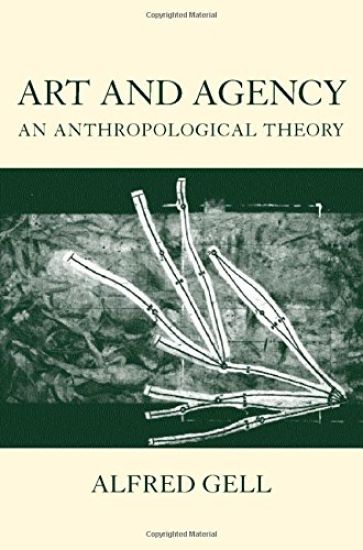
Art and Agency

Art and Agency

Gell Alfred

Clarendon Press
1998
sidottu
Alfred Gell puts forward a new anthropological theory of visual art, seen as a form of instrumental action: the making of things as a means of influencing the thoughts and actions of others. He argues that existing anthropological and aesthetic theories take an overwhelmingly passive point of view, and questions the criteria that accord art status only to a certain class of objects and not to others. The anthropology of art is here reformulated as the anthropology of a category of action: Gell shows how art objects embody complex intentionalities and mediate social agency. He explores the psychology of patterns and perceptions, art and personhood, the control of knowledge, and the interpretation of meaning, drawing upon a diversity of artistic traditions—European, Indian, Polynesian, Melanesian, and Australian. Art and Agency was completed just before Alfred Gell's death at the age of 51 in January 1997. It embodies the intellectual bravura, lively wit, vigour, and erudition for which he was admired, and will stand as an enduring testament to one of the most gifted anthropologists of his generation.
Art and Agency

Art and Agency

Alfred Gell

Clarendon Press
1998
nidottu
Alfred Gell puts forward a new anthropological theory of visual art, seen as a form of instrumental action: the making of things as a means of influencing the thoughts and actions of others. He argues that existing anthropological and aesthetic theories take an overwhelmingly passive point of view, and questions the criteria that accord art status only to a certain class of objects and not to others. The anthropology of art is here reformulated as the anthropology of a category of action: Gell shows how art objects embody complex intentionalities and mediate social agency. He explores the psychology of patterns and perceptions, art and personhood, the control of knowledge, and the interpretation of meaning, drawing upon a diversity of artistic traditions--European, Indian, Polynesian, Melanesian, and Australian. Art and Agency was completed just before Alfred Gell's death at the age of 51 in January 1997. It embodies the intellectual bravura, lively wit, vigour, and erudition for which he was admired, and will stand as an enduring testament to one of the most gifted anthropologists of his generation.
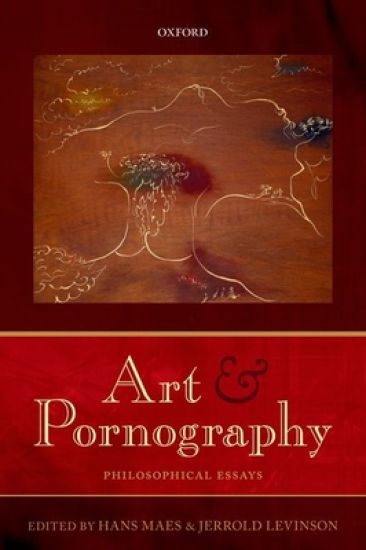
Art and Pornography

Art and Pornography

Oxford University Press
2015
nidottu
Art and Pornography presents a series of essays which investigate the artistic status and aesthetic dimension of pornographic pictures, films, and literature, and explores the distinction, if there is any, between pornography and erotic art. Is there any overlap between art and pornography, or are the two mutually exclusive? If they are, why is that? If they are not, how might we characterize pornographic art or artistic pornography, and how might pornographic art be distinguished, if at all, from erotic art? Can there be aesthetic experience of pornography? What are some of the psychological, social, and political consequences of the creation and appreciation of erotic art or artistic pornography? Leading scholars from around the world address these questions, and more, and bring together different aesthetic perspectives and approaches to this widely consumed, increasingly visible, yet aesthetically underexplored cultural domain. The book, the first of its kind in philosophical aesthetics, will contribute to a more accurate and subtle understanding of the many representations that incorporate explicit sexual imagery and themes, in both high art and demotic culture, in Western and non-Western contexts. It is sure to stir debate, and healthy controversy.
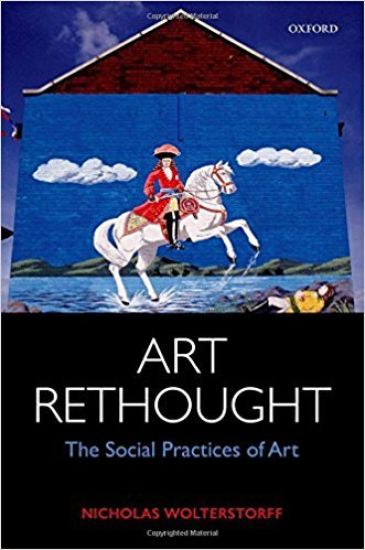
Art Rethought

Art Rethought

Nicholas Wolterstorff

Oxford University Press
2015
sidottu
Human beings engage works of the arts in many different ways: they sing songs while working, they kiss icons, they create and dedicate memorials. Yet almost all philosophers of art of the modern period have ignored this variety and focused entirely on just one mode of engagement, namely, disinterested attention. In the first part of the book Nicholas Wolterstorff asks why philosophers have concentrated on just this one mode of engagement. The answer he proposes is that almost all philosophers have accepted what the author calls the grand narrative concerning art in the modern world. It is generally agreed that in the early modern period, members of the middle class in Western Europe increasingly engaged works of the arts as objects of disinterested attention. The grand narrative claims that this change represented the arts coming into their own, and that works of art, so engaged, are socially other and transcendent. Wolterstorff argues that the grand narrative has to be rejected as not fitting the facts. Wolterstorff then offers an alternative framework for thinking about the arts. Central to the alternative framework that he proposes are the idea of the arts as social practices and the idea of works of the arts as having different meaning in different practices. He goes on to use this framework to analyse in some detail five distinct social practices of art and the meaning that works have within those practices: the practice of memorial art, of art for veneration, of social protest art, of works songs, and of recent art-reflexive art.
Art and Philosophy

Art and Philosophy

Oxford University Press
2025
sidottu
Though a field often thought far from the center of contemporary philosophy, philosophy of art&#8212perhaps more than any other field similarly situated&#8212nevertheless enjoys extensive overlap with and points of exchange at that center. The last decade has seen a marked resurgence of interest in aesthetics and philosophy of art from those working outside these areas, and a reciprocal resurgence of interest in other subfields from philosophers of art. Art and Philosophy brings together twenty-one original essays at the intersection of art and philosophy. These essays are intersectional in two respects. Firstly, the authors draw meaningful connections between art and philosophy, using artworks to motivate, support, and shape their views. Secondly, the authors draw connections between the theoretical discipline of aesthetics and philosophy of art, on the one hand, and the rest of philosophy, on the other. Some chapters explore philosophical matters by examining art and other aesthetic objects, whilst others bring together contemporary thought and research in aesthetics and philosophy of art with important developments in other areas of philosophy. The chapters are organized into ten sections. These ten sections represent the current issues best exemplifying the productive and informative exchanges that exist at these intersections. The topics range from metaphysics and philosophy of language to creativity and love. By placing the connection to art at the forefront, Art and Philosophy is a testament to the myriad ways art and the philosophy of art intersect and overlap with issues that lie at the core of contemporary philosophy.
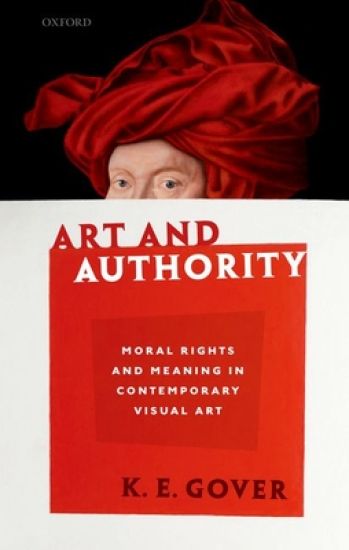
Art and Authority

Art and Authority

K. E. Gover

Oxford University Press
2018
sidottu
People engage with authored works all the time. They buy paintings, read books, and download songs. They might even be artists themselves. And yet they tend to take the concept of authorship for granted. The basic idea that an artist as author maintains some kind of claim to his or her creation, even as it circulates in the world at large, seems natural. It is the basis for copyright law and moral rights legislation which protect the rights of authors. But what is an author, and why do artists receive special legal recognition and protection that the creators of other kinds of artifacts do not? It is often assumed that artists have a special bond with their artworks, but the nature of this bond, and its function as the source of an artist's authority over his or her work, often goes unquestioned. Art and Authority is a philosophical essay on artistic freedom: its sources, nature, and limits. Artistic freedom can mean different things depending on the context in which it is invoked. K. E. Gover argues that the most fundamental form of artistic freedom involves the artist's authority to accept or disavow the works that he or she produces, to curate the works that bear his or her name, and that represent his or her artistic oeuvre. Our very concept of what an artwork isthe intentional expression of the artist, for its own sakedepends on this second-order endorsement by the artist of what he or she has made. Using real-world cases and controversies in contemporary visual art, Gover argues that the leading accounts of artistic authorship in the legal and philosophical literature have overlooked the significance of this moment.
Art, Mind, and Narrative

Art, Mind, and Narrative

Oxford University Press
2016
sidottu
This volume presents new essays on art, mind, and narrative inspired by the work of the late Peter Goldie, who was Samuel Hall Professor of Philosophy at the University of Manchester until 2011. Its three sections cover Narrative Thinking; Emotion, Mind, and Art; and Art, Value, and Ontology. Within these sections, leading authorities in the philosophy of mind, aesthetics and the emotions offer the reader entry points into many of the most exciting contemporary debates in these areas of philosophy. Topics covered include the role that narrative thinking plays in our lives, our imaginative engagement with fiction, the emotions and their role in the motivation of action, the connection between artistic activity and human well-being, and the appreciation and ontological status of conceptual artworks.
Art Rethought

Art Rethought

Nicholas Wolterstorff

Oxford University Press
2017
nidottu
Human beings engage works of the arts in many different ways: they sing songs while working, they kiss icons, they create and dedicate memorials. Yet almost all philosophers of art of the modern period have ignored this variety and focused entirely on just one mode of engagement, namely, disinterested attention. In the first part of the book Nicholas Wolterstorff asks why philosophers have concentrated on just this one mode of engagement. The answer he proposes is that almost all philosophers have accepted what the author calls the grand narrative concerning art in the modern world. It is generally agreed that in the early modern period, members of the middle class in Western Europe increasingly engaged works of the arts as objects of disinterested attention. The grand narrative claims that this change represented the arts coming into their own, and that works of art, so engaged, are socially other and transcendent. Wolterstorff argues that the grand narrative has to be rejected as not fitting the facts. Wolterstorff then offers an alternative framework for thinking about the arts. Central to the alternative framework that he proposes are the idea of the arts as social practices and the idea of works of the arts as having different meaning in different practices. He goes on to use this framework to analyse in some detail five distinct social practices of art and the meaning that works have within those practices: the practice of memorial art, of art for veneration, of social protest art, of works songs, and of recent art-reflexive art.
Art and Belief

Art and Belief

Oxford University Press
2017
sidottu
Art and Belief presents twelve new essays at the intersection of philosophy of mind and philosophy of art, particularly to do with the relation between belief and truth in our experience of art. Several contributors discuss the cognitive contributions artworks can make and the questions surrounding these. Can authors of fiction testify to their readers? If they can, are they culpable for the false beliefs of their readers formed in response to their work? If they cannot, that is, if the testimonial powers of authors of fiction are limited, is there some non-testimonial epistemic role that fiction can play? And in any case, is such a role relevant when determining the value of the work? Also explored are issues concerned with the phenomenon of fictional persuasion, specifically, what is the nature of the attitude involved in such cases (those in which we form beliefs about the real world in response to reading fiction)? If these attitudes are typically unstable, unjustified, and unreliable, does this put pressure on the view that they are beliefs? If these attitudes are beliefs, does this put pressure on the view that all beliefs are aimed at truth? The final pair of papers in the volume take different stances on the nature of aesthetic testimony, and whether testimony of this kind is a legitimate source of beliefs about aesthetic properties and value.
Art, History, and Postwar Fiction

Art, History, and Postwar Fiction

Kevin Brazil

Oxford University Press
2018
sidottu
Art, History, and Postwar Fiction explores the ways in which novelists responded to the visual arts from the aftermath of the Second World War to the present day. If art had long served as a foil to enable novelists to reflect on their craft, this book argues that in the postwar period, novelists turned to the visual arts to develop new ways of conceptualizing the relationship between literature and history. The sense that the novel was becalmed in the end of history was pervasive in the postwar decades. In seeming to bring modernism to a climax whilst repeating its foundational gestures, visual art also raised questions about the relationship between continuity and change in the development of art. In chapters on Samuel Beckett, William Gaddis, John Berger, and W. G. Sebald, and shorter discussions of writers like Doris Lessing, Kathy Acker, and Teju Cole, this book shows that writing about art was often a means of commenting on historical developments of the period: the Cold War, the New Left, the legacy of the Holocaust. Furthermore, it argues that forms of postwar visual art, from abstraction to the readymade, offered novelists ways of thinking about the relationship between form and history that went beyond models of reflection or determination. By doing so, this book also argues that attention to interactions between literature and art can provide critics with new ways to think about the relationship between literature and history beyond reductive oppositions between formalism and historicism, autonomy and context.
Art, Aesthetics, and the Brain

Art, Aesthetics, and the Brain

Oxford University Press
2018
nidottu
Humans have engaged in artistic and aesthetic activities since the appearance of our species. Our ancestors have decorated their bodies, tools, and utensils for over 100,000 years. The expression of meaning using color, line, sound, rhythm, or movement, among other means, constitutes a fundamental aspect of our species' biological and cultural heritage. Art and aesthetics, therefore, contribute to our species identity and distinguish it from its living and extinct relatives. Science is faced with the challenge of explaining the natural foundations of such a unique trait, and the way cultural processes nurture it into magnificent expressions, historically and ethnically unique. How does the human brain bring about these sorts of behaviors? What neural processes underlie the appreciation of painting, music, and dance? How does training modulate these processes? How are they impaired by brain lesions and neurodegenerative diseases? How did such neural underpinnings evolve? Are humans the only species capable of aesthetic appreciation, or are other species endowed with the rudiments of this capacity? This volume brings together the work on such questions by leading experts in genetics, psychology, neuroimaging, neuropsychology, art history, and philosophy. It sets the stage for a cognitive neuroscience of art and aesthetics, understood in the broadest possible terms. With sections on visual art, dance, music, neuropsychology, and evolution, the breadth of this volume's scope reflects the richness and variety of topics and methods currently used today by scientists to understand the way our brain endows us with the faculty to produce and appreciate art and aesthetics.
Art History

Art History

Dana Arnold

Oxford University Press
2020
nidottu
Art history encompasses the study of the history and development of painting, sculpture and the other visual arts. In this Very Short Introduction, Dana Arnold presents an introduction to the issues, debates, and artefacts that make up art history. Beginning with a consideration of what art history is, she explains what makes the subject distinctive from other fields of study, and also explores the emergence of social histories of art (such as Feminist Art History and Queer Art History). Using a wide range of images, she goes on to explore key aspects of the discipline including how we write, present, read, and look at art, and the impact this has on our understanding of art history. This second edition includes a new chapter on global art histories, considering how the traditional emphasis on periods and styles in art originated in western art and can obscure other critical approaches and artwork from non-western cultures. Arnold also discusses the relationship between art and history, and the ways in which art can tell a different history from the one narrated by texts. ABOUT THE SERIES: The Very Short Introductions series from Oxford University Press contains hundreds of titles in almost every subject area. These pocket-sized books are the perfect way to get ahead in a new subject quickly. Our expert authors combine facts, analysis, perspective, new ideas, and enthusiasm to make interesting and challenging topics highly readable.
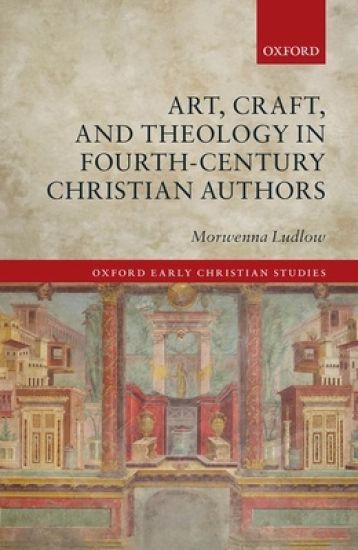
Art, Craft, and Theology in Fourth-Century Christian Authors
Ancient authors commonly compared writing with painting. The sculpting of the soul was also a common philosophical theme. Art, Craft, and Theology in Fourth-Century Christian Authors takes its starting-point from such figures to recover a sense of ancient authorship as craft. The ancient concept of craft (ars, techne) spans 'high' or 'fine' art and practical or applied arts. It unites the beautiful and the useful. It includes both skills or practices (like medicine and music) and productive arts like painting, sculpting and the composition of texts. By using craft as a guiding concept for understanding fourth Christian authorship, this book recovers a sense of them engaged in a shared practice which is both beautiful and theologically useful, which shapes souls but which is also engaged in the production of texts. It focuses on Greek writers, especially the Cappadocians (Basil of Caesarea, Gregory of Nazianzus, and Gregory of Nysa) and John Chrysostom, all of whom were trained in rhetoric. Through a detailed examination of their use of two particular literary techniques--ekphrasis and prosopopoeia--it shows how they adapt and experiment with them, in order to make theological arguments and in order to evoke a response from their readership.
Art and Authority

Art and Authority

K. E. Gover

Oxford University Press
2021
nidottu
People engage with authored works all the time. They buy paintings, read books, download songs - they may even be artists themselves. Very rarely, however, is the concept of authorship brought into question. The basic idea that the artist as an author maintains some kind of claim to his or her creation, even as it circulates in the world at large, seems natural. It is the basis for copyright law and moral rights legislation which protect the rights of authors. But what is an author, and why do artists receive special legal recognition and protection that the creators of other kinds of artefacts do not? It is often assumed that artists have a special bond with their artworks, but the nature of this bond and its function as the source of an artist's authority over their work often goes unquestioned. Art and Authority is a philosophical essay on artistic freedom: its sources, nature, and limits. Artistic freedom can mean different things depending on the context in which it is invoked. K. E. Gover argues that the most fundamental form of artistic freedom involves the artist's authority to accept or disavow the works that they produce and to curate the works that bear their name. Our very concept of what an artwork is the intentional expression of the artist, for its own sake depends on this second-order endorsement by the artist of what they have made. Using real-world cases and controversies in contemporary visual art, Gover argues that the leading accounts of artistic authorship in the legal and philosophical literature have overlooked the significance of this moment.
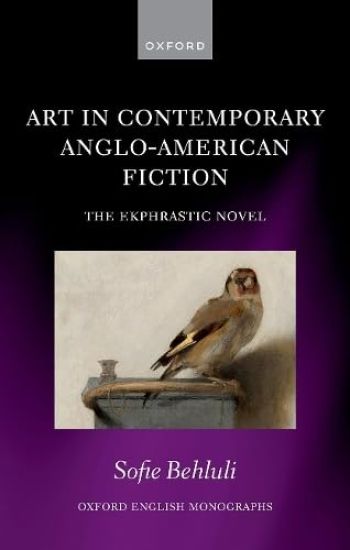
Art in Contemporary Anglo-American Fiction

Art in Contemporary Anglo-American Fiction

Sofie Behluli

Oxford University Press
2025
sidottu
This book addresses the recent surge of Anglo-American novels about visual art since the 2010s and interprets it as a coming of age of an old literary sub-genre, which is here termed as the 'ekphrastic novel'. These novels are distinguished by their systematic use of ekphrasis which creatively and critically negotiates the intertwined aesthetics of literature and visual art. By addressing the challenge of representing visual images such as photographs, paintings, and art installations with words, these novels reveal a greater interest in exploring how and why we engage with art, rather than merely depicting the art itself. In this way, ekphrastic novels present themselves as powerful practitioners and critics of contemporary image-making. The book focuses on four aspects emerging from ekphrastic passages--value, form, affect, and scale--to explore critical questions posed by contemporary ekphrastic novels: Who has the power to assign value today, and at what cost? Which social, political, historical, cultural, and ethical dimensions are obscured by certain forms, and how can ekphrasis (re)introduce these aspects into public discourse? What affects do images and artworks elicit, and how do they reinforce or challenge existing value systems? How can narrative scale uncover potential injustices in the interplay between life and art? Moreover, what insights do ekphrastic novels offer into contemporary reading habits and strategies? By tracing a literary tradition from nineteenth-century to contemporary fiction and offering detailed close readings of several critically acclaimed and widely read contemporary novels, this book delves into the theoretical and practical intersections of ekphrasis and the novel.
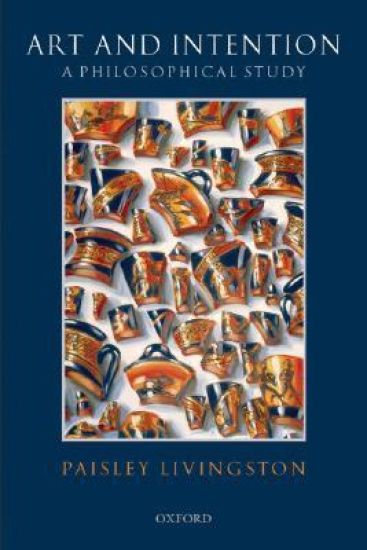
Art and Intention

Art and Intention

Paisley Livingston

Clarendon Press
2007
nidottu
Do the artist's intentions have anything to do with the making and appreciation of works of art? In Art and Intention Paisley Livingston develops a broad and balanced perspective on perennial disputes between intentionalists and anti-intentionalists in philosophical aesthetics and critical theory. He surveys and assesses a wide range of rival assumptions about the nature of intentions and the status of intentionalist psychology. With detailed reference to examples from diverse media, art forms, and traditions, he demonstrates that insights into the multiple functions of intentions have important implications for our understanding of artistic creation and authorship, the ontology of art, conceptions of texts, works, and versions, basic issues pertaining to the nature of fiction and fictional truth, and the theory of art interpretation and appreciation. Livingston argues that neither the inspirationist nor rationalistic conceptions can capture the blending of deliberate and intentional, spontaneous and unintentional processes in the creation of art. Texts, works, and artistic structures and performances cannot be adequately individuated in the absence of a recognition of the relevant makers´ intentions. The distinction between complete and incomplete works receives an action-theoretic analysis that makes possible an elucidation of several different senses of 'fragment' in critical discourse. Livingston develops an account of authorship, contending that the recognition of intentions is in fact crucial to our understanding of diverse forms of collective art-making. An artist's short-term intentions and long-term plans and policies interact in complex ways in the emergence of an artistic oeuvre, and our uptake of such attitudes makes an important difference to our appreciation of the relations between items belonging to a single life-work. The intentionalism Livingston advocates is, however, a partial one, and accomodates a number of important anti-intentionalist contentions. Intentions are fallible, and works of art, like other artefacts, can be put to a bewildering diversity of uses. Yet some important aspects of art's meaning and value are linked to the artist´ s aims and activities.
Art in China

Art in China

Craig Clunas

Oxford University Press
2009
nidottu
China boasts a history of art lasting over 5,000 years and embracing a huge diversity of forms - objects of jade, lacquer and porcelain, painted scrolls and fans, sculptures in stone, bronze and wood, and murals. But this rich tradition has not, until now been fully appreciated in the West where scholars have focused attention on the European high arts of painting and sculpture, downplaying arts more highly prized by the Chinese themselves, such as calligraphy. Art in China marks a breakthrough in the study of the subject. Drawing on recent innovative scholarship - and newly-accessible studies in China itself - Craig Clunas surveys the full spectrum of the visual arts in China. He ranges from the Neolithic period to the art scene of the early 21st century, examining Chinese art in a variety of contexts - as it has been designed for tombs, commissioned by rulers, displayed in temples, created by the men and women of the educated elite, and bought and sold in the marketplace. This updated edition contains expanded coverage of modern and contemporary art, from the fall of the empire in 1911 to the growing international interest in the art of an increasingly confident and booming China.
Art and Emotion

Art and Emotion

Derek Matravers

Clarendon Press
2001
nidottu
Derek Matravers examines how emotions form a bridge between our experience of art and of life. We often find that a particular poem, painting, or piece of music carries an emotional charge; and we may experience emotions towards, or on behalf of, a particular fictional character. These experiences are philosophically puzzling, for their causes seem quite different from the causes of emotion in the rest of our lives. Matravers shows that what these experiences have in common, and what links them to the expression of emotion in non-artistic cases, is the role played by feeling. He carries out a critical survey of various accounts of the nature of fiction, attacks contemporary cognitivist accounts of expression, and offers an uncompromising defence of a controversial view about musical expression: that music expresses the emotions it causes its listeners to feel.