Kirjojen hintavertailu. Mukana 11 717 486 kirjaa ja 12 kauppaa.

Kirjahaku

Etsi kirjoja tekijän nimen, kirjan nimen tai ISBN:n perusteella.

1000 tulosta hakusanalla Alfred Comyn Lyall

Alfred Herbert Ltd and the British Machine Tool Industry, 1887-1983

Alfred Herbert Ltd and the British Machine Tool Industry, 1887-1983

Roger Lloyd-Jones; M.J. Lewis

Ashgate Publishing Limited
2006
sidottu
At the beginning of the twentieth century Britain was amongst the world leaders in the production of machine tools, yet by the 1980s the industry was in terminal decline. Focusing on the example of Britain's largest machine tool maker, Alfred Herbert Ltd of Coventry, this study charts the wider fortunes of this vital part of the manufacturing sector. Taking a chronological approach, the book explores how during the late nineteenth century the industry developed a reputation for excellence throughout the world, before the challenges of two world wars necessitated drastic changes and reorganisations. Despite meeting these challenges and emerging with confidence into the post-war market place, the British machine tool industry never regained its pre-eminent position, and increasingly lost ground to foreign competition. By using the example of Alfred Herbert Ltd to illuminate the broader economic and business history of the British machine tool industry, this study not only provides a valuable insight into British manufacturing, but also contributes to the ongoing debates surrounding Britain's alleged decline as a manufacturing nation.
Alfred Gilbert's Aestheticism

Alfred Gilbert's Aestheticism

Jason Edwards

Ashgate Publishing Limited
2006
sidottu
Alfred Gilbert's Aestheticism presents the first sustained re-evaluation of the life and work of one of the most acclaimed sculptors of the late-Victorian period. Drawing on important new archival sources, this ground-breaking study challenges the customary assumption that Aestheticism was primarily a literary, painterly or architectural phenomena. Jason Edwards reveals both the diverse ways in which Gilbert's sculptures operated within the context of Aestheticism and also how these works provided a unique and provocative commentary on the history of masculine friendship and eroticism in the period leading up to and beyond the Wilde trials in 1895. Detailed readings are offered of the relationship of Gilbert's work to essays by Pater and Swinburne, poems, plays, and novels by Wilde and W. S. Gilbert, and paintings by Burne-Jones, Leighton, Rossetti, Solomon, Whistler, and Watts. With over 90 illustrations, including key contemporary photographs showing Gilbert's works in their original contexts, this book makes a major contribution to the field of Victorian sculpture studies.
Alfred the Great

Alfred the Great

Ashgate Publishing Limited
2003
sidottu
1999 marked the eleven-hundredth anniversary of the death of Alfred the Great, and to mark this event, two international conferences were held to re-evaluate and contextualise Alfred's achievements and the developments of his reign. This volume includes papers given at both events and provides substantial assessments, by leading scholars, of issues of source-criticism, of the large corpus of Old English literature associated with Alfred and of developments in government and society in late ninth-century England. It also explores how Alfred and his kingdom related to the wider geo-political and cultural situation in the British isles and continental Europe, and closes with a substantial survey of the uses and shifts in Alfred's reputation in the centuries following his death. This substantial and wide ranging volume will become a standard reference work for anyone interested in Old English literature or Anglo-Saxon history, and will set the pattern of future scholarly debate.
Alfred North Whitehead and Yi Yulgok

Alfred North Whitehead and Yi Yulgok

Chung Soon Lee

University Press of America
2006
nidottu
This book explores the Confucian-Christian dialogue in Korea through a comparative study of the cosmologies of Alfred North Whitehead (1861-1947), the founder of process philosophy, and Yi Yulgok (1536-1584), the great scholar of Korean Neo-Confucianism. Although their philosophical traditions are different, Yulgok and Whitehead's perspectives on the universe were very similar. This study argues that Whitehead's theory of eternal object-actual entity has affinities with Yulgok's theory of principle-material force. Their two theories, both based on reciprocal dialectical interrelationships, view the world as a cosmos characterized by the process of becoming. Accordingly, Whitehead's panentheistic interpretation of the God-world relationship correlates with Yulgok's Neo-Confucian notion of how the Great Ultimate relates to material force. These two concepts suggest a balanced structure of God and the world and offer insights into encouraging interreligious spirituality in Korea.
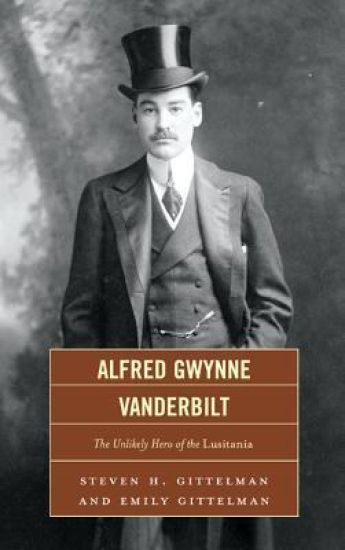
Alfred Gwynne Vanderbilt

Alfred Gwynne Vanderbilt

Steven H. Gittelman; Emily Gittelman

Hamilton Books
2013
sidottu
At a young age, Alfred Vanderbilt inherited a massive fortune of $40 million and control of the Vanderbilt railroading empire. With no interest in business matters, the youth squandered his wealth on horses and women on two continents. None of the Vanderbilts gave as much fuel for gossip to the curious public as Alfred. By the time the extravagant playboy boarded the Lusitania on May 7, 1915, he was the subject of numerous scandals, including the suicide of four different women. But as the ship went down, he spent the last minutes of his life rescuing women and children and forgoing his own life. How is it that this wraith, this gluttonous, opulent youth, could undergo an entire change of character in his last few moments? Alfred Gwynne Vanderbilt follows Alfred’s journey from philanderer to hero in this incredible, never-before-told story of the hero of the Lusitania.
Alfred Hitchcock All the Films

Alfred Hitchcock All the Films

Bernard Benoliel; Gilles Esposito; Jean-François Rauger; Murielle Joudet

Running Press,U.S.
2024
sidottu
Organized chronologically and covering every short film, television episode, and classic film that the "Master of Suspense" directed over the course of his illustrious, 60-year career, Alfred Hitchcock All the Films draws upon years of research to tell the behind the scenes stories of how each project was conceived, cast, and produced, down to the creation of the costumes, the search for perfect locations, and of course, the direction of some of cinema's most memorable scenes.Spanning more than six decades, and including stories of work with longtime collaborators like costume designer Edith Head, title designer Saul Bass, and composer Bernard Herrmann, this book details the creative processes that resulted in numerous classic films like Vertigo,The Birds,Psycho, Rear Window, North By Northwest,andTo Catch a Thief (to name a few). The director's classic TV series are also covered extensively along with original release dates, lesser-known short films, box office totals, surreptitious casting details, and other insider scoops that will keep fans and students alike turning pages. Featuring hundreds of vivid photographs that celebrate one of cinema's most iconic artists, Alfred Hitchcock All the Films is a visual feast that's perfect for the movie fan in your life.
Alfred Hitchcock's Silent Films

Alfred Hitchcock's Silent Films

Marc Raymond Strauss

McFarland Co Inc
2004
pokkari
Alfred Hitchcock called the silent "the purest form of cinema," and the ten silent films he directed between 1925 and 1929 reveal the young director's mature artistry. Hitchcock's silents have often been characterized as the work of a talented amateur, a young director practicing his craft during a pre-sound era of antiquated instruments and poor film techniques--the director experimented with myriad points of view, unique camera angles and movements, and special effects such as dissolves, blurriness, and violent cuts. These films, however, contain the first appearances of some of his greatest and most familiar techniques: the vertigo-inducing crowd scene, the symbolic use of inanimate objects, the manipulation of the audience's emotions, and the self-conscious, often macabre wit. This work discovers Hitchcock's early talent and skill through close readings of the films from The Pleasure Garden to the silent version of Blackmail, using shot-by-shot descriptions and interpretations. Each film's chapter includes technical information, a summary of the critical response from the film's release to the present, and detailed analysis of the camera techniques and themes Hitchcock uses.
Alfred Schutz's Sociological Aspect of Literature
The maintext in the present volume has beenconstructed out of passages found scattered aboutin thirty-five years of Alfred Schutz's writings, and it has been constructed by following a pageof notes for a lecture that he gave in 1955 under the title "Sociological Aspect of Literature. " The result can be considered the substance of Schutz's contribution to the theory of literature. More detail about how this construction has beenperformed is offered in the Editor's Introduction. The complementary essays areby scholars from Germany, Japan, andthe United States , from several generations, and from the disciplines of anthropology, philosophy, and sociology. These researchers were invited to reflect in their own perspectives on the main text and in relation to matters referred to within and beyond it. Draftversions of most of these complementary essays were presented for critical discussion in a research symposium held at the Graduate Faculty of Political and Social Science of theNewSchool for Social Research on April28-29, 1995 underthe sponsorship of The Center for Advanced Research in Phenomen­ ology, Inc. , Florida Atlantic University; The Department of Philosophy of The Graduate Faculty of the New School, Richard 1. Bernstein, Chair; and Evelyn and George Schutz, the philosopher's children. Revised versions of these presentations and also several essays subsequently recruited are offered to begin yet another stagein thehistory of scholarship on Schutz and the phenomenological research inspired by him. Northwestern University Press is thanked for permission to quote extensively from Alfred Schutz, The Phenomenology of the Social World, trans.
Alfred Tarski and the Vienna Circle
The larger part of Yearbook 6 of the Institute Vienna Circle constitutes the proceedings of a symposium on Alfred Tarski and his influence on and interchanges with the Vienna Circle, especially those on and with Rudolf Carnap and Kurt Gödel. It is the first time that this topic has been treated on such a scale and in such depth. Attention is mainly paid to the origins, development and subsequent role of Tarski's definition of truth. Some contributions are primarily historical, others analyze logical aspects of the concept of truth. Contributors include Anita and Saul Feferman, Jan Wolenski, Jan Tarski and Hans Sluga. Several Polish logicians contributed: Gzegorczyk, Wójcicki, Murawski and Rojszczak. The volume presents entirely new biographical material on Tarski, both from his Polish period and on his influential career in the United States: at Harvard, in Princeton, at Hunter, and at the University of California at Berkeley. The high point of the analysis involves Tarski's influence on Carnap's evolution from a narrow syntactical view of language, to the ontologically more sophisticated but more controversial semantical view. Another highlight involves the interchange between Tarski and Gödel on the connection between truth and proof and on the nature of metalanguages. The concluding part of Yearbook 6 includes documentation, book reviews and a summary of current activities of the Institute Vienna Circle. Jan Tarski introduces letters written by his father to Gödel; Paolo Parrini reports on the Vienna Circle's influence in Italy; several reviews cover recent books on logical empiricism, on Gödel, on cosmology, on holistic approaches in Germany, and on Mauthner.
Alfred Maudslay and the Maya

Alfred Maudslay and the Maya

Ian Graham

University of Oklahoma Press
2002
sidottu
In this fascinating biography, the first ever published about Alfred Maudslay (1850-1931), Ian Graham describes this extraordinary Englishman and his pioneering investigations of the ancient Maya ruins.Maudslay, the grandson of a famous English inventor and engineer, spent his formative adult years in the South Seas as a junior official in Great Britain's Colonial Office. Despite his exotic experiences, he did not find his true vocation until the age of thirty-one, when he arrived in Guatemala.Maudslay played a crucial role in exploring and documenting the monuments and architecture of the ancient Maya ruins at Palengue Copán, Chichén Itzá, and other sites previously unknown. His photographs and plaster casts have proven to be invaluable in the deciphering of Maya hieroglyphics. Personal resources allowed him to undertake fieldwork at a time when no institution provided such support. He made plaster casts of large stone monuments, accurate maps of sites, and painstaking recordings of inscriptions. His Biologia Centrali-Americana, a multivolume compendium of photographs, drawings, plans, and text published almost a century ago, remains an essential foundation for Maya studies. Perhaps Maudslay's greatest legacy is magnificent collection of glass-negative photographs, many of which are reproduced in this book.
Alfred Maudslay and the Maya

Alfred Maudslay and the Maya

Ian Graham

University of Oklahoma Press
2020
nidottu
In this fascinating biography, the first ever published about Alfred Maudslay (1850-1931), Ian Graham describes this extraordinary Englishman and his pioneering investigations of the ancient Maya ruins.Maudslay, the grandson of a famous English inventor and engineer, spent his formative adult years in the South Seas as a junior official in Great Britain's Colonial Office. Despite his exotic experiences, he did not find his true vocation until the age of thirty-one, when he arrived in Guatemala.Maudslay played a crucial role in exploring and documenting the monuments and architecture of the ancient Maya ruins at Palengue CopÁn, ChichÉn ItzÁ, and other sites previously unknown. His photographs and plaster casts have proven to be invaluable in the deciphering of Maya hieroglyphics. Personal resources allowed him to undertake fieldwork at a time when no institution provided such support. He made plaster casts of large stone monuments, accurate maps of sites, and painstaking recordings of inscriptions. His Biologia Centrali-Americana, a multivolume compendium of photographs, drawings, plans, and text published almost a century ago, remains an essential foundation for Maya studies. Perhaps Maudslay's greatest legacy is magnificent collection of glass-negative photographs, many of which are reproduced in this book.
The Philosophy of Alfred North Whitehead, Volume 3

The Philosophy of Alfred North Whitehead, Volume 3

Alfred North Whitehead

Open Court Publishing Co ,U.S.
1999
pokkari
Alfred North Whitehead (1861-1947) has made an enormous impact upon philosophical thinking. His work continues to fascinate, and occasionally to exasperate, Whitehead's 'Principia Mathematica' (jointly offered with Russell) is crucial to an understanding of recent philosophy of logic and of mathematics. Whitehead's metaphysics has proved formidably difficult yet stimulating. With his ideas on God he fathered a major school of modern theology.
Alfred Hair

Alfred Hair

Gary Monroe

University Press of Florida
2020
sidottu
The undervalued force behind the Highwaymen phenomenon.A long-awaited testament to the life and work of Alfred Hair, the driving force of the Florida Highwaymen, this book introduces a charismatic personality whose energy and creativity were foundational to the success of his fellow African American artists during the era of Jim Crow segregation.Shot and killed in a barfight at the age of 29, Hair lived his short life fully, with a zest and intensity that informed his art. In high school he made canvas frames in the Fort Pierce studio of A. E. Backus, the painter who inspired the style of the Highwaymen, and soon became the artist's protégé. By the time Hair graduated in 1961, he was painting luminous South Florida landscapes and selling them door to door. One of the only formally trained Highwaymen, he spurred on the collective of artists as they traversed the state in search of the white clientele who would buy their artwork.Hair's paintings, reproduced here in brilliant color, are marked by their spontaneous, gestural, carefree flair. He was known for his fast painting, which yielded a sense of place well-suited for Florida's postwar residents. These oil paintings hung in their homes and offices like trophies. Sold before the oils were dry, Hair's paintings appeared to their first owners to glow from within. "Alfred could paint as fast as he wanted and as good as he wanted," said Highwayman Al Black. Hair would work on as many as 20 paintings at once to make more money. His goal, as he often declared, was to be a millionaire.Gary Monroe describes Hair's upbringing, growth as an artist, and romantic escapades and marriage, ending with the tragic events that unfolded at the juke joint known as Eddie's Place the night of August 9, 1970. Alfred Hair remembers a man who lifted the spirits of the Highwaymen painters and enhanced the idea of Florida through his art.
Alfred Hitchcock

Alfred Hitchcock

Paula Marantz Cohen

The University Press of Kentucky
2021
nidottu
This provocative study traces Alfred Hitchcock's long directorial career from Victorianism to postmodernism. Paula Cohen considers a sampling of Hitchcock's best films - Shadow of a Doubt, Rear Window, Vertigo, Psycho - as well as some of his more uneven ones - Rope, The Wrong Man, Topaz - and makes connections between his evolution as a filmmaker and trends in the larger society.Drawing on a number of methodologies including feminism, psychoanalysis, and family systems, the author provides an insightful look at the paradox of a Victorian-style gentleman who evolved into one of the leading masters of the modern medium of film. Cohen sees Hitchcock's films as developing, in part, as a masculine response to the domestic, psychological novels that had appealed primarily to women during the Victorian era. His career, she argues, can be seen as an attempt to balance "the two faces of Victorianism": the masculine legacy of law and hierarchy and the feminine legacy of feeling and imagination.Also central to her thesis is the Victorian model of the nuclear family and its permutations, especially the father-daughter dyad. She postulates a fundamental dynamic in Hitchcock's films, what she calls a "daughter's effect," and relates it to the social role of the family as an institution and to Hitchcock's own relationship with his daughter, Patricia, who appeared in three of his films.Cohen argues that Hitchcock's films reflect his Victorian legacy and serve as a map for ideological trends. She charts his development from his British period through his classic Hollywood years into his later phase, tracing a conceptual evolution that corresponds to an evolution in cultural identity - one that builds on a Victorian inheritance and ultimately discards it.