
Kirjahaku
Etsi kirjoja tekijän nimen, kirjan nimen tai ISBN:n perusteella.
1000 tulosta hakusanalla Alfred Weindinger
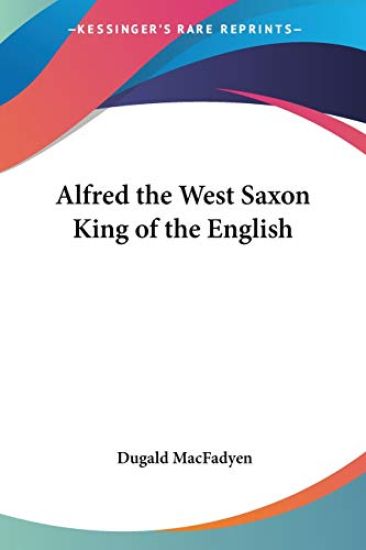
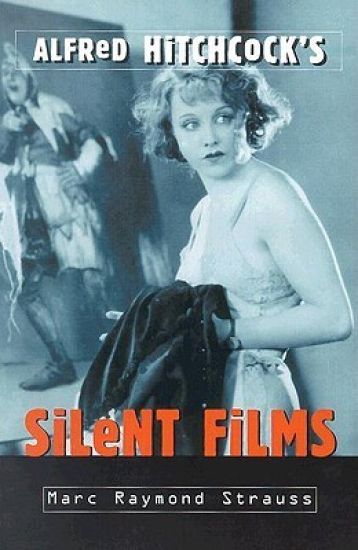
Alfred Hitchcock called the silent "the purest form of cinema," and the ten silent films he directed between 1925 and 1929 reveal the young director's mature artistry. Hitchcock's silents have often been characterized as the work of a talented amateur, a young director practicing his craft during a pre-sound era of antiquated instruments and poor film techniques--the director experimented with myriad points of view, unique camera angles and movements, and special effects such as dissolves, blurriness, and violent cuts. These films, however, contain the first appearances of some of his greatest and most familiar techniques: the vertigo-inducing crowd scene, the symbolic use of inanimate objects, the manipulation of the audience's emotions, and the self-conscious, often macabre wit. This work discovers Hitchcock's early talent and skill through close readings of the films from The Pleasure Garden to the silent version of Blackmail, using shot-by-shot descriptions and interpretations. Each film's chapter includes technical information, a summary of the critical response from the film's release to the present, and detailed analysis of the camera techniques and themes Hitchcock uses.
Alfred Schutz's Sociological Aspect of Literature
Springer
1997
sidottu
The maintext in the present volume has beenconstructed out of passages found scattered aboutin thirty-five years of Alfred Schutz's writings, and it has been constructed by following a pageof notes for a lecture that he gave in 1955 under the title "Sociological Aspect of Literature. " The result can be considered the substance of Schutz's contribution to the theory of literature. More detail about how this construction has beenperformed is offered in the Editor's Introduction. The complementary essays areby scholars from Germany, Japan, andthe United States , from several generations, and from the disciplines of anthropology, philosophy, and sociology. These researchers were invited to reflect in their own perspectives on the main text and in relation to matters referred to within and beyond it. Draftversions of most of these complementary essays were presented for critical discussion in a research symposium held at the Graduate Faculty of Political and Social Science of theNewSchool for Social Research on April28-29, 1995 underthe sponsorship of The Center for Advanced Research in Phenomen ology, Inc. , Florida Atlantic University; The Department of Philosophy of The Graduate Faculty of the New School, Richard 1. Bernstein, Chair; and Evelyn and George Schutz, the philosopher's children. Revised versions of these presentations and also several essays subsequently recruited are offered to begin yet another stagein thehistory of scholarship on Schutz and the phenomenological research inspired by him. Northwestern University Press is thanked for permission to quote extensively from Alfred Schutz, The Phenomenology of the Social World, trans.
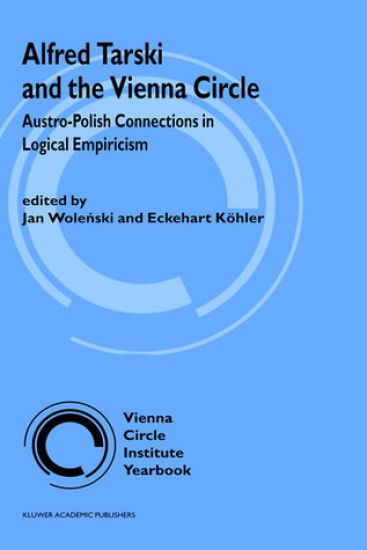
Alfred Tarski and the Vienna Circle
Springer
1998
sidottu
The larger part of Yearbook 6 of the Institute Vienna Circle constitutes the proceedings of a symposium on Alfred Tarski and his influence on and interchanges with the Vienna Circle, especially those on and with Rudolf Carnap and Kurt Gödel. It is the first time that this topic has been treated on such a scale and in such depth. Attention is mainly paid to the origins, development and subsequent role of Tarski's definition of truth. Some contributions are primarily historical, others analyze logical aspects of the concept of truth. Contributors include Anita and Saul Feferman, Jan Wolenski, Jan Tarski and Hans Sluga. Several Polish logicians contributed: Gzegorczyk, Wójcicki, Murawski and Rojszczak. The volume presents entirely new biographical material on Tarski, both from his Polish period and on his influential career in the United States: at Harvard, in Princeton, at Hunter, and at the University of California at Berkeley. The high point of the analysis involves Tarski's influence on Carnap's evolution from a narrow syntactical view of language, to the ontologically more sophisticated but more controversial semantical view. Another highlight involves the interchange between Tarski and Gödel on the connection between truth and proof and on the nature of metalanguages. The concluding part of Yearbook 6 includes documentation, book reviews and a summary of current activities of the Institute Vienna Circle. Jan Tarski introduces letters written by his father to Gödel; Paolo Parrini reports on the Vienna Circle's influence in Italy; several reviews cover recent books on logical empiricism, on Gödel, on cosmology, on holistic approaches in Germany, and on Mauthner.
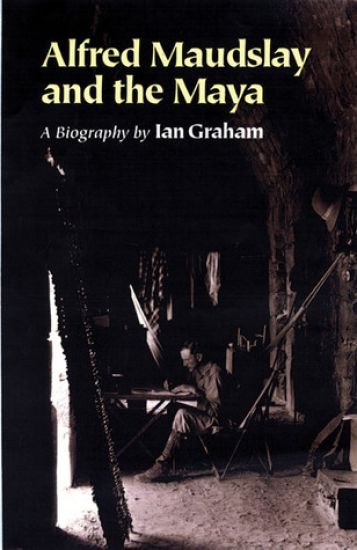
In this fascinating biography, the first ever published about Alfred Maudslay (1850-1931), Ian Graham describes this extraordinary Englishman and his pioneering investigations of the ancient Maya ruins.Maudslay, the grandson of a famous English inventor and engineer, spent his formative adult years in the South Seas as a junior official in Great Britain's Colonial Office. Despite his exotic experiences, he did not find his true vocation until the age of thirty-one, when he arrived in Guatemala.Maudslay played a crucial role in exploring and documenting the monuments and architecture of the ancient Maya ruins at Palengue Copán, Chichén Itzá, and other sites previously unknown. His photographs and plaster casts have proven to be invaluable in the deciphering of Maya hieroglyphics. Personal resources allowed him to undertake fieldwork at a time when no institution provided such support. He made plaster casts of large stone monuments, accurate maps of sites, and painstaking recordings of inscriptions. His Biologia Centrali-Americana, a multivolume compendium of photographs, drawings, plans, and text published almost a century ago, remains an essential foundation for Maya studies. Perhaps Maudslay's greatest legacy is magnificent collection of glass-negative photographs, many of which are reproduced in this book.
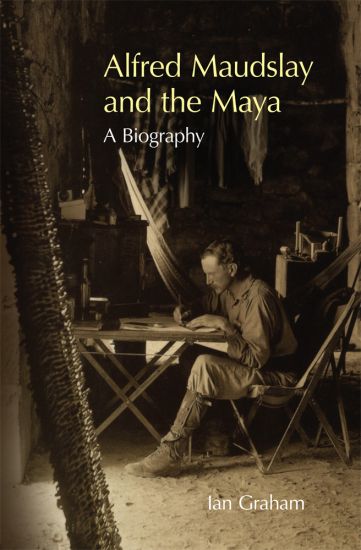
In this fascinating biography, the first ever published about Alfred Maudslay (1850-1931), Ian Graham describes this extraordinary Englishman and his pioneering investigations of the ancient Maya ruins.Maudslay, the grandson of a famous English inventor and engineer, spent his formative adult years in the South Seas as a junior official in Great Britain's Colonial Office. Despite his exotic experiences, he did not find his true vocation until the age of thirty-one, when he arrived in Guatemala.Maudslay played a crucial role in exploring and documenting the monuments and architecture of the ancient Maya ruins at Palengue CopÁn, ChichÉn ItzÁ, and other sites previously unknown. His photographs and plaster casts have proven to be invaluable in the deciphering of Maya hieroglyphics. Personal resources allowed him to undertake fieldwork at a time when no institution provided such support. He made plaster casts of large stone monuments, accurate maps of sites, and painstaking recordings of inscriptions. His Biologia Centrali-Americana, a multivolume compendium of photographs, drawings, plans, and text published almost a century ago, remains an essential foundation for Maya studies. Perhaps Maudslay's greatest legacy is magnificent collection of glass-negative photographs, many of which are reproduced in this book.
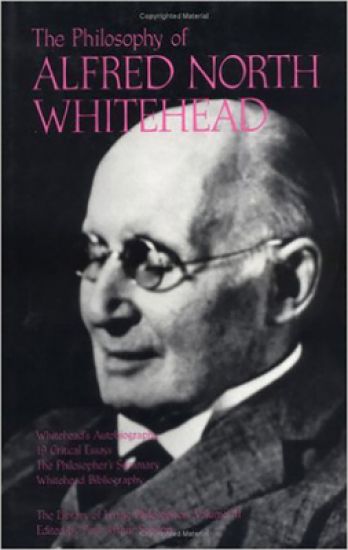
The Philosophy of Alfred North Whitehead, Volume 3
Alfred North Whitehead
Open Court Publishing Co ,U.S.
1999
pokkari
Alfred North Whitehead (1861-1947) has made an enormous impact upon philosophical thinking. His work continues to fascinate, and occasionally to exasperate, Whitehead's 'Principia Mathematica' (jointly offered with Russell) is crucial to an understanding of recent philosophy of logic and of mathematics. Whitehead's metaphysics has proved formidably difficult yet stimulating. With his ideas on God he fathered a major school of modern theology.
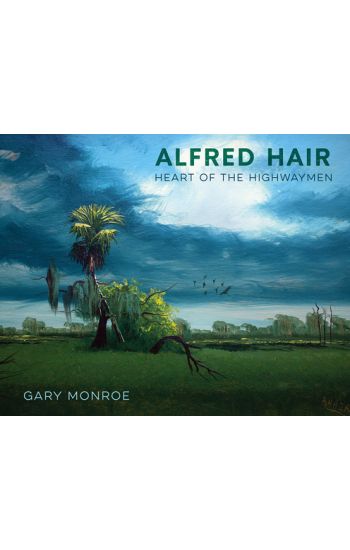
The undervalued force behind the Highwaymen phenomenon.A long-awaited testament to the life and work of Alfred Hair, the driving force of the Florida Highwaymen, this book introduces a charismatic personality whose energy and creativity were foundational to the success of his fellow African American artists during the era of Jim Crow segregation.Shot and killed in a barfight at the age of 29, Hair lived his short life fully, with a zest and intensity that informed his art. In high school he made canvas frames in the Fort Pierce studio of A. E. Backus, the painter who inspired the style of the Highwaymen, and soon became the artist's protégé. By the time Hair graduated in 1961, he was painting luminous South Florida landscapes and selling them door to door. One of the only formally trained Highwaymen, he spurred on the collective of artists as they traversed the state in search of the white clientele who would buy their artwork.Hair's paintings, reproduced here in brilliant color, are marked by their spontaneous, gestural, carefree flair. He was known for his fast painting, which yielded a sense of place well-suited for Florida's postwar residents. These oil paintings hung in their homes and offices like trophies. Sold before the oils were dry, Hair's paintings appeared to their first owners to glow from within. "Alfred could paint as fast as he wanted and as good as he wanted," said Highwayman Al Black. Hair would work on as many as 20 paintings at once to make more money. His goal, as he often declared, was to be a millionaire.Gary Monroe describes Hair's upbringing, growth as an artist, and romantic escapades and marriage, ending with the tragic events that unfolded at the juke joint known as Eddie's Place the night of August 9, 1970. Alfred Hair remembers a man who lifted the spirits of the Highwaymen painters and enhanced the idea of Florida through his art.
This provocative study traces Alfred Hitchcock's long directorial career from Victorianism to postmodernism. Paula Cohen considers a sampling of Hitchcock's best films - Shadow of a Doubt, Rear Window, Vertigo, Psycho - as well as some of his more uneven ones - Rope, The Wrong Man, Topaz - and makes connections between his evolution as a filmmaker and trends in the larger society.Drawing on a number of methodologies including feminism, psychoanalysis, and family systems, the author provides an insightful look at the paradox of a Victorian-style gentleman who evolved into one of the leading masters of the modern medium of film. Cohen sees Hitchcock's films as developing, in part, as a masculine response to the domestic, psychological novels that had appealed primarily to women during the Victorian era. His career, she argues, can be seen as an attempt to balance "the two faces of Victorianism": the masculine legacy of law and hierarchy and the feminine legacy of feeling and imagination.Also central to her thesis is the Victorian model of the nuclear family and its permutations, especially the father-daughter dyad. She postulates a fundamental dynamic in Hitchcock's films, what she calls a "daughter's effect," and relates it to the social role of the family as an institution and to Hitchcock's own relationship with his daughter, Patricia, who appeared in three of his films.Cohen argues that Hitchcock's films reflect his Victorian legacy and serve as a map for ideological trends. She charts his development from his British period through his classic Hollywood years into his later phase, tracing a conceptual evolution that corresponds to an evolution in cultural identity - one that builds on a Victorian inheritance and ultimately discards it.
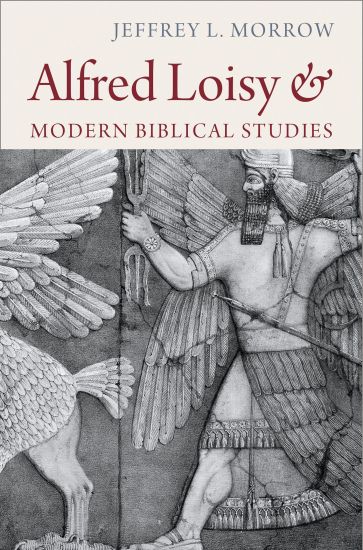
Alfred Loisy and Modern Biblical Studies
Jeffrey L. Morrow
The Catholic University of America Press
2019
sidottu
The French Catholic priest and biblical scholar Alfred Loisy (1857-1940) was at the heart of the Roman Catholic Modernist crisis in the early part of the twentieth century. He saw much of his work as an attempt to bring John Henry Newman's notion of development of doctrine into the realm of Catholic biblical studies, and thereby transform Catholic theology. This volume situates Loisy's better known works on the New Testament and theology in the context of his lesser known work in Assyriology and Old Testament studies. His early training in Assyriology taught Loisy a comparative historical approach to studying ancient texts, in addition to providing him the requisite training in ancient Near Eastern languages and literature. Loisy built upon this Assyriological foundation with his historical critical work in biblical studies, first in the Old Testament. In his biblical scholarship, Loisy combined the then current trends of historical biblical criticism with his more comparative approach. Prior to his excommunication in 1908, Loisy attempted in his more popular writings to defend the inclusion of historical biblical criticism in the repertoire of Catholic biblical interpretation. He saw this as an important step in reforming Catholic theology. The Modernist crisis set the stage for the major debates that would occur in the Catholic theological world for more than a century. The controversy over Modernism became one important conflict that helped pave the way for the Second Vatican Council. The issues raised during Loisy's time, remain contested today. Examining how Loisy approached biblical studies helps readers better understand his overall work, and the place it played in the pivotal intellectual turmoil of his day.
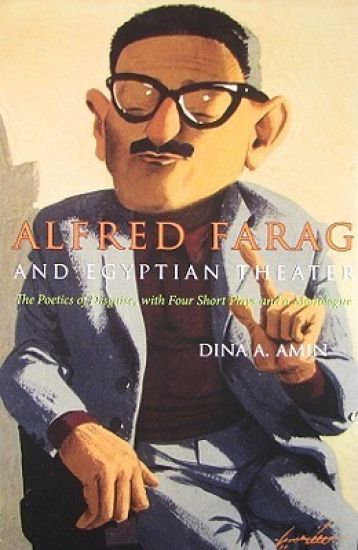
As one of Egyptian theater's leading contemporary playwrights, Alfred Farag has had a profound influence on shaping Arabic drama and Egyptian cultural politics during the past five decades. His plays interrogate the human condition, exposing the struggles of nonheroic individuals faced with political, social, and economic abuse. Farag's dramatic themes, his tireless campaign to democratize the theater, and his encouragement of cultural awareness in the remote and rural regions of Egypt in addition to the cities led to his imprisonment, battles with censorship, and exile. This remarkable writer's indomitable spirit is clearly evidenced in his spending a large part of his time while imprisoned writing plays for performances by his fellow prisons. In the first book-length examination of his work in English, Dina Amin chronicles Farag's career and offers a critical perspective on his creative output and the condition of Egyptian theater in the 1970s through the 1990s. Farag is best known for the folkloric and neorealist plays he produced during the sixties, but critics have consistently overlooked the immense body of work produced in the thirty years that followed. Filling that gap, Amin offers an account of the sophisticated development of his later work, revealing his bold experimentation and successful embrace of modernist, absurdist, and post-modern styles. With fresh insight, Amin contextualizes these works within Farag's own creative history and the larger history of Arabic theater. This book, with the inclusion of four plays and a monologue (translated for the first time into English), will bring a much-deserved wider audience to the work of this extraordinary dramatist.
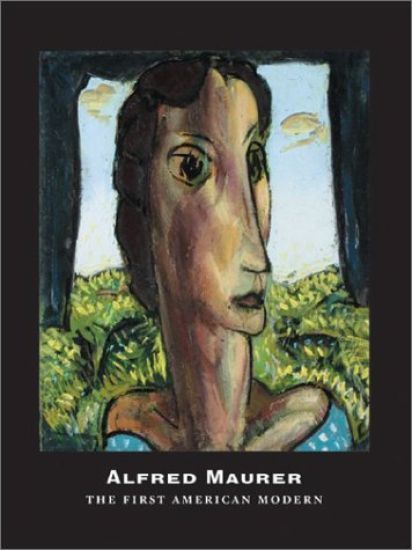
A welcome overview of the career of a significant yet often overlooked American painterAlfred Henry Maurer (1868–1932) was a prolific artist who worked in many of the styles of the early twentieth century: impressionism, postimpressionism, fauvism, and expressionism. This richly illustrated book draws from the single largest public collection of his work and presents the impressive range of his paintings and works on paper throughout his career.Maurer was one of the first American artists to travel to Paris in the early 1900s to experience the new art movements developing there. He was particularly influenced by Matisse and his bold and dramatic use of color, and became one of the first American artists to embrace and incorporate fauvism in his work. In 1909 Alfred Stieglitz included Maurer in a show at his New York gallery, where his art was exhibited in the company of other American modernists such as Georgia O’Keeffe, Arthur Dove, and Marsden Hartley. Despite his extensive and varied career, Maurer did not achieve the fame or recognition of many of his contemporaries, and an insightful essay by Daphne Anderson Deeds provides valuable background about his artistic development and his lonely and tragic personal life.Distributed for the Frederick R. Weisman Art Museum
Alfred North Whitehead CB
Rowman Littlefield
1979
nidottu
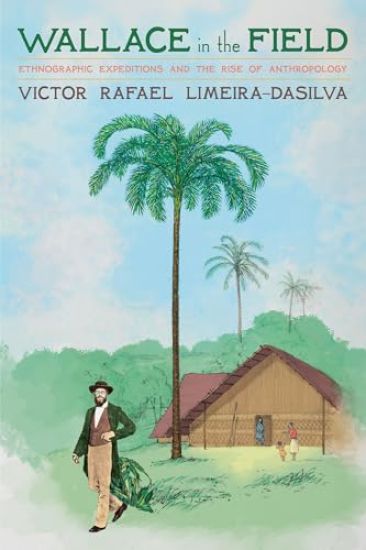
Alfred Russel Wallace, Anthropologist: Early Ethnographic Practices in the Emerging Nineteenth-Century British Anthropology
Victor Rafael Limeira Da Silva
UNIVERSITY OF PITTSBURGH PRESS
2026
sidottu
A man of many talents--naturalist, geographer, anthropologist, and political commentator--Alfred Russel Wallace made seminal contributions to biology in the nineteenth century, playing a pivotal role in developing the theory of evolution through natural selection, which preceded Darwin's famous tome, The Origin of Species.
This collection of essays displays the range and breadth of Hitchcock scholarship and assesses the significance of his body of work as a bridge between the fin de siecle culture of the 19th century and the 20th century. It engages with Hitchcock's characteristic formal and aesthetic preoccupations.
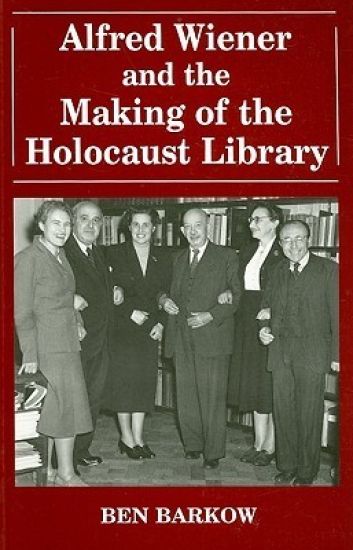
Alfred Wiener and the Making of the Holocaust Library
Ben Barkow
Vallentine Mitchell Co Ltd
1997
nidottu
A catalogue of the suffering inflicted upon the the Jewish people was already in its 10th year of compilation by the time the Nazis held the Wannsee conference in 1942. This book tells how the Holocaust Library began.
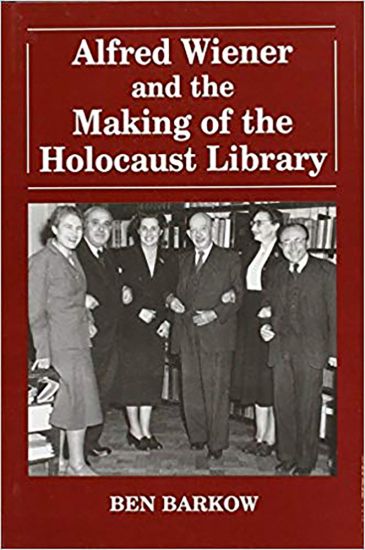
Alfred Wiener and the Making of the Holocaust Library
Ben Barkow
Vallentine Mitchell Co Ltd
1997
sidottu
Alfred the Wise
D.S. Brewer
1997
sidottu
Alfred's life, work and influence studied through writings of his age. Alfred and the great achievements of his reign are once more at the centre of scholarly discussion, and the studies in this collection make a significant contribution to the continuing debate. Focusing particularly on the writingsof Alfred's age, the contributions, by leading scholars in the field, examine Alfred's life, work and influence: there are accounts of law and morality; examinations of translations and their sources; and investigations of wordsand events, throwing new light on all major aspects of Alfred's reign. As a whole, the volume is an appropriate tribute to Janet Bately, whose writings on the age of Alfred are known and admired by both historians and literary scholars throughout the world. Professor JANE ROBERTS teaches in the Department of English, King's College, London; Professor JANET L. NELSON, Director of the Centre for Late Antiques and Medieval Studies, teaches in the Department of History, King's College, London; Professor MALCOLM GODDEN is Rawlinson and Bosworth Professor of Anglo-Saxon at the University of Oxford. Contributors and contents: ANDREW BREEZE, J.E. CROSS, ANDREW HAMER, ROBERTA FRANK, ALLEN J. FRANTZEN, M.R. GODDEN, WALTER GOFFART, LYNNE GRUNDY, CYRIL HART, JOYCE HILL, SIMON KEYNES, ANN KNOCK, BRUCE MITCHELL, JANET L. NELSON, BARBARA RAW, JANE ROBERTS, D.G. SCRAGG, ALFRED B. SMYTH, E.G. STANLEY, PAULE. SZARMACH, PATRICK WORMALD