Kirjojen hintavertailu. Mukana 12 421 311 kirjaa ja 12 kauppaa.

Kirjahaku

Etsi kirjoja tekijän nimen, kirjan nimen tai ISBN:n perusteella.

1000 tulosta hakusanalla Arthur Allen

Arthur Hugh Clough

Arthur Hugh Clough

Oxford University Press
2025
nidottu
This volume in the 21st-Century Oxford Authors series offers an authoritative, comprehensive selection of the work of Arthur Hugh Clough (1819-1861), one of the most distinctive writers of the Victorian period. The first selection to place Clough's poetry alongside his prose, it allows readers to explore how his poems are connected to his literary criticism and his lectures on literary history, to his letters and diaries, and to his writing on politics and economics. A political radical and religious sceptic, Clough emerges as a strikingly modern Victorian: he writes honestly and directly about sexuality, and his work is informed by a cosmopolitan perspective that views Victorian society in the context of other national, political, and cultural traditions. Clough's innovative poems incorporate a diverse range of voices and styles, borrowing and reimagining aspects of the epic, the drama, and the novel. And they reveal a side of Victorian culture-irreverent, iconoclastic, and self-aware-that is often ignored today. Detailed notes identify and explain Clough's comments on major political events such as the European revolutions of 1848, and his allusions to a wide array of different writers and texts. The edition includes an Introduction to the life and works of Clough, and a Chronology, which enhance the study, understanding, and enjoyment of these works.
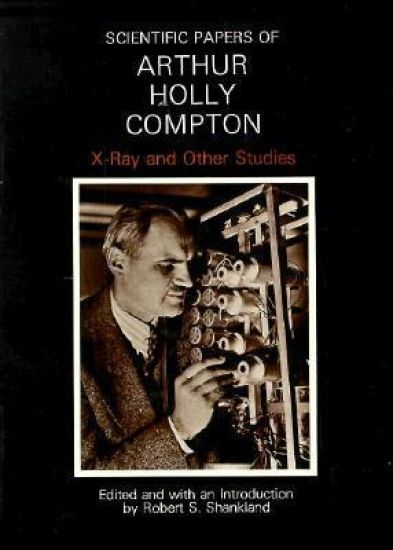
Scientific Papers of Arthur Holly Compton

Scientific Papers of Arthur Holly Compton

Arthur Holly Compton

University of Chicago Press
1973
sidottu
Arthur Holly Compton was one of the great leaders in physics of the twentieth century. In this volume, Robert S. Shankland, who was once a student of Compton's, has collected and edited the most important of Professor Compton's papers on X-rays—the field of his greatest achievement—and on other related topics. Compton entered the field of X-ray research in 1913 and carried on active work until the 1930s, when he began to specialize in cosmic rays. During the years when Compton was an active leader in X-ray research, he made many notable contributions which are reflected in the papers presented here. He was the first to prove several important optical properties of X-rays, including scattering, complete polarization, and total reflection. He was also the first, with his student R. L. Doan, to use ruled gratings for the production of X-ray spectra. Professor Compton's greatest discovery, for which he was awarded a Nobel Prize in 1927, was the Compton Effect. This was the outgrowth of experiments he had initiated during a year at Cambridge in 1919-20. He did the major portion of these experiments at Washington University in St. Louis during the period 1920-24. His work demonstrated that in the scattering of X-rays by electrons, the radiation behaves like corpuscles, and that the interaction between the X-ray corpuscles and the electrons in the scatter is completely described by the principles of the conservation of energy and momentum for the collisions of particles. In his introduction, Professor Shankland gives a historical account of the papers, narrates Professor Compton's early scientific career, and shows how he arrived at a quantum explanation of the Compton scattering after eliminating all classical explanations.
Arthur Dove

Arthur Dove

Rachael Z. DeLue

University of Chicago Press
2016
sidottu
Arthur Dove, often credited as America's first abstract painter, created dynamic and evocative images inspired by his surroundings, from the farmland of upstate New York to the north shore of Long Island. But his interests did not stop with nature. Challenging earlier accounts that view him as simply a landscape painter, Arthur Dove: Always Connect reveals for the first time the artist's intense engagement with language, the nature of social interaction, and scientific and technological advances. Rachael Z. DeLue rejects the traditional assumption that Dove can only be understood in terms of his nature paintings and association with photographer and gallery director Alfred Stieglitz and his circle. Instead, she uncovers deep and complex connections between Dove's work and his world, including avant-garde literature, popular music, machine culture, meteorology, mathematics, aviation, and World War II, just to name a few. Arthur Dove also offers the first sustained account of Dove's Dadaesque multimedia projects and the first explorations of his animal imagery and the role of humor in his art. Beautifully illustrated with works from all periods of Dove's career, this book presents an unprecedented vision of one of America's most innovative and captivating artists-and reimagines how the story of modern art in the United States might be told.
Arthur Vandenberg – The Man in the Middle of the American Century
The idea that a Senator Republican or Democrat would put the greater good of the country ahead of party seems nearly impossible to imagine in our current climate of gridlock and divisiveness. But this hasn't always been the case. Arthur H. Vandenberg (1884-1951), Republican from Grand Rapids, Michigan, was the model of a consensus builder, and the coalitions he spearheaded continue to form the foundation of American foreign and domestic policy today. Edward R. Murrow called him "the central pivot of the entire era," yet, despite his significance, Vandenberg has never received the full public attention he is due until now. With this authoritative biography, Hendrik Meijer reveals how Vandenberg built and nurtured the bipartisan consensus that created the American Century. Originally the editor and publisher of the Grand Rapids Herald, Vandenberg was appointed and later elected to the Senate in 1928, where he became an outspoken opponent of the New Deal and a leader among the isolationists who resisted FDR's efforts to aid European allies at the onset of World War II.But Vandenberg soon recognized the need for unity at the dawn of a new world order; and as a Republican leader, he worked closely with Democratic administrations to build the strong bipartisan consensus that established the Marshall Plan, the United Nations, and NATO. Vandenberg, as Meijer reveals, was instrumental in organizing Congressional support for these monumental twentieth-century foreign policy decisions. Vandenberg's life and career offer powerful lessons for today, and Meijer has given us a story that suggests an antidote to our current democratic challenges. After reading this poignant biography, many will ask: Where is the Vandenberg of today?
Arthur Vandenberg

Arthur Vandenberg

Hendrik Meijer

University of Chicago Press
2019
pokkari
The idea that a Senator--Republican or Democrat--would put the greater good of the country ahead of party seems nearly impossible to imagine in our current climate of gridlock and divisiveness. But this hasn't always been the case. Arthur H. Vandenberg (1884-1951), Republican from Grand Rapids, Michigan, was the model of a consensus builder, and the coalitions he spearheaded continue to form the foundation of American foreign and domestic policy today. Edward R. Murrow called him "the central pivot of the entire era," yet, despite his significance, Vandenberg has never received the full public attention he is due--until now. With this authoritative biography, Hendrik Meijer reveals how Vandenberg built and nurtured the bipartisan consensus that created the American Century. Originally the editor and publisher of the Grand Rapids Herald, Vandenberg was appointed and later elected to the Senate in 1928, where he became an outspoken opponent of the New Deal and a leader among the isolationists who resisted FDR's efforts to aid European allies at the onset of World War II. But Vandenberg soon recognized the need for unity at the dawn of a new world order; and as a Republican leader, he worked closely with Democratic administrations to build the strong bipartisan consensus that established the Marshall Plan, the United Nations, and NATO. Vandenberg, as Meijer reveals, was instrumental in organizing Congressional support for these monumental twentieth-century foreign policy decisions. Vandenberg's life and career offer powerful lessons for today, and Meijer has given us a story that suggests an antidote to our current democratic challenges. After reading this poignant biography, many will ask: Where is the Vandenberg of today?
Arthur Schopenhauer

Arthur Schopenhauer

David Bather Woods

THE UNIVERSITY OF CHICAGO PRESS
2025
sidottu
An engaging biography of one of the most influential Western philosophers and a thought-provoking exploration of how to live with Arthur Schopenhauer’s pessimism. Arthur Schopenhauer (1788–1860) almost wasn’t one of the greatest philosophers of the nineteenth century. Born in the Free City of Danzig to a family of shipping merchants, he was destined for a life of imports and exports until his father died in a suspected suicide. After much deliberation, the young Schopenhauer invested his inheritance in himself and his philosophical vocation. But the long road to recognition was a difficult one, with Schopenhauer spending all but the last decade of his life in total obscurity. Yet his ideas and style went on to influence great thinkers, including Friedrich Nietzsche, Ludwig Wittgenstein, and Sigmund Freud, as well as artists such as the composer Richard Wagner and writers Marcel Proust, Thomas Mann, Samuel Beckett, and many more. A singular and remarkably influential thinker, Schopenhauer is usually described as an extreme pessimist. He questioned the purpose of existence in a world where pain and suffering are inescapable and happiness is all too brief. In this engaging philosophical biography, David Bather Woods reevaluates Schopenhauer’s pessimism in the context of his life experiences, revealing the philosopher’s relentless fascination with the world and making a case for his contemporary relevance. Bather Woods weaves together Schopenhauer’s ideas with the story of how he came to be, including such topics as love, loneliness, morality, politics, gender, sexuality, death, suicide, fame, and madness. In doing so, this book answers some of life’s most challenging questions about how to deal with pain and loss, and how to live with ourselves and each other. Despite his pessimistic outlook on human existence, Schopenhauer didn’t give up on life. Rather, he recognized that the question of how to live becomes even more pressing, and he worked to provide an answer. Bather Woods shows how Schopenhauer’s life informed his ideas and how they still resonate today.
Arthur Garber the Harbor Barber

Arthur Garber the Harbor Barber

Joe Frank

Firefly Books Ltd
2019
sidottu
“In a seaside town on a cozy little bay, ships of all kinds often dock for the day. There a man lives loved by tourists and fishers, known through the world to do magic with scissors.” So starts this children’s book debut by author-illustrator Joe Frank. With bright splashes of vibrant watercolours and jaunty rhyming prose, Frank’s fashionable maritime myth comes alive in 32 pages of seafaring fun. With his perfectly coiffured pompadour, our protagonist Arthur Garber must set aside his daily dealings providing trims for sunburned tourists and buzzcuts for naval crews when he is met with the challenge of his life: A castaway with wild hair floats ashore hoping to look normal, once more. “There was simply so much of it, frazzled and frizzy. Anyone else would have left feeling dizzy. What followed became a maritime myth. A castaway saved by a master hairsmith.” Full of wild hair, tall tales and a joyous surprise, Arthur Garber the Harbour Barber is a fantastic yarn for landlubbers and seafaring folk alike.
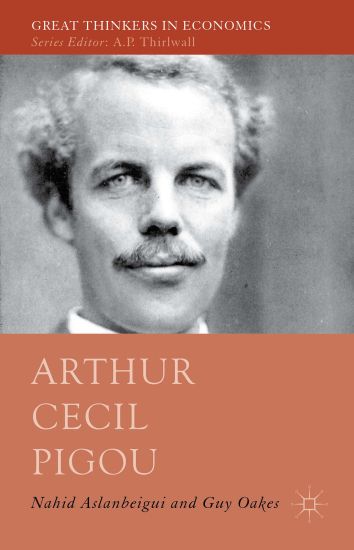
Arthur Cecil Pigou

Arthur Cecil Pigou

Nahid Aslanbeigui; Guy Oakes

Palgrave Macmillan
2015
sidottu
The British economist Arthur Cecil Pigou (1877-59) reconceptualized economics as a theory of economic welfare and a logic of policy analysis. Misconceptions of his work abound. This book, an essay in demystification and the first reading of the entire Pigouvian oeuvre, stresses his pragmatic and historicist premises.
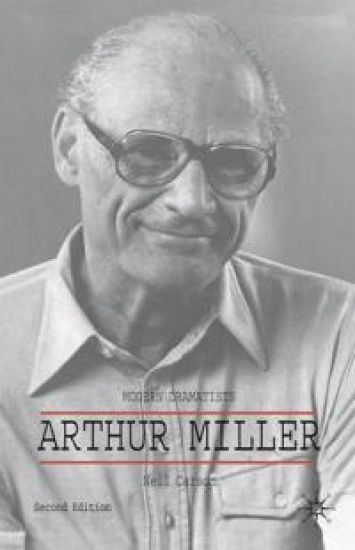
Arthur Miller

Arthur Miller

Neil Carson

Red Globe Press
2008
sidottu
Following Miller's death in 2005, this fully revised, expanded and updated new edition examines the playwright's career as a whole. All the plays are now discussed, along with his non-dramatic writings, and Carson explores the ways in which Miller's later work helps us to better understand the plays of his maturity.
Arthur Miller

Arthur Miller

Neil Carson

Red Globe Press
2008
nidottu
Following Miller's death in 2005, this fully revised, expanded and updated new edition examines the playwright's career as a whole. All the plays are now discussed, along with his non-dramatic writings, and Carson explores the ways in which Miller's later work helps us to better understand the plays of his maturity.
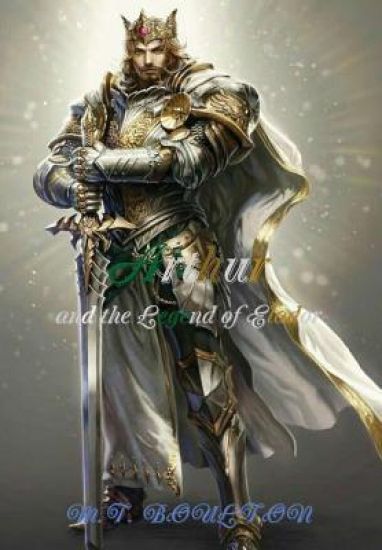
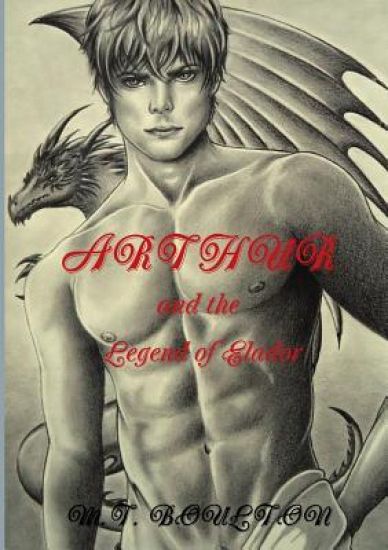
Arthur and the Legend of Elador
Part of The Round Table Chronicles Arthur and the Legend of Elador During Uther's reign, he had banned magic in Camelot and started a war with Elador, the only kingdom in the Five Lands that practises magic as its heart, causing years of animosity between the two kingdoms. Now, Arthur who have been crowned King after Uther's death is on a mission to reverse what his father has done: bring back peace between Elador and Camelot and integrate the use of magic back into Camelot. And that starts with forming the strongest diplomatic bond that can ever be created between two kingdoms, a marriage bond between the King of Camelot, Arthur PenDragon and the Prince and future King of Elador, Merlin Emrys. Available titles in the ound Table Chronicles: Merlin and the Unearthing of Arthur The Truth of the Once and Future King: Arthur PenDragon by Emrys Tristan and the Lure of Caraval
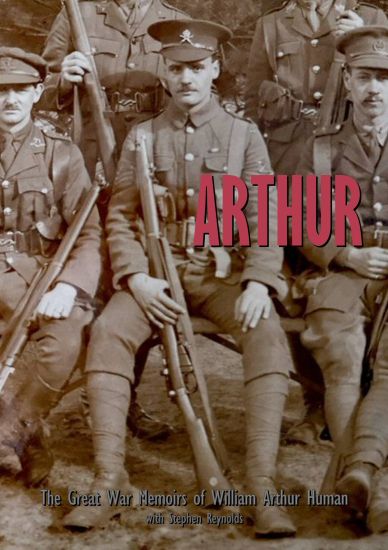
ARTHUR: The Great War Memoirs of William Arthur Human

ARTHUR: The Great War Memoirs of William Arthur Human

Stephen Reynolds; William Arthur Human

Lulu.com
2019
nidottu
William Arthur Human was 22 years old and serving as a British soldier in India when war broke out in 1914.This is his story, in his own words, covering his first eight months on the Western Front and featuring the Battle of Neuve Chapelle.An extraordinarily vivid account that is heartfelt, captivating, and challenging in equal measure."Nowadays - when I think of it - it gives me a shiver down my back. I wonder how a man could live through it all and yet be sane."Written by William Arthur HumanTranscribed by his great-grandson Stephen Reynolds
Arthur and the Legend of Elador
Part of The Round Table Chronicles Arthur and the Legend of Elador During Uther's reign, he had banned magic in Camelot and started a war with Elador, the only kingdom in the Five Lands that practises magic as its heart, causing years of animosity between the two kingdoms. Now, Arthur who have been crowned King after Uther's death is on a mission to reverse what his father has done: bring back peace between Elador and Camelot and integrate the use of magic back into Camelot. And that starts with forming the strongest diplomatic bond that can ever be created between two kingdoms, a marriage bond between the King of Camelot, Arthur Pendragon and the Prince and future King of Elador, Merlin Emrys. Available titles in the Round Table Chronicles: Merlin and the Unearthing of Arthur The Truth of the Once and Future King: Arthur Pendragon by Emrys Tristan and the Lure of Caraval
Arthur and the Legend of Elador Heraldic Edition
Part of The Round Table Chronicles Arthur and the Legend of Elador During Uther's reign, he had banned magic in Camelot and started a war with Elador, the only kingdom in the Five Lands that practises magic as its heart, causing years of animosity between the two kingdoms. Now, Arthur who have been crowned King after Uther's death is on a mission to reverse what his father has done: bring back peace between Elador and Camelot and integrate the use of magic back into Camelot. And that starts with forming the strongest diplomatic bond that can ever be created between two kingdoms, a marriage bond between the King of Camelot, Arthur Pendragon and the Prince and future King of Elador, Merlin Emrys. Available titles in the Round Table Chronicles: Merlin and the Unearthing of Arthur The Truth of the Once and Future King: Arthur Pendragon by Emrys Tristan and the Lure of Caraval
Arthur C. Clarke

Arthur C. Clarke

Gary Westfahl

University of Illinois Press
2018
sidottu
Already renowned for his science fiction and scientific nonfiction, Arthur C. Clarke became the world's most famous science fiction writer after the success of 2001: A Space Odyssey. He then produced novels like Rendezvous with Rama and The Fountains of Paradise that many regard as his finest works. Gary Westfahl closely examines Clarke's remarkable career, ranging from his forgotten juvenilia to the passages he completed for a final novel, The Last Theorem. As Westfahl explains, Clarke's science fiction offered original perspectives on subjects like new inventions, space travel, humanity's destiny, alien encounters, the undersea world, and religion. While not inclined to mysticism, Clarke necessarily employed mystical language to describe the fantastic achievements of advanced aliens and future humans. Westfahl also contradicts the common perception that Clarke's characters were bland and underdeveloped, arguing that these reticent, solitary individuals, who avoid conventional relationships, represent his most significant prediction of the future, as they embody the increasingly common lifestyle of people in the twenty-first century.
Arthur C. Clarke

Arthur C. Clarke

Gary Westfahl

University of Illinois Press
2018
nidottu
Already renowned for his science fiction and scientific nonfiction, Arthur C. Clarke became the world's most famous science fiction writer after the success of 2001: A Space Odyssey. He then produced novels like Rendezvous with Rama and The Fountains of Paradise that many regard as his finest works. Gary Westfahl closely examines Clarke's remarkable career, ranging from his forgotten juvenilia to the passages he completed for a final novel, The Last Theorem. As Westfahl explains, Clarke's science fiction offered original perspectives on subjects like new inventions, space travel, humanity's destiny, alien encounters, the undersea world, and religion. While not inclined to mysticism, Clarke necessarily employed mystical language to describe the fantastic achievements of advanced aliens and future humans. Westfahl also contradicts the common perception that Clarke's characters were bland and underdeveloped, arguing that these reticent, solitary individuals, who avoid conventional relationships, represent his most significant prediction of the future, as they embody the increasingly common lifestyle of people in the twenty-first century.
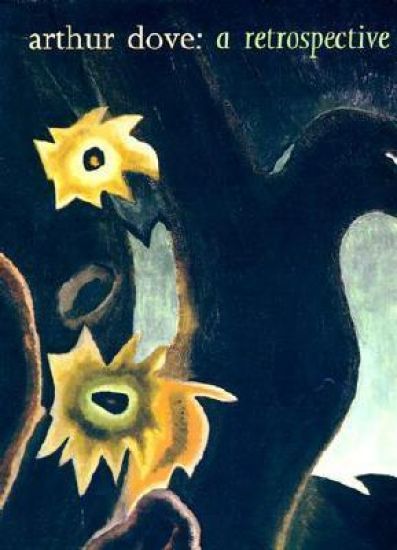
Arthur Dove

Arthur Dove

Debra Bricker Balken

MIT Press
1997
pokkari
In collaboration with William C. Agee and Elizabeth Hutton Turner The American artist Arthur Dove (1880-1946), purportedly the first artist to have produced an abstract painting, has always occupied a central place in writings on early American modernism. This book accompanies the first major exhibition on Dove since 1974. The exhibition, organized by the Addison Gallery of American Art and the Phillips Collection, covers the period from 1908, the year after Dove took up painting, through 1946, the year of his death. It is comprised of approximately eighty paintings, collages, pastels, and charcoal drawings. Along with Georgia O'Keeffe and John Marin, Dove was touted for more than three decades by photographer and dealer Alfred Stieglitz as an American original, one whose work was prescient in its opposition to the materialism of a newly industrialized America. Essays by Balken, Agee, and Turner discuss Dove's interactions with Stieglitz and others in his circle, including O'Keeffe, Marin, Marsden Hartley, and Paul Strand, and re-examine Dove in the context of early twentieth-century intellectual and cultural history. The book contains color plates of all the works in the exhibition; the essays are profusely illustrated with black-and-white images not included in the exhibition. Apart from an out-of-print catalogue raisonne, this book is the largest and most comprehensive publication to date on Dove's work. Copublished with the Addison Gallery of American Art in association with the Phillips Collection