Laura Taylor, a kind, benevolent woman. Or is she? Is she just a normal homemaker going about her own business in the quiet hometown where she lives? What powers does the gentle redhead possess? If she is just an innocent, sixty-year old woman, why is she appearing in the dreams of countless people throughout the country? Why is she summoning them to come down to her hometown? Laura has a strange secret to reveal to them, and one that she hopes they will believe for their very own lives will depend on it. She must prepare them to embark on a journey to their ancestral home, many light years away! Laura must succeed in convincing them to believe her before it is too late, before "August the 6th.
This is a story of a Mexican-American family who lived in the same fertile valley that was the setting for John Steinbeck's Grapes of Wrath. Several decades after Steinbeck's 1939 novel, this family realized the American dream of creating a financially successful business, sending their children to private school, and owning their family home. They also experienced a father's alcoholism; a brother's Down syndrome; a twin brother's HIV infection, homosexuality, and death; a daughter's struggles with rivalry, addictions, and personal demons; and, a mother's decline into dementia and Alzheimer's disease. The author tells this story with courageous honesty. The tale is not elaborately reconstructed by the author to portray how she wanted things to be to engender approval from readers or surviving relatives, nor to enhance her image or that of family members. Instead, it is a heart-wrenching account of denial, anger, guilt, death, and acceptance of realities about herself and her family.
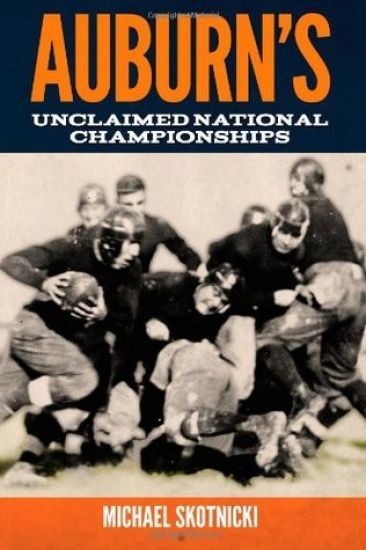
Because major college football has never had a playoff system to produce a true champion, controversy has surrounded the issue of which team could be declared a National Champion, even as far back as the early years of the last century. The sports media and followers of college football filled that vacuum by creating polls and mathematical systems to name various teams as National Champions, even retroactively naming champions for college football's early years. Some colleges have seized every opportunity to glorify their football teams by claiming a National Championship for every year possible.An exception has been Auburn University, which has not done all it can to celebrate its success on the gridiron and officially claims a National Championship for only two seasons, 1957 and 2010. Auburn even declines to claim a National Championship for its undefeated 1913 team, although that squad is recognized as a National Champion in the Official NCAA Division I Football Records Book.Auburn's Unclaimed National Championships seeks to alter this position of the Auburn University Athletic Department and is perhaps one of the most important books ever written about the Auburn University football program.Author Michael Skotnicki argues that until a playoff system is instituted by the NCAA to establish a true major college football National Champion, multiple teams can make a legitimate claim to a National Championship and the concept of a true single National Champion for any season is mythical. Skotnicki notes that many universities have claimed National Championships for seasons where they were not named such by the two most well-know selectors, the Associated Press and the Coaches Poll, with two universities even adding retroactive National Championship claims to past seasons as recently as this year (2012).This well-researched text brings needed attention to the entire history of Auburn football and makes the case for the position that in addition to the 1957 and 2010 National Championship seasons claimed by the Auburn Athletic Department, there are seven other seasons - 1910, 1913, 1914, 1958, 1983, 1993, and 2004 - for which Auburn should be recognized as a National Champion. Skotnicki, an appellate attorney, provides a history for each of these seasons, brings them to life, and makes the case for why Auburn's claim to recognition as a National Champion for each of those years is as strong or stronger than the teams accepted as national champions in those seasons.Skotnicki argues that in only claiming two National Championship seasons, Auburn University is forsaking much of its great football history, and that it should claim a total of nine National Championships.
The evolutionist Ernst Mayr considered August Weismann “one of the great biologists of all time.” Yet the man who formulated the germ plasm theory—that inheritance is transmitted solely through the nuclei of the egg and sperm cells—has not received an in-depth historical examination. August Weismann reintroduces readers to a towering figure in the life sciences. In this first full-length biography, Frederick Churchill situates Weismann in the swirling intellectual currents of his era and demonstrates how his work paved the way for the modern synthesis of genetics and evolution in the twentieth century.In 1859 Darwin’s tantalizing new idea stirred up a great deal of activity and turmoil in the scientific world, to a large extent because the underlying biological mechanisms of evolution through natural selection had not yet been worked out. Weismann’s achievement was to unite natural history, embryology, and cell biology under the capacious dome of evolutionary theory. In his major work on the germ plasm (1892), which established the material basis of heredity in the “germ cells,” Weismann delivered a crushing blow to Lamarck’s concept of the inheritance of acquired traits.In this deeply researched biography, Churchill explains the development of Weismann’s pioneering work based on cytology and embryology and opens up an expanded history of biology from 1859 to 1914. August Weismann is sure to become the definitive account of an extraordinary life and career.
Grand political accomplishment and artistic productivity were the hallmarks of Augustus Caesar's reign (31 B.C. to A.D. 14), which has served as a powerful model of achievement for societies throughout Western history. Although much research has been done on individual facets of Augustan culture, Karl Galinsky's book is the first in decades to present a unified overview, one that brings together political and social history, art, literature, architecture, and religion. Weaving analysis and narrative throughout a richly illustrated text, Galinsky provides not only an enjoyable account of the major ideas of the age, but also an interpretation of the creative tensions and contradictions that made for its vitality and influence. Galinsky draws on source material ranging from coins and inscriptions to the major works of poetry and art, and challenges the schematic concepts and dichotomies that have commonly been applied to Augustan culture. He demonstrates that this culture was neither monolithic nor the mere result of one man's will. Instead it was a nuanced process of evolution and experimentation. Augustan culture had many contributors, as Galinsky demonstrates, and their dynamic interactions resulted in a high point of creativity and complexity that explains the transcendence of the Augustan age. Far from being static, its sophisticated literary and artistic monuments call for the active response and involvement of the reader and viewer even today.
Centring on the reign of the emperor Augustus, volume four is pivotal to the series, tracing of the changing shape of the entity that was ancient Rome through its political, cultural and economic history. Within this period the Roman world was reconfigured. On a political and constitutional level the patterns of the republic, which sustained an oligarchic regime and a popularist structure, were transformed into a monarchical dictatorship in which the earlier elements continued to function. On an imperial level, the growth in Roman power reached what was virtually its apogee. In literature and the visual arts, new forms of expression, based on those of the previous generations but closely linked to the new regime, showed great achievements. In society and the economy, the effectiveness and dominance of Rome as the centre of world power became increasingly obvious.
Augustus: How the Roman Empire came about The reign of Augustus, the first of the Roman emperors, has been seen, both by contemporaries and over the centuries that have followed, as a pivotal moment in the history of Rome. The final stage in the move to monarchical government and the structures he put in place, which were to last largely unchanged for over two hundred years, ensured this; but Augustus himself remains an enigmatic figure. J. S. Richardson explores the processes which resulted in such a massive shift, and the often unforeseen events which led to the establishment of an empire and a dynasty. Key features:* a pivotal volume in the series* traces the changing shape of the entity that was ancient Rome through its political, cultural and economic history* demonstrates how the effectiveness and dominance of Rome as the centre of work power became increasingly obvious Keywords:Augustus; Roman Empire.
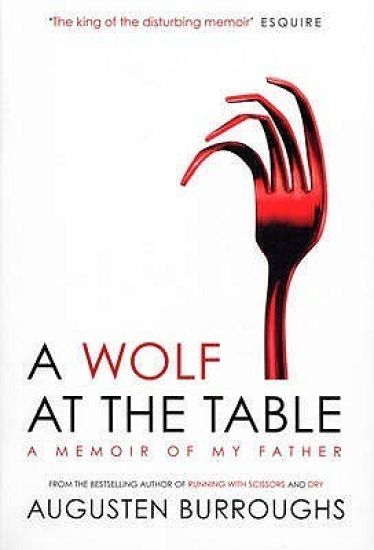
From the author: 'My father doesn't feature much in Running with Scissors. And one of the reasons for this is because he didn't feature much in my life. But there's another reason too: Our relationship was so complicated so dark so confusing and so big that to tell the story would require a book. So finally upon the death of my father in 2005 I decided to tell the story I have been most afraid yet most compelled to tell.' This prequel to international hit Running With Scissors tells the story of Augusten's relationship with his tormented father: a man who sent his wife mad and saw his other son run away from home prior to Augusten going into foster care. Harrowing insightful and amusing by turns.
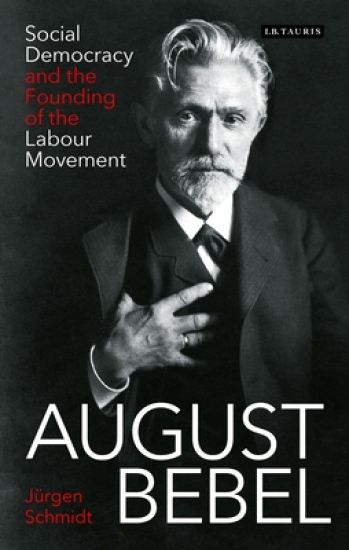
August Bebel (1840-1913) was one of the towering figures of late nineteenth century European socialism and the leading figure of the German labour movement from the 1860s until his death in 1913. Born into a modest family, and a half-orphan from the age of four, his advancement to a pivotal role in the politics of Imperial Germany mirrored the success of German social democracy in this period. Bebel was not only the founder and first leader of the Social Democratic Workers Party of Germany (SDAP), a political movement that became the largest socialist party in nineteenth-century Europe, but he was also a powerful orator and leading member of the German parliament. He was described by contemporaries as the ‘king of the German workers’ and the ‘shadow emperor’ of Germany. In this biography, Jürgen Schmidt situates Bebel’s life and career in the political, social and cultural history of modern Europe. He also provides an overview of the growth of the labour movement and working class political activism in late-nineteenth century Germany. This is an essential biography of one of Germany’s most influential and unique politicians, living at a time of great political, social and industrial change in Europe.
Coming shortly after the British occupation of Iraq and the German invasion of Russia, the Anglo-Russian occupation of Iran secured a vital route for supplies to Russia and assured British control of the oilfields. To save the Pahlavi regime, Reza Shah was replaced by his son and Iranians were given a “New Deal.” The Allied occupation thus ushered in a brief period of democratic freedoms. Having described the rise of Reza Shah in a previous work, Majd completes the story by describing his downfall. The author has made an extensive search of the widely scattered U.S. diplomatic and military records and these are supplemented by reports in the The New York Times, The Washington Post, and The Chicago Daily Tribune, as well as other press accounts. More than seventy years later, this interesting story has remained untold. August 1941 is the first detailed and documented account of the affair.
Long before "The Perfect Storm," the 1935 August Gale roared northeast. The surf raged along the New York and New Jersey shores as the gale whirled toward Newfoundland. Waves as tall as three-story houses swamped ships; monster combers broke masts in two and swept every man on deck into the raging sea. Scores of fishermen disappeared when the "divil" descended on that August evening, and one Newfoundland village would never be the same. Forty-two children in a community of three hundred lost their fathers.In August Gale, Pulitzer Prize-winning writer Barbara Walsh takes readers on two heartrending odysseys: one into a deadly Newfoundland hurricane and the lives of schooner fishermen who relied on God and the wind to carry them home; the other, into a squall stirred by a man with many secrets: a grandfather who remained a mystery until long after his death.
Although Auguste Comte is conventionally acknowledged as one of the founders of sociology and as a key representative of positivism, few new editions of his writings have been published in the English language in this century. He has become virtually dissociated from the history of modern positivism and the most recent debates about it. Gertrud Lenzer maintains that the work of Comte is, for better or for worse, essential to an understanding of the modern period of positivism. This collection provides new access to the work of Comte and gives practitioners of various disciplines the possibility of reassessing concepts that were first introduced in Comte's writings.Today much of the ordinary business of academic disciplines is conducted under the assumption that the realm of science is essentially separate from the realms of politics and science. A close reading of Comte will reveal how deeply such current ideas and theories were originally embedded in a particular political context. One of his central methodological principles was that the theory of society had to be removed from the arena of political practice precisely in order to control that practice by means of these same sciences. It is in Comte's work that the reader will be able to observe how the forces of social and political reaction began to be powerfully organized to combat the critical forces in its own and later eras. Auguste Comte and Positivism will be of importance to the work of philosophers, sociologists, political theorists, and historians.