Kirjahaku
Etsi kirjoja tekijän nimen, kirjan nimen tai ISBN:n perusteella.
1000 tulosta hakusanalla Austin J. Stack
John L. Austin was a British philosopher of language and leading proponent of ordinary language philosophy, perhaps best known for developing the theory of speech acts. Austin pointed out that we use language to do things as well as to assert things, and that the utterance of a statement like "I promise to do so-and-so" is best understood as doing something - making a promise - rather than making an assertion about anything. Hence the name of one of his best-known works How to Do Things with Words. Austin, in providing his theory of speech acts, makes a significant challenge to the philosophy of language, far beyond merely elucidating a class of morphological sentence forms that function to do what they name. Austin's work ultimately suggests that all speech and all utterance is the doing of something with words and signs, challenging a metaphysics of language that would posit denotative, propositional assertion as the essence of language and meaning.
Paris Climate Agreement: Beacon of Hope
Ross J. Salawitch; Timothy P. Canty; Austin P. Hope; Walter R. Tribett; Brian F. Bennett
Springer International Publishing AG
2017
sidottu
This book is open access under a CC BY 4.0 license.This volume presents an Empirical Model of Global Climate developed by the authors and uses that model to show that global warming will likely remain below 2ºC, relative to preindustrial, throughout this century provided: a) both the unconditional and conditional Paris INDC commitments are followed; b) the emission reductions needed to achieve the Paris INDCs are carried forward to 2060 and beyond.The first section of the book provides a short overview of Earth’s climate system, describing and contrasting climatic changes throughout the planet’s history and anthropogenic changes post-Industrial Revolution. The second section describes the climate model developed by the authors (Canty et al., Atmospheric Chemistry and Physics, 2013) and contrasts the model with climate models used in the Intergovernmental Panel on Climate Change (IPCC) 2013 Report. Chapter 3 examines both the unconditional (i.e., firm commitments) andconditional Paris INDCs (commitments contingent on financial flow and/or technology transfer) through the lens of their climate model and concludes that if all of the Paris INDCs are followed, then they are indeed a beacon of hope for Earth’s climate. The fourth part of the book offers a perspective of energy needs and subsequent emissions reductions required to meet the Paris temperature goals, illuminating challenges faced both in the developing world and the developed world.Throughout the book, easy-to-understand charts and graphics illustrate concepts. The scientific basis of Chapters 2 and 3 was first presented in a keynote session of the 96th Annual Meeting of the American Meteorological Society in January, 2016.
Paris Climate Agreement: Beacon of Hope
Ross J. Salawitch; Timothy P. Canty; Austin P. Hope; Walter R. Tribett; Brian F. Bennett
Springer International Publishing AG
2018
nidottu
This book is open access under a CC BY 4.0 license.This volume presents an Empirical Model of Global Climate developed by the authors and uses that model to show that global warming will likely remain below 2ºC, relative to preindustrial, throughout this century provided: a) both the unconditional and conditional Paris INDC commitments are followed; b) the emission reductions needed to achieve the Paris INDCs are carried forward to 2060 and beyond.The first section of the book provides a short overview of Earth’s climate system, describing and contrasting climatic changes throughout the planet’s history and anthropogenic changes post-Industrial Revolution. The second section describes the climate model developed by the authors (Canty et al., Atmospheric Chemistry and Physics, 2013) and contrasts the model with climate models used in the Intergovernmental Panel on Climate Change (IPCC) 2013 Report. Chapter 3 examines both the unconditional (i.e., firm commitments) andconditional Paris INDCs (commitments contingent on financial flow and/or technology transfer) through the lens of their climate model and concludes that if all of the Paris INDCs are followed, then they are indeed a beacon of hope for Earth’s climate. The fourth part of the book offers a perspective of energy needs and subsequent emissions reductions required to meet the Paris temperature goals, illuminating challenges faced both in the developing world and the developed world.Throughout the book, easy-to-understand charts and graphics illustrate concepts. The scientific basis of Chapters 2 and 3 was first presented in a keynote session of the 96th Annual Meeting of the American Meteorological Society in January, 2016.
Like Aaron and Hur who lifted the arms of Moses during battle (Exodus 17), this book highlights the critical work of clergy care providers in America. These individuals and organizations support clergy by providing counseling, coaching, spiritual direction, funding, hospitality, education, and benefits upon which clergy rely. Their ministry strengthens congregations and has the capability to produce an exponential return for the kingdom of God. Yet, these providers are often disconnected. Our groundbreaking national research reveals gaps in the training, qualifications, and formational experiences of clergy care providers. We note differences in language that hinder effective communication as well as significant disparities in the literature that informs clergy care. Addressing these disconnects has the potential to improve the lives of clergy and the congregations and communities clergy serve. Whether you are a clergy care provider, a clergyperson, or a lay leader, we invite you to respond. Working together, we envision a connected network of providers offering more effective support for clergy and improving the congregations and communities they serve.
Hidden Darkness: Dark of Night
C. J. Austin
Createspace Independent Publishing Platform
2013
nidottu
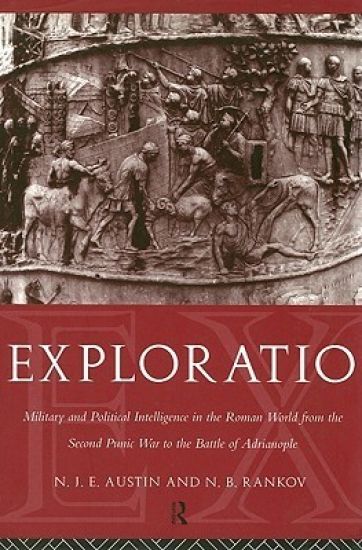
Exploratio is the first ever survey of Roman military and civil intelligence. The authors examine in detail the operation and gradual development of Roman intelligence-gathering from shaky beginnings to a high level of excellence. They identify who gathered it, and for whom.This study shows the effects of intelligence on policy formation at various levels from the purely local through to the global. The consequences of various instances of the mishandling of information are uncovered. Austin and Rankov also demonstrate that intelligence gathering was not necessarily directed from Rome, but had for practical reasons to be carried out and processed on the frontiers themselves.Exploratio is important reading for all students and teachers of Roman history. It will also appeal to those with a general interest in military or diplomatic history.
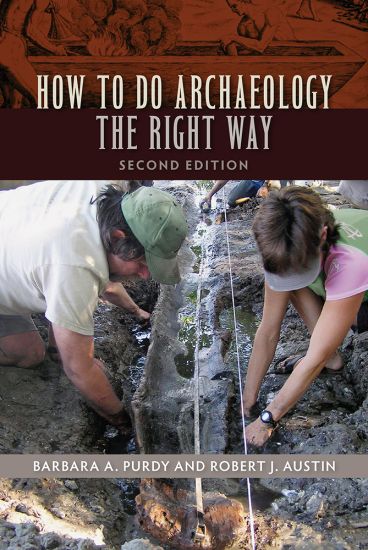
How to Do Archaeology the Right Way
Barbara Purdy; Robert J. Austin
University Press of Florida
2016
sidottu
With more than 50 years of field experience between the two authors, this highly regarded volume reveals how responsible archaeologists locate, excavate, and analyze sites, middens, and remains. This second edition contains new, emended, and greatly expanded chapters about recently discovered sites and the development of sophisticated technologies to record and analyze their contents more rapidly and efficiently. The volume also showcases new dating techniques and methods in excavation, preservation, and curation.
Racehorses in Australia
W H Lang; Kenneth Austin; W J Stewart (William John St McKay
Anson Street Press
2025
pokkari
Racehorses in Australia
W H Lang; Kenneth Austin; W J Stewart (William John St McKay
Anson Street Press
2025
sidottu
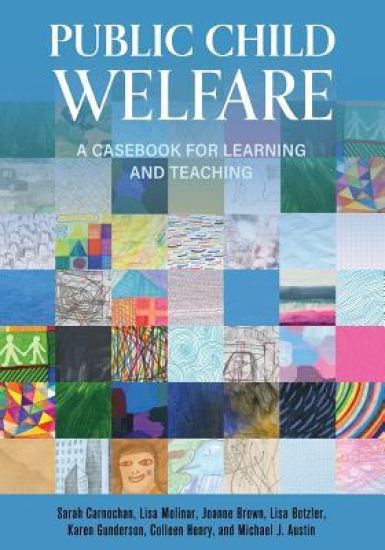
Public Child Welfare
Sarah Carnochan; Michael J. Austin; Lisa Botzler; Lisa Molinar; Joanne Brown; Karen Gunderson
Cognella, Inc
2018
nidottu
Public Child Welfare: A Casebook for Learning and Teaching provides social work students and practicing social workers with 20 real-world cases gathered from four California county child welfare agencies. Readers are exposed to the stories of social workers and families involved in child welfare services. The rich and varied content captures the daily complexities, challenges, and successes that social workers experience in the field.Framed within the context of relevant national and state policy and practices, the cases address a variety of child welfare issues including neglect and abuse, substance abuse, domestic violence, criminal justice involvement, mental health, reunification and adoption, and more. Case-based learning relates to family dynamics, initial risks and harms, finding the right home for the child, court proceedings, and the trajectory of these complex cases over time.Public Child Welfare challenges social work students and practitioners to critically examine documented, real-world cases to inform and strengthen their own practices. The casebook is an ideal resource for social work courses, child welfare seminars, and agency-based training programs.
Digital Portfolio Construction: A Guide for Showcasing Social Work Skills
Dale Fitch; Michael J. Austin; Mary Ruffolo
Cognella Academic Publishing
2021
sidottu
This concise book seeks to make available to the public what may be called "the other side of Islam - not the violent aspect appearing in the nightly news headlines which focus on radical terrorists, but the long and rich tradition at the heart of Islamic spirituality known as Sufism. With great lucidity and clarity, Stoddart offers a succinct, yet comprehensive overview of Sufism's fundamental doctrines and spiritual practices, which are followed by many millions of Muslims throughout the world. Known for his capacity to give clear explanations of unfamiliar and complex material, Stoddart emphasises the importance of the role of art and beauty, highlights its intricate symbolism and explains the central role of the invocation of the Name of God in Sufi spiritual practice; an appendix includes central Koranic, Prophetic and traditional Sufi sayings. This new edition is based upon an earlier and much shorter book Stoddart wrote 35 years ago, which was highly acclaimed by leading experts in the field of Islamic Studies. Harvard professor Annemarie Schimmel remarked that it was "Useful ... adorned with many good illustrations ... (and) contains many important points clearly expressed."