
Kirjahaku
Etsi kirjoja tekijän nimen, kirjan nimen tai ISBN:n perusteella.
1000 tulosta hakusanalla Benjamin F Matthes

First Reunion Of The Survivors Of The Army Of The Tennessee And Its Four Corps
Benjamin F. Chase
KESSINGER PUBLISHING, LLC
2008
nidottu
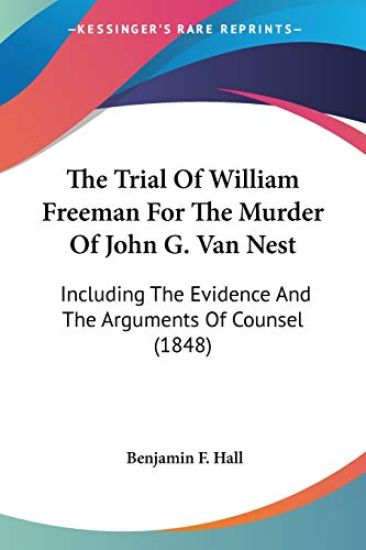
The Trial Of William Freeman For The Murder Of John G. Van Nest: Including The Evidence And The Arguments Of Counsel (1848)
Benjamin F. Hall
KESSINGER PUBLISHING, LLC
2008
nidottu

Biographies and Portraits of the Progressive Men of Iowa
Benjamin F. Gue; Benjamin Franklin Shambaugh
Kessinger Pub
2009
pokkari

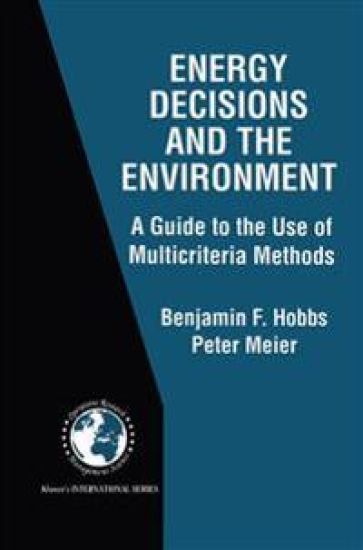
Energy Decisions and the Environment
Benjamin F. Hobbs; Peter Meier
Springer-Verlag New York Inc.
2012
nidottu
Planning, operating, and policy making in the electric utility and natural gas sectors involves important trade-offs among economic, social, and environmental criteria. These trade-offs figure prominently in ongoing debates about how to meet growing energy demands and how to restructure the world's power industry. Energy Decisions and the Environment: A Guide to the Use of Multicriteria Methods reviews practical tools for multicriteria (also called multiobjective) decision analysis that can be used to quantify trade-offs and contribute to more consistent, informed, and transparent decision making. These methods are designed to generate and effectively communicate information about trade-offs; to help people form, articulate, and apply value judgments in decision making; and to promote effective negotiation among stakeholders with competing interests. Energy Decisions and the Environment: A Guide to the Use of Multicriteria Methods includes explanations of a wide range of methods, tutorial applications that readers can duplicate, a detailed review of energy-environment applications, and three in-depth case studies.


Five Public Philosophies of Walter Lippmann
Benjamin F. Wright
University of Texas Press
1973
nidottu
Essayist, editor, columnist, author of many books, and winner of a special Pulitzer Prize citation in 1958 for his powers of news analysis, Walter Lippmann both appraised and influenced twentieth-century American politics. No other author of the century dealt with the persistent problems of politics from so many approaches, was so widely read, or varied so widely in his conclusions. Benjamin F. Wright’s study is the first book devoted to an exposition and analysis of Lippmann’s nine “books of political philosophy,” as James Reston called them. These books provide a fascinating study of changes in the political and economic ideas of the most important journalist of his time. Lippmann’s books published in 1913 and 1914 reflect the optimism of the Progressive Era, of faith in science and in the ability of people to choose their goals and attain them. In 1922 and 1925, while editor of the New York World, Lippmann wrote searching, often pessimistic analyses of what he believed to be the prevailing assumptions regarding the nature and role of public opinion. Although in the Coolidge era he relegated government to a minor role as mediator, he became an enthusiastic defender of the achievements of the early New Deal. Two years later in a longer look, he found the same New Deal following the path toward totalitarianism. Keynes was discarded and his place taken by the economics of Adam Smith, bolstered by the common law of Coke and the Constitution of the founders. Finally, in 1955, in the extremely popular and very engaging Public Philosophy, there is a lament for the “decline of the West” and a plea to return to the age of civility and natural law. In a final analytical chapter, Wright presents a critique of Lippmann’s historical understanding and the modern applications of the tradition of natural law. He also assesses Lippmann’s inability to translate the “public philosophy” into programs or institutional changes and the failure to account for the expansion of governmental functions together with the continued strength of constitutional democracy in the West.
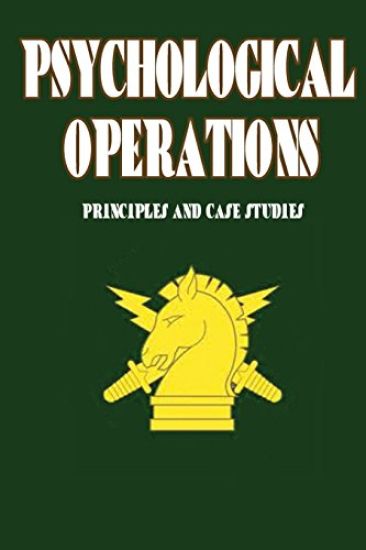
Psychological Operations - Principles and Case Studies
Benjamin F. Findley; Frank L. Goldstein
Createspace Independent Publishing Platform
2012
nidottu

The Old Swimmin Hole and Leven More Poems Neghborly Poems on Friendship Grief and Farm Life
Benjamin F. Johnson; James Whitcomb Riley
Literary Licensing, LLC
2014
sidottu

The Old Swimmin Hole and Leven More Poems Neghborly Poems on Friendship Grief and Farm Life
Benjamin F. Johnson; James Whitcomb Riley
Literary Licensing, LLC
2014
nidottu

This work examines the Iranian Crisis of 1946 and its active role in shaping the Cold War that followed. It is intended to serve as a case study of how the United States was able to successfully flex its short-lived atomic monopoly and achieve its international objectives in the early postwar era. This writing engages with the robust academic field of U.S. foreign relations that over the past number of years revisited and reimagined the origins and driving forces of the Cold War. The Soviet Union’s violation of a troop withdrawal agreement at the conclusion of the Second World War, coupled with its active support of Kurdish and Azeri separatist movements, aggressively tested the new and evolving international order. The primary objective of this work is to understand how the international community achieved a relatively peaceful withdrawal of Soviet forces from Iranian territory. I contend that: 1) Iran possessed, due to its wartime role and latent economic potential, a degree of leverage in negotiations with the United States and Russia that other nations did not; 2) that the Iranian prime minister, Ahmad Qavam, shrewdly manipulated both superpowers with his own brand of masterful statecraft while pursuing his own “Iran-centric” objectives; 3) that the United States used its preponderance of military, economic, and diplomatic might to effectively achieve its postwar aims; and 4) the primary actors in the crisis solidified the legitimacy of the United Nations and its Security Council, which had previously been in jeopardy. While lesser known than the Berlin Airlift or the Korean War or the Cuban Missile Crisis, the Iranian Crisis revealed for the first time what a superpower clash might look like. This event provides a stunning example of crisis management by the primary participants. The Iranian Crisis was indeed the birth of the Cold War, and it established a model for state actions during and after this long conflict. The Crisis also provides a powerful example of how third-party entities outside of Europe, despite possessing relatively meager military and economic might, had the ability to alter and occasionally manipulate superpower behavior.

Hyper-Grace: Biblically Confronting Current False-Grace Heresies
Benjamin F. Hoogterp
Createspace Independent Publishing Platform
2014
nidottu
The deceptions sweeping the church are multiplying, to no surprise. The only thing of relative surprise is the lack of sufficient resources to counter it. There will always be weeds in within the wheat, but we don't have to hand knives and forks to the wolves for their lamb-chops. It's time for the church to stand up, use the sword of the Spirit, and cut off their hand if that is required, to catch the little foxes, or sometimes big fat ones, that are, truly, ruining many vineyards. These are not trivial things, nor are they grey areas. They are outright deceptions and manipulations of the Word, bolstered on charisma and popularity. In the guise of liberty, they bring a seduction of senility that binds people where they are at. True freedom, true grace, brings us to the cross, and bids us "Come ye here and die." True Christianity is not looking up at the cross at our savior, but dying up upon there with Him. As true as it has been in all time, this generation of preachers needs this clarion wake-up call: Awake to righteousness, and sin not; for some have not the knowledge of God: I speak this to your shame. 1 Corinthians 15:34 This book will answer: What is Grace? Is there a false grace? Why is there so much focus on Grace today? What is the place of the Law? What is repentance, and how does it factor into the life of a believer? Is there such a thing as a restoration of Grace happening today? If so, is there a counterfeit? What is the Bible's view on 'Grace'? Does God care about our sin once we're saved? What does the Finished Works of the Cross accomplish? What won't the Finished Works of the Cross do? What is the duty of a Christian once they're saved, and why isn't this a "works salvation"? What are some of the common misconceptions about Grace? When are we born again? What is the nature of hell and is it eternal? Are we by nature good? What are some of the things people actually wrongly teaching about Grace today? How do I keep myself from error? What are the six foundations of the faith and how do they keep me from errors concerning Grace? This book can either be informative on the basics of true Grace in comparison to the many false faces offered today, or it can become a tutorial on how to righteously, yet effectively, and aggressively, confront and challenge the current false Grace teachings. Included are numerous scriptural references on why the Christian should not be afraid to engage in debate with people even in gross error, as well as what not to do, and when to walk away. Reading this book will both equip you to be aware of the deceptions in the wider body of Christ, as well as prime you to effectively and intelligently refute them. Don't think your church is immune to this threat, because it isn't You will also find references on, Who and what Biblically are heretics and heresies? What is 'Anathema'? Why did Paul use it? When should we? Should we judge? Are we allowed to judge? What are the Biblical guidelines for judgment? How can I expect a discussion with a false-grace advocate to go these days? What are the proper guidelines for talking to someone, especially when they are hostile or twisting the Word of God for their own purpose? How can I expect them to twist scripture? Does God judge us today? What is proper Biblical etiquette for having a conversation? And, what do you do if they don't have it? Expect to be challenged to live a life of bold faith cultivated in a heart of intimacy. Expect a message straight out of "All the Words in Red", as well as a systematic basis for understanding why Jesus' words are the only framework for discussing Christianity. Be prepared see the heart of Jesus reflected in the Sermon on the Mount, and to be challenged to walk in greater love, not only in your personal life, but even when dealing with those who are in error.

Beyond Revelation: An Eschatology of the Kingdom
Benjamin F. Hoogterp
Createspace Independent Publishing Platform
2014
nidottu
A fresh look at an old subject. The author addresses the study of the book of Revelation and Eschatology with an emphasis on the Kingdom. Notably, the results are conclusively Preterist in content by the eyes of the author, of the mildest of forms. Coming from several years of end-times research, and many more of that of Bible knowledge, this book focuses on the prophesies of Daniel, as well as the Gospels, to prove with reasonable certainty (to the author) that the reasonable whole of the book of Daniel is concluded and fulfilled, and much of the Revelation of John. The book follows in an "at-face-value" approach, allowing normal customs of language, demonstrating a concise and historic progression of events, with the destruction of the temple on 70 AD, the Second Jewish Revolt of 135 AD being the winepress of God's wrath, the seven bowls of wrath poured out upon Rome in what is known as the Crisis of the Third Century to destroy Rome, and a literal, already-fulfilled Millennium in the Middle Ages. The focus of the book is doctrine of the Kingdom, which demonstrates its centrality in the entire subject. It is the asserted that the study of Eschatology is the study of the Kingdom (this is repeated throughout the book). Including a look at the parables of Jesus, and taking Jesus' introductory declaration of Mark 1:15 to be clearest statement of the Kingdom, this book side-steps the fruitless debates of the Schweitzer, Dodd, and Ladd, of "consistent", "realized", or "inaugurated" Eschatologies, and steps directly to an "everlasting eschatology". Thy kingdom is an everlasting kingdom, and thy dominion endureth throughout all generations. Ps 145:13 Generally relying upon the KJV version for the development of key issues, except where a nuance is better brought out by another version as indicated, the author develops the case, 'sola scriptura', that the Kingdom is indeed here, and that it relates to the first coming of Christ. Of note, the author specifically interprets the Olivet Discourse as being divided, based upon the merits of a study of the word "Eutheos" in Matthew 24:29. "Eutheos", when compared throughout the New Testament, often implies an unspecified time gap, representing hours, days, or even months. This, combined with a reading of the traditional "time texts", Matthew 24:34&36, the author sees that the v36 "but of that day and hour" specifically excludes the v29-31 "that day" from the "these things" of v4-22. As such, the "this generation" applies precisely and exactly to the generation then alive during the giving of this discussion, as per the traditional partial-Preterist position. However, it clearly excludes the obvious Second Coming references in vv29-31. Additionally, the author makes specific reference to the verses of Daniel 11:40-43 as pertaining to the Battle of Actium in 31 BC, or the foundation of the Roman Empire, which is shown to be the fourth Kingdom of Daniel 2,7. These two facts place the Great Tribulation of Daniel 12 and Matthew 24 decidedly in the first century, the 70AD destruction of Jerusalem, according to the author. The author then divides the body of Revelation into two prophecies, as per the two prophetic commissions in Revelation 1 and 10. Using a 68-70AD, post-Neronic, pre-fall of Jerusalem date for the book, Rev 6-11 corresponds to the destruction of Jerusalem, while Rev 12-19 are clearly seen in historic events and detail the further punishing of the Jewish nation, followed by the final overthrow of the beast, Rome. Woven throughout the book, the author attempts to depict the great contrast of ages. For 1,000 years, Babylon, in four different stages, ruled the known world. Then, after it was broken small at the conversion of Constantine, the Kingdom of God ruled for its 1,000 years. We are now in that "short time", looking towards a Gog Magog conflict, and the fulfillment of the Israel promises in between Revelation 20:10-11.

Doing Qualitative Research
Benjamin F. Crabtree; William L. Miller
SAGE PUBLICATIONS INC
2022
nidottu
The long-awaited third edition of Doing Qualitative Research by Benjamin F. Crabtree and William L. Miller is out! Co-create your own inspired research stories with this reader-friendly text on qualitative methods, design, and analysis. Written for both students and researchers with little to no qualitative experience, as well as investigators looking to expand and refine their expertise, this clear and concise book will quickly get readers up to speed doing truly excellent qualitative research. The first four chapters of the book set the stage by contextualizing qualitative research within the overall traditions of research, focusing on the history of qualitative research, the importance of collaboration, reflexivity, and finding the appropriate method for your research question. Each part then addresses a different stage of the research process, from data collection, data analysis and interpretation, and refocusing on the bigger picture once your research is complete. Unique chapters cover case study research, intervention studies, and participatory research. The authors use their experiences and knowledge to provide both personal and published research stories to contextualize qualitative concepts. Many of the examples demonstrate the use of qualitative methods within a mixed-methods approach. Each chapter concludes with open-ended questions to further reader contemplation and to spark discussions with classmates and colleagues. With an abundance of clinical research examples featuring a variety of qualitative methods, Doing Qualitative Research encourages researchers to learn by doing and actively experiment with the tools and concepts presented throughout the book.

The Transatlantic Slave Trade: Overcoming the 500-year Legacy is a contemporary testament, history and documentation to empower remembrance, education, reckoning, reparations, and reconciliation. History reveals that whenever the denial of the oneness of all humanity is permitted, people sink into vicious, violent and virulent acts of deprivation and dehumanization. Contemporary attempts to deny, ignore, justify or condone the legacy of the centuries-long genocide and the international economic consequences of the transatlantic slave trade have to be resolutely challenged and refuted.For over five hundred years, people and nations have been enriched by the impact and saddled with the contradictions of the transatlantic slave trade. As a result of the international slave trade, unprecedented economic profits and wealth were acquired in Europe and in North and South America. The brutal consignment and enforced categorization of African people as mere property devoid of any human attribution was part and parcel of the emergence of the haunted ideology of white supremacy. That ideology is still used today in a derogatory attempt to justify racism and inequity. Comprising the research, reporting, and writings of the National Newspapers Publishers Association (NNPA) Senior National Correspondent, Stacy M. Brown with those of the renowned civil rights activist, Dr. Benjamin Chavis, The Transatlantic Slave Trade illuminates the multifaceted dimensions of this brutal phenomenon as a shared history. It is a mosaic woven from the threads of sorrow, resistance, complicity, and resilience.

Pioneer Settlers of Grayson County, Virginia
Benjamin F. Nuckolls
Janaway Publishing, Inc.
2011
nidottu