Kirjojen hintavertailu. Mukana 11 717 486 kirjaa ja 12 kauppaa.

Kirjahaku

Etsi kirjoja tekijän nimen, kirjan nimen tai ISBN:n perusteella.

1000 tulosta hakusanalla Brett Mclaughlin

Cybercrime Case Presentation

Cybercrime Case Presentation

Brett Shavers

Syngress Media,U.S.
2012
nidottu
Cybercrime Case Presentation is a "first look" excerpt from Brett Shavers' new Syngress book, Placing the Suspect Behind the Keyboard. Case presentation requires the skills of a good forensic examiner and great public speaker in order to convey enough information to an audience for the audience to place the suspect behind the keyboard. Using a variety of visual aids, demonstrative methods, and analogies, investigators can effectively create an environment where the audience fully understands complex technical information and activity in a chronological fashion, as if they observed the case as it happened.
Cybercrime Investigation Case Studies

Cybercrime Investigation Case Studies

Brett Shavers

Syngress Media,U.S.
2012
nidottu
Cybercrime Investigation Case Studies is a "first look" excerpt from Brett Shavers' new Syngress book, Placing the Suspect Behind the Keyboard. Case studies are an effective method of learning the methods and processes that were both successful and unsuccessful in real cases. Using a variety of case types, including civil and criminal cases, with different cybercrimes, a broad base of knowledge can be gained by comparing the cases against each other. The primary goal of reviewing successful cases involving suspects using technology to facilitate crimes is to be able to find and use the same methods in future cases. This "first look" teaches you how to place the suspect behind the keyboard using case studies.
Cybercrime Investigative Case Management

Cybercrime Investigative Case Management

Brett Shavers

Syngress Media,U.S.
2012
nidottu
Investigative Case Management is a "first look" excerpted from Brett Shavers' new Syngress book, Placing the Suspect Behind the Keyboard. Investigative case management is more than just organizing your case files. It includes the analysis of all evidence collected through digital examinations, interviews, surveillance, and other data sources. In order to place a suspect behind any keyboard, supporting evidence needs to be collected and attributed to a person. This first look provides you with traditional and innovative methods of data analysis to identify and eliminate suspects through a combination of supporting methods of analysis.
X-Ways Forensics Practitioner’s Guide

X-Ways Forensics Practitioner’s Guide

Brett Shavers; Eric Zimmerman

Syngress Media,U.S.
2013
nidottu
The X-Ways Forensics Practitioner's Guide is more than a manual-it's a complete reference guide to the full use of one of the most powerful forensic applications available, software that is used by a wide array of law enforcement agencies and private forensic examiners on a daily basis. In the X-Ways Forensics Practitioner's Guide, the authors provide you with complete coverage of this powerful tool, walking you through configuration and X-Ways fundamentals, and then moving through case flow, creating and importing hash databases, digging into OS artifacts, and conducting searches. With X-Ways Forensics Practitioner's Guide, you will be able to use X-Ways Forensics to its fullest potential without any additional training. The book takes you from installation to the most advanced features of the software. Once you are familiar with the basic components of X-Ways, the authors demonstrate never-before-documented features using real life examples and information on how to present investigation results. The book culminates with chapters on reporting, triage and preview methods, as well as electronic discovery and cool X-Ways apps.
Hiding Behind the Keyboard

Hiding Behind the Keyboard

Brett Shavers; John Bair

Syngress Media,U.S.
2016
nidottu
Hiding Behind the Keyboard: Uncovering Covert Communication Methods with Forensic Analysis exposes the latest electronic covert communication techniques used by cybercriminals, along with the needed investigative methods for identifying them. The book shows how to use the Internet for legitimate covert communication, while giving investigators the information they need for detecting cybercriminals who attempt to hide their true identity. Intended for practitioners and investigators, the book offers concrete examples on how to communicate securely, serving as an ideal reference for those who truly need protection, as well as those who investigate cybercriminals.
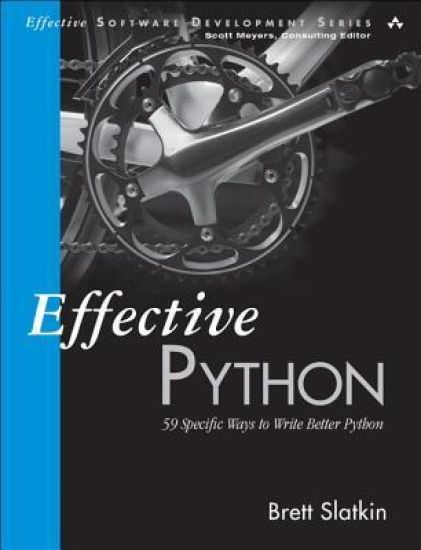
Effective Python

Effective Python

Brett Slatkin

Addison Wesley
2015
nidottu
“Each item in Slatkin’s Effective Python teaches a self-contained lesson with its own source code. This makes the book random-access: Items are easy to browse and study in whatever order the reader needs. I will be recommending Effective Python to students as an admirably compact source of mainstream advice on a very broad range of topics for the intermediate Python programmer.” —Brandon Rhodes, software engineer at Dropbox and chair of PyCon 2016-2017 It’s easy to start coding with Python, which is why the language is so popular. However, Python’s unique strengths, charms, and expressiveness can be hard to grasp, and there are hidden pitfalls that can easily trip you up. Effective Python will help you master a truly “Pythonic” approach to programming, harnessing Python’s full power to write exceptionally robust and well-performing code. Using the concise, scenario-driven style pioneered in Scott Meyers’ best-selling Effective C++, Brett Slatkin brings together 59 Python best practices, tips, and shortcuts, and explains them with realistic code examples. Drawing on years of experience building Python infrastructure at Google, Slatkin uncovers little-known quirks and idioms that powerfully impact code behavior and performance. You’ll learn the best way to accomplish key tasks, so you can write code that’s easier to understand, maintain, and improve. Key features include Actionable guidelines for all major areas of Python 3.x and 2.x development, with detailed explanations and examples Best practices for writing functions that clarify intention, promote reuse, and avoid bugs Coverage of how to accurately express behaviors with classes and objects Guidance on how to avoid pitfalls with metaclasses and dynamic attributes More efficient approaches to concurrency and parallelism Better techniques and idioms for using Python’s built-in modules Tools and best practices for collaborative development Solutions for debugging, testing, and optimization in order to improve quality and performance
Effective Python

Effective Python

Brett Slatkin

Addison Wesley
2020
nidottu
Updated and Expanded for Python 3 It’s easy to start developing programs with Python, which is why the language is so popular. However, Python’s unique strengths, charms, and expressiveness can be hard to grasp, and there are hidden pitfalls that can easily trip you up.This second edition of Effective Python will help you master a truly “Pythonic” approach to programming, harnessing Python’s full power to write exceptionally robust and well-performing code. Using the concise, scenario-driven style pioneered in Scott Meyers’ best-selling Effective C++, Brett Slatkin brings together 90 Python best practices, tips, and shortcuts, and explains them with realistic code examples so that you can embrace Python with confidence.Drawing on years of experience building Python infrastructure at Google, Slatkin uncovers little-known quirks and idioms that powerfully impact code behavior and performance. You’ll understand the best way to accomplish key tasks so you can write code that’s easier to understand, maintain, and improve. In addition to even more advice, this new edition substantially revises all items from the first edition to reflect how best practices have evolved.Key features include 30 new actionable guidelines for all major areas of PythonDetailed explanations and examples of statements, expressions, and built-in typesBest practices for writing functions that clarify intention, promote reuse, and avoid bugsBetter techniques and idioms for using comprehensions and generator functionsCoverage of how to accurately express behaviors with classes and interfacesGuidance on how to avoid pitfalls with metaclasses and dynamic attributesMore efficient and clear approaches to concurrency and parallelismSolutions for optimizing and hardening to maximize performance and qualityTechniques and built-in modules that aid in debugging and testingTools and best practices for collaborative development Effective Python will prepare growing programmers to make a big impact using Python.
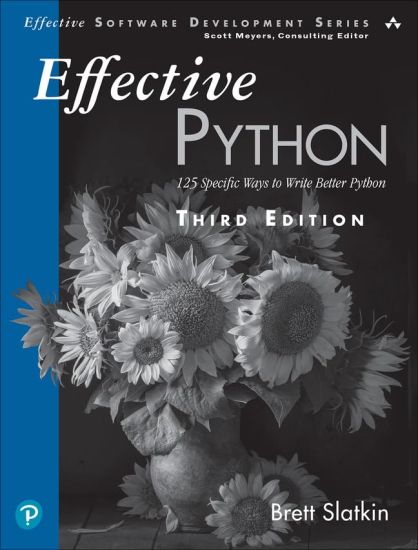
Effective Python

Effective Python

Brett Slatkin

PEARSON EDUCATION (US)
2025
nidottu
Master the art of Python programming with 125 actionable best practices to write more efficient, readable, and maintainable code. Python is a versatile and powerful language, but leveraging its full potential requires more than just knowing the syntax. Effective Python: 125 Specific Ways to Write Better Python, 3rd Edition is your comprehensive guide to mastering Python's unique strengths and avoiding its hidden pitfalls. This updated edition builds on the acclaimed second edition, expanding from 90 to 125 best practices that are essential for writing high-quality Python code. Drawing on years of experience at Google, Brett Slatkin offers clear, concise, and practical advice for both new and experienced Python developers. Each item in the book provides insight into the "Pythonic" way of programming, helping you understand how to write code that is not only effective but also elegant and maintainable. Whether you're building web applications, analyzing data, writing automation scripts, or training AI models, this book will equip you with the skills to make a significant impact using Python. Key Features of the 3rd Edition: Expanded Content: Now with 125 actionable guidelines, including 35 entirely new items.Updated Best Practices: Reflects the latest features in Python releases up to version 3.13.New Chapters: Additional chapters on how to build robust programs that achieve high performance.Advanced Topics: In-depth coverage of creating C-extension modules and interfacing with native shared libraries.Practical Examples: Realistic code examples that illustrate each best practice.
Sex and the Psyche

Sex and the Psyche

Brett Kahr

Penguin Books Ltd
2008
pokkari
What’s going on in your head when you go to bed?We talk about sex increasingly openly today, but when it comes to our most private fantasies it’s often a different matter. Here Psychotherapist Brett Kahr examines the little-known world of our sexual imaginations. He has undertaken Britain’s biggest every sex survey, with responses from over 19,000 adults, to explore questions such as:• Why do people fantasize?• Can our fantasies ever be damaging or dangerous?• Should we tell our partners about them?• Do men and women fantasize differently?• What do our fantasies tell us about ourselves?This frank and fascinating account will help you understand for the first time what our unspoken desires and secret thoughts really mean. It is a book for anyone interested in human relationships and what makes us tick, opening up the hidden worlds inside all of us.
Armadillo Rodeo

Armadillo Rodeo

Brett Jan

Penguin Books Ltd
2004
pokkari
A rodeo is no place for an armadillo, but that is where Bo, the adventure-seeking, near-sighted armadillo, ends up, with hilarious results, as he is thrown off a bucking bronco, tastes red-hot chili peppers, and does the two-step with newfound friends. Reprint.
Daisy Comes Home

Daisy Comes Home

Brett Jan

Penguin Books Ltd
2005
pokkari
A hertwarming tale from the beloved author of The Mitten Mei Mei has the six happiest hens in China. She gives them treats and fresh hay baths, and when she calls to them-gu gu gu gu gu -they all run to her as fast as they can. But one of the hens, Daisy, is not always so happy. The other hens pick on Daisy and push her off the perch every night, knowing that she is too small to stand up to them. Then one day Daisy accidentally drifts out onto the river in a basket and must quickly learn how to survive. When Daisy finds her way home, this plucky little hen is no longer afraid. Jan Brett and her husband, Joe, traveled with their daughter-in-law, Yun, and her husband, Sean, to China, the land where Yun was born. During this trip, Jan found the inspiration for Daisy's story.
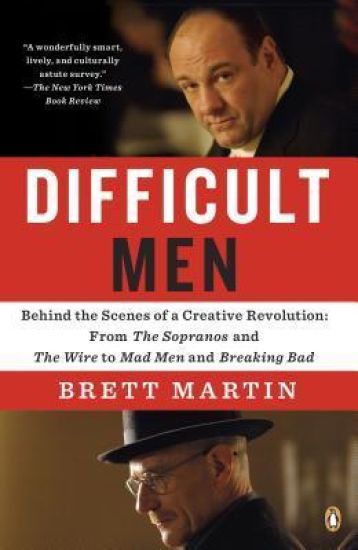
Difficult Men: Behind the Scenes of a Creative Revolution
The 10th anniversary edition, now with a new preface by the author "A wonderfully smart, lively, and culturally astute survey." - The New York Times Book Review "Grand entertainment...fascinating for anyone curious about the perplexing miracles of how great television comes to be." - The Wall Street Journal "I love this book...It's the kind of thing I wish I'd been able to read in film school, back before such books existed." - Vince Gilligan, creator of Breaking Bad and co-creator of Better Call Saul In the late 1990s and early 2000s, the landscape of television began an unprecedented transformation. While the networks continued to chase the lowest common denominator, a wave of new shows on cable channels dramatically stretched television's narrative inventiveness, emotional resonance, and creative ambition. Combining deep reportage with critical analysis and historical context, Brett Martin recounts the rise and inner workings of this artistic watershed - a golden age of TV that continues to transform America's cultural landscape. Difficult Men features extensive interviews with all the major players - including David Chase (The Sopranos), David Simon and Ed Burns (The Wire), David Milch (NYPD Blue, Deadwood), Alan Ball (Six Feet Under), and Vince Gilligan (Breaking Bad, Better Call Saul) - and reveals how television became a truly significant and influential part of our culture.
Honey... Honey... Lion!

Honey... Honey... Lion!

Brett Jan

Puffin Books
2014
pokkari
The African plains provide a stunning environment for Jan Brett's latest animal adventure. For as long as anyone can remember, the honeyguide bird and the African honey badger have been partners when it comes to honey:Honeyguide finds the honeycomb, Badger breaks it open, and they share the sweetness inside.But this day, Badger keeps all the honey for himself. Foolish Badger!In no time, Honeyguide leads Badger on a fast chase. Badger thinks it's for honey; but Honeyguide has a surprise waiting for her greedy friend.As they swim across a pond, push through a thicket of reeds, leap over a huge anthill, a menagerie of exotic animals passes the news along in a kind of animal Bush Telegraph. Finally Badger faces a lift-the-flap page, revealing the twist that teaches Badger a lesson. Can you guess who's under that flap?Honey . . . Honey . . . Lion! will surely become a family favorite for readers of all ages.
Enfolding Silence

Enfolding Silence

Brett J. Esaki

Oxford University Press Inc
2016
sidottu
This book demonstrates how Japanese Americans have developed traditions of complex silences to survive historic moments of racial and religious oppression and how they continue to adapt these traditions today. In order to examine Japanese Americans' complex relationship to silence, Brett Esaki offers four case studies of Japanese American art--gardening, origami, jazz, and monument construction--and examines how each artistic practice has responded to a historic moment of oppression. In doing so, he finds that these artistic silences incorporate and convey obfuscated religious ideas from Buddhism, Christianity, Confucianism, Shinto, indigenous religions, and contemporary spirituality. While silence is often thought of as the binary opposite and absence of sound, this book provides a non-binary theory of silence that articulates how multidimensional silences are formed and how they function. Brett Esaki argues that non-binary silences have allowed Japanese Americans to disguise, adapt, and innovate religious resources in order to negotiate racism and oppressive ideologies from both the United States and Japan. Drawing from the fields of religious studies, ethnic studies, theology, anthropology, art, music, history, and psychoanalysis, this book highlights the ways in which silence has been used to communicate the complex emotions of historical survival, religious experience, and artistic inspiration.
Aboriginal and Torres Strait Islander

Aboriginal and Torres Strait Islander

Brett Biles; Jessica Biles

OUP Australia and New Zealand
2019
nidottu
Aboriginal & Torres Strait Islander Peoples' Health prepares nursing and allied health students for health care practice among Indigenous Australian communities and encourages best clinical practice and skill development. With its focus on cultural competence, community and cultural safety, the text examines theoretical concepts and specific health domains, and provides valued insight into the skills required of health professionals. The text advances the strengths-based approach by highlighting the strengths in communities and health, rather than the deficiencies. The experiences and expert knowledge of the author team are combined with a diverse range of case examples to equip students with an understanding of cultural competencies and to prepare them for the diverse and alternative approaches to health care they will need to adopt when working with Indigenous Australians and community groups.
Dying to Be Normal

Dying to Be Normal

Brett Krutzsch

Oxford University Press Inc
2019
sidottu
Finalist, Best LGBTQ Nonfiction Book, Lambda Literary Awards 2020 On October 14, 1998, five thousand people gathered on the steps of the U.S. Capitol to mourn the death of Matthew Shepard, a gay college student who had been murdered in Wyoming eight days earlier. Politicians and celebrities addressed the crowd and the televised national audience to share their grief with the country. Never before had a gay citizen's murder elicited such widespread outrage or concern from straight Americans. In Dying to Be Normal, Brett Krutzsch argues that gay activists memorialized people like Shepard as part of a political strategy to present gays as similar to the country's dominant class of white, straight Christians. Through an examination of publicly mourned gay deaths, Krutzsch counters the common perception that LGBT politics and religion have been oppositional and reveals how gay activists used religion to bolster the argument that gays are essentially the same as straights, and therefore deserving of equal rights. Krutzsch's analysis turns to the memorialization of Shepard, Harvey Milk, Tyler Clementi, Brandon Teena, and F. C. Martinez, to campaigns like the It Gets Better Project, and national tragedies like the Pulse nightclub shooting to illustrate how activists used prominent deaths to win acceptance, influence political debates over LGBT rights, and encourage assimilation. Throughout, Krutzsch shows how, in the fight for greater social inclusion, activists relied on Christian values and rhetoric to portray gays as upstanding Americans. As Krutzsch demonstrates, gay activists regularly reinforced a white Protestant vision of acceptable American citizenship that often excluded people of color, gender-variant individuals, non-Christians, and those who did not adhere to Protestant Christianity's sexual standards. The first book to detail how martyrdom has influenced national debates over LGBT rights, Dying to Be Normal establishes how religion has shaped gay assimilation in the United States and the mainstreaming of particular gays as "normal" Americans.
The Cost of Competence

The Cost of Competence

Brett Silverstein; Deborah Perlick

Oxford University Press Inc
1995
sidottu
In The Cost of Competence Brett Silverstein and Deborah Perlick argue that rather than simply labelling individual women as, say, anorexic or depressed, it is time to look harder at the widespread prejudices within our society and child-rearing practices that lead thousands of young women to equate thinness with competence and success, and femininity with failure.
Canada: A Nation of Regions: Canada

Canada: A Nation of Regions: Canada

Brett McGillivray

Oxford University Press, Canada
2009
nidottu
Canada: A Nation of Regions, second edition, is a comprehensive survey of the regional geography of Canada. Explaining the physical and human processes that have shaped and continue to transform this country, Brett McGillivray tells the stories of the interactions between Canada's peoples and landscapes. Divided into three parts, which examine Canada globally, regionally, and finally as a country, Canada: A Nation of Regions features an interdisciplinary approach, incorporating geography, anthropology, archaeology, history, economics, sociology, and political studies into one engaging and enlightening text.
The Window Before

The Window Before

Brett V. Benson; Bradley C. Smith

OXFORD UNIVERSITY PRESS INC
2026
nidottu
Do military alliances deter or provoke conflict? This book explores this critical question by examining the often-overlooked phase of alliance implementation, a complex and prolonged process that occurs before an alliance's deterrent benefits are realized. Brett V. Benson and Bradley C. Smith argue that the formation of new alliances does not immediately translate into increased military strength. Instead, states must navigate political and military challenges to operationalize their alliance, creating a vulnerable window of time before an alliance is implemented. Benson and Smith reveal that while fully realized alliances can enhance deterrence and foster peace, their preliminary stages can provoke conflict, as potential enemies may wage preventive war to counteract the anticipated shift in power. To address these risks, The Window Before details strategies employed by allies, including crafting less provocative treaty terms, accelerating the implementation process, and maintaining secrecy to minimize adversaries' chances to react. Through in-depth theoretical analysis and historical examples, the book sheds light on the effectiveness of these strategies and their broader implications for alliance dynamics and international relations. It offers crucial insights into current global tensions, including the ongoing war in Ukraine, China-Taiwan relations, and the emerging no-limits security partnership between Russia and China. In a world undergoing epochal shifts in alliances ranging from Europe to the Middle East to East Asia, this methodologically rigorous book provides the necessary theoretical framework for understanding why alliance shifts happen and predicting the fallout--potentially devastating--that may result.
Textual Warfare and the Making of Methodism

Textual Warfare and the Making of Methodism

Brett C. McInelly

Oxford University Press
2014
sidottu
Textual Warfare and the Making of Methodism argues that the eighteenth-century Methodist revival participated in and was produced by a rich textual culture that includes both pro- and anti-Methodist texts; and that Methodism be understood and approached as a rhetorical problem-as a point of contestation and debate resolved through discourse. Methodist belief and practice attracted its share of negative press, and Methodists eagerly (and publically) responded to their critics; and the controversy generated by the revival ensured that Methodism would be conditioned by textual and rhetorical processes, whether in published polemic and apologia, or in private diaries and letters as Methodists navigated the complexities of their spiritual lives and anti-Methodist efforts to undermine their faith. While it may seem obvious to conclude that a controversial movement would be shaped by controversy, Textual Warfare examines the specific ways Methodist belief, practice, and self-understanding were filtered through the anti-Methodist critique; the particular historic and cultural conditions that informed this process; and the overwhelming extent to which Methodism in the eighteenth century was mediated by texts and rhetorical exchange. The proliferation of print media and the relative freedom of the press in the eighteenth century; the extent to which society generally and Methodism specifically promoted literacy; and a cultural sensibility predisposed to open debate on matters of public interest, ensured the development of a public sphere in which individuals came together to deliberate, in conversation and in print, on a range of issues relevant to the larger community. It was within this sphere that Methodist religiosity, including the intensely private nature of spiritual conversion, became matters of civic concern on an unprecedented scale and that Methodism ultimately took its form.