
Kirjahaku
Etsi kirjoja tekijän nimen, kirjan nimen tai ISBN:n perusteella.
1000 tulosta hakusanalla Bryan Gorrison
The Rightful Remedy. Addressed to the Slaveholders of the South. by Edward B. Bryan. Pub. For the Southern Rights Association.
Edward B Bryan
University of Michigan Library
2006
pokkari
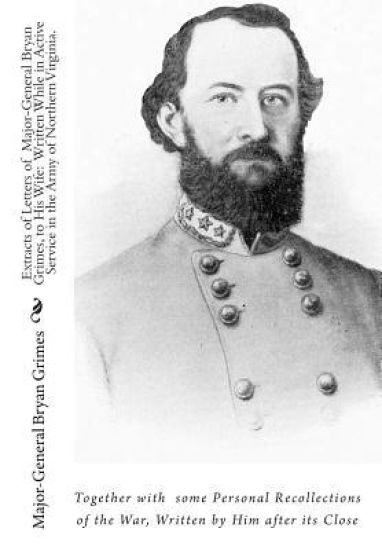
Extracts of Letters of Major-General Bryan Grimes, to His Wife: Written While in Active Service in the Army of Northern Virginia.: Together with some
Major-General Bryan Grimes
Createspace Independent Publishing Platform
2010
nidottu
Extracts of Letters of Major-General Bryan Grimes, to His Wife: Written While in Active Service in the Army of Northern Virginia. Together with some Personal Recollections of the War, Written by Him after its Clos
William Jennings Bryan: A Study in Political Vindication
Wayne C. Williams
Literary Licensing, LLC
2013
nidottu
Memoirs of William Jennings Bryan
William Jennings Bryan; Mary Baird Bryan
Literary Licensing, LLC
2013
nidottu

That Woman: A Bryan Draper Mystery
Jeffrey Smith
Createspace Independent Publishing Platform
2014
nidottu

The Jewelry Box: A Bryan Draper Mystery
Jeffrey Smith
Createspace Independent Publishing Platform
2014
nidottu

Backstage with Bryan Rooney: From Liverpool to Ringo to Donna Summer
Kenny Smith; Bryan Rooney
Createspace Independent Publishing Platform
2015
nidottu

This book is about an older woman who awaits the return of her one and only true love Bryan. Even though everyone tells her he is dead she refuses to believe it so she writes letters to her dead fianc e in hopes that she will someday be reunited with him.

William Jennings Bryan: A Concise But Complete Story of His Life and Services
Harvey E. Newbranch
Createspace Independent Publishing Platform
2016
nidottu
Originally published in 1900. William Jennings Bryan was an American orator and politician from Nebraska, and a dominant force in the populist wing of the Democratic Party, standing three times as the Party's nominee for President of the United States. -Wikipedia

Recognized as Tennessee’s first composer of art music, Charles Faulkner Bryan blazed many trails. He was the first Tennessee composer to have a work performed by a large symphony orchestra, the first Tennessee musician to be awarded a Guggenheim Fellowship, and the first composer anywhere to write a symphony based on white spirituals. Further, he reached a large audience with works performed at Carnegie Hall and on national radio. Although he died in 1955 at the tragically early age of forty-three, he left a rich legacy.This biography explores Bryan’s life and work as a music educator, folk music performer and researcher, and composer, along the way providing new insights into Southern culture, music, musicology, and folklore. Appalachian folk music was the connecting thread in the rich tapestry of Bryan’s life, and Carolyn Livingston has woven the many strands of his career into a seamless and compelling account.Drawing on previously untapped archives and on interviews with the Bryan family, Livingston depicts the rise of a hardworking musician and educator from the Tennessee mountain country. As a folklore advocate, Bryan’s compositions reflected both the preservation and the transformation of regional culture, and his performances in that genre drew audiences to college campuses well before the folk music revival of the 1960s.But it was as a southern Americanist composer that Bryan offered a unique perspective on the American neo-romantic scene of the 1930s and 1940s. He incorporated black spirituals, white spirituals, and Appalachian folk tunes into larger works, such as his folk opera Singin’ Billy. His choral arrangements, including See Me Cross the Water, represented his joy in music and celebration, and his White Spiritual Symphony reflected his appreciation of his heritage with such themes as Goin’ Over Jordan. Livingston discusses selected examples of his music in detail.As scholars and music enthusiasts renew their acquaintance with twentieth-century regional composers, Livingston’s detailed work allows us to gain a new appreciation of Bryan. This book depicts a visionary who mastered composition, education, performance, and research, and it contributes to our understanding of the cultural transformations taking place the first half of the twentieth century.The Author: Carolyn Livingston, a native of Tennessee, is professor and director of graduate studies in music at the University of Rhode Island.

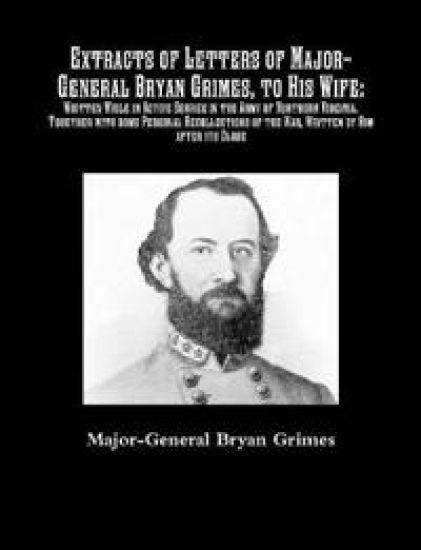
Extracts of Letters of Major-General Bryan Grimes, to His Wife
Major-General Bryan Grimes
Historic Publishing
2017
pokkari
The matter contained in the succeeding pages was never intended for publication. It represents a short sketch of incidents, and participation in the late war, by the late MAJOR-GENERAL BRYAN GRIMES, and extracts from letters to his wife, written from the camp, and on the fields of battle, and such other matters of record and interest as have seemed to me fit and proper to be inserted therein.GENERAL GRIMES had for years after the surrender determined to write out his recollections of the war, solely for the benefit, pleasure and curiosity of his children and their posterity, to be read in after years, with no view whatever of their publication, but simply to be kept as a matter of record in his family. He had commenced this work, as shown in his original manuscript, and, as far as executed, it is printed in the following pages.In his letters to his wife, he gave briefly an account of what almost daily transpired, and being written on those respective days, was fresh in his recollection, and maybe received as strictly authentic. His known integrity and truthfulness will need no corroboration of what he has written or related.These sketches and incidents demonstrate the character, honor and chivalry - the obligation of duty, and love of country, of a true citizen and a brave soldier. They present a truthful and impartial history, and will be read with interest and gratification by his friends and surviving comrades in war, and with this view they are thus publicly presented.It will be observed that in one or two places disconnected notes appear, indicating clearly his intention to refer to them at some other time, and to extend more fully their subject matter. I have thought proper to have them printed just as they appear, and as they are written in the original manuscript.
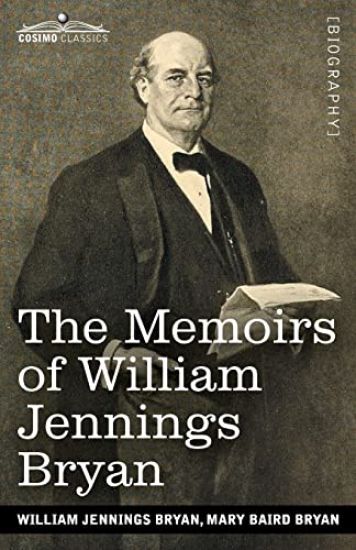
The Memoirs of William Jennings Bryan
William Jennings Bryan; Mary Baird Bryan
Cosimo Classics
1905
pokkari