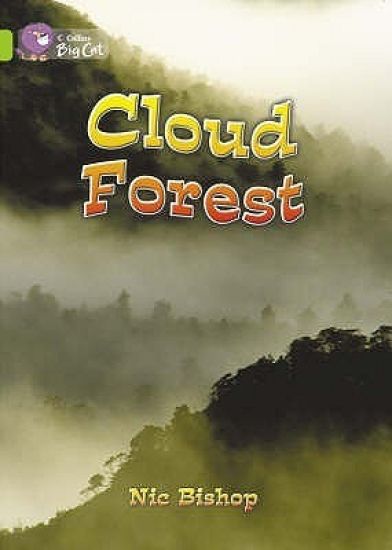
Build your child’s reading confidence at home with books at the right level Lime/Band 11 books have longer sentence structures and a greater use of literary language.Text type – A non-chronological report.Pages 30 and 31 feature a persuasive text in a poster format compelling us to act now to save the cloud forest. This provides lots of speaking, listening and writing opportunities.Curriculum links – Science: Plants and animals, Variation; Geography: Passport to the world.This book has been levelled for Reading Recovery.This book has been quizzed for Accelerated Reader.
THE SUNDAY TIMES BESTSELLER AND NATIONAL BOOK AWARD FINALIST ‘A dazzling epic of love, war and the joy of books’ Guardian ‘There is magic in this place … You just have to sit and breathe and wait and it will find you’ Fifteenth-century Constantinople. Present day Idaho. The future, and humanity’s last hope. Across time and space, five young dreamers are bound by a single ancient text. Together, they tell a story of a world in peril; of the power of words, of resilience, and of hope against all odds. The Pulitzer Prize-winning author of All the Light We Cannot See returns with a heart-breaking, magnificent epic of human connection and a love letter to storytelling itself. ‘Wonderment and despair, love and destruction and hope – all find their place in its sumptuously plotted pages’ Observer ‘Ingenious, hopeful and totally absorbing’ Financial Times ‘This engagingly written, big-hearted book is a must-read’ Daily Mirror
Written by an anonymous English monk during the late fourteenth century, The Cloud of Unknowing is a sublime expression of what separates God from humanity and is widely regarded as a hallmark of Western literature and spirituality. A work of simplicity, courage, and lucidity, it is a contemplative classic on the deep mysteries of faith. "Lift up your heart to God with a humble impulse of love and have himself as your aim, not any of his goods ... Set yourself to rest in this darkness, always crying out after him whom you love. For if you are to experience him or to see him at all, insofar as it is possible here, it must always be in this cloud and in this darkness." -- The Cloud of Unknowing
Publisher's Note: Products purchased from Third Party sellers are not guaranteed by the publisher for quality, authenticity, or access to any online entitlements included with the product."The promise of cloud computing is here. These pages provide the 'eyes wide open' insights you need to transform your business." --Christopher Crowhurst, Vice President, Strategic Technology, Thomson ReutersA Down-to-Earth Guide to Cloud ComputingCloud Computing: A Practical Approach provides a comprehensive look at the emerging paradigm of Internet-based enterprise applications and services. This accessible book offers a broad introduction to cloud computing, reviews a wide variety of currently available solutions, and discusses the cost savings and organizational and operational benefits. You'll find details on essential topics, such as hardware, platforms, standards, migration, security, and storage. You'll also learn what other organizations are doing and where they're headed with cloud computing. If your company is considering the move from a traditional network infrastructure to a cutting-edge cloud solution, you need this strategic guide. Cloud Computing: A Practical Approach covers:Costs, benefits, security issues, regulatory concerns, and limitationsService providers, including Google, Microsoft, Amazon, Yahoo, IBM, EMC/VMware, Salesforce.com, and othersHardware, infrastructure, clients, platforms, applications, services, and storageStandards, including HTTP, HTML, DHTML, XMPP, SSL, and OpenIDWeb services, such as REST, SOAP, and JSONPlatform as a Service (PaaS), Software as a Service (SaaS), and Software plus Services (S+S)Custom application development environments, frameworks, strategies, and solutionsLocal clouds, thin clients, and virtualizationMigration, best practices, and emerging standards
Into a realm of samurai and geishas, ninjas and Zen masters comes a man and a woman from the West, and the destiny of a nation that has been closed to the outside world for 250 years is about to change forever.
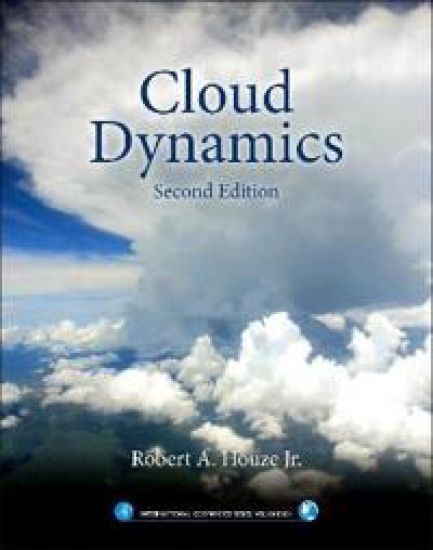
As models of the Earth/atmosphere system and observations become ever more sophisticated, and concerns about climate change and societal impacts of extreme weather and its forecasting grow, understanding the role of clouds in the atmosphere is increasingly vital. Cloud Dynamics, Second Edition provides the essential information needed to understand how clouds affect climate and weather. This comprehensive book examines the underlying physics and dynamics of every specific type of cloud that occurs in the Earth's atmosphere, showing how clouds differ dynamically depending on whether they occur over oceans or mountains, or as parts of atmospheric storms, such as thunderstorms, tropical cyclones, or warm and cold fronts. Covering both the microphysical and macrophysical aspects of clouds, the book treats all of the physical scales involved in cloud processes, from the microscale of the individual drops and ice particles up to scales of storms in which the clouds occur. As observational technology advances with increasingly sophisticated remote sensing capabilities, detailed understanding of how the dynamics and physics of clouds affect the quantities being measured is of paramount importance. This book underpins the work necessary for proper interpretation of these observations, now and in the future.
To reduce the risk of digital forensic evidence being called into question in judicial proceedings, it is important to have a rigorous methodology and set of procedures for conducting digital forensic investigations and examinations. Digital forensic investigation in the cloud computing environment, however, is in infancy due to the comparatively recent prevalence of cloud computing. Cloud Storage Forensics presents the first evidence-based cloud forensic framework. Using three popular cloud storage services and one private cloud storage service as case studies, the authors show you how their framework can be used to undertake research into the data remnants on both cloud storage servers and client devices when a user undertakes a variety of methods to store, upload, and access data in the cloud. By determining the data remnants on client devices, you gain a better understanding of the types of terrestrial artifacts that are likely to remain at the Identification stage of an investigation. Once it is determined that a cloud storage service account has potential evidence of relevance to an investigation, you can communicate this to legal liaison points within service providers to enable them to respond and secure evidence in a timely manner.
Cloud Data Centers and Cost Modeling establishes a framework for strategic decision-makers to facilitate the development of cloud data centers. Just as building a house requires a clear understanding of the blueprints, architecture, and costs of the project; building a cloud-based data center requires similar knowledge. The authors take a theoretical and practical approach, starting with the key questions to help uncover needs and clarify project scope. They then demonstrate probability tools to test and support decisions, and provide processes that resolve key issues. After laying a foundation of cloud concepts and definitions, the book addresses data center creation, infrastructure development, cost modeling, and simulations in decision-making, each part building on the previous. In this way the authors bridge technology, management, and infrastructure as a service, in one complete guide to data centers that facilitates educated decision making.
Cloud Storage Security: A Practical Guide introduces and discusses the risks associated with cloud-based data storage from a security and privacy perspective. Gain an in-depth understanding of the risks and benefits of cloud storage illustrated using a Use-Case methodology. The authors also provide a checklist that enables the user, as well as the enterprise practitioner to evaluate what security and privacy issues need to be considered when using the cloud to store personal and sensitive information.
Cloud Computing in Ocean and Atmospheric Sciences provides the latest information on this relatively new platform for scientific computing, which has great possibilities and challenges, including pricing and deployments costs and applications that are often presented as primarily business oriented. In addition, scientific users may be very familiar with these types of models and applications, but relatively unfamiliar with the intricacies of the hardware platforms they use. The book provides a range of practical examples of cloud applications that are written to be accessible to practitioners, researchers, and students in affiliated fields. By providing general information on the use of the cloud for oceanographic and atmospheric computing, as well as examples of specific applications, this book encourages and educates potential users of the cloud. The chapters provide an introduction to the practical aspects of deploying in the cloud, also providing examples of workflows and techniques that can be reused in new projects.
Cloud Control Systems: Analysis, Design and Estimation introduces readers to the basic definitions and various new developments in the growing field of cloud control systems (CCS). The book begins with an overview of cloud control systems (CCS) fundamentals, which will help beginners to better understand the depth and scope of the field. It then discusses current techniques and developments in CCS, including event-triggered cloud control, predictive cloud control, fault-tolerant and diagnosis cloud control, cloud estimation methods, and secure control/estimation under cyberattacks. This book benefits all researchers including professors, postgraduate students and engineers who are interested in modern control theory, robust control, multi-agents control.
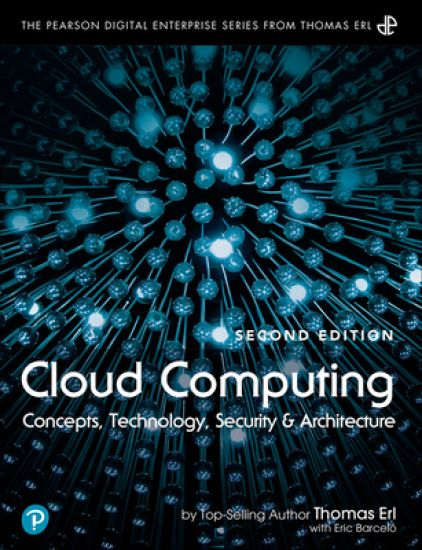
Cloud Computing: Concepts, Technology, Security & Architecture Cloud computing has become an integral and foundational part of information technology. The majority of digital business activity and technology innovation occurs with the involvement of contemporary cloud environments that provide highly sophisticated automated technology infrastructure and a vast range of technology resources. To successfully build upon, interact with, or create a cloud environment requires an understanding of its common inner mechanics, architectural layers, models, and security controls. It also requires an understanding of the business and economic factors that justify the adoption and real-world use of clouds and cloud-based products and services. In Cloud Computing: Concepts, Technology, Security & Architecture, Thomas Erl, one of the world's top-selling IT authors, teams up with cloud computing expert Eric Barceló Monroy and researchers to break down proven and mature cloud computing technologies and practices into a series of well-defined concepts, technology mechanisms, and technology architectures. Comprehensive coverage of containerization and cybersecurity topics is also included. All chapters are carefully authored from an industry-centric and vendor-neutral point of view. In doing so, the book establishes concrete, academic coverage with a focus on structure, clarity, and well-defined building blocks for mainstream cloud computing and containerization platforms and solutions. With nearly 370 figures, 40 architectural models, and 50 mechanisms, this indispensable guide provides a comprehensive education of contemporary cloud computing, containerization, and cybersecurity that will never leave your side.
When Claude L vi-Strauss passed away in 2009 at age 100, France celebrated the life and contributions of not only a preeminent anthropologist, but one of the defining intellectuals of the 20th century. Just as Freud had shaken up the antiquarian discipline of psychiatry, so had L vi-Strauss revolutionized anthropology, transforming it from the colonial-era study of "exotic" tribes to one consumed with fundamental questions about the nature of humanity and civilization itself. Remarkably, there has never been a biography in English of the enigmatic Claude L vi-Strauss. Drawing on a welter of original research and interviews with the anthropologist, Patrick Wilcken's Claude L vi-Strauss fills this void. In rich detail, Wilcken recreates Levi-Strauss's peripatetic life: his groundbreaking fieldwork in some of the remotest reaches of the Amazon in the 1930s; his years as a Jew in Nazi-occupied France and an emigr in wartime New York; and his return to Paris in the late 1940s, where he clashed with Jean-Paul Sartre and fundamentally influenced fellow postwar thinkers from Jacques Lacan to Michel Foucault and Roland Barthes. It was in France that structuralism, the school of thought he founded, first took hold, creating waves far beyond the field of anthropology. In his heyday, Levi-Strauss was both a hero to contemporary intellectuals, and an international celebrity. In Claude Levi-Strauss, Wilcken gives the reader a fascinating intellectual tour of the anthropologist's landmark works: Tristes Tropiques, his most famous book, a literary meditation on his travels and fieldwork; The Savage Mind, which showed that "primitive" people are driven by the same intellectual curiosities as their Western counterparts, and finally his monumental four-volume Mythologiques, a study of the universal structures of native mythology in the Americas. In the years that L vi-Strauss published these pioneering works, Wilcken observes, tribal societies seemed to hold the answers to the most profound questions about the human mind. Following the great anthropologist from S o Paulo to the Brazilian interior, and from New York to Paris, Patrick Wilcken's Claude L vi-Strauss is both an evocative journey and an intellectual biography of one of the 20th century's most influential minds.
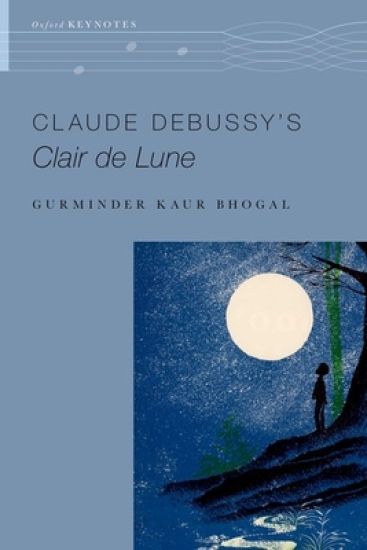
Debussy himself had little regard for Clair de Lune, and scholars have thus far followed suit—until now. Claude Debussy's Clair de Lune is the first book wholly dedicated to an historical, cultural, and analytical investigation of the French composer's famous composition for piano. Author Gurminder Kaur Bhogal explores why, over any other piece in Debussy's repertoire for piano, Clair de Lune achieved stardom in the decades following the composer's death, and how, as the third movement of the Suite Bergamasque, it managed to almost fully eclipse the other movements. Drawing on a broad range of excerpts from classical and popular music, commercials, film, and video games, Bhogal examines the various ways in which listeners have engaged with the piece. She also places it in its proper artistic context, through analysis alongside the poetry of Paul Verlaine and the paintings of Jean-Antoine Watteau. A wide range of aural, visual, and video examples energize the narrative, and demonstrate how Clair de Lune has come to achieve an iconic status within and beyond Debussy's oeuvre.
Debussy himself had little regard for Clair de Lune, and scholars have thus far followed suit—until now. Claude Debussy's Clair de Lune is the first book wholly dedicated to an historical, cultural, and analytical investigation of the French composer's famous composition for piano. Author Gurminder Kaur Bhogal explores why, over any other piece in Debussy's repertoire for piano, Clair de Lune achieved stardom in the decades following the composer's death, and how, as the third movement of the Suite Bergamasque, it managed to almost fully eclipse the other movements. Drawing on a broad range of excerpts from classical and popular music, commercials, film, and video games, Bhogal examines the various ways in which listeners have engaged with the piece. She also places it in its proper artistic context, through analysis alongside the poetry of Paul Verlaine and the paintings of Jean-Antoine Watteau. A wide range of aural, visual, and video examples energize the narrative, and demonstrate how Clair de Lune has come to achieve an iconic status within and beyond Debussy's oeuvre.
Claude Lanzmann's monumental Shoah is the most celebrated film about the Holocaust ever made. For eleven years, Lanzmann traveled the world in search of those witnesses closest to the agony of the Jews of Europe during the Nazi terror. In superbly conducted, detailed interviews, rendered in searching, intimate close-ups, survivors disclose personal experiences at the limit of human expression. Thus we hear the invaluable testimonies of Richard Glazar and the barber Abraham Bomba, members of the Sonderkommando at Treblinka; of Simon Srebnik, the young boy who sang Polish and German songs as he walked through the streets of Chelmno in leg irons, and of the thousands of bodies he helped to burn; of the Czechoslovak Jew Filip Muller who survived five selections while serving in the Sonderkommando at Birkenau to witness the destruction of the Czech family camp; of Rudolf Vrba, who escaped from Birkenau to warn Hungarian Jews of their impending doom. Their first-hand accounts are confirmed in horrifying interviews Lanzmann conducted with former German guards and functionaries who scheduled the trains to the East; with average Polish farmers and townspeople who watched as their neighbors were taken away to their deaths; and with Polish heroes like Jan Karski, who tried in vain to warn Western leaders of the catastrophe unfolding on Polish soil. In counterpoint to their chilling tales, Lanzmann's camera surveys the former killing sites, mapping the terrain of mass murder and examining the monuments erected in memory of the lost Jewish communities of Europe. No more profound, more vivid or more moving cinematic work about the Holocaust exists. This volume examines Shoah from its inception through its reception in France, Europe, and the United States. New in English are translations of some of Lanzmann's key essays and interviews as well as a range of appreciations, analyses, and critiques by leading American, French and Polish critics and commentators.
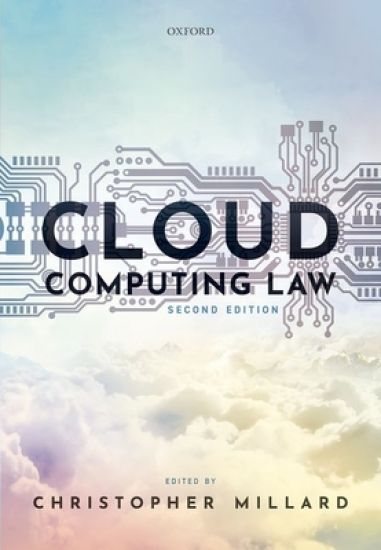
Cloud computing continues to expand dramatically and the 'as a Service' model is now both mainstream and ubiquitous. Cloud now encompasses everything from the remote provision of essential computer processing and storage resources, through to delivery of complex business and government services, logistics, healthcare, education, and entertainment. The Covid-19 pandemic provided a striking demonstration of cloud computing's global scalability and resilience, as billions of workers and students switched in a matter of weeks to working and studying 'from home'. This book delivers an accessible analysis of the key legal and regulatory issues that surround cloud computing. Topics covered include contracts for cloud services, information ownership and licensing, privacy and data protection, standards and competition law, law enforcement access to data, and international tax models for cloud and other digital services. The book is organised in four parts. Part I explains what cloud computing is, why it matters, and what non-technical readers need to know about how it works. Part II includes a detailed review of standard contracts for 40 cloud services and highlights key legal and commercial issues that arise in negotiated transactions for cloud services. Ownership of, and access to, 'digital assets' are also explored. Part III focusses on the application of data protection and cybersecurity rules, including an in-depth assessment of the impact of the EU's General Data Protection Regulation (GDPR) on providers and users of cloud services. Finally, Part IV addresses governance issues relating to public sector use of cloud, access to cloud data by law enforcement authorities, competition rules and standards, and the disruption to global taxation models caused by the rapid shift to cloud services.