Kirjojen hintavertailu. Mukana 12 083 983 kirjaa ja 12 kauppaa.

Kirjahaku

Etsi kirjoja tekijän nimen, kirjan nimen tai ISBN:n perusteella.

1000 tulosta hakusanalla Corey Harton

Early Modern German Philosophy (1690-1750)

Early Modern German Philosophy (1690-1750)

Corey W. Dyck

Oxford University Press
2020
nidottu
Early Modern German Philosophy (1690-1750) makes some of the key texts of early German thought available in English, in most cases for the first time. The translations range from texts by the most important figures of the period, including Christian Thomasius, Christian Wolff, Christian August Crusius, and Georg Friedrich Meier, as well as texts by consequential but less familiar thinkers such as Dorothea Christiane Erxleben, Theodor Ludwig Lau, Friedrich Wilhelm Stosch, and Joachim Lange. The topics covered range across a number of areas of theoretical philosophy, including metaphysics (the immortality of the soul, materialism and its refutation, the pre-established harmony), epistemology (the principle of sufficient reason, the limits of reason with respect to matters of faith), and logic (the role of prejudices in cognition and the doctrine of truth). These texts are intended to showcase German philosophy in the early Modern period as a far richer tradition than it is typically given credit for, and indeed as much more than either a footnote to Leibniz or merely a step on the way to Kant. This collection is a valuable resource for students and scholars interested in the early modern German tradition and the often neglected works that enlightened it.
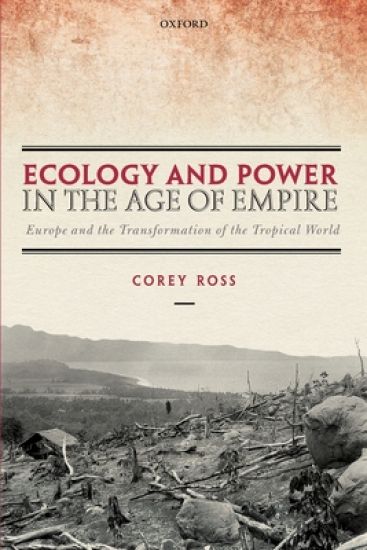
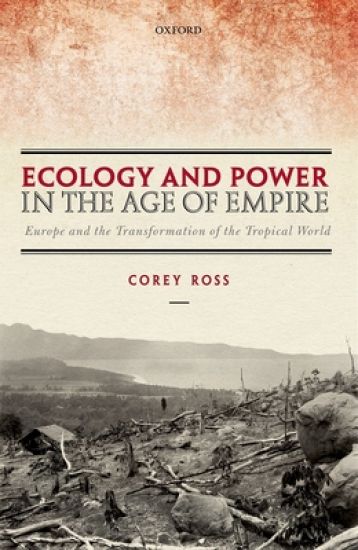
Ecology and Power in the Age of Empire

Ecology and Power in the Age of Empire

Corey Ross

Oxford University Press
2019
nidottu
Ecology and Power in the Age of Empire provides the first wide-ranging environmental history of the heyday of European imperialism, from the late nineteenth century to the end of the colonial era. It focuses on the ecological dimensions of the explosive growth of tropical commodity production, global trade, and modern resource management strategies that still visibly shape our world today, and how they were related to broader social, cultural, and political developments in Europe's colonies. Covering the overseas empires of all the major European powers, Corey Ross argues that tropical environments were not merely a stage on which conquest and subjugation took place, but were an essential part of the colonial project, profoundly shaping the imperial enterprise even as they were shaped by it. The story he tells is not only about the complexities of human experience, but also about people's relationship with the ecosystems in which they were themselves embedded: the soil, water, plants, and animals that were likewise a part of Europe's empire. Although it shows that imperial conquest rarely represented the signal ecological trauma that some accounts suggest, it nonetheless demonstrates that modern imperialism marked a decisive and largely negative milestone for the natural environment. By relating the expansion of modern empire, global trade, and mass consumption to the momentous ecological shifts that they entailed, this book provides a historical perspective on the vital nexus of social, political, and environmental issues that we face in the twenty-first-century world.
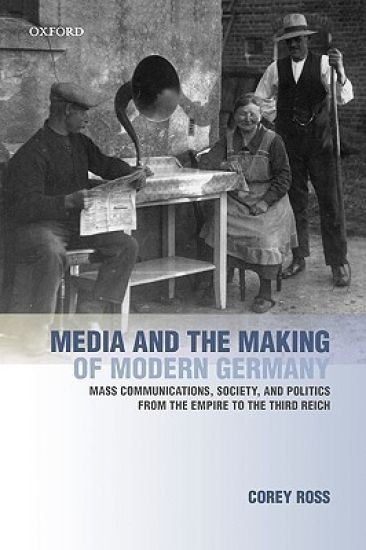
Media and the Making of Modern Germany

Media and the Making of Modern Germany

Corey Ross

Oxford University Press
2008
sidottu
Few developments in the industrial era have had a greater impact on everyday social life than the explosion of the mass media and commercial entertainments, and none have exerted a more profound influence on the nature of modern politics. Nowhere in Europe were the tensions and controversies surrounding the rise of mass culture more politically charged than in Germany-debates that played fatefully into the hands of the radical right. Corey Ross provides the first general account of the expansion of the mass media in Germany up to the Second World War, examining how the rise of film, radio, recorded music, popular press, and advertising fitted into the wider development of social, political, and cultural life. Spanning the period from the late nineteenth century to the Third Reich, Media and the Making of Modern Germany shows how the social impact and meaning of 'mass culture' were by no means straightforward or homogenizing, but rather changed under different political and economic circumstances. By locating the rapid expansion of communications media and commercial entertainments firmly within their broader social and political context, Ross sheds new light on the relationship between mass media, social change, and political culture during this tumultuous period in German history.
Media and the Making of Modern Germany

Media and the Making of Modern Germany

Corey Ross

Oxford University Press
2010
nidottu
Few developments in the industrial era have had a greater impact on everyday social life than the explosion of the mass media and commercial entertainments, and none have exerted a more profound influence on the nature of modern politics. Nowhere in Europe were the tensions and controversies surrounding the rise of mass culture more politically charged than in Germany-debates that played fatefully into the hands of the radical right. Corey Ross provides the first general account of the expansion of the mass media in Germany up to the Second World War, examining how the rise of film, radio, recorded music, popular press, and advertising fitted into the wider development of social, political, and cultural life. Spanning the period from the late nineteenth century to the Third Reich, Media and the Making of Modern Germany shows how the social impact and meaning of 'mass culture' were by no means straightforward or homogenizing, but rather changed under different political and economic circumstances. By locating the rapid expansion of communications media and commercial entertainments firmly within their broader social and political context, Ross sheds new light on the relationship between mass media, social change, and political culture during this tumultuous period in German history.
Ecology and Power in the Age of Empire

Ecology and Power in the Age of Empire

Corey Ross

Oxford University Press
2017
sidottu
Ecology and Power in the Age of Empire provides the first wide-ranging environmental history of the heyday of European imperialism, from the late nineteenth century to the end of the colonial era. It focuses on the ecological dimensions of the explosive growth of tropical commodity production, global trade, and modern resource management-transformations that still visibly shape our world today-and how they were related to broader social, cultural, and political developments in Europe's colonies. Covering the overseas empires of all the major European powers, Corey Ross argues that tropical environments were not merely a stage on which conquest and subjugation took place, but were an essential part of the colonial project, profoundly shaping the imperial enterprise even as they were shaped by it. The story he tells is not only about the complexities of human experience, but also about people's relationship with the ecosystems in which they were themselves embedded: the soil, water, plants, and animals that were likewise a part of Europe's empire. Although it shows that imperial conquest rarely represented a sudden bout of ecological devastation, it nonetheless demonstrates that modern imperialism marked a decisive and largely negative milestone for the natural environment. By relating the expansion of modern empire, global trade, and mass consumption to the momentous ecological shifts that they entailed, this book provides a historical perspective on the vital nexus of social, political, and environmental issues that we face in the twenty-first-century world.
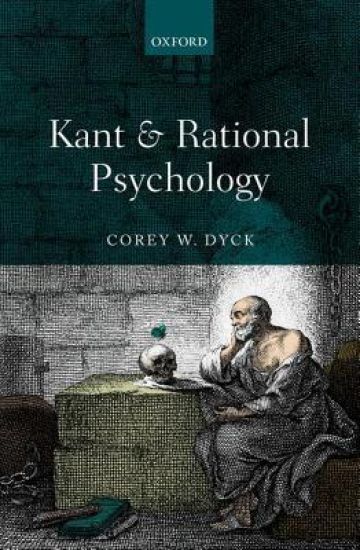
Kant and Rational Psychology

Kant and Rational Psychology

Corey W. Dyck

Oxford University Press
2014
sidottu
Corey W. Dyck presents a new account of Kant's criticism of the rational investigation of the soul in his monumental Critique of Pure Reason, in light of its eighteenth-century German context. When characterizing the rational psychology that is Kant's target in the Paralogisms of Pure Reason chapter of the Critique commentators typically only refer to an approach to, and an account of, the soul found principally in the thought of Descartes and Leibniz. But Dyck argues that to do so is to overlook the distinctive rational psychology developed by Christian Wolff, which emphasized the empirical foundation of any rational cognition of the soul, and which was widely influential among eighteenth-century German philosophers, including Kant. In this book, Dyck reveals how the received conception of the aim and results of Kant's Paralogisms must be revised in light of a proper understanding of the rational psychology that is the most proximate target of Kant's attack. In particular, he contends that Kant's criticism hinges upon exposing the illusory basis of the rational psychologist's claims inasmuch as he falls prey to the appearance of the soul as being given in inner experience. Moreover, Dyck demonstrates that significant light can be shed on Kant's discussion of the soul's substantiality, simplicity, personality, and existence by considering the Paralogisms in this historical context.
Liberty Power

Liberty Power

Corey M. Brooks

University of Chicago Press
2016
sidottu
Abraham Lincoln's Republican Party was the first party built on opposition to slavery to win on the national stage-but its victory was rooted in the earlier efforts of under-appreciated antislavery third parties. Liberty Power tells the story of how abolitionist activists built the most transformative third-party movement in American history and effectively reshaped political structures in the decades leading up to the Civil War. As Corey M. Brooks explains, abolitionist trailblazers who organized first the Liberty Party and later the more moderate Free Soil Party confronted formidable opposition from a two-party system expressly constructed to suppress disputes over slavery. Identifying the Whigs and Democrats as the mainstays of the southern Slave Power's national supremacy, savvy abolitionists insisted that only a party independent of slaveholder influence could wrest the federal government from its grip. A series of shrewd electoral, lobbying, and legislative tactics enabled these antislavery third parties to wield influence far beyond their numbers. In the process, these parties transformed the national political debate and laid the groundwork for the success of the Republican Party and the end of American slavery.
Killing the Koala and Poisoning the Prairie

Killing the Koala and Poisoning the Prairie

Corey J. A. Bradshaw; Paul R. Ehrlich

University of Chicago Press
2015
nidottu
Though separated by thousands of miles, the United States and Australia have much in common. Geographically both countries are expansive-the United States is the fourth largest in land mass and Australia the sixth-and both possess a vast amount of natural biodiversity. At the same time, both nations are on a crash course toward environmental destruction. Highly developed super consumers with enormous energy footprints and high rates of greenhouse-gas emissions, they are two of the biggest drivers of climate change per capita. As renowned ecologists Corey J. A. Bradshaw and Paul R. Ehrlich make clear in Killing the Koala and Poisoning the Prairie, both of these countries must confront the urgent question of how to stem this devastation and turn back from the brink. In this book, Bradshaw and Ehrlich provide a spirited exploration of the ways in which the United States and Australia can learn from their shared problems and combine their most successful solutions in order to find and develop new resources, lower energy consumption and waste, and grapple with the dynamic effects of climate change. Peppering the book with humor, irreverence, and extensive scientific knowledge, the authors examine how residents of both countries have irrevocably altered their natural environments, detailing the most pressing ecological issues of our time, including the continuing resource depletion caused by overpopulation. They then turn their discussion to the politics behind the failures of environmental policies in both nations and offer a blueprint for what must be dramatically changed to prevent worsening the environmental crisis. Although focused on two nations, Killing the Koala and Poisoning the Prairie clearly has global implications-the problems facing the United States and Australia are not theirs alone, and the solutions to come will benefit by being crafted in coalition. This book provides a vital opportunity to learn from both countries' leading environmental thinkers and to heed their call for a way forward together.
Liberty Power

Liberty Power

Corey M. Brooks

University of Chicago Press
2020
nidottu
Abraham Lincoln’s Republican Party was the first party built on opposition to slavery to win on the national stage—but its victory was rooted in the earlier efforts of under-appreciated antislavery third parties. Liberty Power tells the story of how abolitionist activists built the most transformative third-party movement in American history and effectively reshaped political structures in the decades leading up to the Civil War. As Corey M. Brooks explains, abolitionist trailblazers who organized first the Liberty Party and later the more moderate Free Soil Party confronted formidable opposition from a two-party system expressly constructed to suppress disputes over slavery. Identifying the Whigs and Democrats as the mainstays of the southern Slave Power’s national supremacy, savvy abolitionists insisted that only a party independent of slaveholder influence could wrest the federal government from its grip. A series of shrewd electoral, lobbying, and legislative tactics enabled these antislavery third parties to wield influence far beyond their numbers. In the process, these parties transformed the national political debate and laid the groundwork for the success of the Republican Party and the end of American slavery.
Major Trade-Offs

Major Trade-Offs

Corey Moss-Pech

THE UNIVERSITY OF CHICAGO PRESS
2025
sidottu
An eye-opening look at the relationship between students’ majors and their entry-level jobs. Humanities majors are used to answering the question, “So, what are you going to do with that degree?” The common misconception is that students in humanities programs don’t learn any useful skills for the real world. In Major Trade-Offs, sociologist Corey Moss-Pech argues that not only do humanities majors learn real-world skills, but they actually use them when they graduate. Despite this discrepancy, graduates with so-called practical degrees like business and engineering are much more likely to find employment, and they earn higher salaries. Why do we belittle a liberal arts education despite the valuable skills that students acquire during their studies? Major Trade-Offs addresses this question by following students from different majors as they enter the workforce. To understand the relationship between majors and entry-level jobs, Moss-Pech conducted nearly 200 interviews with roughly ninety students from four majors at a large Midwestern university: engineering, business, English, and communications. He follows these students through their senior years, chronicling their internships and the support their universities provide in helping them pursue their career paths. He found that graduates from practical majors entered the labor market successfully, typically through structured internship programs. However, many ended up in entry-level jobs that, while well-paid, were largely clerical and didn’t necessarily require a degree to perform. On the other hand, liberal arts majors rarely accessed structured internships and were largely left to carve out their own paths, but did use their degree skills once they secured a job. These results challenge popular myths about the “marketability” of these different majors and offer a new vision for the future of higher education. Liberal arts skills are essential in the labor market, and yet educators and policymakers still push resources into the practical arts, perpetuating the myth that those majors are more valuable while depriving students of a well-rounded education and leaving them no better prepared for the workforce than liberal arts students. Of interest to students, educators, and employers, Major Trade-Offs calls on colleges and universities to advocate for liberal arts majors, leveling the playing field for students as they plan for entry-level work.
Major Trade-Offs

Major Trade-Offs

Corey Moss-Pech

THE UNIVERSITY OF CHICAGO PRESS
2025
nidottu
An eye-opening look at the relationship between students’ majors and their entry-level jobs. Humanities majors are used to answering the question, “So, what are you going to do with that degree?” The common misconception is that students in humanities programs don’t learn any useful skills for the real world. In Major Trade-Offs, sociologist Corey Moss-Pech argues that not only do humanities majors learn real-world skills, but they actually use them when they graduate. Despite this discrepancy, graduates with so-called practical degrees like business and engineering are much more likely to find employment, and they earn higher salaries. Why do we belittle a liberal arts education despite the valuable skills that students acquire during their studies? Major Trade-Offs addresses this question by following students from different majors as they enter the workforce. To understand the relationship between majors and entry-level jobs, Moss-Pech conducted nearly 200 interviews with roughly ninety students from four majors at a large Midwestern university: engineering, business, English, and communications. He follows these students through their senior years, chronicling their internships and the support their universities provide in helping them pursue their career paths. He found that graduates from practical majors entered the labor market successfully, typically through structured internship programs. However, many ended up in entry-level jobs that, while well-paid, were largely clerical and didn’t necessarily require a degree to perform. On the other hand, liberal arts majors rarely accessed structured internships and were largely left to carve out their own paths, but did use their degree skills once they secured a job. These results challenge popular myths about the “marketability” of these different majors and offer a new vision for the future of higher education. Liberal arts skills are essential in the labor market, and yet educators and policymakers still push resources into the practical arts, perpetuating the myth that those majors are more valuable while depriving students of a well-rounded education and leaving them no better prepared for the workforce than liberal arts students. Of interest to students, educators, and employers, Major Trade-Offs calls on colleges and universities to advocate for liberal arts majors, leveling the playing field for students as they plan for entry-level work.
Back to Normal

Back to Normal

Corey Firth

Tellwell Talent
2023
pokkari
Anxiety changes our entire life, leaving us feeling lost and unsure of how to get it back to normal. It's far too common to feel unsuccessful, despite having tried various anxiety-relief methods. Back to Normal offers a new holistic approach for anyone who has suffered from anxiety disorders and is struggling to recover. This transformative book compiles fundamental practices, rarely mentioned key information and the counterintuitive knowledge needed to finally be successful recovering from anxiety disorder. Written by an author who shares his personal experience overcoming his own anxiety disorder, Back to Normal will help you gain a deeper understanding of your own anxiety and uncover the knowledge needed to finally recover and get back to your normal.
Change Research

Change Research

Corey Shdaimah; Roland Stahl; Sanford Schram

Columbia University Press
2011
sidottu
Collaborating with community members adds a critical dimension to social work research, providing practitioners with intimate knowledge of a community's goals and needs while equipping community advocates with vital skills for social change. Sharing the inspiring story of one such partnership, Corey Shdaimah, Roland Stahl, and Sanford F. Schram recount their efforts working with an affordable housing coalition in Philadelphia, helping activists research low-income home ownership and repair. Their collaboration helped create the Philadelphia Housing Trust Fund, which funnels millions of dollars to people in need. This volume describes the origins of their partnership and its growth, including developing tensions and their diffusion in ways that contributed to the research. The authors personalize methods of research and the possibilities for advocacy, ultimately connecting their encounters to more general, critical themes. Building on the field's commitment to social justice, they effectively demonstrate the potential of change research to facilitate widespread, long-term difference and improve community outcomes.
Change Research

Change Research

Corey Shdaimah; Roland Stahl; Sanford Schram

Columbia University Press
2011
pokkari
Collaborating with community members adds a critical dimension to social work research, providing practitioners with intimate knowledge of a community's goals and needs while equipping community advocates with vital skills for social change. Sharing the inspiring story of one such partnership, Corey Shdaimah, Roland Stahl, and Sanford F. Schram recount their efforts working with an affordable housing coalition in Philadelphia, helping activists research low-income home ownership and repair. Their collaboration helped create the Philadelphia Housing Trust Fund, which funnels millions of dollars to people in need. This volume describes the origins of their partnership and its growth, including developing tensions and their diffusion in ways that contributed to the research. The authors personalize methods of research and the possibilities for advocacy, ultimately connecting their encounters to more general, critical themes. Building on the field's commitment to social justice, they effectively demonstrate the potential of change research to facilitate widespread, long-term difference and improve community outcomes.
Fixing Landscape

Fixing Landscape

Corey Byrnes

Columbia University Press
2019
sidottu
In 1994, workers broke ground on China’s Three Gorges Dam. By its completion in 2012, the dam had transformed the ecology of the Yangzi River, displaced over a million people, and forever altered a landscape immortalized in centuries of literature and art. The controversial history of the dam is well known; what this book uncovers are its unexpected connections to the cultural traditions it seems to sever. By reconsidering the dam in relation to the aesthetic history of the Three Gorges region over more than two millennia, Fixing Landscape offers radically new ways of thinking about cultural and spatial production in contemporary China.Corey Byrnes argues that this monumental feat of engineering can only be understood by confronting its status as a techno-poetic act, a form of landscaping indebted to both the technical knowledge of engineers and to the poetic legacies of the Gorges as cultural site. Synthesizing methods drawn from premodern, modern, and contemporary Chinese studies, as well as from critical geography, art history, and the environmental humanities, Byrnes offers innovative readings of eighth-century poetry, paintings from the twelfth through twenty-first centuries, contemporary film, nineteenth-century British travelogues, and Chinese and Western maps, among other sources. Fixing Landscape shows that premodern poetry and visual art have something urgent to tell us about a contemporary experiment in spatial production. Poems and paintings may not build dams, but Byrnes argues that the Three Gorges Dam would not exist as we know it without them.
Focus On Apple Aperture

Focus On Apple Aperture

Corey Hilz

Focal Press
2011
nidottu
Are you into photography not photomanipulation?Frustrated that you are spending too much time in front of the screen and not enough behind the lens?Feel like you are not getting the most out of the powerful processing functions of Apple Aperture? This straightforward, inspiring guide is aimed at photographers whose goal is to use the software to bring out the best in their photographs. Professional photographer and educator Corey Hilz leads you through a highly effective, professional's workflow with Aperture, from importing your photos from your camera and making image adjustments, to labelling each photo with metadata and keywords for effective organization and searching, and finally outputting your images for print or social media. He focuses on the vital aspects for photographers such as correcting tone and color, targeted adjustments, metadata, and managing a fast expanding library. Focus On Apple Aperture is packed with stunning photographs and screenshots to illustrate every tweak the author makes, to effortlessly teach the new or beginning user the fundamentals of the software. Users of all versions of Aperture will benefit from this book.
A Noble Fight

A Noble Fight

Corey D. B. Walker

University of Illinois Press
2008
sidottu
A Noble Fight examines the metaphors and meanings behind the African American appropriation of the culture, ritual, and institution of freemasonry in navigating the contested terrain of American democracy. Combining cultural and political theory with extensive archival research--including the discovery of a rare collection of nineteenth-century records of an African American Freemason Lodge--Corey D. B. Walker provides an innovative perspective on American politics and society during the long transition from slavery to freedom. With great care and detail, Walker argues that African American freemasonry provides a critical theoretical lens for understanding the distinctive ways African Americans have constructed a radically democratic political imaginary through racial solidarity and political nationalism, forcing us to reconsider much more circumspectly the complex relationship between voluntary associations and democratic politics. Mapping the discursive logics of the language of freemasonry as a metaphoric rendering of American democracy, this study interrogates the concrete forms of an associational culture, revealing how paradoxical aspects of freemasonry such as secrecy and public association inform the production of particular ideas and expressions of democracy in America.
Dawoud Bey

Dawoud Bey

Corey Keller; Elisabeth Sherman

Yale University Press
2020
sidottu
With a powerful juxtaposition of portraiture and landscape photography, this book explores Dawoud Bey’s vivid evocations of race, history, time, and place Dawoud Bey (b. 1953) is an American photographer best known for his large-scale portraits of underrepresented subjects and for his commitment to fostering dialogue about contemporary social and political topics. Bey has also found inspiration in the past, and in two recent series, presented together here for the first time, he addresses African American history explicitly, with renderings both lyrical and immediate. In 2012 Bey created The Birmingham Project, a series of paired portraits memorializing the six children who were victims of the Ku Klux Klan’s bombing of Birmingham, Alabama’s 16th Street Baptist Church, a site of mass civil rights meetings, and the violent aftermath. Night Coming Tenderly, Black is a group of large-scale black-and-white landscapes made in 2017 in Ohio that reimagine sites where the Underground Railroad once operated. The book is introduced by an essay exploring the series’ place within Bey’s wider body of work, as well as their relationships to the past, the present, and each other. Additional essays investigate the works’ evocations of race, history, time, and place, addressing the particularities of and resonances between two series of photographs that powerfully reimagine the past into the present.Published in association with the San Francisco Museum of Modern ArtExhibition Schedule:San Francisco Museum of Modern Art (February 15–October 12, 2020)High Museum of Art, Atlanta (November 7, 2020–March 14, 2021)Whitney Museum of American Art, New York (April 16–October 3, 2021)
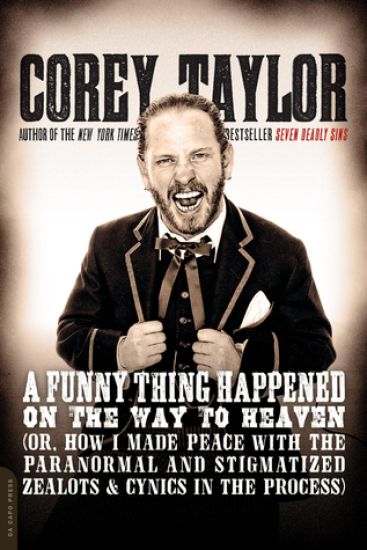
A Funny Thing Happened on the Way to Heaven: (Or, How I Made Peace with the Paranormal and Stigmatized Zealots and Cynics in the Process)
Slipknot and Stone Sour singer Corey Taylor's New York Times bestselling journey into the world of ghosts and the supernatural Corey Taylor has seen a lot of unbelievable things. However, many of his most incredible experiences might just shock you. For much of his life, the Grammy Award-winning singer of Slipknot and Stone Sour and New York Times bestselling author of Seven Deadly Sins has brushed up against the supernatural world. Those encounters impacted his own personal evolution just as much as headlining at Castle Donington in front of 100,000 people at Download Festival or debuting at #1 on the Billboard Top 200. Since growing up in Iowa, his own curiosity drew him into situations that would've sent most people screaming scared and running for the hills. He's ballsy enough to go into the darkness and deal with the consequences, though. As a result, he's seen ghosts up close and personal, whether while combing through an abandoned house in his native Iowa as a child or recording an album in the fabled Houdini Hollywood Hills mansion. He's also got the memories (and scars) to prove it. For some reason, he can't seem to shake these spectral stories, and that brings us to this little tome right here... At the same time, being an erudite, tattooed, modern Renaissance Man, he was never one for Sunday Service. Simply put, he's seen ghosts, but he hasn't seen Jesus. Taylor especially can't find a reason why people do the insane things they do in HIS name. That's where everything gets really interesting. His second book, A Funny Thing Happened on the Way to Heaven, compiles Taylor's most intimate, incredible, and insane moments with the supernatural. His memories are as vivid as they are vicious. As he recounts these stories, he questions the validity of religious belief systems and two-thousand-year-old dogma. As always, his rapid-fire writing, razor sharp sense of humor, unbridled honesty, and cozy anecdotes make quite the case for his point. You might end up believing him or not. That's up to you, of course. Either way, you're in for a hell of a ride.