Kirjojen hintavertailu. Mukana 11 342 296 kirjaa ja 12 kauppaa.

Kirjahaku

Etsi kirjoja tekijän nimen, kirjan nimen tai ISBN:n perusteella.

1000 tulosta hakusanalla Cristina Contilli

The Darlings

The Darlings

Cristina Alger

Penguin Publishing Group
2012
nidottu
A Bonfire of the Vanities for our times, by an author who "knows her way around 21st-century wealth and power" (The Wall Street Journal). Since he married Merrill Darling, daughter of billionaire financier Carter Darling, attorney Paul Ross has grown accustomed to all the luxuries of Park Avenue. But a tragic event is about to catapult the Darling family into the middle of a massive financial investigation and a red-hot scandal. Suddenly, Paul must decide where his loyalties really lie. Debut novelist Cristina Alger is a former analyst at Goldman Sachs, an attorney, and the daughter of a Wall Street financier. Drawing on her unique insider's perspective, Alger gives us an irresistible glimpse into the highest echelons of New York society--and a fast-paced thriller of epic proportions that powerfully echoes Claire Messud's The Emperor's Children and reads like a fictional Too Big to Fail.

Adult-Ish

Adult-Ish

Cristina Vanko

TarcherPerigee
2017
nidottu
How's adulting going? Here's a book to track your progress. Your first real job. The first plant you kept alive. The first relationship you kept alive (until further notice). This hand-lettered and illustrated guided journal is a charming and cheeky celebration of what it means to finally be a grown-up (sort of). From the first time you visited home without bringing dirty laundry to the first time you truly felt comfortable in your own skin, the small victories and meaningful milestones in this quirky and insightful journal make it a great gift and a fun experience for anyone winning at adulthood - the good, the bad and the OMG.
Democracy Reloaded

Democracy Reloaded

Cristina Flesher Fominaya

Oxford University Press Inc
2020
sidottu
In Democracy Reloaded, Cristina Flesher Fominaya tells the story of one of the most influential social movements of recent times: Spain's "Indignados" or "15-M" movement that took to the streets of Spain on May 15, 2011 with the rallying cry "Real Democracy Now! We are not commodities in the hands of bankers and politicians!" Based on access to key participants in the 15-M movement and Podemos and extensive participant observation, Flesher Fominaya tells a provocative and original story of this remarkable movement, its emergence, evolution, and impact. In so doing, she argues that in times of global economic and democratic crisis, movements organized around autonomous network logics can build and sustain strong movements in the absence of formal organizations, strong professionalized leadership, and the ability to attract external resources. Further, she challenges explanations for success that rest on the mobilizing power of social media. Through in-depth analysis of the month long occupation of Madrid's Puerta del Sol, and subsequent 15-M mobilization, Democracy Reloaded shows how the experience of the protest camp revitalized pre-existing networks, forged bonds of solidarity, and gave birth to a new movement that went on to influence public debate and the political agenda, in Spain and beyond.
Democracy Reloaded

Democracy Reloaded

Cristina Flesher Fominaya

Oxford University Press Inc
2020
nidottu
In Democracy Reloaded, Cristina Flesher Fominaya tells the story of one of the most influential social movements of recent times: Spain's "Indignados" or "15-M" movement that took to the streets of Spain on May 15, 2011 with the rallying cry "Real Democracy Now! We are not commodities in the hands of bankers and politicians!" Based on access to key participants in the 15-M movement and Podemos and extensive participant observation, Flesher Fominaya tells a provocative and original story of this remarkable movement, its emergence, evolution, and impact. In so doing, she argues that in times of global economic and democratic crisis, movements organized around autonomous network logics can build and sustain strong movements in the absence of formal organizations, strong professionalized leadership, and the ability to attract external resources. Further, she challenges explanations for success that rest on the mobilizing power of social media. Through in-depth analysis of the month long occupation of Madrid's Puerta del Sol, and subsequent 15-M mobilization, Democracy Reloaded shows how the experience of the protest camp revitalized pre-existing networks, forged bonds of solidarity, and gave birth to a new movement that went on to influence public debate and the political agenda, in Spain and beyond.
John of God

John of God

Cristina Rocha

Oxford University Press Inc
2017
sidottu
This book is the first ethnographic account of the global spiritual movement headed by John of God, a Brazilian faith healer. Renowned for performing surgeries using rudimentary tools such as kitchen knives and scissors, without anesthetics or asepsis, John of God is allegedly inhabited by "entities," or spirits, and goes into a trance-like state in order to heal his visitors and afterwards, when he regains consciousness, does not remember the operations. Visited by thousands of the desperately ill; the wealthy; celebrities such as Oprah Winfrey, Ram Daas, Wayne Dyer, and Shirley MacLaine; and an increasing array of media, John of God has become an international faith healing superstar in just over a decade. Books about him have been translated into several languages, from Russian to Ukrainian to Japanese; ABC, the Discovery Channel, and the BBC have made documentaries on his healing center; tour guides advertise package trips; and John of God himself travels to conduct healing events in the US, New Zealand, Germany, Greece, Switzerland, Austria, and many other countries. More recently, a transnational spiritual community has developed around John of God, comprised of the ill, those who seek spiritual growth, healers, and tour guides, and according to followers, even spirits whose powers transcend national boundaries. Drawing on a decade of fieldwork in Brazil, the US, the UK, Germany, Australia, and New Zealand, Cristina Rocha examines the social and cultural forces that have made it possible for a healer from Brazil to become a global "guru" in the 21st century. Rocha explores what attracts foreigners to John of God's cosmology and healing practices, how they understand their own experiences, and how these radical experiences have transformed their lives.
John of God

John of God

Cristina Rocha

Oxford University Press Inc
2017
nidottu
This book is the first ethnographic account of the global spiritual movement headed by John of God, a Brazilian faith healer. Renowned for performing surgeries using rudimentary tools such as kitchen knives and scissors, without anesthetics or asepsis, John of God is allegedly inhabited by "entities," or spirits, and goes into a trance-like state in order to heal his visitors and afterwards, when he regains consciousness, does not remember the operations. Visited by thousands of the desperately ill; the wealthy; celebrities such as Oprah Winfrey, Ram Daas, Wayne Dyer, and Shirley MacLaine; and an increasing array of media, John of God has become an international faith healing superstar in just over a decade. Books about him have been translated into several languages, from Russian to Ukrainian to Japanese; ABC, the Discovery Channel, and the BBC have made documentaries on his healing center; tour guides advertise package trips; and John of God himself travels to conduct healing events in the US, New Zealand, Germany, Greece, Switzerland, Austria, and many other countries. More recently, a transnational spiritual community has developed around John of God, comprised of the ill, those who seek spiritual growth, healers, and tour guides, and according to followers, even spirits whose powers transcend national boundaries. Drawing on a decade of fieldwork in Brazil, the US, the UK, Germany, Australia, and New Zealand, Cristina Rocha examines the social and cultural forces that have made it possible for a healer from Brazil to become a global "guru" in the 21st century. Rocha explores what attracts foreigners to John of God's cosmology and healing practices, how they understand their own experiences, and how these radical experiences have transformed their lives.
Norms in the Wild

Norms in the Wild

Cristina Bicchieri

Oxford University Press Inc
2017
sidottu
In Norms in the Wild, distinguished philosopher Cristina Bicchieri argues that when it comes to human behavior, social scientists place too much stress on rational deliberation. In fact, she says, many choices occur without much deliberation at all. Two people passing in a corridor automatically negotiate their shared space; cars at an intersection obey traffic signals; we choose clothing based on our instincts for what is considered appropriate. Bicchieri's theory of social norms accounts for these automatic components of coordination, where individuals react automatically to cues that focus their attention on what the norm is in that situation. Social norms thus act as rules for making choices in a social world where people expect others -- often unconsciously -- to follow the same rule. Some norms enable seamless social co-operation, while others are less beneficial to human flourishing. Bicchieri is famous for her interdisciplinary work on game theory and most recently her work on social norms, and Norms in the Wild represents her latest challenge to many of the fundamental assumptions of the social sciences. Bicchieri's work has broad implications not only for understanding human behavior, but for changing it for better outcomes. People have a strongly conditioned preference for following social norms, but that also means that manipulating their expectations can cause major behavioral changes. Bicchieri has been working recently with UNICEF and other NGO's to explore the applicability of her views to issues of human rights around the world. Is it possible to change social expectations around forced marriage, genital mutilations, and public health practices like vaccinations and sanitation? If so, how? What tools might we use? This short book explores how social norms work, and how changing them - changing preferences, beliefs, and especially social expectations - can potentially improve lives all around the world. It will appeal to an unusually broad range of readers including philosophers, psychologists and others in behavioral sciences, and anyone involved in public policy or at NGOs.
Norms in the Wild

Norms in the Wild

Cristina Bicchieri

Oxford University Press Inc
2017
nidottu
In Norms in the Wild, distinguished philosopher Cristina Bicchieri argues that when it comes to human behavior, social scientists place too much stress on rational deliberation. In fact, she says, many choices occur without much deliberation at all. Two people passing in a corridor automatically negotiate their shared space; cars at an intersection obey traffic signals; we choose clothing based on our instincts for what is considered appropriate. Bicchieri's theory of social norms accounts for these automatic components of coordination, where individuals react automatically to cues that focus their attention on what the norm is in that situation. Social norms thus act as rules for making choices in a social world where people expect others -- often unconsciously -- to follow the same rule. Some norms enable seamless social co-operation, while others are less beneficial to human flourishing. Bicchieri is famous for her interdisciplinary work on game theory and most recently her work on social norms, and Norms in the Wild represents her latest challenge to many of the fundamental assumptions of the social sciences. Bicchieri's work has broad implications not only for understanding human behavior, but for changing it for better outcomes. People have a strongly conditioned preference for following social norms, but that also means that manipulating their expectations can cause major behavioral changes. Bicchieri has been working recently with UNICEF and other NGO's to explore the applicability of her views to issues of human rights around the world. Is it possible to change social expectations around forced marriage, genital mutilations, and public health practices like vaccinations and sanitation? If so, how? What tools might we use? This short book explores how social norms work, and how changing them - changing preferences, beliefs, and especially social expectations - can potentially improve lives all around the world. It will appeal to an unusually broad range of readers including philosophers, psychologists and others in behavioral sciences, and anyone involved in public policy or at NGOs.
Effective Scientific Communication

Effective Scientific Communication

Cristina Hanganu-Bresch; Kelleen Flaherty

Oxford University Press Inc
2020
sidottu
Writing and the sciences are intricately linked. Without writing, science would not exist -- and could not be funded, communicated, replicated, enhanced, or applied. Further, writing helps scientists (and students) understand the science, explain the results of research in a greater context, and develop new ideas. Working from this philosophy, this book primarily addresses undergraduate STEM majors and minors who want or need to improve their scientific writing skills. Grounded in the basics of rhetorical research and scientific writing practices and guided by the authors' experiences in the classroom, this book makes the case that writing is an essential component of science regardless of the stage of the scientific process, and that it is in fact a component of thinking about science itself. Featuring student-centered stories that place each topic in context and suggestions for practice, Hanganu-Bresch and Flaherty arm STEM students with the skills to enhance critical thinking and cultivate good writing habits.
Political Conversations in Late Republican Rome

Political Conversations in Late Republican Rome

Cristina Rosillo-López

Oxford University Press
2021
sidottu
Political Conversations in Ciceronian Rome offers for the first time a perspective of Roman politics through the proxy of conversations and meetings. In Rome oral was the default mode of communication in politics: oratory before the people in assemblies, addresses and discussions in the Senate, speeches in the law courts, rumours, and public opinion. We are familiar with the notion that the Roman political world of the Late Republic included lofty speeches and sessions of the Senate, but an important aspect of Late-Republican politics revolved around senators talking among themselves, chatting off in the corner. Only when they could not reach each other in person, Roman senators and their peers resorted to letters. This book intends to analyse political conversations and illuminate the oral dimension of Roman politics. It posits that the study of politics should not be restricted to the senatorial group, but that other persons should be considered as important political actors with their own agency (albeit in different degrees), such as freedmen and elite women. It argues that Roman senators and their entourages met in person to have conversations in which they discussed politics, circulated political information and negotiated strategies; this extra-institutional sphere had a relevant impact both on politics and institutions as well as determined how the Roman Republic functioned.
Democracy without Shortcuts

Democracy without Shortcuts

Cristina Lafont

Oxford University Press
2022
nidottu
This book articulates a participatory conception of deliberative democracy that takes the democratic ideal of self-government seriously. It aims to improve citizens' democratic control and vindicate the value of citizens' participation against conceptions that threaten to undermine it. The book critically analyzes deep pluralist, epistocratic, and lottocratic conceptions of democracy. Their defenders propose various institutional ''shortcuts'' to help solve problems of democratic governance such as overcoming disagreements, citizens' political ignorance, or poor-quality deliberation. However, all these shortcut proposals require citizens to blindly defer to actors over whose decisions they cannot exercise control. Implementing such proposals would therefore undermine democracy. Moreover, it seems naive to assume that a community can reach better outcomes 'faster' if it bypasses the beliefs and attitudes of its citizens. Unfortunately, there are no 'shortcuts' to make a community better than its members. The only road to better outcomes is the long, participatory road that is taken when citizens forge a collective will by changing one another's hearts and minds. However difficult the process of justifying political decisions to one another may be, skipping it cannot get us any closer to the democratic ideal. Starting from this conviction, the book defends a conception of democracy ''without shortcuts''. This conception sheds new light on long-standing debates about the proper scope of public reason, the role of religion in politics, and the democratic legitimacy of judicial review. It also proposes new ways to unleash the democratic potential of institutional innovations such as deliberative minipublics.
The Lottocratic Mentality

The Lottocratic Mentality

Cristina Lafont; Nadia Urbinati

Oxford University Press
2024
sidottu
In recent years there has been great interest in new forms of citizen participation, such as citizens' assemblies or deliberative polls that involve ordinary citizens in political decision-making. Many see these innovations as the best solution to the current crisis of democracy. The most radical among them propose replacing elections with the random selection of ordinary citizens, transforming electoral democracy into a lottocracy. These developments are driven by a lottocratic mentality that is deeply transforming our understanding of democracy, political equality, representation, and more. In The Lottocratic Mentality, Lafont and Urbinati focus on this way of thinking, which is flourishing in public debates, inspiring the organization of citizens' assemblies worldwide, and bridging democratic and nondemocratic regimes in the vision of a unified global order based on problem-solving allotted assemblies, free from electoral competition. The authors' analysis shows that it amounts to a worrisome form of technopopulism that justifies conferring legislative power on randomly selected assemblies based on a mixture of populist and technocratic grounds. This lottocratic mentality legitimizes the anti-democratic idea that the many should be "ruled" by "the few" chosen by chance. Against this view, they show how lottery-based institutions could be used with the democratic aim of empowering the citizenry, but only if the lottocratic mentality is rejected.
Focus on Special Educational Needs

Focus on Special Educational Needs

Cristina Sanchez -Lopez; Theresa Young

Oxford University Press
2018
nidottu
Focus on Special Educational Needs explores the characteristics of effective classroom instruction for language learners aged 5 -18 with special educational needs. It guides teachers and other educational practitioners to combine their multiple perspectives in providing balanced, coordinated, cohesive, and comprehensive approaches to serve these learners. The authors present a framework for developing inclusive learning environments which are culturally and linguistically responsive, based on socio-cultural and strengths-based perspectives. Research studies along with examples from real classrooms are highlighted to illustrate collaborative practice in action.
The Trouble with Unity

The Trouble with Unity

Cristina Beltran

Oxford University Press Inc
2010
sidottu
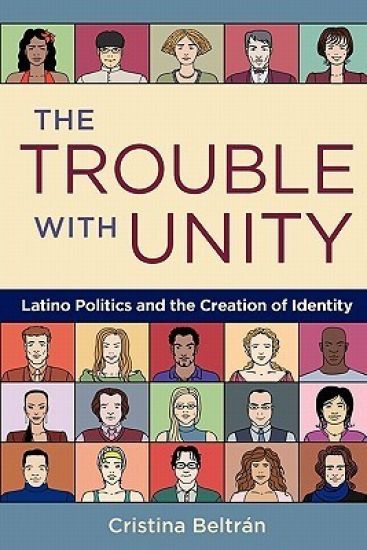
Over the past decade, much attention has been given to examining the growing political influence of Latinos in the United States in order to define the so-called "Latino vote." The idea of the existence of a coherent Latino vote or political agenda (encompassing the interests of various ethnic groups of Latin-American origin and known as civic Latinidad) is, as this book shows, not only highly debatable, but possibly politically unviable. Beltrán's book is the first comprehensive critique of civic Latinidad and the Latino electoral and protest politics that work to erase political diversity and debate in favor of images of political and cultural unity. Situated at the intersection of political theory and Latino studies, Beltrán's book analyzes the practices, perceptions, and assumptions that shape how Latinos in the United States articulate their quest for political power and influence. The book looks at three key moments in U.S. Latino political history: the Chicano and Puerto Rican civil rights movements of the late 1960s; the emergence of Latinos as a pan-ethnic voting bloc in the 1980s; and the recent political activism surrounding illegal immigration. To this, Beltrán applies political theory to analyze the relationship among participatory democracy, public speech, and racial identification and to link the study of Latino politics to the larger question of how subjects are made capable of collective action. The Trouble with Unity draws upon a diverse range of political, feminist, and cultural theorists to challenge the very existence of a coherent "Latino" political agenda with a pre-existing set of "Latino interests" that can be found and defended.
The Trouble with Unity

The Trouble with Unity

Cristina Beltran

Oxford University Press Inc
2010
nidottu
Over the past decade, much attention has been given to examining the growing political influence of Latinos in the United States in order to define the so-called "Latino vote." The idea of the existence of a coherent Latino vote or political agenda (encompassing the interests of various ethnic groups of Latin-American origin and known as civic Latinidad) is, as this book shows, not only highly debatable, but possibly politically unviable. Beltrán's book is the first comprehensive critique of civic Latinidad and the Latino electoral and protest politics that work to erase political diversity and debate in favor of images of political and cultural unity. Situated at the intersection of political theory and Latino studies, Beltrán's book analyzes the practices, perceptions, and assumptions that shape how Latinos in the United States articulate their quest for political power and influence. The book looks at three key moments in U.S. Latino political history: the Chicano and Puerto Rican civil rights movements of the late 1960s; the emergence of Latinos as a pan-ethnic voting bloc in the 1980s; and the recent political activism surrounding illegal immigration. To this, Beltrán applies political theory to analyze the relationship among participatory democracy, public speech, and racial identification and to link the study of Latino politics to the larger question of how subjects are made capable of collective action. The Trouble with Unity draws upon a diverse range of political, feminist, and cultural theorists to challenge the very existence of a coherent "Latino" political agenda with a pre-existing set of "Latino interests" that can be found and defended.
Transnational Networking and Elite Self-Empowerment

Transnational Networking and Elite Self-Empowerment

Cristina E. Parau

Oxford University Press
2018
sidottu
Judicial institutions in the new democracies established after the fall of communism in Central and Eastern Europe have become patterned on a transnational template that maximises judicial empowerment to the detriment of national parliaments. Through the influence of an elite, transnational community of interest, revisions to the judiciary have been implemented with little attention from politicians or the public. As a result, there has been a shift in the role of the judiciary from adjudication under the law towards improvising public policy. Transnational Networks and Elite Self-Empowerment is an inquiry into why and how this could have come about, and what the implications are for democracy. Cristina Parau explores the processes by which the elites have used transnational networks as a means of self-empowerment, and how they have been able to entrench their minority influence within the constitutions of their countries. Taking an inter-disciplinary approach, she builds a strong case through a deep analysis set against and supported by an extensive series of interviews with key political actors. This is a timely reminder of the need to pay attention to our democratic institutions and not to take for granted the foundations on which they are laid.
Memes, Monsters, and the Digital Grotesque

Memes, Monsters, and the Digital Grotesque

Cristina Moreno-Almeida

Oxford University Press
2024
sidottu
Memes, Monsters, and the Digital Grotesque looks at the emerging and thriving new genre of digital horror from an innovative perspective. Examining digital cultural production during the period that has been referred to as the 'Arab Winter', Moreno-Almeida delves into the memes, animated cartoons, music videos, and expressive cultures — like fashion and urban subcultures — that emerged between 2016 and 2020. In revealing concealed narratives underlying the digital lives of artists, as well as ordinary people, Moreno-Almeida explores how memes, horror, and the grotesque capture a moment infused with political and affective significance, characterized by despair, alienation, and anomie, alongside opportunities for creative experimentation made possible in the postdigital era.
Cool Christianity

Cool Christianity

Cristina Rocha

OXFORD UNIVERSITY PRESS INC
2024
nidottu
Hillsong, an Australian megachurch founded in 1983, is now a global phenomenon. It has branches in most global cities and award-winning worship bands that tour the world and whose music is sung weekly by an estimated 50 million people in 60 languages. Moreover, the megachurch and its bands have an immense presence on social media with millions of followers. The scandals around sex and money that have rocked Hillsong in recent times have been reported globally in the mainstream secular media, reflecting the megachurch's prominence. Hillsong's style of Pentecostalism relies on a deep engagement with consumer capitalism, as well as celebrity, youth, and digital cultures. In Cool Christianity, Cristina Rocha tells the story of how Hillsong's “Cool Christianity” aesthetic allowed it to make inroads among the Brazilian middle classes, who adopted Hillsong's brand of Christianity as a way of becoming cosmopolitan and establishing class boundaries. Rocha draws on the theoretical frameworks of material religion and lived religion to show how religion can be made globally relevant to young people through cool aesthetics, affect, and engagement with consumer culture--from fashion to music to branding--in the digital age.
Environmental Ethics and Medical Reproduction

Environmental Ethics and Medical Reproduction

Cristina Richie

OXFORD UNIVERSITY PRESS INC
2024
sidottu
Carbon emissions of global health care activities comprise 4-5% of total world emissions, placing the health care industry on par with the food sector. The United States health care industry in particular expends an estimated 479 million metric tons of carbon dioxide per year -- nearly 8% of the country's total emissions. Health care impacts the environment through the use of resources needed to cure, treat, and prevent diseases; by extending lifespans; and by facilitating new births. In this book, Dr. Cristina Richie evaluates "medicalized reproduction" (MR) from an environmental perspective. From pre-conception gamete retrieval to in-vitro fertilization (IVF), to birthing suites, MR has an enormous carbon footprint. But, unlike other areas of high-carbon health care, such as organ transplantation or chemotherapy, medicalized reproduction does not treat, cure, or prevent disease. It is supported by an economized medical industry, and as such, is open for ethical scrutiny. Richie first situates MR within environmental ethics. Part I analyzes the numerous resources used for medical reproduction, emphasizing that MR is a voluntary lifestyle choice. Part II offers policy suggestions for sustainable MR, remaining sensitive to some individuals' desires to be parents coupled with the global push for medical and climate justice. The conclusion recognizes the obligation for environmental sustainability in all areas of life, including health care and family life.
Exploring Parliament

Exploring Parliament

Cristina Leston-Bandeira; Louise Thompson

Oxford University Press
2018
nidottu
A fresh perspective on an ancient institution; Exploring Parliament offers an engaging and real-life insight into the inner workings, impact, and relevance of twenty-first century Parliament. Short academic and practitioner chapters are combined with highly relevant and practical case studies, to provide a new and accessible introduction to Parliament's structures, people, and practices. As well as covering the broader structure of UK Parliament, this text explains the role of small parties in law making, the design and space of Parliament, and offers illuminating case studies on highly topical areas such as the Backbench Business Committee, the Hillsborough Inquiry and recent pieces of legislation such as the Assisted Dying Bill. This text is complemented by the following online resources for students and lecturers: - Video tours of Parliament - Podcasts to explain and explore the work of Parliament - Web links to help students to explore Parliament even further