Kirjojen hintavertailu. Mukana 11 244 527 kirjaa ja 12 kauppaa.

Kirjahaku

Etsi kirjoja tekijän nimen, kirjan nimen tai ISBN:n perusteella.

1000 tulosta hakusanalla Cyril Methodius Jansky

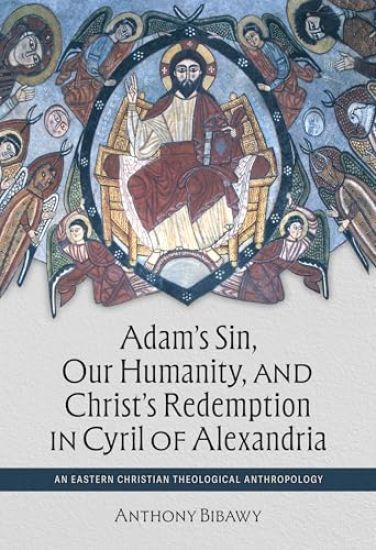
Adam's Sin, Our Humanity, and Christ's Redemption in Cyril of Alexandria

Adam's Sin, Our Humanity, and Christ's Redemption in Cyril of Alexandria

Anthony Bibawy

THE CATHOLIC UNIVERSITY OF AMERICA PRESS
2025
nidottu
As a result of the neo-patristic movement of the early twentieth century, the teachings of original sin and atonement as understood in the West were questioned and reformulated based on what was believed to be early Eastern Christian patristic thought. This new paradigm proposed that humanity inherited death and corruption, but not sin, from Adam and that the purpose of the Incarnation and salvific work of Christ was to restore humanity from death and corruption, but not an inherent sinfulness.In contrast to this popular and seemingly dogmatic paradigm and false dichotomy between Western and Eastern teaching on sin and atonement, this volume asserts that the writings of many Eastern fathers of the early fifth century incorporate many, if not the majority, of the terms and teachings behind what have been labeled as Western departures concerning original sin and atonement. Through a comprehensive analysis of the writings of Cyril of Alexandria and some of his contemporaries in the early fifth century East during the time of the Pelagian controversy, this book demonstrates that a central and consistent theme of their soteriology revolves around the sinfulness and guilt of all humanity that is rooted in Adam's sin by nature and is resolved only through recapitulation into the new root, the second Adam, the impeccable Christ. Christ's impeccability is necessary to correct the state of sinfulness and guilt in humanity through his incarnation and spotless sacrifice on the cross as a ransom and substitute on behalf of and in exchange of all to satisfy the divine justice and to restore humanity to its original state in the divine image.
An ACT for Confirming and Establishing a Partition of Several Manors, Lands, and Hereditaments, in the County of York, Belonging to Sir Cyril Wich, Bart. Elizabeth Wilson, and Mary Turton
The 18th century was a wealth of knowledge, exploration and rapidly growing technology and expanding record-keeping made possible by advances in the printing press. In its determination to preserve the century of revolution, Gale initiated a revolution of its own: digitization of epic proportions to preserve these invaluable works in the largest archive of its kind. Now for the first time these high-quality digital copies of original 18th century manuscripts are available in print, making them highly accessible to libraries, undergraduate students, and independent scholars.This collection reveals the history of English common law and Empire law in a vastly changing world of British expansion. Dominating the legal field is the Commentaries of the Law of England by Sir William Blackstone, which first appeared in 1765. Reference works such as almanacs and catalogues continue to educate us by revealing the day-to-day workings of society.++++The below data was compiled from various identification fields in the bibliographic record of this title. This data is provided as an additional tool in helping to insure edition identification: ++++British LibraryT063209Drop-head title. With a docket title. Enacted: Private Acts, 26 Geo.II.c.33. London, 1753]. 21, 1]p.; 2
Hypatia Or, The history of a most beautiful, most vertuous, most learned, and every way accomplish'd lady; who was torn to pieces by the clergy of Alexandria, to gratify the pride, emulation, and cruelty of their archbishop, commonly but undeservedly styled St. Cyril
Mormon Doctrine Plain and Simple; Or, Leaves from the Tree of Life, a classical and rare book that has been considered essential throughout human history, so that this work is never forgotten, we at Alpha Editions have made efforts in its preservation by republishing this book in a modern format for present and future generations. This whole book has been reformatted, retyped and designed. These books are not made of scanned copies of their original work and hence the text is clear and readable.
Festal Letters 1-12

Festal Letters 1-12

Cyril

The Catholic University of America Press
2009
sidottu
St.Cyril of Alexandria is best known for his role in the Christological disputes of the fifth century. In recent years, however, scholars have turned their attention to Cyril the exegete. Cyril wrote extensive commentaries on nearly every book of the Bible; in fact, two-thirds of his extant corpus is devoted to biblical interpretation. Yet, despite this strong interest in Cyril as theologian and biblical interpreter, his activity as the Patriarch of Alexandria remains obscure. Doctrinal treatises and biblical commentary reveal little of the daily pastoral duties that occupied Cyril during his years as leader of one of ancient Christianity's most important sees. This new translation of Cyril's ""Festal Letters"" will help fill these gaps. Twenty-nine in all, these letters cover all but three of Cyril's years as bishop. In Alexandria, festal letters functioned primarily as a vehicle for announcing the beginning of Lent and the proper date for the celebration of Easter. They also served an important catechetical purpose by providing the patriarch with an annual opportunity to present his flock with a pastoral version of the theological issues that found more formal and complex expression elsewhere. Thus, Cyril's ""Festal Letters"" offer the modern reader a glimpse into the issues that Cyril himself considered important enough to proclaim to the entire diocese and a sample of how he prepared these ideas for reception by a less sophisticated audience. These letters illuminate other aspects of the ancient church in Alexandria, including that church's complex relationship with the Jews and other religious groups, as well as the ways in which the ascetical movement wound its way into the patriarch's pastoral program. In short, Cyril of Alexandria's ""Festal Letters"" provides modern readers with a rare opportunity to enter the daily reality of the church in ancient Alexandria.
Letters 1-50

Letters 1-50

Cyril

The Catholic University of America Press
2007
nidottu
St. Cyril, Patriarch of Alexandria for thirty-two years in the first half of the fifth century, was a great champion of the faith against heresy; he opposed Novatianism, Neoplatonism, and Judaism. His principal struggle, however, was with Nestorius, Patriarch of Constantinople. Cyril vehemently defended the application of the word Theotokos, which means 'Godbearer', to the Blessed Virgin Mary. Nestorius, representative of the Antiochene theological school, held that the Blessed Virgin was the mother only of the humanity of Christ. This great Christological controversy and the Council of Ephesus that was convened in 431 to resolve it provide the subject matter for the entire collection of letters in this volume. Letter 1 is Cyril's response to a group of monks under his jurisdiction who ask for guidance in the Nestorian debate. His remarks take us straight to the heart of the matter: "Therefore, I am amazed if some should question at all whether the Holy Virgin should be called the Mother of God." Through Letter 32 we are involved with the controversy and its development down to and including the Council of Ephesus. Letter 4, addressed to Nestorius, has been called the dogmatic letter, and the Council of Ephesus approved it as maintaining the teaching of Nicaea. Letter 17 is considered an epitome of Cyril's faith. Along with twelve anathemas it condemned Nestorius in the name of the synod convened by Pope Celestine in Rome and later was added to the Acts of the Council of Ephesus Letters 33 to 50 concern the question of John, Bishop of Antioch and a personal friend of Cyril through a longstanding correspondence. When John and his bishops arrived at Ephesus, they set up a rival council and issued a decree of deposition and excommunication against Cyril and Memnon, Bishop of Ephesus. After the Council of Ephesus it was Cyril's task to reconcile the Antiochene bishops who had formed the Conciliabulum with John to restore peace to the Churches in the East. Letter 39 reveals his joy in achieving this reconciliation and in regaining his friendship with John. Together with Letters 4 and 17, Letter 39 has been called ecumenical. Letter 41 is exegetically important for its long discussion of the work "scapegoat," and Letter 45, which contains Cyril's famous formula, for it's doctrinal and theological content.
Letters 51-110

Letters 51-110

Cyril

The Catholic University of America Press
2007
nidottu
This second and final volume of the letters of St. Cyril, Patriarch of Alexandria (412-444), takes up in medias res the great Christological controversy about the term Theotokos and the events which lead up to its resolution at the Council of Ephesus in 431. Defending the doctrines of the Trinity and the Person of Christ in the Alexandrian tradition of St. Athanasius these letters reveal Cyril's brilliant theological acumen and deep personal faith. Letters 51 to 61 are concerned with the question of John of Antioch and the bishops who, with him, supported Nestorius in the tradion of the Antiochene School, set up a rival council, and this went so far as even to depose Cyril. Of this group Letters 50 and 55 are exceptional for their theological content. Letter 66 to 74 deal with the extension of the Nestorian heresy by eastern bishops who, although they agreed to the deposition of Nestorius and the anathemas against him, began to uphold the ideas of his teachers Diodore of Tarsus and Theodore of Mopsuestia. Letters 77 to 79 and 85 are purely administrative and, as such, are noteworthy examples of Cyril's patriarchy. Letter 89, an exegetic explanation of the punishment of Cain, is a partial copy of letter 260 of St. Basil. Three letters are spurious; 86 and 87, which deal with the date of Easter, and 88, a supposed letter from Hypatia to Cyril. Perhaps the most unusual letter is 96, a breve or catalog of treasures sent from Alexandria as bribes to the imperial court at Constantinople, not an uncommon practice it would seem since Cyril writes about it quite openly. The translator has appended five letters to the corpus. The first four are addressed to Cyril and are important for the light they shed on the Nestorian controversy. The last, an alternate version of letter 85 translated from the Latin text, contains a response to the synod at Carthage concerning the date of Easter, different in the two versions.