

Kirjahaku
Etsi kirjoja tekijän nimen, kirjan nimen tai ISBN:n perusteella.
1000 tulosta hakusanalla Cyrus F. Rea




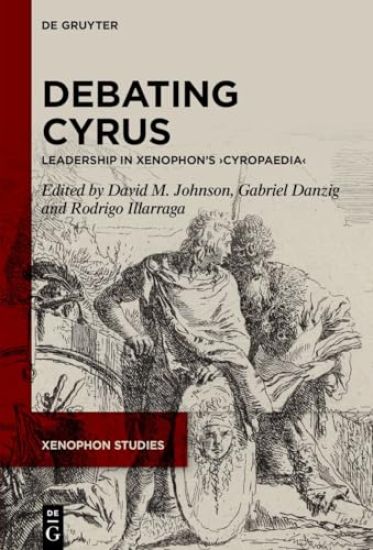
Debating Cyrus: Leadership in Xenophon's >Cyropaedia
De Gruyter
2026
sidottu
Is Xenophon's Cyrus the Great the model leader he seems to be, or does his apparent success actually demonstrate the dangers of imperialism and one-man rule? Debating Cyrus gathers contributions from many of the world's leading scholars in Xenophontic Studies, and features scholars with a wide range of approaches to reading classical texts. Our essays discuss the surprisingly subtle techniques Xenophon employs, and study topics including ambition, the rule of law, hunting, tragedy, romance, and the use Cyrus makes of love and fear. A cluster of essays considers Cyrus' one apparent failure -- the failure to ensure his kingdom will prosper after him. Other essays show what we can learn about the Cyropaedia by comparing it to other works by Xenophon and his contemporaries. Our aim is not to resolve the debate about Cyrus, a debate that will live on as long as readers care about Xenophon's magisterial account of the founder of the greatest empire of his day and disagree about what sort of leadership to expect from a leader like Cyrus. Our goal is to prepare readers to engage in the debate themselves.
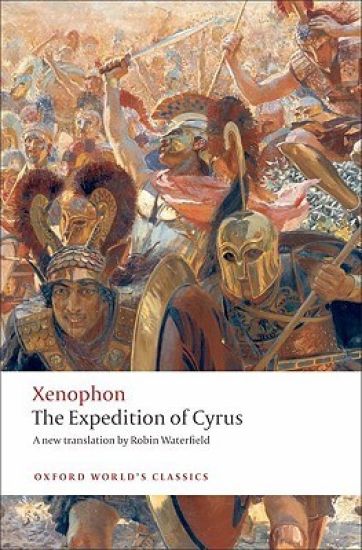
'Men, the enemy troops you can see are all that stands between us and the place we have for so long been determined to reach. We must find a way to eat them alive!' The Expedition of Cyrus tells the story of the march of the Ten Thousand. The exploits of this famous army of Greek mercenaries in modern-day Turkey, Syria, and Iraq were described by one of their leaders, the Athenian historian and philosopher Xenophon. They were recruited at the end of the fifth century BC by a young Persian prince, Cyrus, who rose in revolt against his brother, the king of Persia. After Cyrus' death, the army was left stranded in the desert of Mesopotamia, a thousand miles from home. Their long march, across mountains and plateaux to the sight of 'The sea! The sea!', and back to the fringes of the Greek world, is the most exciting adventure story to survive from the ancient world. Xenophon's gripping narrative offers a unique insight into the character of a Greek army struggling to survive in an alien world. It is also the most sustained eyewitness account of the landscape of the vast and wealthy Persian empire. ABOUT THE SERIES: For over 100 years Oxford World's Classics has made available the widest range of literature from around the globe. Each affordable volume reflects Oxford's commitment to scholarship, providing the most accurate text plus a wealth of other valuable features, including expert introductions by leading authorities, helpful notes to clarify the text, up-to-date bibliographies for further study, and much more.

There was once an ancient clay tablet that held a single phrase from the Cyrus Cylinder stamped upon it. It was a message from Cyrus the Great, intended to wake his nation up from its centuries-long slumber. A follower of the Zoroastrian religion, Arya was only twelve years old when the 1979 Revolution happened in Iran. Growing up in a society ruled by the Islamic revolutionaries, he finds himself in a desperate situation that results in a chance to learn from the ancient clay tablet. He survives decades of social discrimination, injustice, and war before moving to Canada in search of both the life he's missed out on and the love of his life-who mysteriously disappeared years ago.

The School of Cyrus
TAYLOR FRANCIS LTD
2020
sidottu
Originally published in 1987, this book is a translation of Xenophon's Cyropaedeia (The Education of Cyprus), first published in 1567.
The School of Cyrus
TAYLOR FRANCIS LTD
2021
nidottu
Originally published in 1987, this book is a translation of Xenophon's Cyropaedeia (The Education of Cyprus), first published in 1567.

The larger part of Theodoret of Cyrus' existant body of work still remains untranslated, and this lack provides a fragmented representation of his thought and has lead to his misrepresentation by ancient, medieval and some modern scholars.Theodoret of Cyrus presents a fresh collection of texts from all periods of his career, including two complete treatises (On the Trinity and On the Incarnation) as well as representative selections from two others (A Cure of Greek Maladies and A Compendium of Heretical Mythification) so far unpublished in English, with a critical introduction concerning his life, legacy and place in the history of Christian doctrine.This book provides the reader with a more balanced picture of Theodoret's often neglected, depreciated and largely inaccessible theological legacy.
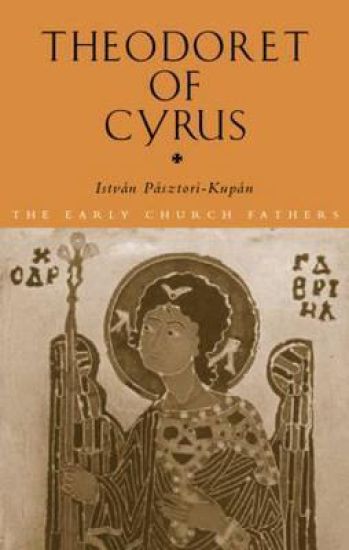
The larger part of Theodoret of Cyrus' existant body of work still remains untranslated, and this lack provides a fragmented representation of his thought and has lead to his misrepresentation by ancient, medieval and some modern scholars.Theodoret of Cyrus presents a fresh collection of texts from all periods of his career, including two complete treatises (On the Trinity and On the Incarnation) as well as representative selections from two others (A Cure of Greek Maladies and A Compendium of Heretical Mythification) so far unpublished in English, with a critical introduction concerning his life, legacy and place in the history of Christian doctrine.This book provides the reader with a more balanced picture of Theodoret's often neglected, depreciated and largely inaccessible theological legacy.
Travels of Cyrus to Which is Annexed a Discourse Upon the Theology and Mythology of the Pagans V1
M. De Ramsay
Kessinger Publishing
2007
sidottu
The Travels of Cyrus to Which is Annexed a Discourse Upon the Theology and Mythology of the Pagans V2
M. De Ramsay
KESSINGER PUBLISHING, LLC
2007
sidottu
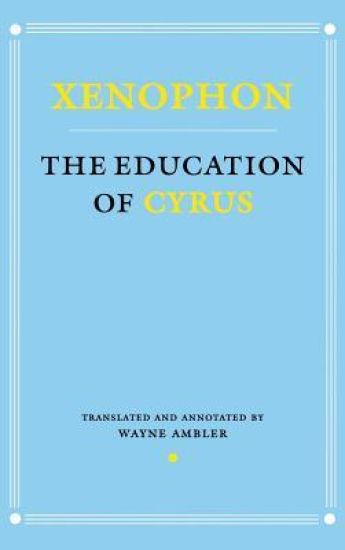
The Education of Cyrus
Cornell University Press
2001
sidottu
Xenophon's masterpiece The Education of Cyrus—a work admired by Machiavelli for its lessons on leadership—is at last available in a new English translation for a new century. Also known as the Cyropaedia, this philosophical novel is loosely based on the accomplishments of Cyrus the Great, founder of the vast Persian Empire that later became the archrival of the Greeks in the classical age. It offers an extraordinary portrait of political ambition, talent, and their ultimate limits.The writings of Xenophon are increasingly recognized as important works of political philosophy. In The Education of Cyrus, Xenophon confronts the vexing problem of political instability by exploring the character and behavior of the ruler. Impressive though his successes are, however, Cyrus is also examined in the larger human context, in which love, honor, greed, revenge, folly, piety, and the search for wisdom all have important parts to play. Wayne Ambler's prose captures the charm and drama of the work while also achieving great accuracy. His introduction, annotations, and glossary help the reader to appreciate both the engaging story itself and the volume's contributions to philosophy.
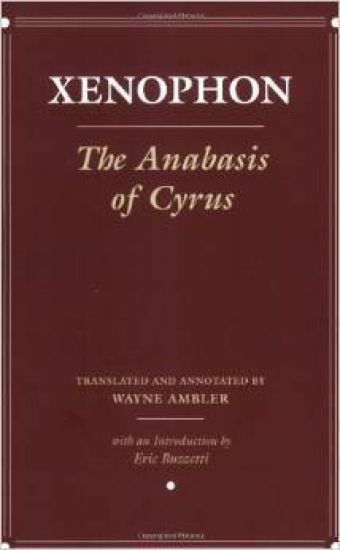
The Anabasis of Cyrus
Cornell University Press
2008
sidottu
One of the foundational works of military history and political philosophy, and an inspiration for Alexander the Great, The Anabasis of Cyrus recounts the epic story of the Ten Thousand, a band of Greek mercenaries hired by Cyrus the Younger to overthrow his brother, Artaxerxes, king of Persia and the most powerful man on earth. It shows how Cyrus' army was assembled covertly and led from the coast of Asia Minor all the way to Babylon; how the Greeks held the field against a superior Persian force; how Cyrus was killed, leaving the Greeks stranded deep within enemy territory; and how many of them overcame countless dangers and found their way back to Greece. Their remarkable success was due especially to the wily and decisive leadership of Xenophon himself, a student of Socrates who had joined the Ten Thousand and, after most of the Greek generals had been murdered, rallied the despondent Greeks, won a position of leadership, and guided them wisely through myriad obstacles.In this new translation of the Anabasis of Cyrus, Wayne Ambler achieves a masterful combination of liveliness and a fidelity to the original uncommon in other versions. Accompanying Ambler's translation is a penetrating interpretive essay by Eric Buzzetti, one that shows Xenophon to be an author who wove a philosophic narrative into his dramatic tale. The translation and interpretive essay encourage renewed study of the Anabasis of Cyrus as a work of political philosophy. They also celebrate its high adventure and its hero's adroit decision-making under the most pressing circumstances.
"The Education of Cyrus is a major work of classical political philosophy that provides a portrait of extraordinary political ambition.... Ambler's precise translation makes it possible to engage in a close textual reading that establishes Xenophon as an important political thinker."-Translation Review Xenophon's masterpiece, The Education of Cyrus, is a work that was admired by Machiavelli for its lessons on leadership. Also known as the Cyropaedia, this philosophical novel is loosely based on the accomplishments of Cyrus the Great, founder of the vast Persian Empire that later became the archrival of the Greeks in the classical age. It offers an extraordinary portrait of political ambition, talent, and their ultimate limits. The writings of Xenophon are increasingly recognized as important works of political philosophy. In The Education of Cyrus, Xenophon confronts the vexing problem of political instability by exploring the character and behavior of the ruler. Impressive though his successes are, however, Cyrus is also examined in the larger human context, in which love, honor, greed, revenge, folly, piety, and the search for wisdom all have important parts to play. Wayne Ambler's translation captures the charm and drama of the work while also achieving great accuracy. His introduction, annotations, and glossary help the reader to appreciate both the engaging story itself and the volume's contributions to philosophy.
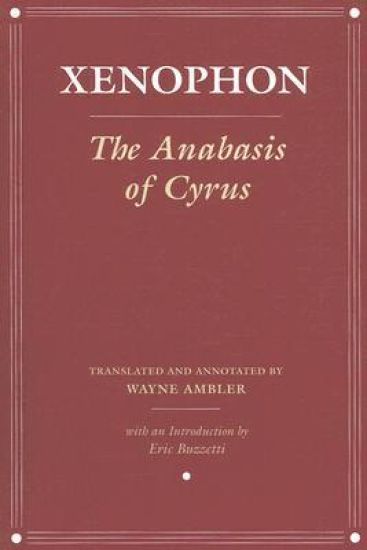
An excellent book for anyone interested in Ancient Greek warfare, or just a rattling good tale.- The NYMAS Review One of the foundational works of military history and political philosophy, and an inspiration for Alexander the Great, the Anabasis of Cyrus recounts the epic story of the Ten Thousand, a band of Greek mercenaries hired by Cyrus the Younger to overthrow his brother, Artaxerxes, king of Persia and the most powerful man on earth. It shows how Cyrus' army was assembled covertly and led from the coast of Asia Minor all the way to Babylon; how the Greeks held the field against a superior Persian force; how Cyrus was killed, leaving the Greeks stranded deep within enemy territory; and how many of them overcame countless dangers and found their way back to Greece. Their remarkable success was due especially to the wily and decisive leadership of Xenophon himself, a student of Socrates who had joined the Ten Thousand and, after most of the Greek generals had been murdered, rallied the despondent Greeks, won a position of leadership, and guided them wisely through myriad obstacles. In this new translation of the Anabasis, Wayne Ambler achieves a masterful combination of liveliness and a fidelity to the original uncommon in other versions. Accompanying Ambler's translation is a penetrating interpretive essay by Eric Buzzetti, one that shows Xenophon to be an author who wove a philosophic narrative into his dramatic tale. The translation and interpretive essay encourage renewed study of the Anabasis as a work of political philosophy. They also celebrate its high adventure and its hero's adroit decision-making under the most pressing circumstances.